The best paper for flyers refers to the specific weight, finish, and texture of paper stock that makes your printed message look professional and perform its job effectively. You might think all paper is the same, but choosing between 80 lb gloss, 100 lb matte, or 14 pt cardstock can dramatically change how people perceive your business. A real estate agent handing out limp, flimsy flyers sends a very different message than one using substantial, glossy stock with vibrant images.
This guide walks you through everything you need to know about flyer paper in Canada. You’ll learn how paper weight affects durability and feel, which finishes work best for different designs, and what stock suits your specific use case. Whether you’re printing event announcements, promotional handouts, or door hangers for local delivery, you’ll discover exactly what paper weight and finish to specify. We’ll also cover Canadian print sizes, eco friendly options available in Canada, and how quantities affect your choices. By the end, you’ll know precisely what to order for flyers that get noticed and kept instead of tossed in the recycling bin.
Why flyer paper choice matters
Your flyer paper selection directly impacts how prospects perceive your business and whether they keep or discard your marketing material. Paper weight and finish communicate quality before anyone reads a single word, and this tactile experience shapes the entire interaction. A law firm printing on flimsy 60 lb paper undermines its message of professionalism, while a budget pizza shop using expensive 14 pt cardstock wastes money that could go toward wider distribution.
First impressions and perceived value
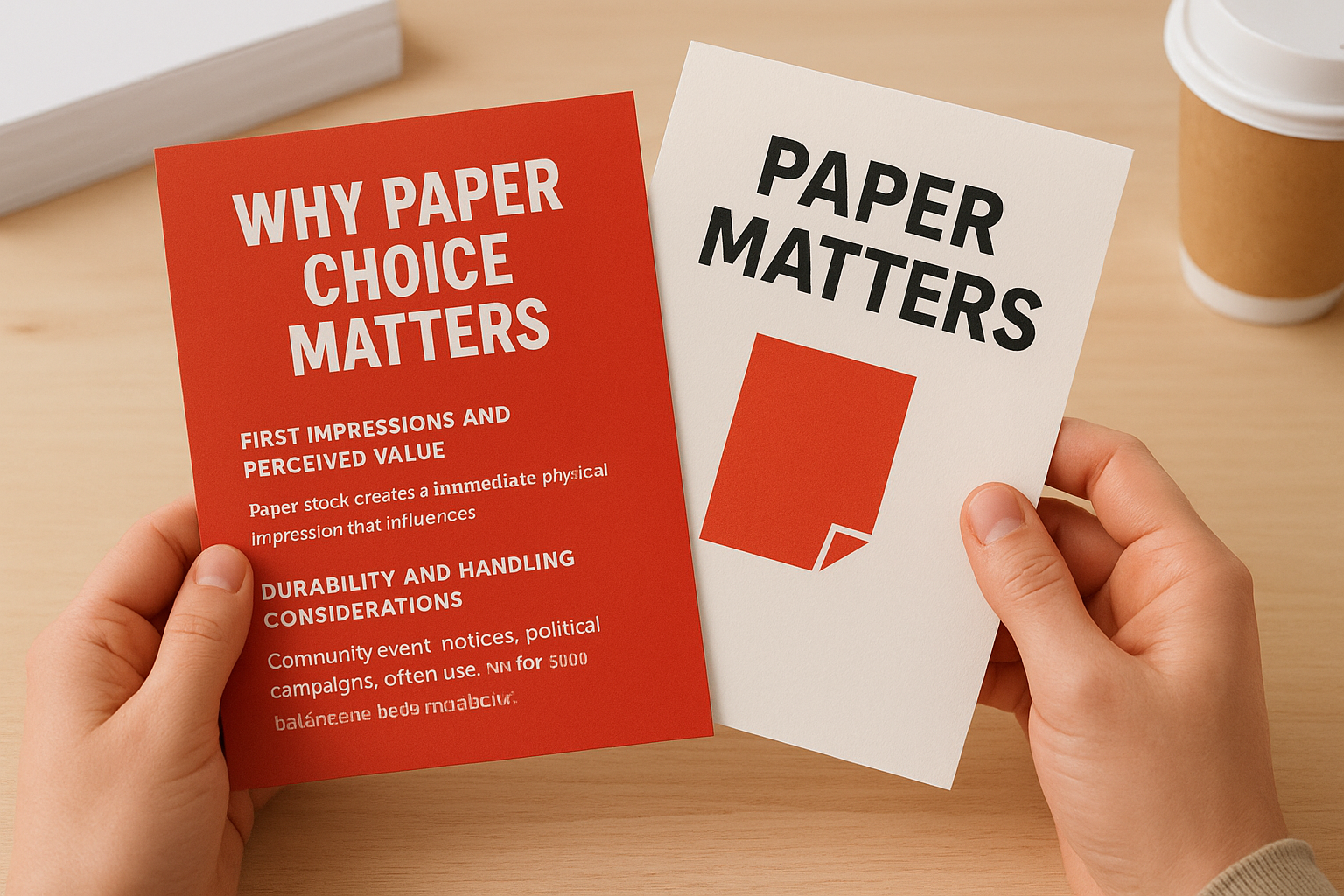
Paper stock creates an immediate physical impression that influences how seriously people take your message. Thicker, heavier paper (100 lb cover or higher) suggests premium service or high-value offers, making it ideal for real estate listings, spa promotions, or upscale restaurant menus. Recipients subconsciously associate substantial paper with substantial businesses, which is why car dealerships and jewellers rarely hand out thin flyers.
Conversely, lighter stocks work perfectly when volume matters more than luxury. Community event notices, political campaigns, and pizza delivery menus often use 80 lb gloss or 100 lb text because these weights balance adequate quality with cost-effective mass production. The best paper for flyers matches your brand positioning and budget realities without sending the wrong signals.
Choosing paper that aligns with your brand promise builds trust before anyone reads your headline.
Durability and handling considerations
Flyers face different physical challenges depending on how you distribute them. Door hangers and outdoor promotional materials need thicker stock (minimum 100 lb cover or 10 pt cardstock) to survive wind, moisture, and repeated handling without tearing or becoming limp. Standard 80 lb text paper works fine for indoor handouts at trade shows or counter displays where conditions stay controlled.
Think about the entire journey your flyer takes from printer to recipient. Direct mail pieces travel through postal equipment and sit in mailboxes, requiring enough stiffness to avoid curling or jamming. Hand-to-hand distribution at street corners demands paper that won’t tear when people stuff it in pockets or bags. Weather-resistant synthetic stocks become necessary for outdoor advertising or materials left in unprotected locations.
How to choose flyer paper in Canada
Selecting the best paper for flyers requires balancing three key factors: your distribution method, your design requirements, and your budget constraints. Start by asking how people will receive your flyers, because a door hanger needs completely different characteristics than a handout at an indoor event. A glossy, image-heavy restaurant menu demands different paper than a text-based community notice about a fundraiser.
Your paper choice should work backwards from the end result you want. If you need vibrant product photography, glossy or silk finishes bring colours to life and create visual impact that matte stocks simply can’t match. Text-heavy flyers with minimal graphics often perform better on uncoated or matte paper because these finishes reduce glare and make reading easier under various lighting conditions. The physical context matters just as much as the visual design.
Match paper to your distribution method
Door-to-door delivery demands heavier paper stocks (minimum 100 lb cover) that won’t tear when people grab them off doorknobs or when wind catches them. Flyers you hand directly to people at events can use lighter weights like 80 lb gloss because they transfer immediately from your hand to theirs without exposure to weather or rough handling. Direct mail pieces need enough stiffness to travel through Canada Post sorting equipment without jamming, typically requiring 80 lb cover as an absolute minimum.
Consider the environment where recipients will encounter your flyers. Outdoor racks or unprotected displays call for waterproof synthetic stocks or laminated paper to survive unexpected rain or snow. Indoor counter displays at cafes or retail locations work perfectly fine with standard coated papers since temperature and humidity stay controlled. Your distribution plan should dictate your paper specifications, not the other way around.
Choose paper weight and finish based on how far your flyers travel and what conditions they face before reaching the reader’s hands.
Consider your design and imagery
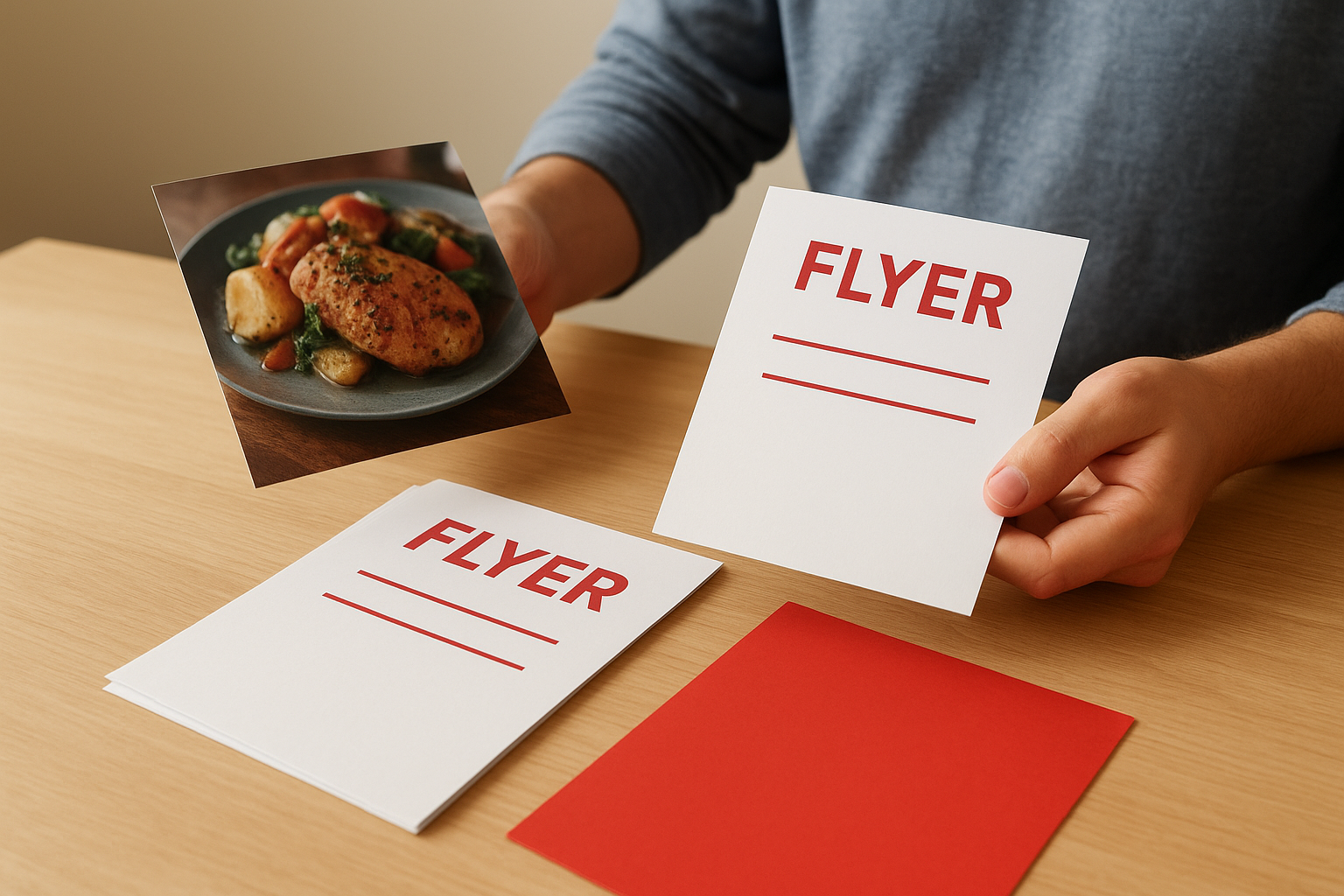
Photograph-heavy designs need glossy or silk-coated papers that reproduce colour accurately and make images pop off the page. Real estate listings, restaurant menus with food photography, and automotive promotions all benefit from coated stocks that enhance visual appeal. The coating creates a barrier that prevents ink from absorbing into paper fibres, resulting in sharper images and more saturated colours.
Text-dominant flyers with charts, maps, or detailed information work better on matte or uncoated stocks that reduce eye strain and eliminate distracting reflections. Community newsletters, event schedules, and informational handouts prioritize readability over visual flash, making matte finishes the practical choice. You can also write notes on uncoated paper, which makes it perfect for forms or flyers where you want recipients to add their contact details.
Understanding paper weights for flyers
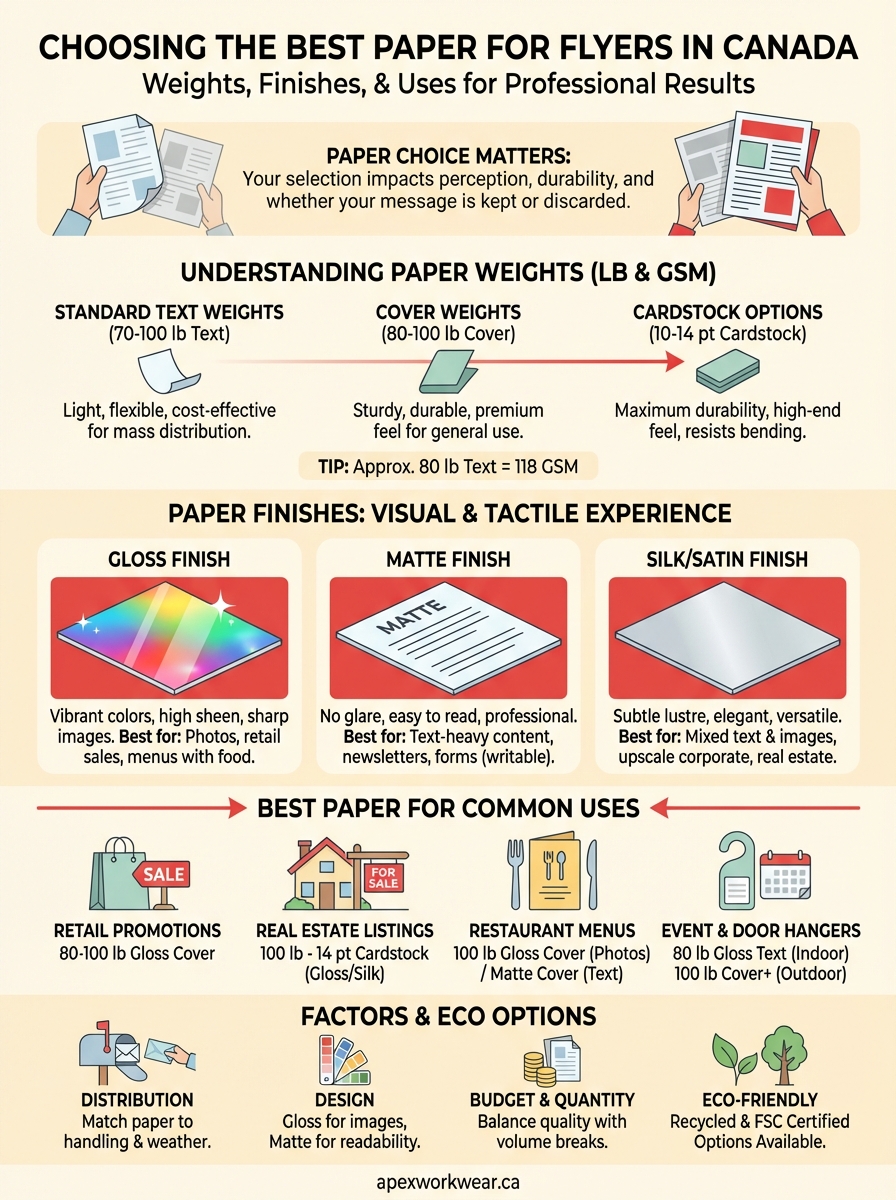
Paper weight determines how thick and substantial your flyers feel, measured in either pounds (lb) or grams per square metre (GSM). Canadian printers typically use the pound system, where higher numbers mean heavier, thicker paper. Understanding these measurements helps you select stock that matches your distribution needs and budget, because a 14 pt cardstock flyer feels completely different in someone’s hand than an 80 lb text sheet.
Common flyer paper weights in Canada
Standard text weights (70 lb to 100 lb text) suit most general-purpose flyers where you need decent quality without excessive cost. You’ll find 80 lb gloss text paper commonly used for retail promotions, event announcements, and restaurant takeaway menus because it offers enough durability for typical handling. These lighter weights work perfectly when you print large quantities for wide distribution where paper cost per unit significantly impacts your total budget.
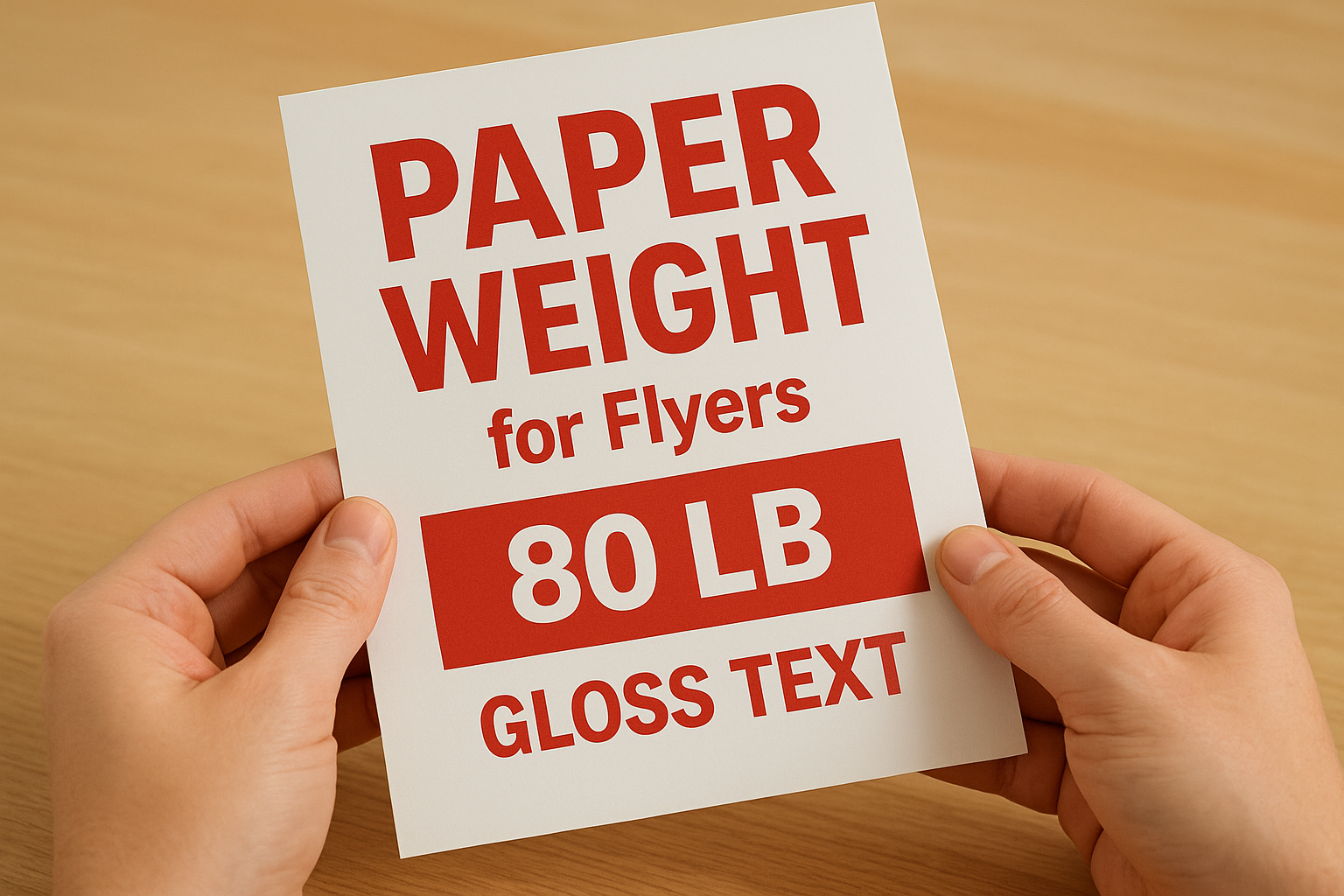
Cover weights (80 lb to 100 lb cover) provide noticeably more thickness and stiffness than text weights, making your flyers feel more premium. Many businesses choose 100 lb gloss cover as the best paper for flyers that need to convey quality while remaining cost-effective. Cover weight stock resists tearing better than text weights, which matters when your flyers face rough handling during door-to-door delivery or outdoor events.
Cardstock options (10 pt to 14 pt) deliver maximum durability and a premium tactile experience that immediately signals quality. Real estate agents, luxury service providers, and businesses promoting high-value offers often select cardstock because the substantial feel reinforces their brand positioning. This thickness prevents the flyers from bending easily, though it increases both material costs and postage if you’re mailing them.
Heavier paper doesn’t always mean better results if your design and distribution method don’t require that level of durability.
GSM vs. lb measurements explained
The pound system measures the weight of 500 sheets (a ream) of paper cut to a specific standard size, which is why you’ll see different numbers for "text" and "cover" weights that feel similar. An 80 lb cover stock actually weighs more than 80 lb text stock because the standard sheet sizes differ between these two categories. This confusing system persists in North America despite its logical inconsistencies.
GSM (grams per square metre) provides a more straightforward measurement where higher numbers always indicate heavier paper, regardless of paper type. European and Asian printers primarily use GSM, though Canadian printers increasingly list both measurements to help customers compare options. Converting between systems requires charts or calculators, but understanding that approximately 80 lb text equals 118 GSM helps you translate specifications.
Choosing the right weight for your needs
Your distribution method should drive your paper weight decision more than any other single factor. Hand-to-hand distribution at trade shows or retail counters allows you to use lighter 80 lb text paper because controlled conditions protect the flyers. Door hangers and outdoor promotional materials demand minimum 100 lb cover or cardstock to survive weather exposure and rough handling.
Budget constraints often force you to balance quality against quantity, where spending less per flyer lets you reach more potential customers. Calculate your total cost per recipient rather than fixating on paper price alone, because a slightly heavier stock might improve response rates enough to justify the additional expense. Testing different weights with small print runs helps you identify the optimal balance for your specific situation without committing to large quantities of potentially ineffective paper.
Paper finishes and textures for flyers
Paper finish refers to the surface coating applied during manufacturing that determines how light reflects off your flyers and how colours reproduce. The three main finishes (gloss, matte, and silk/satin) create dramatically different visual experiences with the same design, so your choice affects everything from image vibrancy to readability under bright lights. A glossy finish makes your photos pop with saturated colours, while matte reduces glare for text-heavy content.
Gloss finish characteristics
Gloss coating creates a shiny, reflective surface that intensifies colours and makes photographs appear more vibrant and eye-catching. This finish works brilliantly for image-driven flyers like restaurant menus with food photography, automotive promotions featuring vehicle shots, or retail advertisements where product imagery needs maximum visual impact. The coating acts as a barrier that keeps ink sitting on the paper surface rather than absorbing into fibres, resulting in sharper details and richer colour saturation.
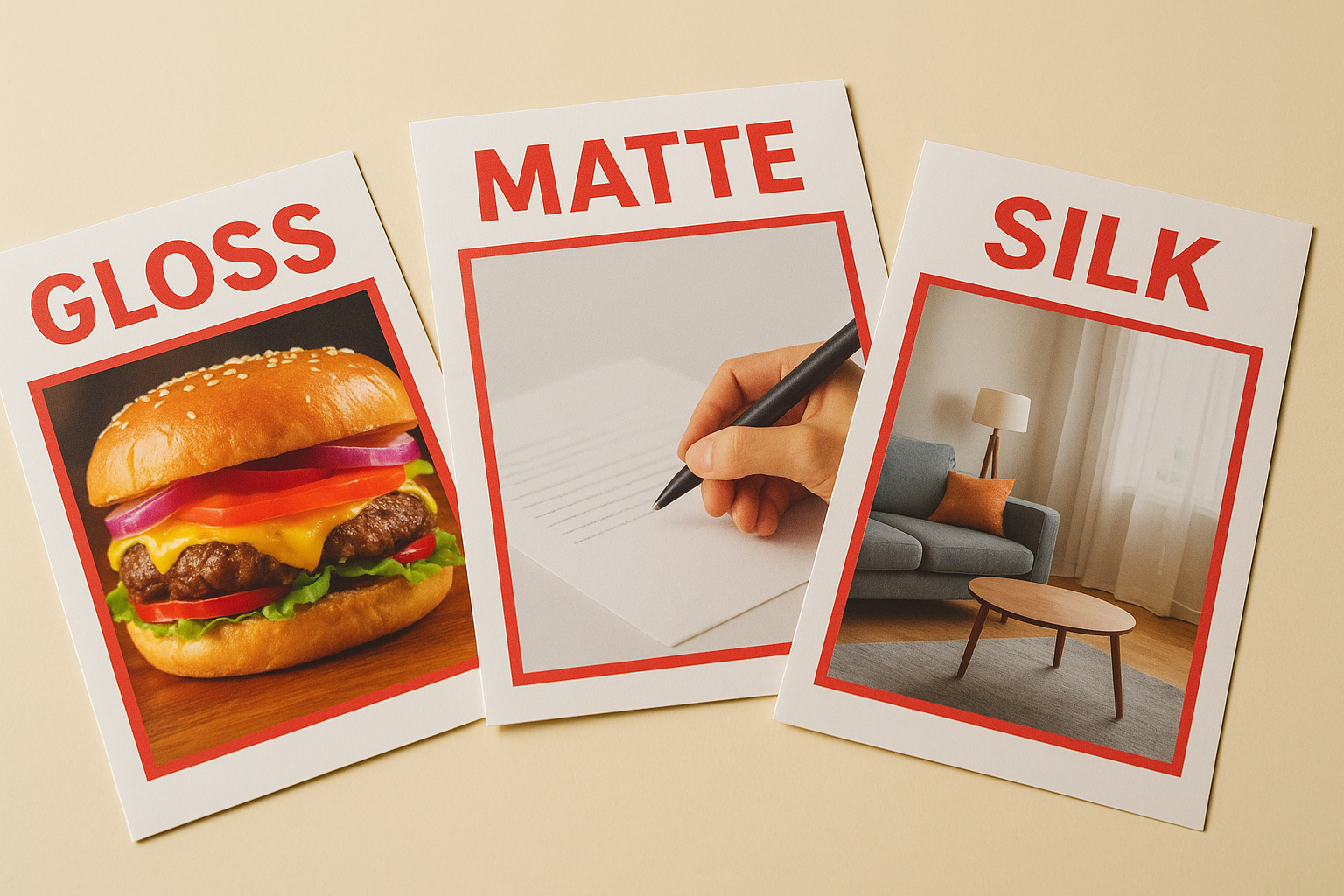
You’ll find gloss finish ideal when you want to create excitement and grab attention quickly, particularly in competitive environments where multiple flyers vie for notice. Real estate agents often choose glossy stock for property listings because the finish makes interior and exterior photos look more appealing. The main drawback involves glare under direct lighting, which can make text harder to read if someone views your flyer near windows or under bright overhead lights.
Matte finish advantages
Matte finish eliminates surface reflection with a flat, non-glossy coating that prioritizes readability and sophistication over visual flash. Text-heavy flyers benefit enormously from matte stock because readers can view the content from any angle without distracting reflections obscuring words. Community newsletters, informational handouts, educational materials, and event schedules all perform better on matte paper where the message matters more than visual excitement.
This finish gives your flyers a more professional, understated appearance that suits corporate communications, non-profit organizations, and situations where you want to project reliability rather than excitement. You can also write on most matte papers with pens or pencils, making this finish practical for forms, registration sheets, or flyers where recipients might add their contact information directly.
Matte finishes reduce eye strain and work better in bright environments where gloss would create problematic reflections.
Silk and satin middle ground
Silk and satin finishes split the difference between gloss and matte, offering a subtle sheen that enhances colours without the intense reflection of full gloss. This compromise often becomes the best paper for flyers that combine significant text content with important imagery, giving you improved colour reproduction while maintaining decent readability. The gentle lustre adds a touch of elegance and quality without the aggressive shine that some audiences find off-putting.
Many Canadian print shops consider silk their premium option for corporate clients, professional services, and upscale retail because the finish suggests quality without looking flashy. Silk-coated stock handles fingerprints better than matte, resists smudging more effectively than gloss, and delivers the most versatile performance across different lighting conditions and viewing angles.
Best paper for common flyer uses
Different flyer applications demand specific paper characteristics based on how recipients will interact with your marketing materials. Your industry, distribution method, and design elements all influence which paper stock delivers the best results for your specific needs. A retail promotion distributed in shopping bags requires different specifications than a door hanger facing outdoor weather conditions or a restaurant menu handed directly to diners.
Retail promotions and sales flyers
Retail sales flyers perform best on 80 lb to 100 lb gloss cover stock because this combination balances vibrant colour reproduction with reasonable cost per unit. You need paper that makes product photos and sale prices pop visually while staying affordable enough for mass distribution across multiple locations or through direct mail campaigns. Gloss finish intensifies reds and yellows used for discount messaging, creating the visual urgency that drives foot traffic during promotional periods.
Consider 100 lb gloss cover as the best paper for flyers promoting seasonal sales, grand openings, or special events where you want maximum visual impact. This weight provides enough substance to survive shopping bags and pockets without tearing, while the glossy surface makes your offers stand out in mailboxes filled with competing advertisements. Fashion retailers, electronics stores, and home improvement centres commonly select this specification for weekly or monthly promotional pieces.
Real estate listings and property flyers
Property marketing materials demand 100 lb to 14 pt cardstock with gloss or silk finish because potential buyers equate paper quality with property value. You cannot effectively market luxury homes or premium properties using flimsy paper that contradicts your pricing message. Glossy stock works brilliantly for exterior and interior photography, making spaces appear more appealing and professional in ways that matte finishes cannot match.
Agents typically choose 14 pt cardstock for high-end listings (above $500,000) and 100 lb gloss cover for standard properties, creating physical differentiation that matches market positioning. The substantial feel of cardstock reinforces the investment significance of property purchases, while silk finish offers a sophisticated alternative that reduces glare when viewing photos under bright showroom or open house lighting conditions.
Restaurant menus and takeaway flyers
Food service marketing splits between 100 lb gloss cover for photo-heavy menus and 100 lb matte cover for text-based takeaway flyers with pricing lists. Glossy paper makes food photography irresistible by enhancing colour saturation and creating the visual appeal that drives ordering decisions. Full-service restaurants, cafes with specialty beverages, and bakeries benefit enormously from gloss finish that makes their menu items look as delicious as possible.
Pizza shops, sub shops, and delivery-focused restaurants often prefer 100 lb cover with UV coating because this combination survives frequent handling by delivery drivers and customers while maintaining print quality through repeated exposure to kitchen heat and moisture. Matte or uncoated stocks work better for simple price-list menus where customers might write special instructions or phone numbers directly on the paper.
Choose heavier paper stocks for menus that customers handle repeatedly versus lighter weights for single-use promotional flyers.
Event announcements and door hangers
Event flyers distributed indoors work perfectly on 80 lb gloss text because controlled environments eliminate weather concerns and hand-to-hand transfer prevents rough handling damage. Concert promotions, community fundraisers, and trade show announcements printed on this economical weight let you maximize distribution volume while maintaining acceptable quality standards for temporary promotional materials.
Door hangers require minimum 100 lb cover or 10 pt cardstock because outdoor exposure and doorknob placement create physical stresses that destroy lighter paper. You need stock thick enough to survive wind, rain, and the mechanical action of recipients removing the hanger from doorknobs without tearing. Many Canadian neighbourhoods experience rapid weather changes that demand water-resistant coatings or synthetic stocks for door-to-door marketing campaigns targeting residential areas.
Eco friendly flyer stocks in Canada
Canadian businesses increasingly demand environmentally responsible printing options that reduce environmental impact without sacrificing print quality. Recycled paper stocks, FSC-certified materials, and alternative fibre options let you market your business while demonstrating commitment to sustainability that resonates with environmentally conscious consumers. Many print shops now stock eco-friendly alternatives at comparable prices to conventional paper, eliminating the cost penalty that previously discouraged green printing choices.
Recycled paper options
Recycled paper stocks contain post-consumer waste content ranging from 30% to 100%, with higher percentages indicating more recycled material in the manufacturing process. You’ll find 100 lb recycled cover stock works well as the best paper for flyers when you want both environmental credentials and adequate durability for most distribution methods. These papers deliver acceptable print quality for text and graphics, though they may not reproduce photographic images with the same vibrancy as virgin fibre stocks.
Most Canadian printers offer recycled options in both coated and uncoated finishes, giving you flexibility to match your design requirements with sustainability goals. Uncoated recycled stock suits community organisations, non-profits, and businesses targeting environmentally aware demographics who appreciate the natural appearance and tactile texture. The slight variation in colour and texture actually enhances authenticity for brands wanting to signal genuine environmental commitment rather than greenwashing.
FSC certified stocks
Forest Stewardship Council certification guarantees your paper comes from responsibly managed forests that maintain biodiversity and support local communities. FSC-certified paper doesn’t necessarily contain recycled content, but the certification ensures sustainable harvesting practices that replace trees and protect ecosystems. You can obtain both virgin fibre and recycled papers with FSC certification, giving you the widest range of weights and finishes while maintaining environmental responsibility.
Canadian print shops increasingly stock FSC-certified gloss and matte options in standard weights from 80 lb text through 14 pt cardstock, making sustainable choices available across all flyer applications. This certification matters particularly for government contracts, corporate clients with sustainability mandates, and businesses serving environmentally conscious markets where green credentials influence purchasing decisions.
FSC certification provides verifiable environmental standards that consumers recognise and trust more than vague sustainability claims.
Budget, quantities and Canadian print sizes
Your printing budget depends heavily on order quantity, paper weight, and finish selection, with prices dropping significantly as volume increases. Canadian print shops typically offer tiered pricing where ordering 500 flyers costs substantially less per unit than printing 100, though you reach diminishing returns beyond certain thresholds. You also need to consider Canadian standard sizes that differ from US dimensions, affecting both paper efficiency and postal costs when mailing your flyers through Canada Post.
How quantities affect your paper costs
Print pricing operates on volume breaks where per-unit costs decrease as quantities increase, typically with major price drops at 250, 500, 1,000, and 5,000 units. Ordering 1,000 flyers might cost only 30% more than 500 flyers, making the larger quantity far more economical if you can distribute them effectively. Setup costs (plate making, colour calibration) stay fixed regardless of quantity, so spreading these expenses across more units reduces your cost per flyer dramatically.
Heavier paper stocks and premium finishes add 10% to 40% to base printing costs, though bulk orders offset some of this premium. You might pay 15 cents per flyer for 100 pieces on 14 pt cardstock, but drop to 8 cents per unit when ordering 1,000 pieces on the same stock. Calculate your total campaign budget including distribution costs rather than focusing solely on printing expenses, because cheaper paper that gets discarded wastes money regardless of the low per-unit price.
Order quantities that match your realistic distribution capacity within three months to avoid storing outdated promotional materials.
Standard Canadian flyer sizes
Canadian printers work primarily with metric measurements and letter-size standards rather than US dimensions, affecting both paper efficiency and Canada Post mailing rates. The most common flyer size measures 8.5" x 11" (standard letter), with 8.5" x 14" (legal size) and 5.5" x 8.5" (half letter) as popular alternatives that optimize paper usage. You’ll find these dimensions work efficiently on Canadian printing presses and fit standard envelopes without custom sizing.
Odd or custom sizes increase costs because they create paper waste during cutting and require special setup time that smaller print shops charge back to you. Sticking with standard dimensions keeps your project as the best paper for flyers becomes more affordable when you select conventional sizes. Canada Post also bases mailing rates partly on dimensions, where oversized pieces trigger higher postage costs that quickly add up across large campaigns targeting residential addresses or business locations.
Next steps for your flyer project
You now understand how paper weight, finish, and texture affect your flyer’s performance and how recipients perceive your business. The best paper for flyers depends on your specific distribution method, design requirements, and budget constraints rather than following a universal recommendation. Testing different stocks with small print runs helps you identify what works best for your audience before committing to large quantities that might underperform.
Start by defining your distribution plan and matching paper specifications to those physical demands. Choose gloss for image-heavy designs, matte for text-focused content, or silk when you need versatility across different lighting conditions. Calculate total campaign costs including distribution rather than fixating on paper price alone, because slightly better stock often delivers significantly better response rates. Get a free quote on your flyer printing project within 24 hours and receive expert guidance on paper selection that matches your specific needs and budget.