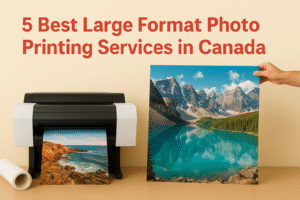
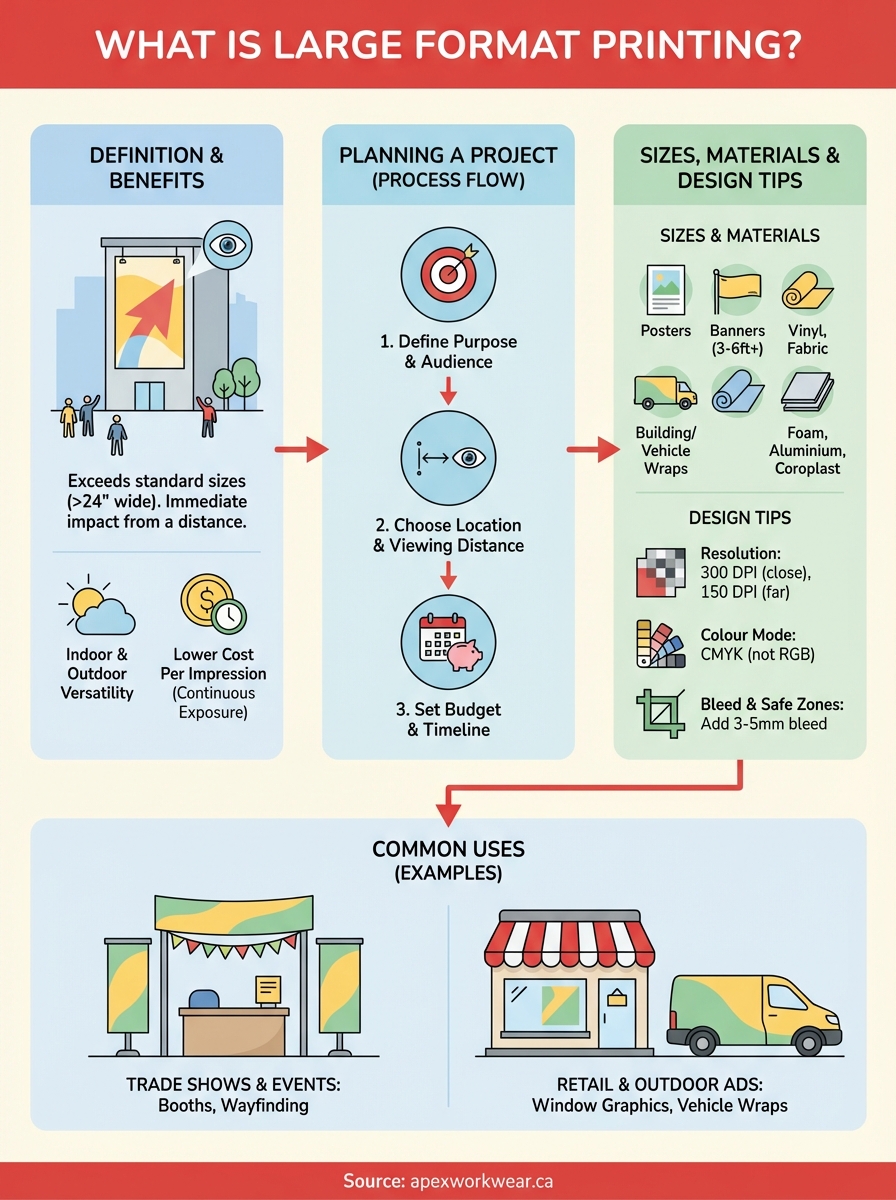
Large format printing produces printed materials that exceed standard office printer sizes. Think banners, posters, trade show displays, building signs, and vehicle wraps. These prints start at 24 inches wide and can stretch to several metres, making them perfect for grabbing attention from a distance. You can print on vinyl, fabric, foam board, metal, and dozens of other materials depending on where you need to display your message.
This guide walks you through everything you need to know about large format printing. You’ll learn why businesses choose it, how to plan a project from start to finish, what sizes and materials work best for different applications, and practical tips for preparing your design files. We’ll also show you real examples of how companies use large format printing to promote their brand, direct customers, and stand out at events. By the end, you’ll know exactly how to move forward with your own project.
Why large format printing matters
Large format printing delivers immediate visual impact that standard printing simply cannot match. Your message appears at a scale that commands attention in busy environments, whether that’s a trade show floor, a retail storefront, or a busy motorway. You reach customers who are metres or even tens of metres away, making it perfect for outdoor advertising, event promotion, and wayfinding.
Versatility across environments
You can deploy large format prints indoors or outdoors depending on your material choice. Weather-resistant vinyl survives rain and sun for months, while fabric banners work beautifully for temporary indoor displays. This flexibility means you use the same printing method for multiple marketing needs, from a weekend event to a permanent building sign.
Large format printing adapts to your specific environment and timeline, not the other way round.
Cost per impression
Your cost per viewing drops dramatically with large format printing compared to smaller materials. A single banner reaches hundreds or thousands of people daily, while business cards reach one person at a time. You invest once in the print and installation, then benefit from continuous exposure without ongoing costs.
How to plan a large format print project
Planning your large format project starts with clear objectives and practical constraints. You need to know exactly what you want to achieve, where the print will live, and who will see it before you choose materials or start designing. This upfront thinking prevents costly reprints and ensures your finished product works in its intended space.
Define your purpose and audience
Start by identifying why you need this print and who needs to see it. You might want to drive foot traffic to a shop, direct visitors at an event, or create brand awareness along a motorway. Each purpose shapes your design choices, from the size of your text to the complexity of your graphics. Understanding what is large format printing helps you match the scale to your communication goals.
Your target audience also determines your approach. A banner aimed at passing motorists needs simpler messaging than a trade show display where people stop and read. Consider viewing time and distance when planning your content density.
Choose your location and viewing distance
The physical environment dictates nearly every technical decision. Indoor prints in climate-controlled spaces allow for more material options, while outdoor installations need weather-resistant substrates and UV-stable inks. You also consider mounting surfaces, whether that’s a wall, a frame, or a freestanding structure.
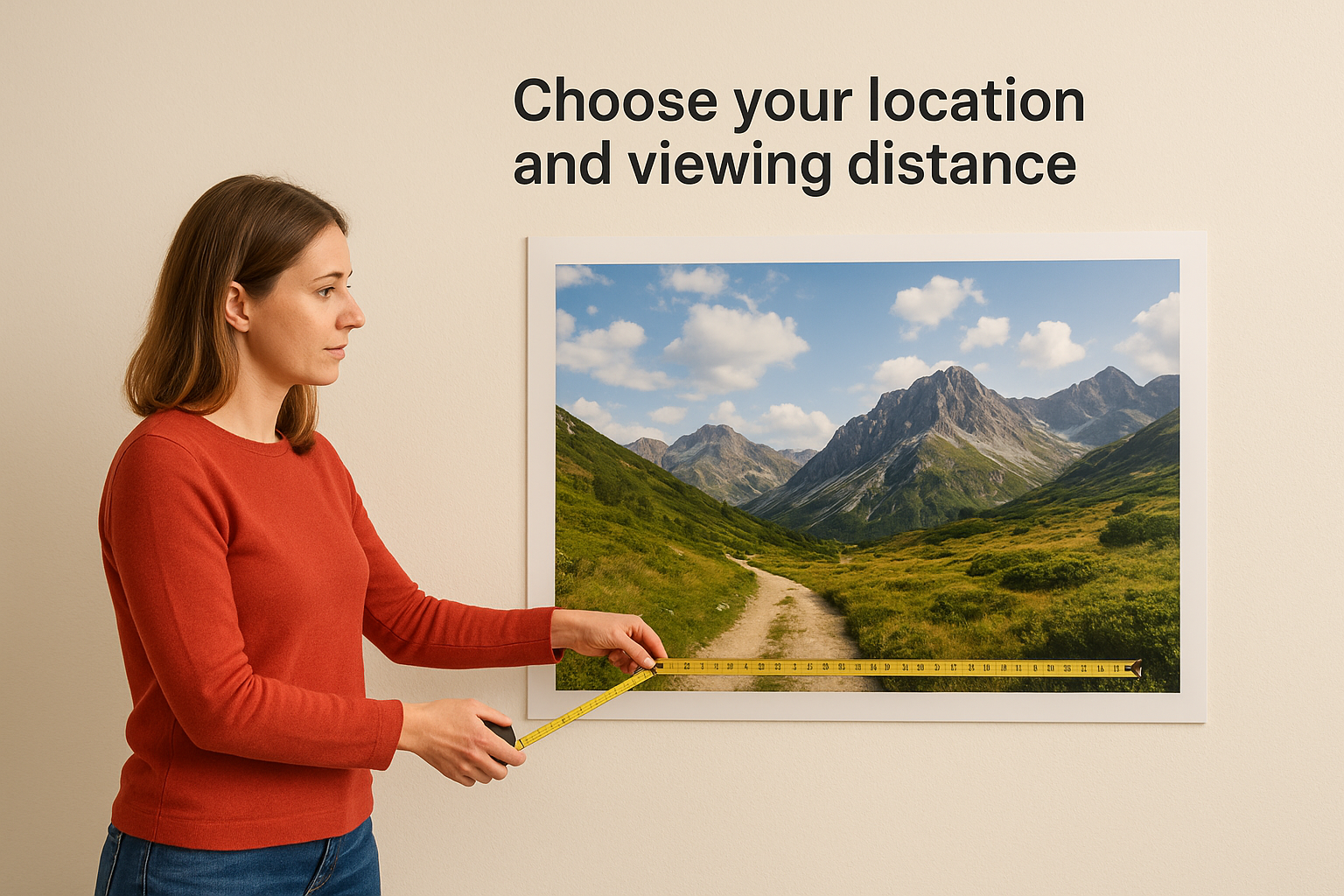
Viewing distance directly impacts your design scale. A poster viewed from two metres away needs smaller text than a building sign viewed from across a car park. Measure the typical distance between your print and your audience, then use that measurement to determine minimum text sizes and image detail levels.
Your viewing distance determines your minimum text size, not your personal preference.
Set your budget and timeline
Establish your total budget including design, printing, shipping, and installation costs. Large format printing scales in price based on size, material, and quantity, so knowing your ceiling helps you make informed trade-offs. Rush orders cost more, while standard turnaround times (typically five to seven business days) offer better value.
Your installation deadline should account for production time, shipping, and any approval steps. Build in a buffer for revisions or unexpected delays, especially if your print coordinates with an event or launch date.
Common sizes, materials and finishes
Your choice of size, material, and finish directly affects how long your print lasts and how it looks in its intended environment. Large format printing accommodates nearly any dimension you need, from small posters to building-sized wraps, and each size category pairs with specific materials designed for that application. Understanding what is large format printing means knowing these options exist on a spectrum from temporary indoor displays to permanent outdoor installations.
Standard size ranges
Most large format projects fall into recognisable categories based on their purpose. Posters typically measure 24 by 36 inches or 36 by 48 inches, while banners often come in 3-foot, 4-foot, or 6-foot widths and stretch to custom lengths. Trade show displays range from tabletop sizes at 24 inches wide to full booth backdrops spanning 10 feet or more. Building signs and vehicle wraps require precise measurements taken on site since no two installations match exactly.
Printers measure capability by maximum width rather than length, since most large format machines print continuously on rolls. Standard equipment handles up to 60 inches wide, while specialised printers accommodate 100 inches or more for truly massive projects.
Substrate options
Vinyl dominates outdoor applications because it withstands weather and UV exposure for years. You find it on banners, window graphics, vehicle wraps, and building signs. Indoor prints often use lighter materials like fabric, which reduces weight and costs while maintaining vibrant colours for shorter-term displays.
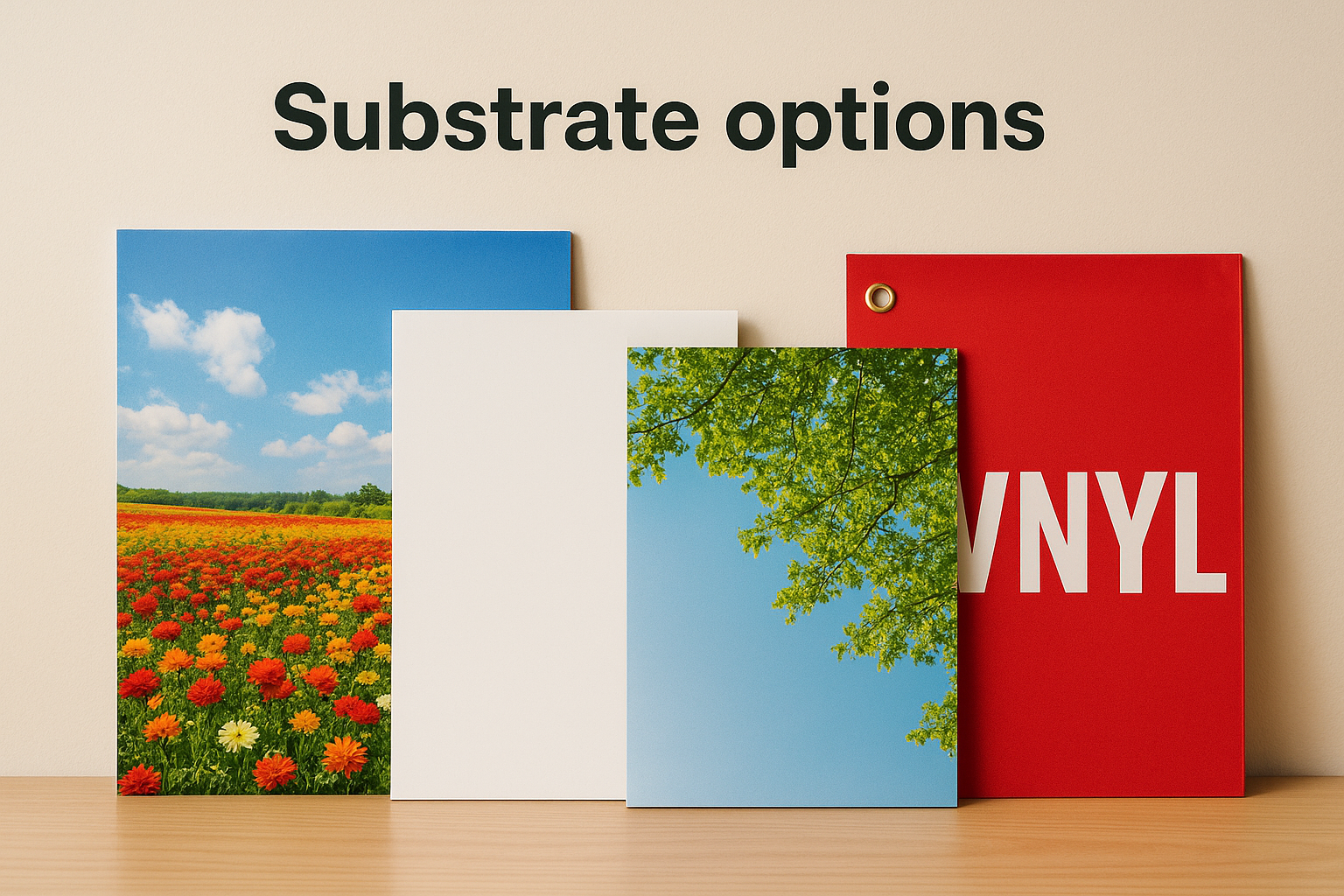
Rigid substrates include foam board for lightweight mounting, aluminium for durable outdoor signs, and coroplast for affordable yard signs. Each material brings different properties: foam board cuts and mounts easily but dents under pressure, while metal survives physical impacts but weighs significantly more.
Your substrate choice determines both your print’s lifespan and its total project cost.
Finishing choices
Lamination adds a protective layer that extends print life and enhances colours. Gloss finishes create vibrant, reflective surfaces perfect for retail environments, while matte finishes reduce glare in brightly lit spaces. You can also choose textured laminates that add tactile interest to indoor displays.
Mounting options range from adhesive backing for wall application to grommets for hanging banners. Some prints require rigid mounting to boards, while others stay rolled until installation.
Practical design and file setup tips
Your design files need specific technical settings to print correctly at large scale. What works for standard office printing fails dramatically when you scale up to metres-wide banners, where even small mistakes become glaringly obvious. You avoid expensive reprints by setting up your files properly from the start rather than hoping your printer can fix issues later.
Resolution and file formats
You need 300 DPI (dots per inch) at actual size for prints viewed up close, like posters or retail displays. Larger prints viewed from several metres away work well at 150 DPI or even 100 DPI because viewers cannot perceive individual pixels from that distance. Calculate your required resolution based on viewing distance rather than applying one standard to every project.
Vector files in PDF, EPS, or AI formats scale infinitely without quality loss, making them ideal for logos and text-heavy designs. Raster images in TIFF or high-quality JPG formats work for photographs but require careful resolution management.
Colour management
Design in CMYK colour mode rather than RGB, since printers use cyan, magenta, yellow, and black inks. RGB colours often look different when converted to CMYK during printing, with vibrant blues and greens shifting noticeably. You prevent surprises by working in CMYK from the beginning and requesting a digital proof before final production.
Your screen cannot accurately show how CMYK inks will appear on your chosen substrate.
Bleed and safe zones
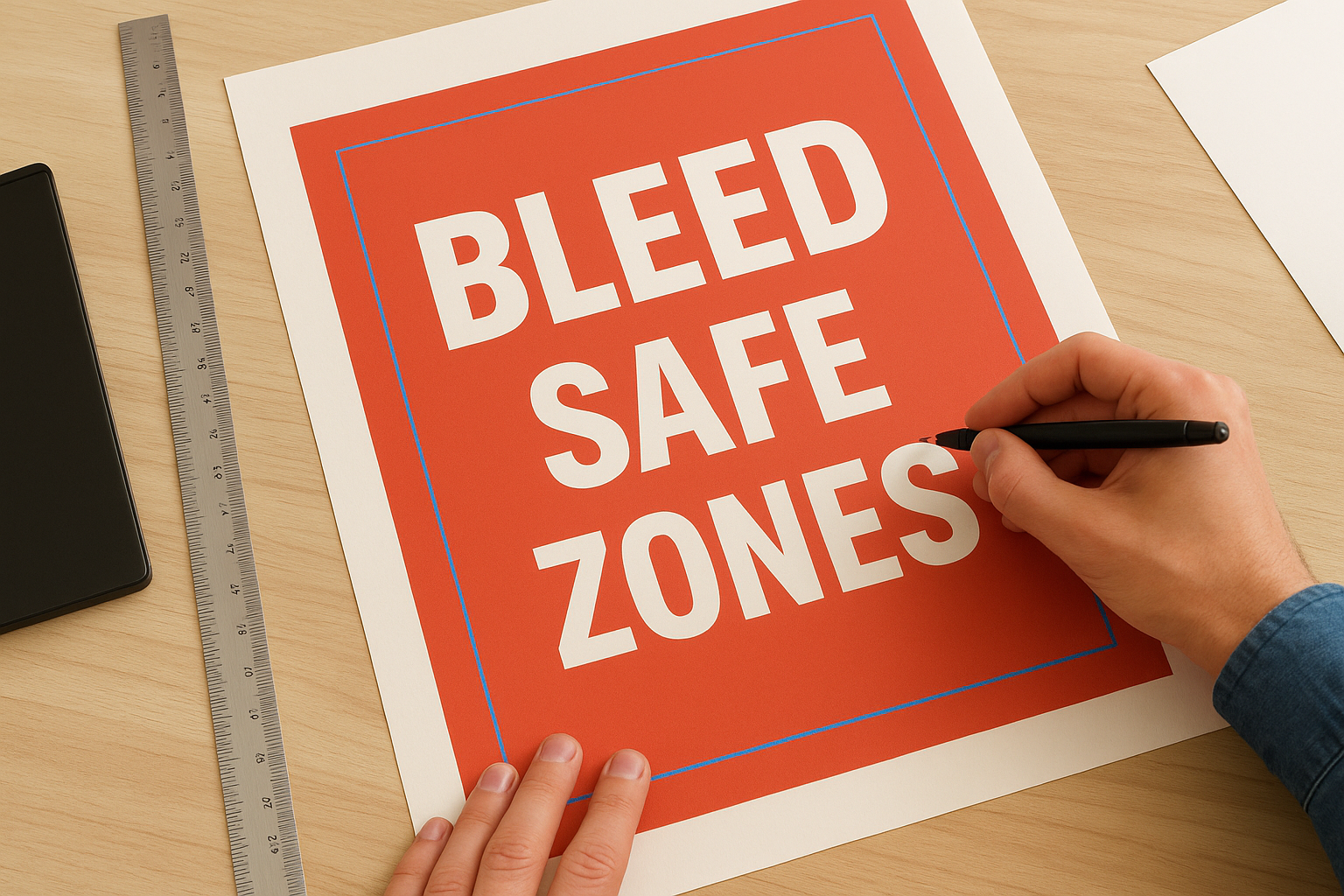
Add 3mm to 5mm of bleed beyond your trim line on all edges. Bleed ensures no white gaps appear if cutting shifts slightly during finishing. Keep all important text and graphics at least 10mm inside the trim line in your safe zone, where they will definitely survive trimming and handling.
Examples of large format printing uses
You see large format printing in commercial environments every day, even if you have not consciously noticed it. Businesses rely on these oversized prints to communicate quickly with customers who are moving, distracted, or far away. Understanding what is large format printing means recognising its presence across multiple industries and applications.
Trade shows and events
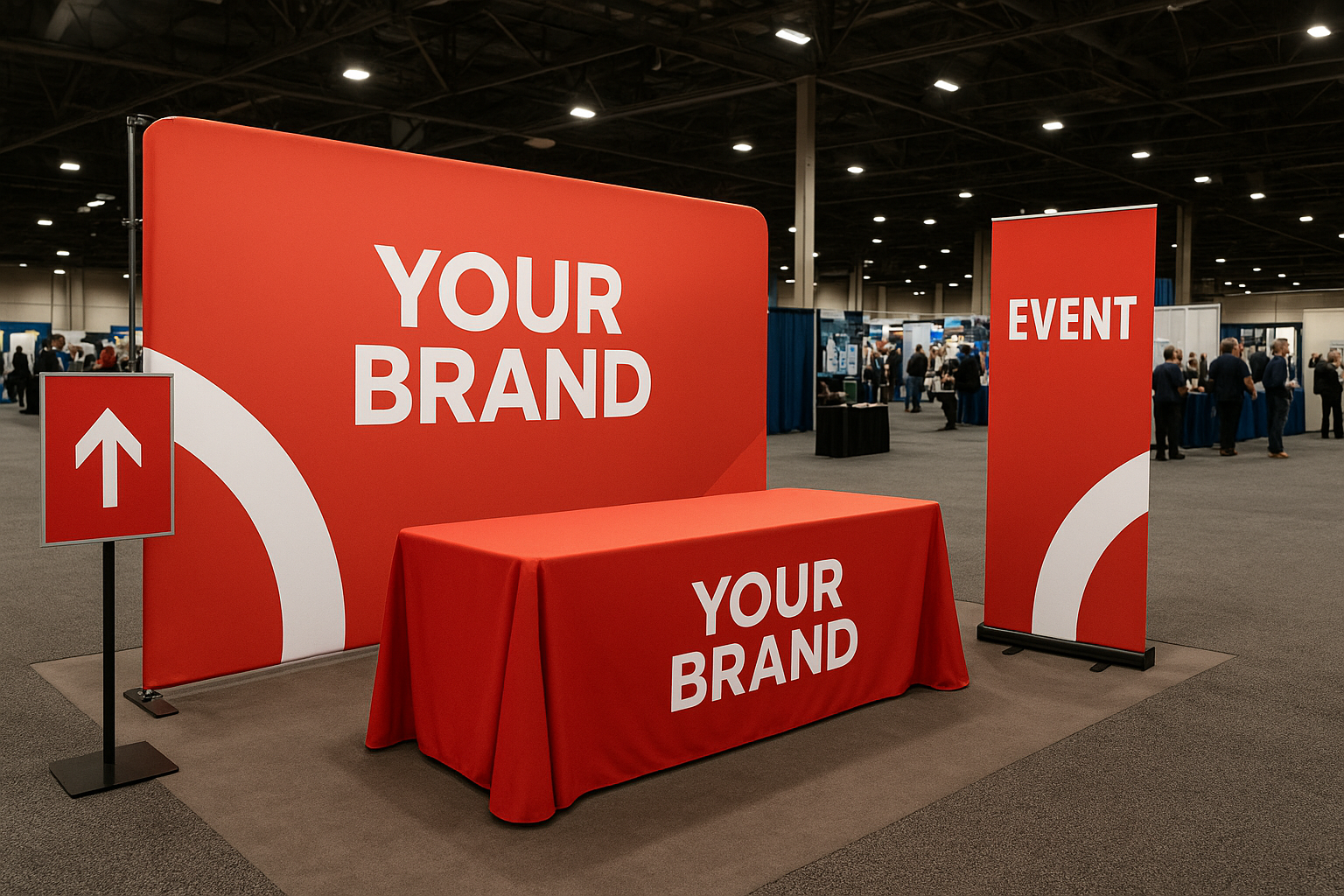
Your exhibition booth stands out with custom-printed backdrops, banner stands, and table covers that display your brand at full scale. Event organisers use large format printing for wayfinding signs, sponsor boards, and photo backdrops that guide attendees and create branded experiences. These temporary installations need quick setup and takedown, making fabric and lightweight materials popular choices.
Retail and outdoor advertising
Storefront windows transform into marketing surfaces with vinyl graphics that announce sales, showcase products, or reinforce brand identity. You find large format printing on building wraps, motorway billboards, bus shelters, and vehicle graphics that reach thousands of daily viewers. Permanent outdoor installations require durable substrates like aluminium or weather-resistant vinyl with UV-stable inks that maintain colour for years.
Large format printing works wherever you need your message seen by many people quickly.
Next steps
You now understand what is large format printing and how to plan your own project from initial concept through to installation. Your next move is to gather your requirements (size, material, viewing distance, timeline) and consult with a printing partner who can guide you through the technical details specific to your application.
Ready to bring your large format project to life? Get a free quote from Apex Workwear and receive expert guidance on materials, sizing, and design within 24 hours.