Your inbox is crowded. Your social media feed moves too fast. Your ads get blocked or scrolled past. If you’re running a small business, getting your message noticed feels harder than ever. You need marketing that cuts through the noise without draining your budget. Something people actually hold, read, and remember.
Postcards deliver that impact. They’re affordable, tangible, and highly effective when done right. This guide walks you through 8 proven postcard marketing ideas designed specifically for small businesses. You’ll learn how to welcome new customers, bring back old ones, drive online traffic, and build loyalty using simple direct mail tactics. Each idea includes practical steps you can start using today, plus design tips and ways to measure results. Whether you’re new to postcard marketing or looking to improve your current approach, these strategies will help you connect with customers and grow your business.
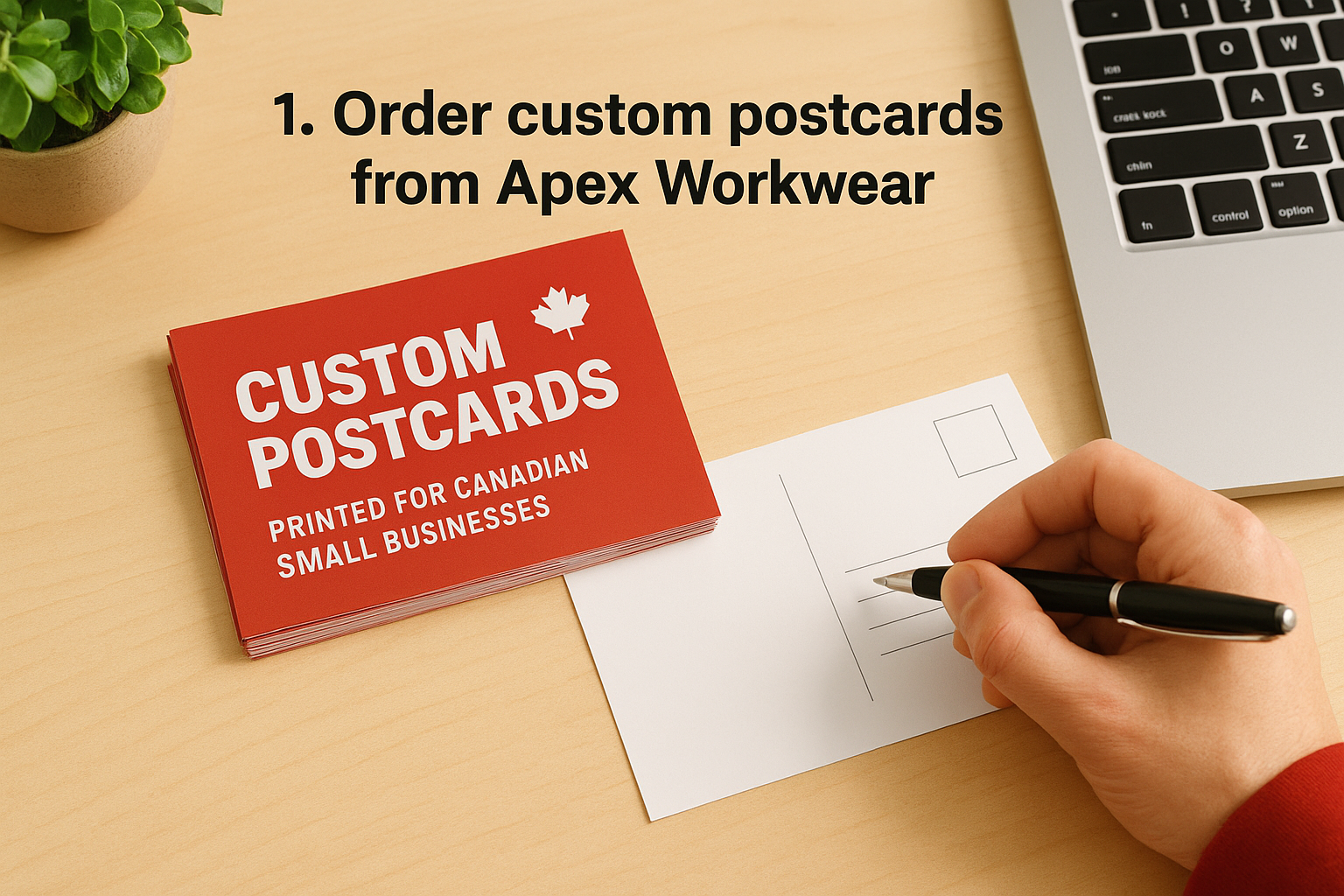
1. Order custom postcards from Apex Workwear
Starting your postcard marketing for small business begins with finding a reliable printing partner. Apex Workwear offers custom postcards designed specifically for Canadian small businesses, with no minimum order requirements on select products. You get professional-quality printing without committing to massive quantities you might not need. Their Canada-based production means faster turnaround times and support from a team that understands local business challenges. Free shipping in the Greater Toronto Area adds even more value for regional businesses.
Why this idea works
Working with a dedicated print partner eliminates the guesswork from postcard campaigns. You receive expert design guidance before your postcards go to print, catching potential issues that could waste your budget. Their team reviews your artwork and offers basic design edits at no extra cost, ensuring your message looks professional. Digital proofs arrive before printing starts, giving you complete control over the final product. This combination of quality control and local service means your postcards reflect well on your brand from the first impression.
Most orders ship within 5-7 business days, with rush options available when you need them faster.
How to put it into action
Visit the Apex Workwear website and request a free quote for your postcard project. Provide your design files or describe what you need if you’re starting from scratch. Their team responds within 24 hours with pricing and recommendations tailored to your specific goals. Choose your postcard size, paper stock, and quantity based on your budget and campaign scope. Bulk pricing discounts kick in automatically for larger orders, making it cost-effective to scale your campaigns as you grow.
Design and printing tips
Keep your message focused on one clear action you want recipients to take. Use high-contrast colours and readable fonts that work well at postcard size. Leave enough white space so your design doesn’t feel cramped or overwhelming. Place your strongest visual element on the address side since that’s what people see first in their mailbox. Request a digital proof and review it on your phone screen to simulate how recipients will view it quickly.
How to track results
Add a unique promo code or phone number to each postcard campaign so you can measure responses directly. Include a QR code that links to a specific landing page designed just for this campaign. Track these URLs separately in your analytics to see exactly how many postcard recipients visit your site. Calculate your return by dividing total revenue from the campaign by your printing and postage costs. This simple math tells you whether your postcard investment paid off and guides your next campaign decisions.
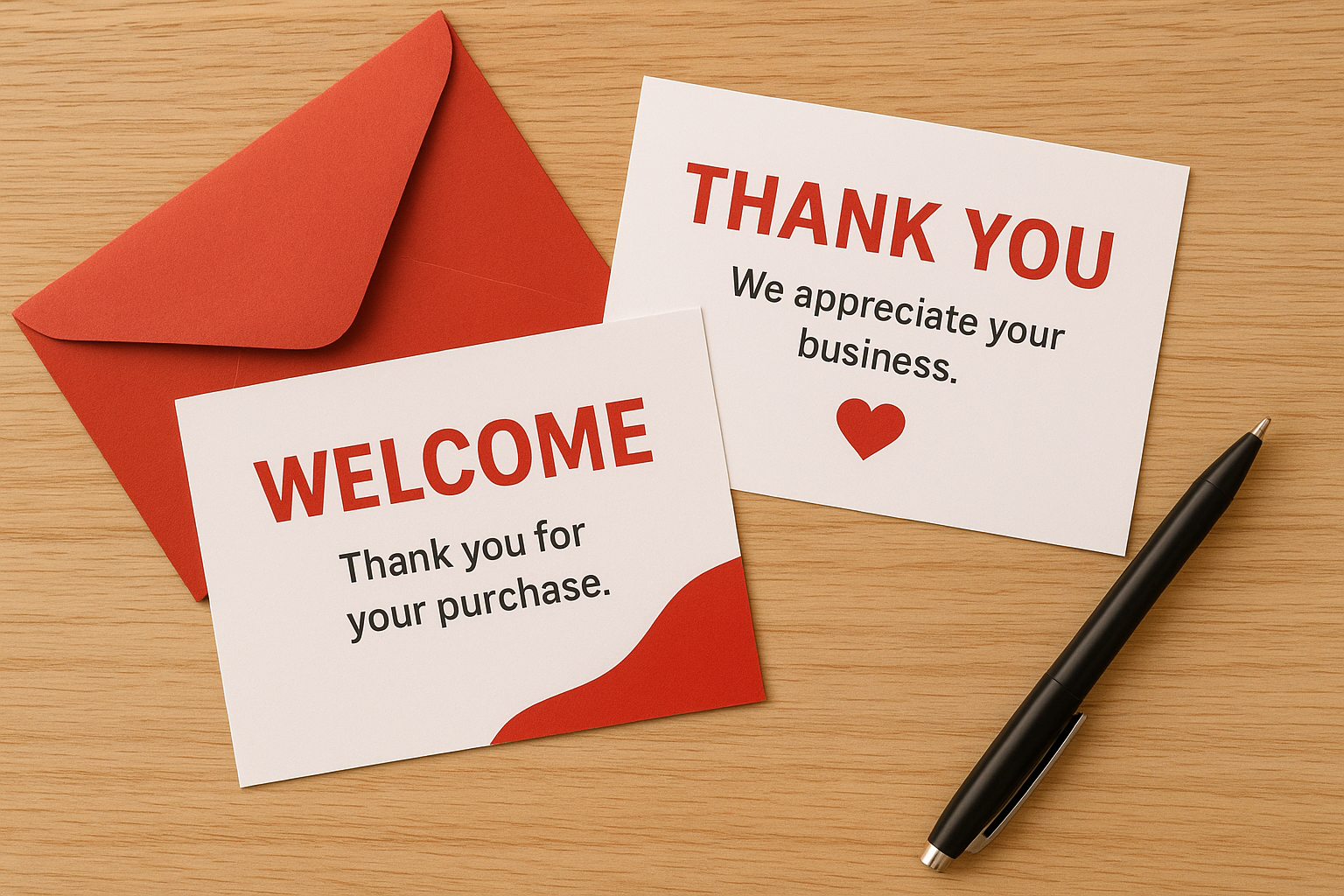
2. Use postcards to welcome and thank customers
Building strong customer relationships starts the moment someone chooses your business. Welcome postcards create an immediate personal connection that emails often miss, while thank-you cards show appreciation in a way that encourages repeat business. This postcard marketing for small business approach turns one-time buyers into loyal customers who remember how you made them feel. Your competitors likely send automated emails that get deleted within seconds, but a physical postcard sits on a desk or fridge for days or weeks.
Why this idea works
People remember brands that acknowledge them personally. A welcome postcard after a first purchase makes new customers feel valued, not just processed through a transaction system. Thank-you cards sent after significant purchases or milestones demonstrate that you notice and appreciate their business. These small gestures build emotional connections that digital communications struggle to match.
Physical mail generates stronger emotional responses than digital messages, making customers more likely to return.
How to put it into action
Create two postcard templates: one for welcoming new customers within a week of their first purchase, and another for thanking repeat customers after major orders. Add the customer’s name through variable printing for true personalisation. Include a special discount code they can use on their next purchase, giving them a concrete reason to return. Send these postcards within 3-5 days of the triggering event while your business stays fresh in their mind.
Design and printing tips
Keep your welcome message warm and genuine without sounding like marketing copy. Use your brand colours and logo prominently so customers instantly recognise who sent the card. Feature a photo of your team or storefront to reinforce the human element behind your business. Leave space for a handwritten signature or personal note when quantities allow, adding authenticity that fully printed cards lack.
How to track results
Include unique discount codes on each type of postcard so you can measure redemption rates separately. Track repeat purchase rates for customers who received postcards versus those who didn’t. Monitor your customer lifetime value for both groups over six months to quantify the long-term impact. Calculate whether the postcard investment increases retention enough to justify the printing and postage costs.
3. Send appointment and service reminders
Missed appointments cost your business money and disrupt your schedule. Reminder postcards reduce no-shows while keeping your brand visible between customer interactions. Service-based businesses like salons, pet groomers, mechanics, and dental practices benefit most from this postcard marketing for small business strategy. Clients appreciate the tangible reminder they can stick on their fridge or desk, making it harder to forget than a buried email or text message.
Why this idea works
Physical reminders create accountability that digital messages often lack. Your postcard sits in plain view where customers see it multiple times before their appointment date. Service reminders also prompt customers to book their next maintenance appointment, oil change, or haircut before they forget. This proactive approach keeps your schedule full and your revenue steady throughout the year.
Reminder postcards can reduce no-show rates by up to 30%, protecting your business from lost revenue.
How to put it into action
Design a postcard template with space to write appointment details by hand or through variable printing. Send reminders 7-10 days before scheduled appointments to give customers enough notice without being too early. Include your cancellation policy and an easy way to reschedule if needed. For service reminders, mail postcards three months after their last visit suggesting it’s time to book again.
Design and printing tips
Feature your business name and logo prominently so customers recognise the sender immediately. Use a simple layout that highlights the appointment date, time, and location in large, readable text. Add a small map or directions if your location is difficult to find. Keep colours professional and avoid cluttering the design with unnecessary graphics.
How to track results
Compare your no-show rates before and after implementing postcard reminders to measure effectiveness. Track how many customers book follow-up appointments after receiving service reminders. Monitor the revenue generated from reminder-prompted bookings versus your postcard costs. Calculate whether reduced no-shows and increased rebookings justify continuing this campaign.
4. Promote seasonal offers and events
Holidays, local events, and seasonal changes create perfect opportunities for targeted postcard campaigns. Your audience expects special offers during these times, making them more receptive to marketing messages. Seasonal postcards tap into existing shopping momentum when customers actively look for deals and services relevant to that time of year. This postcard marketing for small business strategy drives immediate action while your competitors rely on easily ignored emails and social posts.

Why this idea works
Seasonal campaigns benefit from built-in urgency and relevance. Customers already plan purchases around holidays, back-to-school periods, or seasonal needs like winter preparation or spring cleaning. Your postcard arrives precisely when they consider these purchases, positioning your business as the solution. Events like grand openings, anniversary sales, or community gatherings gain attendance and buzz when promoted through direct mail that people can share with neighbours and friends.
Postcard campaigns timed to seasonal buying patterns generate response rates up to 4.4%, far exceeding typical email marketing results.
How to put it into action
Plan your postcard calendar around key dates relevant to your business, mailing cards 2-3 weeks before each event or season. Create urgency with specific deadlines like "Offer expires December 24" or "Register by March 15." Highlight the seasonal benefit customers gain, such as preparing their home before winter or refreshing their wardrobe for summer. Include clear instructions on how to claim the offer or attend your event.
Design and printing tips
Use seasonal imagery and colours that immediately signal the occasion without overwhelming your brand identity. Feature your strongest offer prominently in the largest text on the card. Add scarcity elements like "Limited quantities" or "First 50 customers only" to motivate quick action. Keep designs festive but professional, avoiding generic clip art that looks cheap.
How to track results
Create unique promotion codes specific to each seasonal campaign so you can measure which holidays or events generate the best returns. Compare sales during campaign periods to the same timeframe in previous years. Track event attendance by asking how participants heard about it. Calculate your cost per new customer acquired through each seasonal campaign to identify which ones deserve repeating.
5. Win back lapsed customers with offers
Customers who stopped buying from you represent untapped revenue sitting in your database. Reactivation postcards target people who already know your brand and made purchases before, making them easier to convert than cold prospects. This postcard marketing for small business tactic costs less than acquiring new customers while rebuilding relationships that faded due to life changes, competition, or simple forgetfulness. A well-timed offer reminds former customers why they chose you originally and gives them a reason to return.
Why this idea works
Former customers respond better to direct mail than strangers because they already trust your business. Your postcard triggers positive memories of past experiences while addressing why they might have drifted away. A compelling incentive overcomes inertia and motivates them to give your business another chance. Research shows reactivating lapsed customers delivers higher returns than new customer acquisition campaigns.
Winning back a former customer costs five times less than acquiring a new one, making reactivation campaigns highly profitable.
How to put it into action
Identify customers who haven’t purchased in 6-12 months but were active before that period. Create a special "we miss you" offer like 20% off their next purchase or a free service upgrade. Personalise each postcard with their name and reference when they last visited if your system tracks that data. Mail these cards in waves, testing different offers to see which generates the strongest response.
Design and printing tips
Lead with your headline expressing that you miss their business, making the message personal rather than purely promotional. Feature your best offer prominently with clear terms and expiration dates. Include photos that remind them of positive experiences they had with your products or services. Avoid guilt-inducing language and focus instead on welcoming them back.
How to track results
Assign unique codes to reactivation postcards so you can measure redemption rates separately from other campaigns. Calculate reactivation rate by dividing returning customers by total postcards sent. Monitor how many reactivated customers make repeat purchases within 90 days, indicating successful relationship rebuilding. Compare lifetime value of reactivated customers to acquisition costs for new ones.
6. Drive online traffic with QR code postcards
Bridging offline and online marketing creates powerful opportunities for small businesses. QR code postcards connect your physical mail to digital destinations like landing pages, online stores, or booking systems. Recipients scan the code with their phone and land exactly where you want them in seconds, eliminating typing errors and friction that stops conversions. This postcard marketing for small business approach tracks digital engagement from physical mail, giving you precise data on campaign performance.

Why this idea works
Modern consumers expect seamless transitions between channels. QR codes remove barriers between seeing your offer and taking action online, dramatically increasing response rates. Postcards with QR codes generate measurable web traffic you can track separately from other sources, proving your direct mail ROI. Customers appreciate the convenience of instant access to more information, product catalogues, or exclusive online deals without searching for your website.
QR code usage increased by 96% in recent years, making this technology familiar and trusted by most consumers.
How to put it into action
Generate a unique QR code for each campaign using free tools built into most design software or online generators. Link your QR code to a dedicated landing page created specifically for this postcard campaign, not your generic homepage. Test the code thoroughly on multiple phone types before printing to ensure it scans reliably. Place the QR code prominently with clear instructions like "Scan for your exclusive offer" so recipients know exactly what action to take.
Design and printing tips
Position your QR code in the bottom corner where it won’t interfere with your main message or imagery. Ensure adequate white space surrounds the code so phone cameras can focus and scan it properly. Keep the code large enough that it remains scannable, typically at least 2.5 cm square. Add a text URL beneath the QR code for recipients who prefer typing or encounter scanning issues.
How to track results
Use URL shorteners with tracking capabilities to monitor scan rates and subsequent actions visitors take on your landing page. Set up conversion tracking in your analytics platform to measure purchases, bookings, or leads generated from QR code traffic. Compare scan-to-conversion rates across different postcard designs to optimise future campaigns. Calculate cost per lead or sale by dividing your total campaign costs by conversions attributed to QR code scans.
7. Target local neighbourhoods by mail
Geographic targeting makes postcard marketing for small business incredibly effective when you serve specific areas. Neighbourhood mail campaigns reach every household within walking distance of your location, introducing your business to potential customers who live nearby. Local targeting costs less than broad campaigns because you mail fewer cards while reaching the people most likely to visit your physical location. Restaurants, gyms, retail shops, and service businesses gain immediate visibility in their community without competing against national brands’ massive advertising budgets.
Why this idea works
People prefer supporting local businesses when they know those businesses exist. Your postcard introduces your brand to neighbours who drive past your location daily without noticing it. Geographic proximity eliminates objections like "too far away" or "I don’t know where that is" that online advertising faces. Local campaigns build community connections that drive foot traffic and word-of-mouth referrals within your target area.
Locally targeted direct mail generates response rates 3-5 times higher than untargeted campaigns because relevance drives action.
How to put it into action
Identify postal codes or carrier routes within 3-5 kilometres of your business location. Purchase mailing lists targeting these specific areas through Canada Post’s Neighbourhood Mail service. Create an introductory offer compelling enough to motivate first visits, like 15% off or a free consultation. Mail your postcards to every address in your target zones, ensuring complete neighbourhood coverage.
Design and printing tips
Include a simple map showing your exact location relative to major intersections or landmarks. Feature your full address and phone number prominently so recipients can find you easily. Use local imagery or references that resonate with neighbourhood residents. Highlight what makes your business different from alternatives outside the area.
How to track results
Add neighbourhood-specific promotion codes so you can measure which areas respond strongest. Ask new customers how they heard about you and record responses systematically. Monitor foot traffic increases during and after your mail drop. Calculate return on investment by comparing revenue from new local customers against your printing and postage costs.
8. Create referral and loyalty postcards
Your existing customers already trust your business and deliver higher profit margins than new customer acquisition. Referral postcards transform satisfied customers into active promoters by giving them an easy way to share your business with friends and family. Loyalty cards reward repeat purchases through stamps, points, or visit tracking that keeps customers returning. This postcard marketing for small business strategy builds sustainable growth through relationships rather than expensive advertising campaigns.
Why this idea works
Referred customers convert faster and stay longer because they arrive with built-in trust from someone they know. Your postcard gives customers a physical tool to share rather than relying on them to remember your name when friends ask for recommendations. Loyalty programmes reduce price sensitivity by making customers focus on accumulating rewards instead of comparing your rates to competitors. Both tactics increase customer lifetime value while lowering acquisition costs.
Referred customers have a 37% higher retention rate and generate 16% more profit than customers acquired through other channels.
How to put it into action
Design referral postcards that customers can give to friends, featuring a special first-time offer for the recipient and a reward for the referrer. Create loyalty cards with spaces for stamps or hole punches that employees mark after each purchase or service. Print cards small enough to fit in wallets so customers carry them everywhere. Distribute referral cards at checkout and hand loyalty cards to customers during their first visit.
Design and printing tips
Make your referral offer compelling for both parties, like "Give $20, Get $20" that benefits the referrer and new customer equally. Use durable cardstock for loyalty cards that withstands wallet wear and repeated handling. Number each referral card uniquely so you can track which customers generate the most referrals. Keep layouts clean with clear instructions on how both programmes work.
How to track results
Record referral codes or card numbers when new customers redeem offers to identify your best advocates. Measure what percentage of customers complete their loyalty cards and return for their reward. Calculate the lifetime value of referred customers versus other acquisition channels. Track redemption rates and adjust reward structures if participation falls below expectations.
Bringing it all together
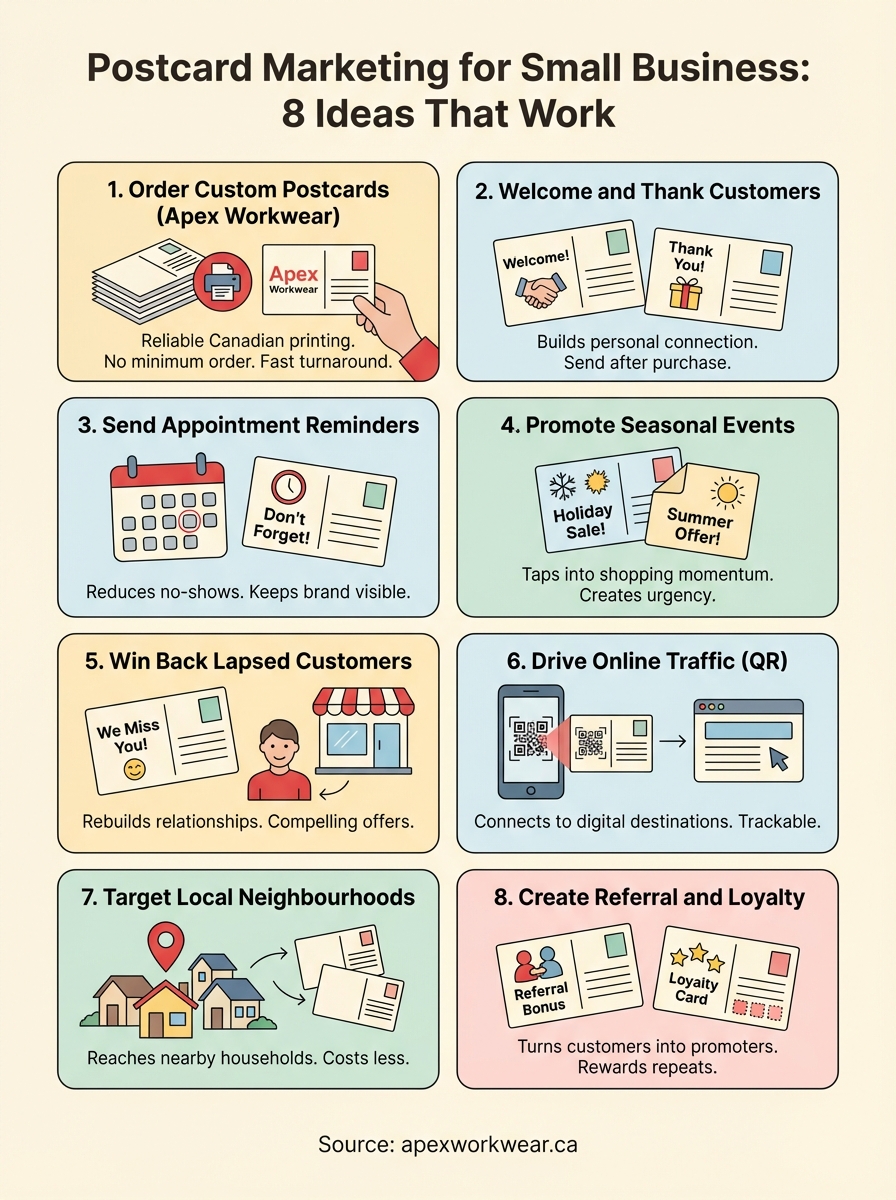
Postcard marketing for small business delivers results when you apply these eight proven strategies. You’ve learned how to welcome new customers, remind them of appointments, promote seasonal offers, reactivate lapsed buyers, drive online traffic, target local neighbourhoods, and build referral programmes. Each tactic works independently, but combining several creates a comprehensive direct mail strategy that keeps your business visible throughout the customer journey.
Success lies in consistent execution and tracking. Start with one or two campaigns that align with your immediate business goals, measure the results carefully, and expand from there. Your postcards need professional printing that reflects well on your brand, and Apex Workwear provides custom postcard printing with expert design support and fast Canadian production. No minimum orders mean you can test campaigns affordably before scaling up. Physical mail creates lasting impressions that drive real business growth while your competitors remain buried in digital clutter.