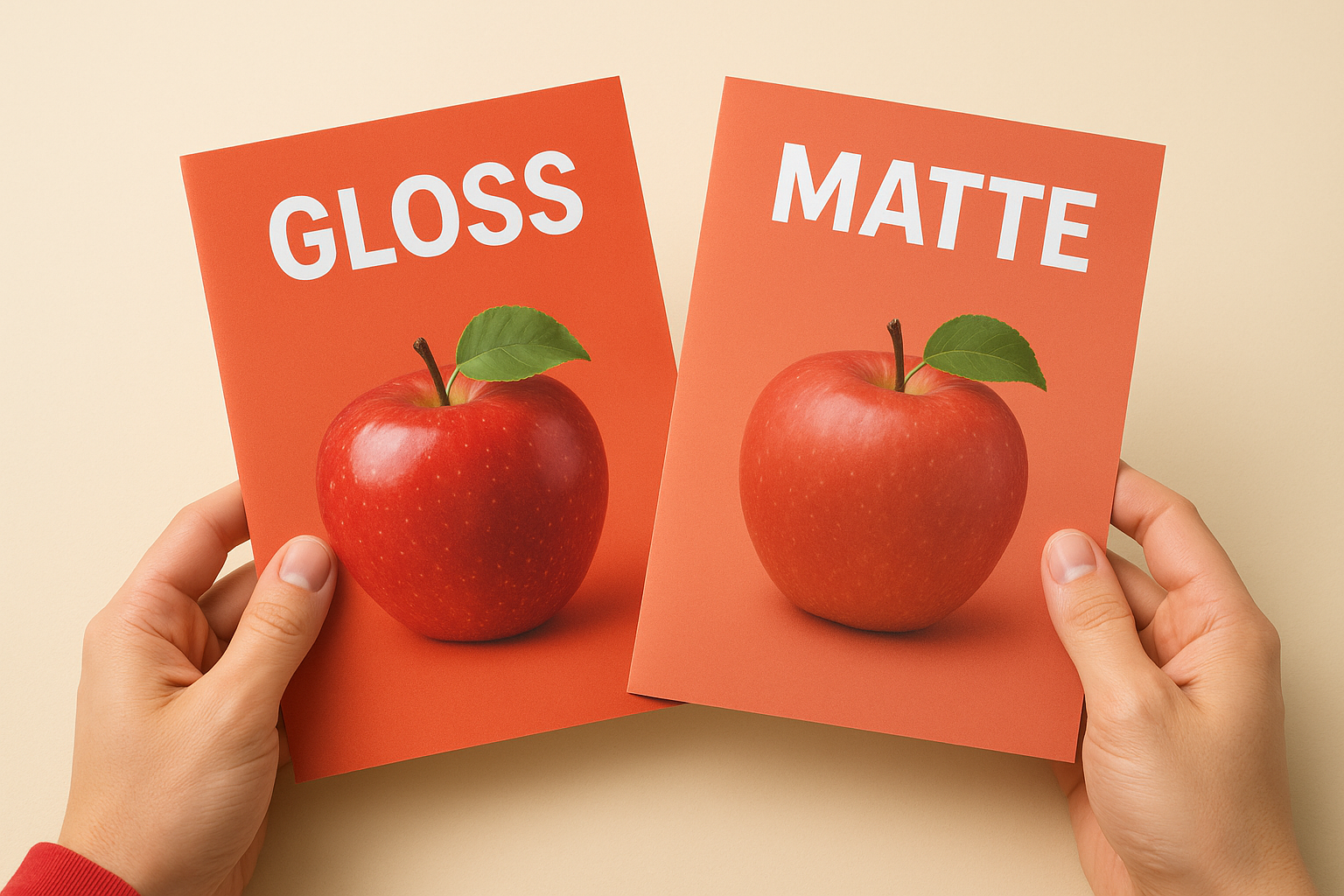
When you order brochures, one of the first decisions you’ll face is choosing between brochure paper options (gloss vs matte). These two finishes refer to the coating applied to the paper surface. Gloss has a shiny, reflective finish that makes colours pop and images look vibrant. Matte has a smooth, non-reflective surface that absorbs light rather than bouncing it back. The finish you choose affects how your brochure looks, feels, and performs in different environments.
This guide breaks down everything you need to know to make the right choice. You’ll learn how each finish impacts readability, durability, and overall appearance. We’ll compare the practical differences, show you when to use each option, and help you match the right paper to your specific needs. By the end, you’ll know exactly which finish works best for your brochures—whether you’re promoting a service, showcasing products, or building brand awareness through print materials.
Why brochure paper finish matters
The paper finish you select shapes how people interact with your brochure from the moment they pick it up. Your finish affects readability, durability, and the overall impression your piece makes. A gloss finish can make product photos look stunning under bright lights, but that same shine creates glare that makes text harder to read. Matte absorbs light instead of reflecting it, which means your content stays legible in any lighting condition. The tactile experience differs too. Gloss feels smooth and slick, while matte offers a softer, more natural texture that many people prefer to hold.
Impact on first impressions
Your brochure’s finish communicates quality before anyone reads a single word. Gloss projects energy and modern appeal, making it ideal when you want to grab attention quickly. Colours appear more saturated, images gain depth, and the overall effect feels bold. Matte conveys sophistication and professionalism, which works well for service-based businesses or industries where trust matters most. Financial advisors, law firms, and healthcare providers often choose matte because it feels more substantial and less sales-focused.
The finish you choose tells your audience what kind of business you run before they read your message.
Practical considerations for everyday use
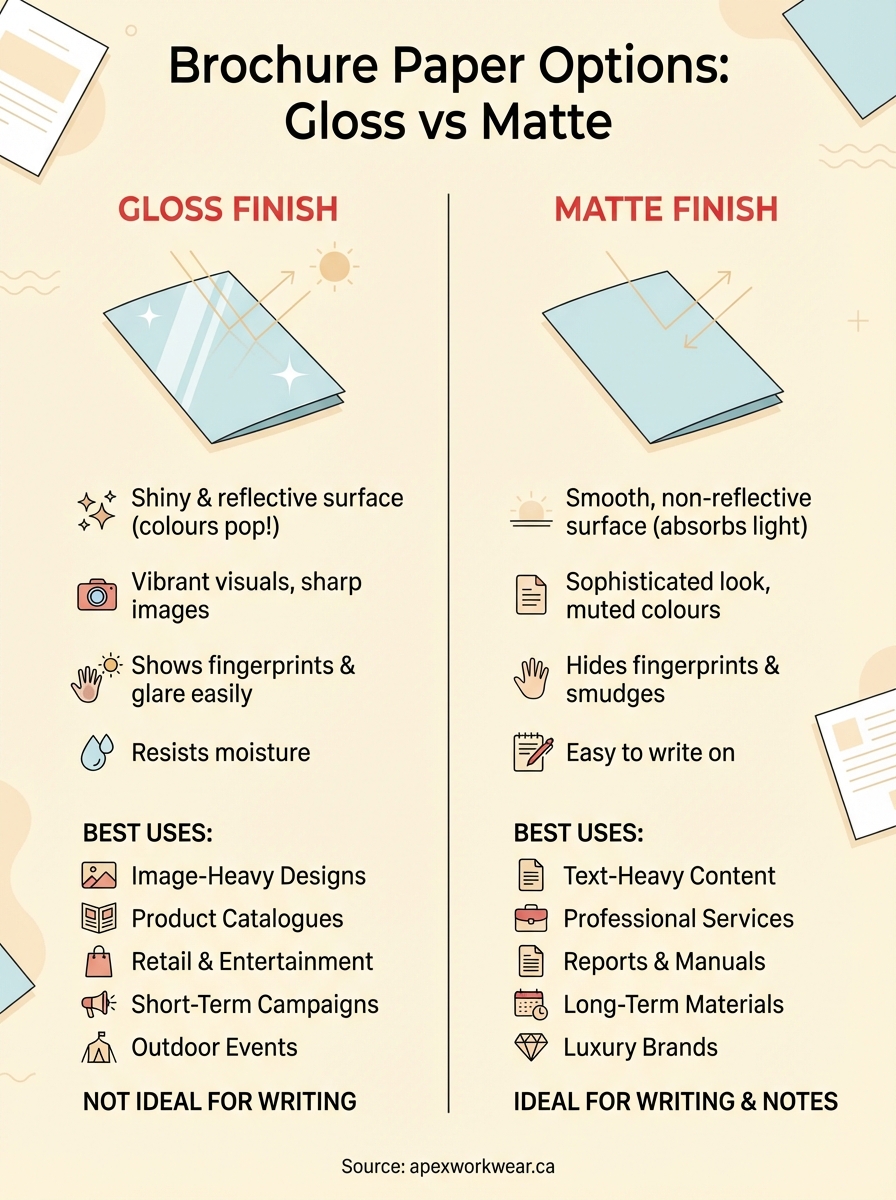
Think about how your brochures will be used in real situations. Fingerprints and smudges show up easily on gloss, which becomes a problem at trade shows or events where hundreds of people handle your materials. Matte resists these marks and stays cleaner longer. Writing on gloss paper proves difficult because most pens won’t dry properly on the slick surface. If you need people to add notes or fill in information, matte becomes the obvious choice. Durability matters too. Gloss offers better moisture resistance, while matte handles frequent handling without showing wear as quickly. Understanding these practical differences between brochure paper options (gloss vs matte) helps you avoid choosing a finish that looks great but doesn’t work for your specific situation.
How to choose between gloss and matte
Choosing between brochure paper options (gloss vs matte) starts with understanding your specific goals and how people will use your materials. Your content type, brand identity, and distribution method all play a role in determining which finish serves you best. Rather than picking based on personal preference alone, you need to match the paper characteristics to your practical requirements. The right finish makes your message clearer, your brand stronger, and your investment more effective.
Consider your content type
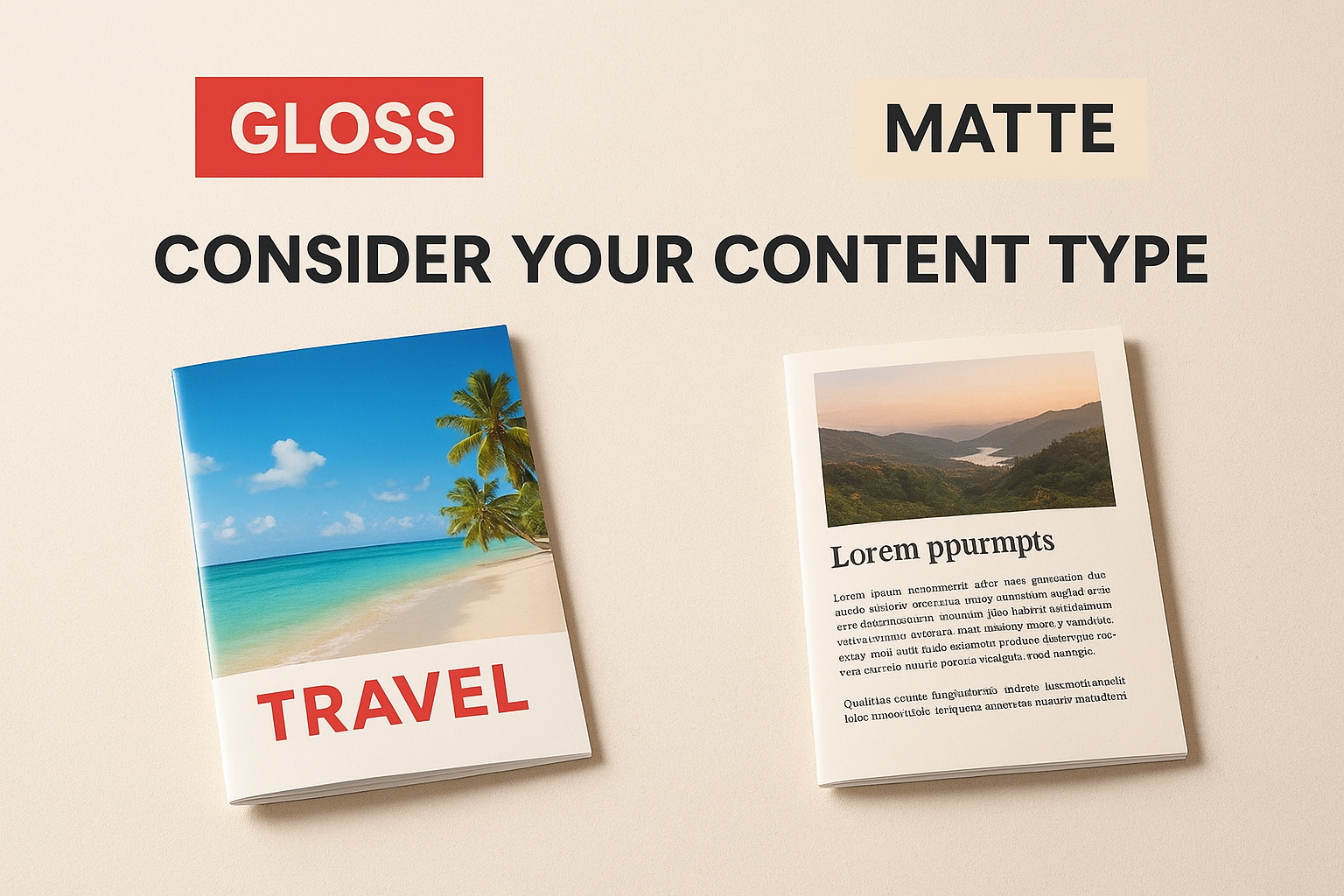
Your design determines which finish works better. Image-heavy brochures with photographs or graphics benefit from gloss because the shiny surface enhances colour saturation and makes visuals more striking. Product catalogues, real estate listings, and travel brochures often use gloss to showcase their offerings in the best possible light. Text-heavy designs work better with matte because the non-reflective surface eliminates glare and makes reading more comfortable. If your brochure contains detailed product specifications, service descriptions, or educational content, matte keeps your readers focused on the information rather than fighting with reflections.
Colour choices matter too. Bright, vibrant colour schemes pop on gloss paper, creating maximum visual impact for attention-grabbing designs. Subtle colour palettes, pastels, or designs with lots of white space look more refined on matte. The matte surface softens colours slightly, which creates a more sophisticated appearance that works well for upmarket brands or professional services.
Match finish to your brand identity
Your paper finish reinforces your brand personality. Gloss communicates energy, modernity, and accessibility, which makes it ideal for retail businesses, entertainment venues, and consumer-focused brands. The reflective surface suggests forward-thinking companies that embrace bold visual statements. Matte projects stability, expertise, and trustworthiness, qualities that matter most in professional services, healthcare, education, and finance. When you hand someone a matte brochure, you signal that substance matters more than flash.
The finish you select becomes part of your brand’s physical identity, so choose one that aligns with how you want customers to perceive your business.
Industry standards influence expectations too. Look at what established competitors in your sector use before making your choice. Breaking from convention can differentiate your brand, but it might also confuse potential customers who expect certain finishes in specific industries. High-end restaurants typically choose matte for their menus and promotional materials. Tech startups often prefer gloss to convey innovation and energy.
Think about distribution and handling
Where and how you distribute your brochures affects which finish lasts longer. Gloss handles moisture better, making it the right choice for outdoor events, trade shows in humid climates, or anywhere your materials might encounter spills or rain. The coating provides a protective barrier that matte lacks. Matte resists fingerprints and smudges, which becomes important when hundreds of people handle your brochures at busy events. If your materials sit on display racks or get passed from person to person, matte maintains a cleaner appearance throughout the day.
Storage and longevity matter too. Gloss shows scratches and scuffs more easily, though the colours resist fading better over time. Matte develops a gentle patina with age that many people find appealing, but colours may fade slightly faster than on gloss. Consider your timeline. Short-term campaigns that need maximum impact benefit from gloss. Long-term materials that need to look professional after months of use often perform better with matte.
Key differences between gloss and matte
Understanding the specific characteristics that separate these two finishes helps you make a confident decision. The differences between brochure paper options (gloss vs matte) extend beyond surface shine to affect everything from how colours appear to how long your materials last. Each finish offers distinct advantages that suit different situations. You’ll notice these differences the moment you hold each type of paper, but the practical impacts go much deeper than initial impressions suggest.
Surface characteristics and appearance
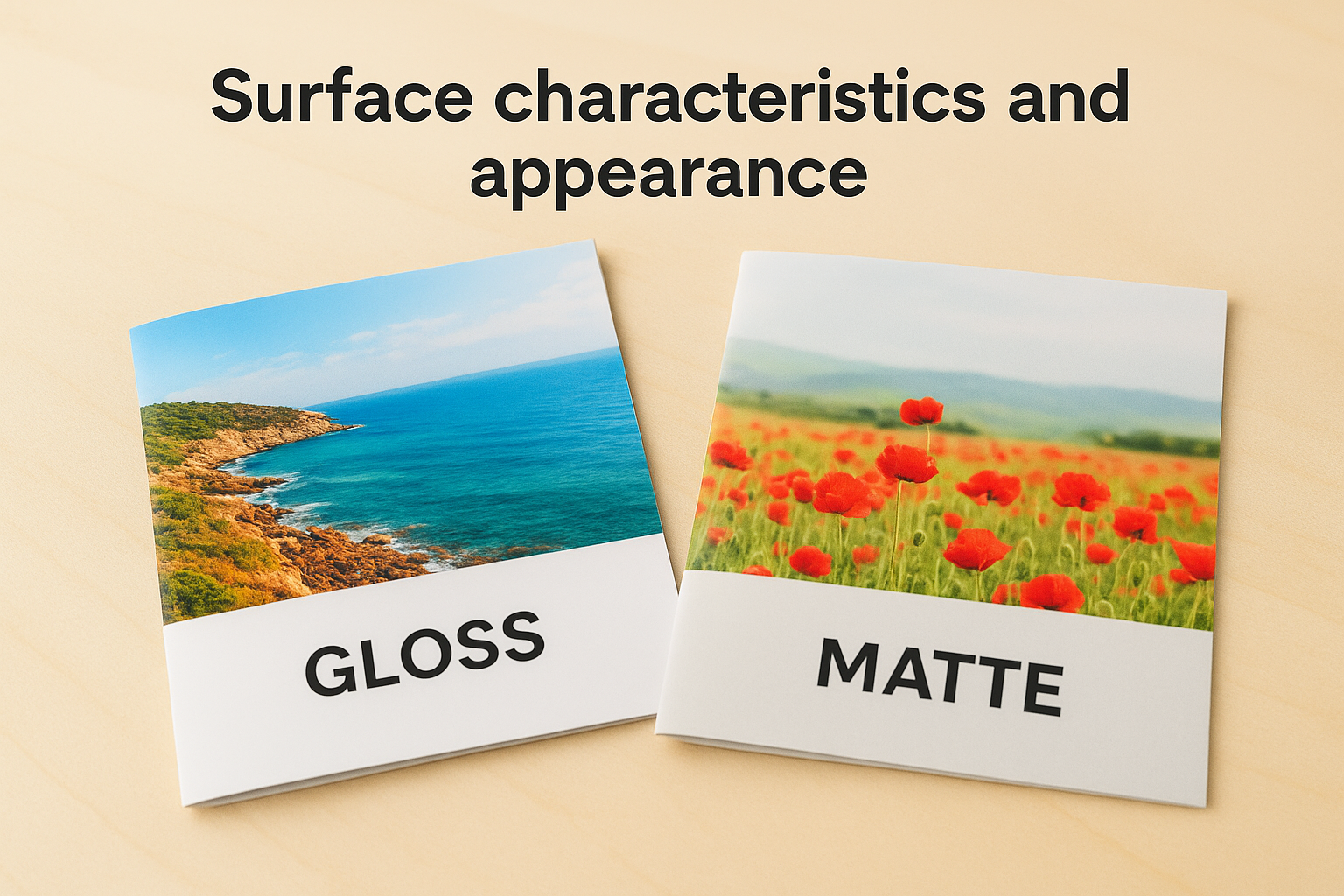
Gloss paper features a shiny, reflective coating that catches and bounces light back to the viewer. This reflective quality makes colours appear more saturated and images look sharper with higher contrast. The smooth surface feels slick to the touch and creates a wet or lacquered appearance. Matte paper absorbs light rather than reflecting it, which produces a softer, more subtle look. The surface feels smooth but not slippery, offering a natural texture that many people find more comfortable to hold. Colours on matte appear slightly muted compared to gloss, creating a sophisticated aesthetic that emphasizes content over visual impact.
The physical feel differs significantly between finishes. You’ll notice gloss feels thinner and more delicate, even when printed on identical paper weights. Matte seems more substantial and durable in your hands, though both finishes can use the same base paper stock. This perception affects how recipients view your brand’s quality and attention to detail.
Readability and text clarity
Gloss creates reflections that interfere with reading under certain lighting conditions. Bright overhead lights, sunlight, or even smartphone screens can produce glare that forces readers to tilt the brochure at awkward angles to see your content clearly. This becomes particularly problematic for text-heavy designs or small font sizes. Matte eliminates glare completely, allowing readers to view your content comfortably in any lighting situation. The non-reflective surface means you don’t sacrifice readability for visual appeal.
Body text looks sharper on matte because the coating prevents light from scattering across letter forms. Headlines and bold text stand out more distinctly on matte, while gloss can sometimes blur fine details in typography. If your brochure requires readers to study detailed information, specifications, or lengthy descriptions, matte gives you a clear advantage. Photography and large graphics still look excellent on matte, just with less gloss-induced vibrance.
Durability and maintenance
Gloss paper resists moisture and liquid spills better thanks to its protective coating, making it more suitable for environments where your brochures might encounter drinks, humidity, or outdoor conditions. The sealed surface prevents water from absorbing into the paper fibres as quickly as uncoated or matte papers. Fingerprints, smudges, and dust show up prominently on gloss, requiring frequent cleaning or replacement at busy events. You’ll see every oil mark and touch point after a few dozen people handle your materials.
Matte paper maintains a cleaner appearance throughout its lifespan because its textured surface naturally hides fingerprints and minor wear.
Matte handles frequent touching without showing signs of use, making it ideal for materials that pass through many hands. Scratches and scuffs appear more visible on gloss because the coating catches light differently when damaged. Both finishes resist tearing equally well when printed on comparable paper weights, but matte generally ages more gracefully as colours fade uniformly rather than developing the worn patches you might see on damaged gloss.
Cost considerations
Most printers charge similar prices for both gloss and matte finishes since the production processes require comparable equipment and materials. You might encounter small price differences based on your printer’s specific capabilities or coating preferences. Gloss sometimes costs slightly less in large quantities because it remains the more commonly requested finish, allowing printers to purchase coating materials in bulk at better rates. The practical cost difference between finishes rarely exceeds five percent of your total order, making performance characteristics more important than price when choosing between options.
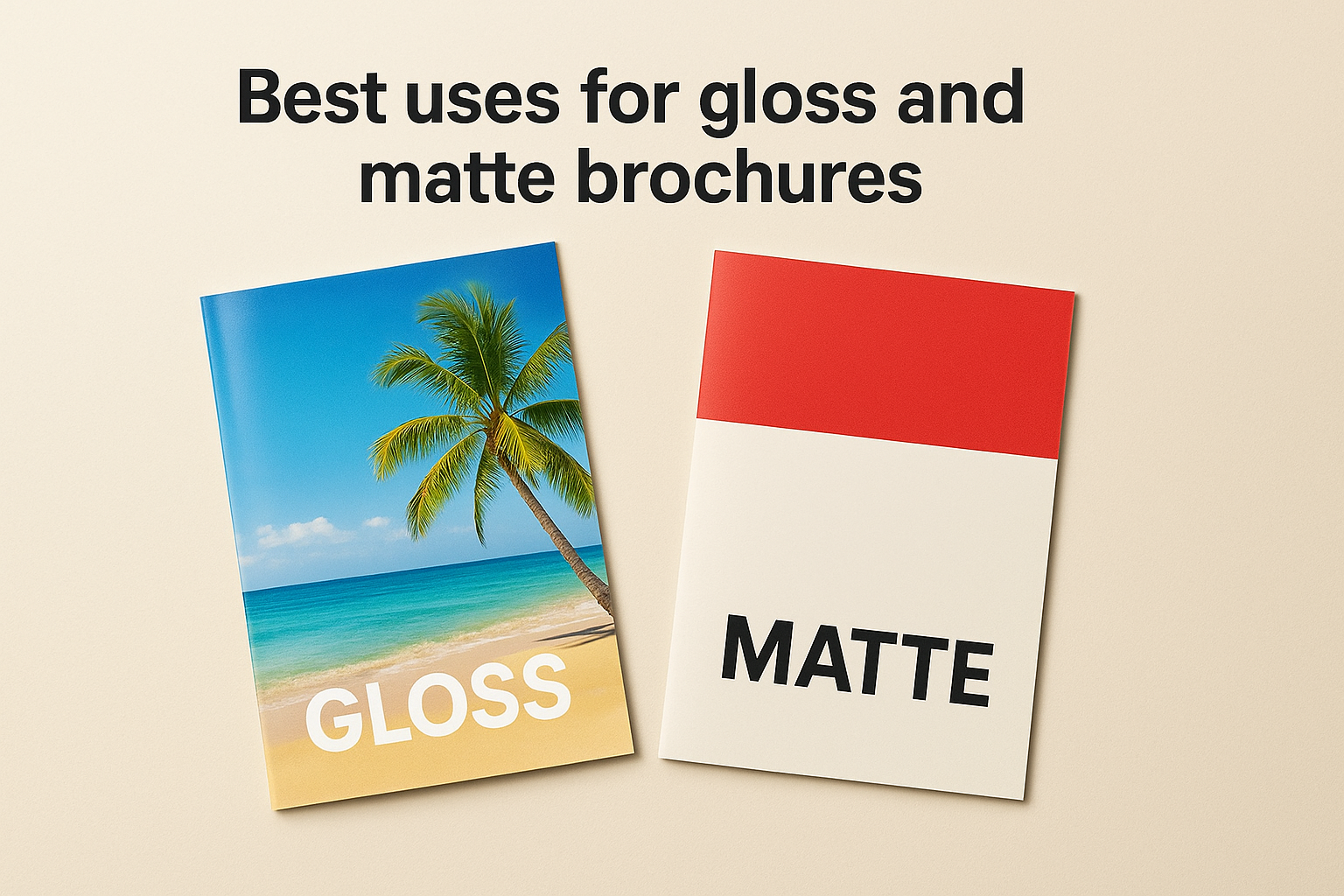
Best uses for gloss and matte brochures
Matching the right finish to your specific project ensures your brochures achieve their intended purpose. The choice between brochure paper options (gloss vs matte) depends on your content mix, target audience, and how you plan to distribute your materials. Understanding which situations favour each finish helps you make a strategic decision rather than guessing based on personal preference. Your brochure’s effectiveness increases when the paper finish supports your message instead of working against it.
When gloss works best
Gloss excels for projects where visual impact matters most. Product catalogues that showcase merchandise benefit from the vibrant colours and sharp image quality gloss provides. Real estate brochures featuring property photos look more appealing with the enhanced contrast and colour saturation gloss delivers. Retail businesses, restaurants with food photography, travel agencies, and entertainment venues all gain advantages from gloss’s ability to make images pop off the page.
Short-term marketing campaigns that need to grab attention quickly perform better with gloss. The reflective surface catches the eye in crowded environments like trade show booths, retail displays, or direct mail campaigns where your piece competes with dozens of others. Event promotions, limited-time offers, and seasonal campaigns benefit from gloss’s energetic appearance that suggests urgency and excitement.
Gloss makes your visuals work harder to capture attention in competitive environments where you have seconds to make an impression.
When matte works best
Professional service providers should default to matte for most applications. Law firms, financial advisors, healthcare practices, and consulting businesses project credibility and expertise through matte’s sophisticated appearance. Educational institutions, non-profit organisations, and government agencies also benefit from matte’s serious, trustworthy aesthetic. The non-reflective surface suggests substance over style, which aligns with how these industries want customers to perceive their services.
Text-heavy brochures containing detailed information, specifications, or instructions work better on matte. Technical documentation, product manuals, and educational materials remain readable in any lighting condition without forcing readers to adjust the brochure constantly to avoid glare. Corporate presentations, annual reports, and white papers gain credibility from matte’s refined appearance.
Industry-specific recommendations
Art galleries and photographers often choose matte to showcase work without the distraction of surface reflections. The finish allows viewers to focus on the artwork itself rather than fighting with glare. Fashion brands targeting luxury markets prefer matte for its upmarket feel that suggests exclusivity and refined taste.
Hospitality businesses split between both options depending on their positioning. High-end hotels and fine dining establishments lean toward matte, while casual restaurants and entertainment venues choose gloss for its energetic appeal. Technology companies frequently select gloss to convey innovation and forward-thinking approaches, though enterprise software firms often prefer matte to emphasise stability and reliability. Consider what established brands in your specific sector use as a starting point, then adjust based on your unique positioning and target audience expectations.
Common questions about brochure paper
You probably have specific questions about choosing between brochure paper options (gloss vs matte) that go beyond basic comparisons. These practical concerns affect your final decision and determine whether your brochures perform as expected. The answers help you avoid common mistakes that waste money or produce disappointing results.
Can you write on both finishes?
You can write on matte paper easily with most pens and markers, but gloss creates problems. The slick coating prevents ink from drying properly, causing smudges and making notes nearly impossible. Ballpoint pens slide across gloss without leaving clear marks, while pencils won’t grip the smooth surface. If your brochures need space for customer information, appointment dates, or personal notes, choose matte without question.
Which finish costs more?
Most printers charge the same price for both gloss and matte finishes since production requirements remain similar. You might see small variations based on coating availability or bulk pricing, but these differences rarely exceed a few pounds per thousand sheets. Your choice should prioritize performance over price because the cost difference won’t significantly impact your budget.
Does paper weight matter?
Paper weight affects durability and perceived quality more than the finish itself. Standard brochure weights range from 100 to 130 gsm for most applications. Heavier stock feels more substantial regardless of whether you choose gloss or matte, which improves how recipients perceive your brand’s quality.
Thicker paper compensates for any concerns about durability, making both finishes perform well when paired with appropriate stock weights.
Final thoughts
Your choice between brochure paper options (gloss vs matte) comes down to matching the finish to your specific needs. Gloss delivers vibrant visuals and moisture resistance for image-heavy materials that need to stand out quickly. Matte provides superior readability and a professional appearance for text-focused content or brands that prioritize substance over flash. Neither finish works universally better than the other because each serves different purposes effectively.
Consider your content type, distribution environment, and brand identity before making your decision. Test both finishes with sample prints if possible to see how your specific design looks on each surface. The right paper finish strengthens your message and makes your investment in printed materials more effective.
Ready to bring your brochure project to life? Apex Workwear offers expert guidance on choosing the right paper finish for your brochures, along with design support and fast turnaround times. You’ll get professional results backed by experienced printing specialists who understand how paper choices affect your final product.