
When you’re ordering custom NCR forms for your business, size matters more than you might expect. The choice between NCR forms size (8.5×11 vs 5.5×8.5) affects everything from how much information you can capture to how portable your forms are in the field. Pick the wrong size, and you’ll end up with forms that don’t fit your workflow, or worse, ones that frustrate your team and slow down operations.
At Apex Workwear, we print NCR forms for contractors, service businesses, and small companies across Canada every week. One of the most common questions we hear is straightforward: which size should I choose? The answer depends on your specific workflow, the type of information you’re capturing, and where your team will actually use these forms.
This guide breaks down the practical differences between these two standard NCR form sizes. You’ll learn when the larger 8.5×11 format makes sense, when the compact 5.5×8.5 half-sheet is the better choice, and how to match your forms to real-world use cases. By the end, you’ll have the clarity you need to place your order with confidence.
What NCR form size affects in day-to-day use
The difference between NCR forms size (8.5×11 vs 5.5×8.5) isn’t just about dimensions on paper. Your choice directly shapes how your team works with these forms every single day. From the clipboard your technician carries to the filing cabinet in your back office, size influences efficiency at every step.
Storage and portability
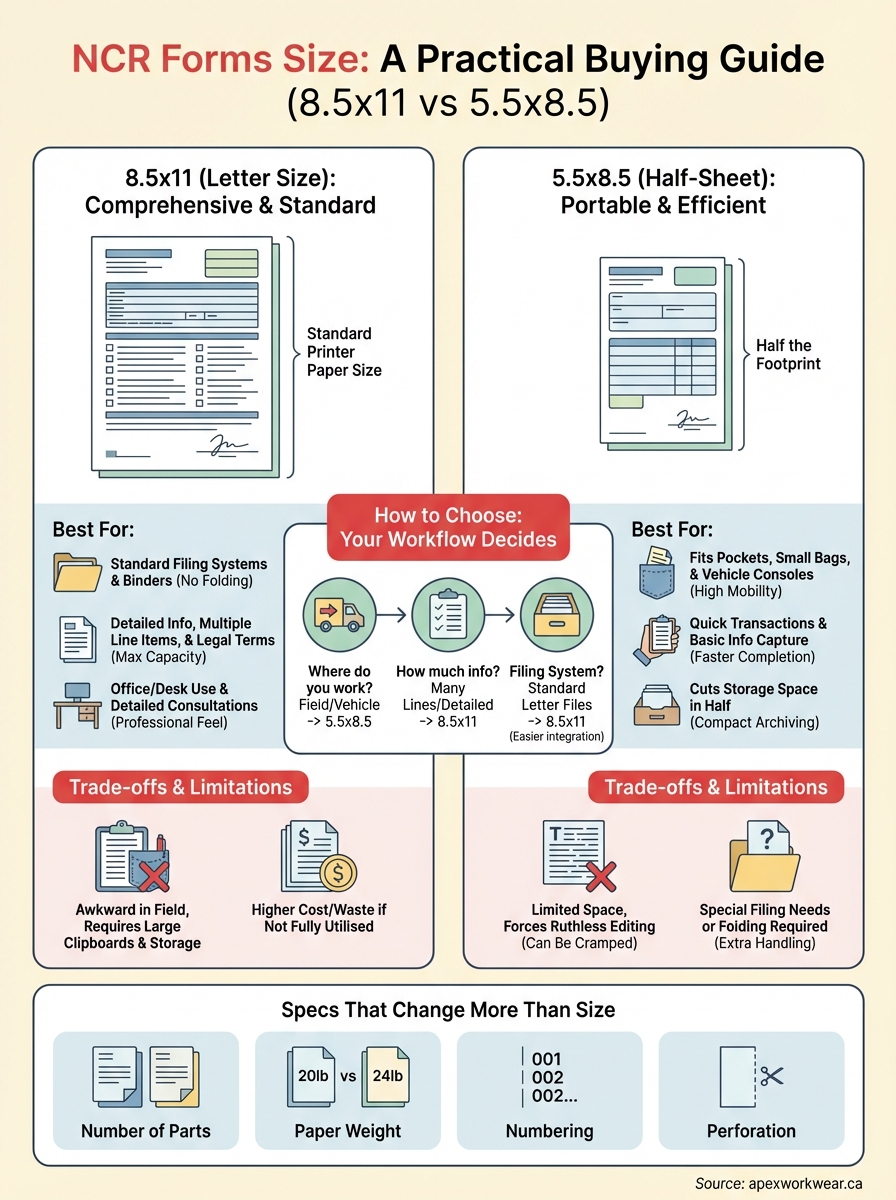
An 8.5×11 form takes up the same space as standard printer paper, which means it fits easily into most folders, binders, and filing systems you already use. You can store these forms in regular letter-size file cabinets without any special organisation. Your team can print them on standard office printers, and they’ll work with any clipboard or padfolio designed for letter paper.
The 5.5×8.5 half-sheet format cuts that footprint in half. You can fit twice as many forms in the same drawer, and field staff can carry a full day’s worth of forms without the bulk. These compact forms slip into jacket pockets or small bags easily, which matters when your technicians are climbing ladders or crawling through tight spaces. However, you’ll need statement-size folders or custom organisers to keep them properly filed.
Information capture capacity
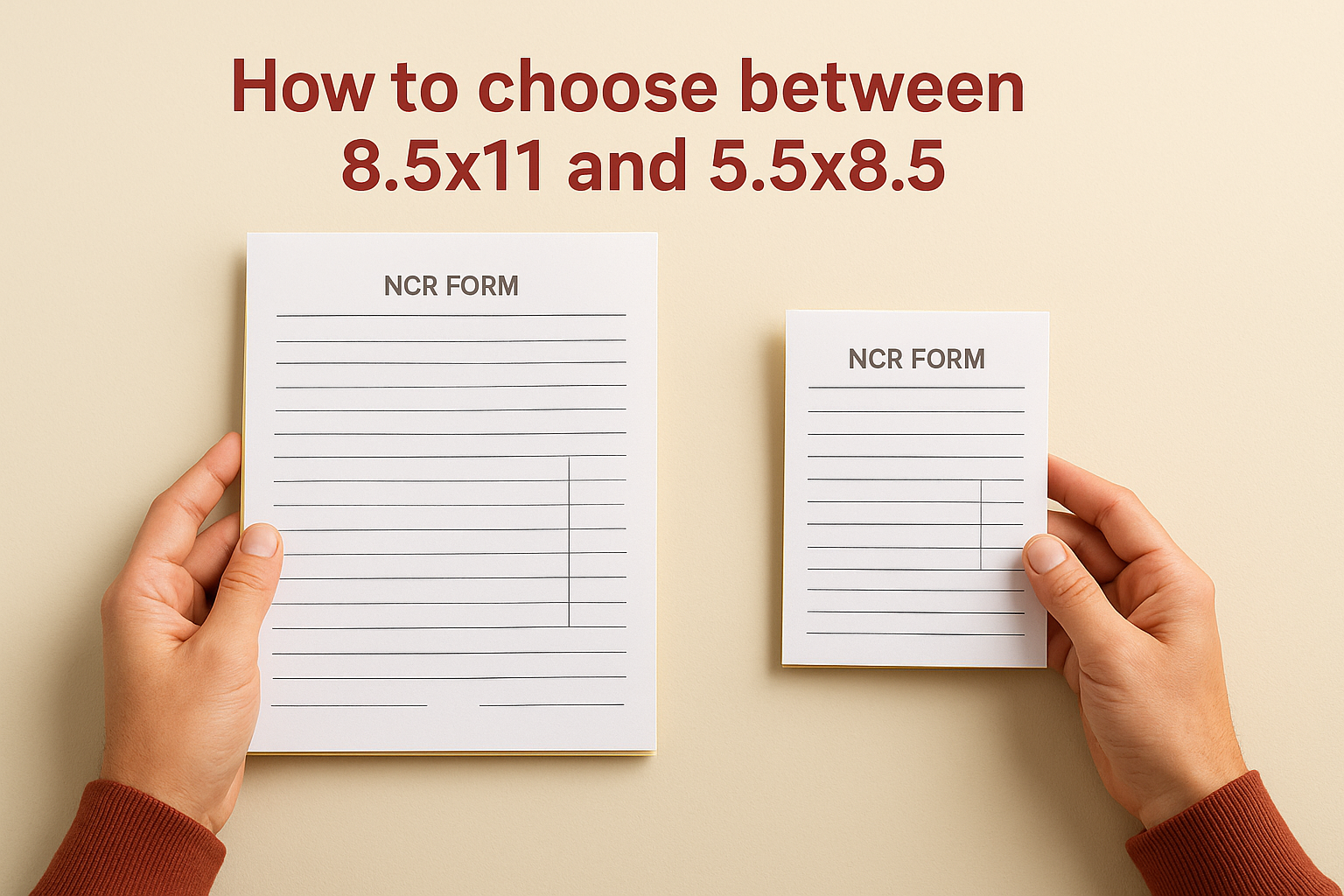
Size directly determines how much information you can collect on a single form. An 8.5×11 sheet gives you roughly 93.5 square inches of usable space. That room lets you include detailed service descriptions, multiple line items, terms and conditions, and signature blocks without cramping the layout or shrinking your text to unreadable sizes.
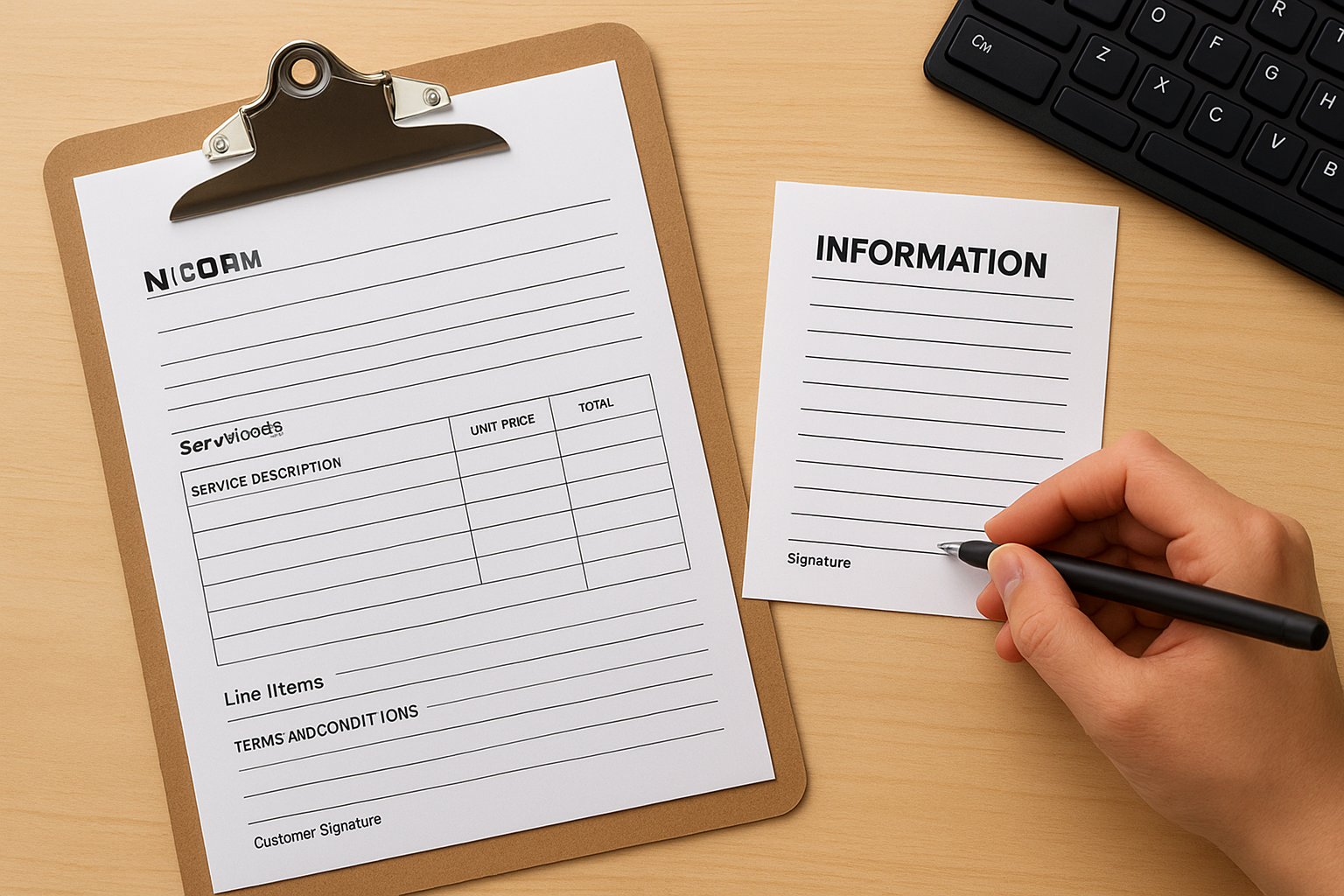
The 5.5×8.5 format provides about 46.75 square inches. You work with half the real estate, which means you need to prioritise what goes on the form. This size works when you’re capturing quick transactions or basic information, but it forces you to edit ruthlessly. Long legal disclaimers, extensive itemised lists, or detailed specifications become challenging to fit.
When you cram too much information onto a small form, your team either skips sections or writes illegibly, both of which defeat the purpose of having a form in the first place.
Filing integration
Most businesses already have established filing systems built around standard letter-size documents. When you choose 8.5×11 NCR forms, they file naturally alongside invoices, contracts, and correspondence. Your administrative staff doesn’t need to create separate filing categories or special folders for carbonless forms.
Half-sheet forms require you to either fold them to fit letter-size files or maintain a separate filing system entirely. Some businesses solve this by stapling two half-sheets together or using specialised half-size hanging folders. This creates extra handling steps that slow down your back-office processing.
Field work considerations
Your team’s working environment changes which size makes practical sense. Technicians working from vehicles often prefer 5.5×8.5 forms because they fit on smaller clipboards that don’t interfere with tight spaces. These compact forms are easier to handle when you’re standing, balancing tools, or working in awkward positions.
Office-based work or detailed on-site consultations benefit from the 8.5×11 format. You can spread the form out on a desk or counter comfortably, and clients find full-size forms more professional when they’re reviewing and signing. The larger format also reduces hand fatigue when you’re filling out multiple forms in succession, because you’re not writing in cramped boxes.
Customer perception and professionalism
Form size affects how clients perceive your business. A full 8.5×11 NCR form typically looks more formal and substantial, which reinforces professionalism in industries like contracting, consulting, or legal services. Clients expect comprehensive documentation in these fields, and the larger format meets that expectation.
Smaller 5.5×8.5 forms feel more casual and transactional, which suits quick service calls, delivery receipts, or simple work orders. They don’t overwhelm customers with paperwork, and they communicate efficiency rather than bureaucracy. The compact size can actually be an advantage when you want the transaction to feel fast and straightforward.
8.5×11 NCR forms: best fit and trade-offs
The full-size 8.5×11 NCR form is the default choice for most businesses because it matches standard North American letter paper dimensions. This format gives you maximum space to capture detailed information without requiring your team to write in cramped boxes or use tiny fonts. When you need comprehensive documentation that holds up legally or professionally, this size delivers the room you need.
Industries and workflows that benefit
Contractors and construction companies rely on 8.5×11 forms because they need to document multiple line items, material specifications, and detailed work scope on a single sheet. Your change orders, work estimates, and completion certificates require space for itemised lists, safety disclaimers, and multiple signature blocks. The larger format lets you include all necessary legal language and terms without sacrificing readability.
Professional services like consulting, HVAC installation, or electrical work benefit from this size when you’re providing detailed quotes or service agreements. You can lay out complex pricing structures, include warranty information, and add diagrams or specifications that help clients understand the work. These forms also project a more formal, established image that reinforces your professionalism during client-facing transactions.
Delivery services and wholesale operations use full-size forms when they need to list extensive product inventories or multiple delivery addresses on one document. Your packing slips, delivery receipts, and inventory transfers often involve dozens of line items that simply won’t fit on smaller formats without becoming unreadable.
When your forms serve as legal documents or detailed service records, the extra space of 8.5×11 reduces errors and ensures nothing gets overlooked.
Real limitations to consider
The NCR forms size (8.5×11 vs 5.5×8.5) comparison reveals genuine drawbacks to the larger format. Field technicians find full-size forms awkward to carry and handle in tight spaces or while standing. You’ll need full-size clipboards, larger vehicle storage, and more bag space, which creates inconvenience during mobile work.
Storage costs add up over time. These forms require twice the filing space of half-sheets, and businesses that generate hundreds of forms monthly quickly fill standard filing cabinets. Your administrative staff also handles larger stacks and heavier bundles when processing or archiving completed forms.
Cost per form runs higher because you’re printing more square inches of material. While the difference per unit seems small, it compounds across thousands of forms. You also generate more waste if your team only fills out partial sections regularly, leaving blank space on every copy.
5.5×8.5 NCR forms: best fit and trade-offs
The half-sheet 5.5×8.5 format offers maximum portability and efficiency for businesses that prioritise speed and mobility over detailed documentation. This compact size fits in shirt pockets, small clipboards, and vehicle consoles without the bulk of full-size forms. When your workflow involves quick transactions, simple receipts, or field work in tight spaces, this format removes unnecessary paperwork overhead while still providing the duplicate copies you need.
Industries and workflows that benefit
Delivery drivers and courier services rely on 5.5×8.5 forms because they need fast proof of delivery without carrying bulky clipboards. You can complete these forms quickly at doorsteps, and customers appreciate the brief, straightforward format that doesn’t require them to read pages of text before signing. Your drivers can carry a full day’s worth of forms in a compact pouch that doesn’t interfere with packages or tools.
Service calls that involve quick diagnostics or simple repairs work perfectly with this size. Your HVAC technicians, appliance repair staff, or maintenance workers can document basic service information and collect signatures without pulling out full-size paperwork. These forms communicate efficiency to customers who want fast service, not lengthy documentation sessions.
Retail businesses use half-sheet NCR forms for sales receipts, exchange authorisations, and simple work orders where detailed line items aren’t necessary. You can process transactions quickly, and the compact copies fit easily into customer wallets or small bags. This size also works well for event registration, membership sign-ups, or any transaction where you’re capturing basic contact information and payment details.
When your forms serve as quick receipts rather than detailed contracts, the compact 5.5×8.5 format speeds up every transaction.
Real limitations to consider
The comparison of NCR forms size (8.5×11 vs 5.5×8.5) reveals that space constraints create real challenges with half-sheets. You can’t fit comprehensive terms and conditions, detailed pricing breakdowns, or extensive legal disclaimers without making your text uncomfortably small. Your forms either become cramped and hard to read, or you’re forced to eliminate information that might be important for your records or legal protection.
Filing integration becomes problematic because these forms don’t match standard office systems. Your administrative staff needs to create separate filing processes or fold forms to fit letter-size folders, which adds handling time to every completed form. Some businesses resort to scanning half-sheets immediately and filing digitally, which defeats the purpose of having physical copies.
Professional perception shifts with smaller forms. Clients in industries like contracting or professional services may view half-sheet forms as less thorough or less professional than full-size documentation. You risk appearing casual or informal when your business context demands comprehensive recordkeeping and detailed agreements.
How to choose between 8.5×11 and 5.5×8.5
Your decision between NCR forms size (8.5×11 vs 5.5×8.5) should start with your actual workflow, not industry standards or what competitors use. The right size emerges when you map out where your team fills out forms, how much information you need to capture, and what happens to completed forms after signatures are collected. These three factors determine which format saves you time and money while serving your business needs.
Start with your workflow location
Where your team actually uses these forms matters more than any other factor. If your staff spends most of their time in vehicles or on job sites, the compact 5.5×8.5 format reduces physical bulk and fits into tighter spaces where full-size clipboards become awkward. Field technicians working in cramped mechanical rooms, up ladders, or in residential spaces appreciate forms they can hold comfortably in one hand while managing tools or explaining work to clients.
Office-based operations or businesses where forms get completed at desks, counters, or in meeting rooms benefit from the 8.5×11 format. You eliminate the cramped writing experience that half-sheets create, and your team can spread forms out properly during detailed consultations or multi-item transactions. The larger size also projects professionalism when clients review and sign documents in formal business settings.
Count your typical line items
Add up how many fields, checkboxes, line items, and signature blocks your average transaction requires. When you regularly need more than 10-12 fields or multiple sections with detailed descriptions, the 8.5×11 format prevents cramped layouts and illegible handwriting. Your forms remain readable and professional without forcing staff to write in tiny boxes.
Simple transactions with basic information capture work perfectly on 5.5×8.5 forms. If you’re collecting customer name, contact details, a brief service description, and a signature, the compact format provides enough room while keeping your paperwork efficient. You waste less paper and reduce storage needs when your information requirements are straightforward.
When you find yourself regularly leaving blank space on full-size forms or cramming information onto half-sheets, you’ve chosen the wrong size.
Consider your filing system
Your existing filing infrastructure influences which size integrates smoothly. Businesses with established letter-size filing cabinets and folder systems find 8.5×11 forms drop directly into current workflows without creating special handling requirements. Your administrative staff processes these forms alongside other business documents without extra sorting or folding steps.
Creating a separate filing system for half-sheets adds handling time but cuts storage space in half. You’ll need statement-size folders or a decision about whether to fold forms to fit standard files, but you gain the ability to archive twice as many forms in the same physical space. This trade-off makes sense when storage costs or space limitations outweigh administrative convenience.
Specs that change more than size
When you’re comparing NCR forms size (8.5×11 vs 5.5×8.5), don’t let dimensions distract you from specifications that create bigger workflow differences. The number of parts, paper weight, and finishing options directly impact how your forms perform in daily use, while size just determines the physical footprint. These production choices affect durability, distribution efficiency, and how well your forms hold up in demanding environments.
Number of parts and carbon colours
Your part count determines how many copies each transaction generates and where those copies go. Two-part forms work when you need one copy for your records and one for the customer, which covers most basic transactions. Three-part and four-part forms let you distribute copies to accounting, job files, or external parties without additional paperwork.
Each part requires a different carbon colour to help you sort and distribute copies quickly. Standard colours follow a predictable sequence: white for the original, canary yellow for the second copy, pink for the third, and goldenrod for the fourth. Your team identifies which copy goes where at a glance without reading labels or checking numbers. More parts increase your per-form cost because you’re printing and collating additional sheets, but you eliminate the need to photocopy or manually distribute transaction records.
Choose part count based on how many departments or parties need immediate access to transaction information, not on theoretical future needs.
Paper weight and durability
NCR forms typically use paper weights between 20 lb and 24 lb bond, with heavier stock adding durability but reducing flexibility. The 20 lb weight works for office environments and light field use where forms stay protected in folders or clipboards. Your completed forms file easily and take up minimal space in storage.
Moving to 24 lb paper creates forms that resist tearing and stand up to rough handling in vehicle consoles, tool bags, or outdoor job sites. Heavier stock feels more substantial to clients during signature collection and holds up better when staff carry forms in pockets or small bags. You pay more per form for the upgraded paper weight, but you reduce losses from damaged or illegible copies.
Numbering and perforation options
Sequential numbering lets you track forms individually and identify missing copies during audits or recordkeeping reviews. You can specify your starting number, which matters when you’re replacing existing inventory or want numbers to match your internal tracking systems. Numbering adds a small cost per form but creates accountability and organisation that saves time during bookkeeping.
Perforation placement determines how easily copies separate after completion. Standard perforation runs along the top edge, letting you tear off copies cleanly without damaging the remaining form. Some businesses request side perforation for landscape-oriented forms or no perforation when they prefer copies to remain attached until filing. Your workflow dictates which option reduces handling time and prevents accidental separation.
Final checklist before you order
Your decision between NCR forms size (8.5×11 vs 5.5×8.5) comes down to practical workflow needs, not theoretical best practices. Choose 8.5×11 when you need comprehensive documentation, detailed line items, and forms that integrate with standard filing systems. Pick 5.5×8.5 when portability matters more than space, your transactions capture basic information, and field staff work in tight spaces or from vehicles.
Before placing your order, confirm your part count matches distribution needs, select paper weight appropriate for your work environment, and decide whether sequential numbering adds value to your recordkeeping. These specifications affect daily usability more than dimensions alone.
Ready to order NCR forms that match your actual workflow? Apex Workwear prints custom carbonless forms in both sizes with free design review and no minimums. You’ll get your digital proof within 24 hours, and most orders ship in 5-7 business days with free delivery across the Greater Toronto Area.