You want your team, staff, or brand looking sharp, and a plain t-shirt with a slapped-on logo just doesn’t cut it. That’s where custom embroidery t shirts come in. Instead of ink sitting on top of the fabric, your logo gets stitched directly into it, giving you a raised, textured finish that holds up wash after wash without cracking or fading.
If you’re searching for this, you’re probably trying to figure out exactly what embroidered apparel involves and how the ordering process actually works, from choosing a garment to approving a design proof. Embroidery is also the go-to choice for business shirts embroidered logo work, since it reads as polished and professional in a way screen printing sometimes doesn’t.
In this guide, we’ll walk through what custom embroidery actually is, how it compares to direct-to-garment printing, and what affects turnaround and pricing. We’ll also cover the practical steps for placing an order, so you know what to expect from file requirements to final delivery, whether you’re outfitting a five-person crew or a whole company.
Why custom embroidery is worth it for your brand
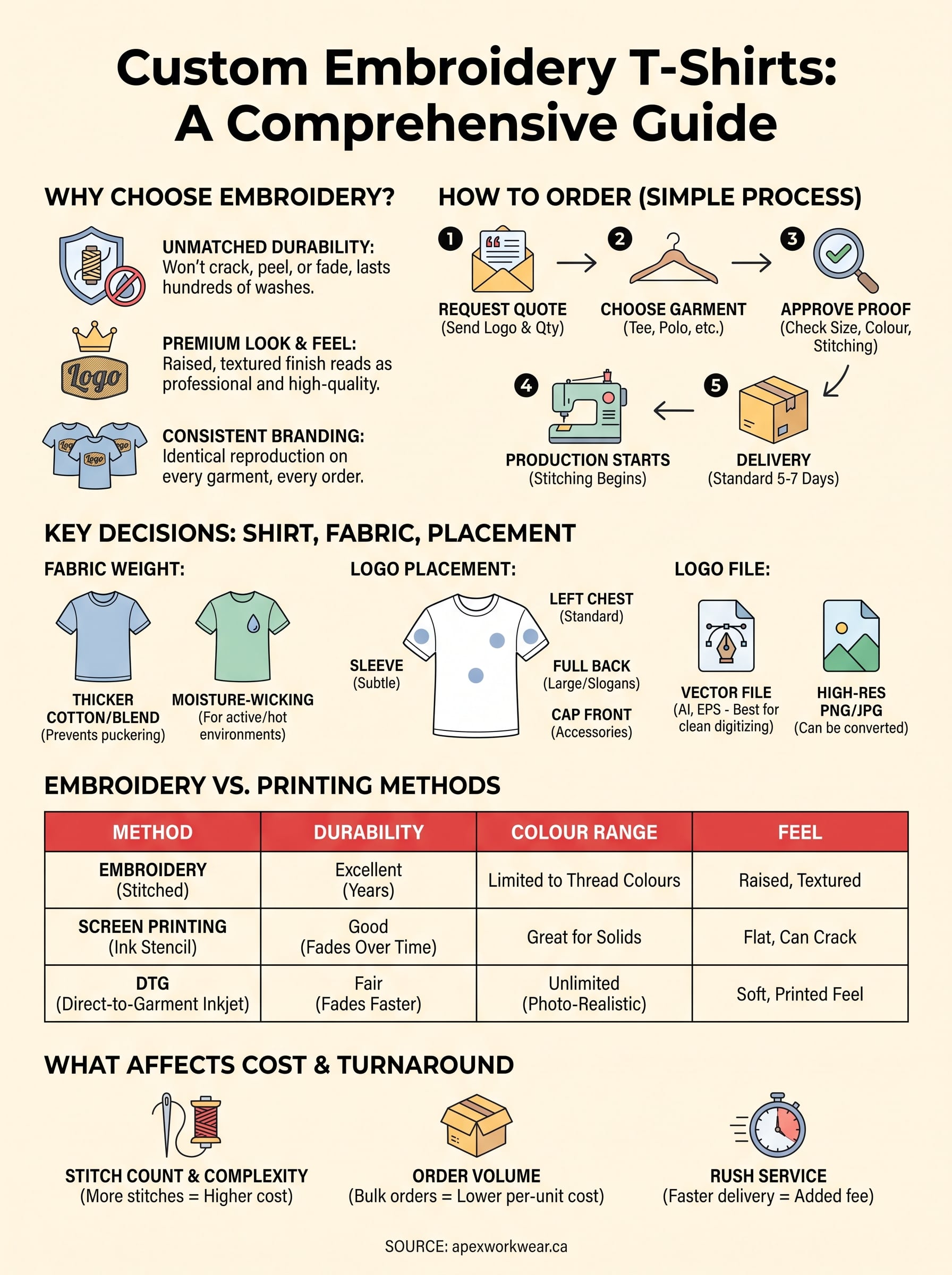
Embroidery earns its price tag because it lasts. Stitched thread becomes part of the garment instead of sitting on the surface, so it survives hundreds of washes, dryer heat, and everyday wear without peeling or fading. If you’ve ever seen a printed logo crack after a few months on a work polo, you already understand why so many businesses switch to embroidery for anything that gets worn regularly.
Durability that pays for itself
Companies outfitting field crews, restaurant staff, or retail teams need apparel that still looks sharp after a full season of use. Custom embroidery t shirts hold their shape and colour far longer than printed alternatives, which means fewer reorders and a lower cost per wear over the life of the garment. That durability is exactly why embroidery dominates the market for business shirts embroidered logo work, from polos to button-downs, where the shirt has to represent your company for years, not weeks.
A stitched logo doesn’t fade with the wash, it just gets more broken in.
A more premium look and feel
Beyond durability, embroidery simply reads as more professional. The raised, textured finish gives your logo a tactile quality that customers and clients notice, even if they can’t quite explain why it looks better. This is a big reason embroidery is the default choice for:
- Client-facing uniforms and front-of-house staff
- Corporate polos and dress shirts
- Trade show and event apparel
- Branded outerwear like jackets and hats
Consistent branding across your team
Getting consistent branding across every shirt, hat, and jacket matters more than most business owners expect. Embroidery digitises your logo once, then reproduces it identically on every garment, so there’s no colour drift or blurred edges between orders placed months apart. That consistency builds trust with customers who see the same crisp mark on every team member, whether that’s a five-person crew or a hundred-person staff. If you’re weighing embroidery against other decoration methods for your team’s apparel, our guide to the best custom embroidery services in Canada breaks down pricing and turnaround for common order sizes.
How to order custom embroidered t-shirts
Ordering embroidered t-shirts shouldn’t feel like a guessing game, and with the right process it isn’t. Apex Workwear keeps things simple: you send over your logo, pick a garment, and get a digital proof before anything gets stitched. That proof stage matters most, since it’s your last chance to catch a sizing issue or colour mismatch before production starts.
The step-by-step process
Most orders follow the same straightforward path from first email to finished shirts:
- Request a free quote with your logo file and rough order size, and expect a reply within 24 hours.
- Choose your garment, whether that’s a t-shirt, an embroidered company logo polo, or a button-down for business shirts embroidered logo work.
- Approve a digital proof showing exact placement, thread colours, and stitch count.
- Confirm your order and production begins, typically shipping within 5-7 business days.
- Request rush service if you’re working against a tighter deadline.
The proof stage is where you catch mistakes for free, not after 50 shirts are already stitched.
What you’ll need to provide
Getting your file ready ahead of time speeds everything up. A vector file (AI, EPS, or high-resolution PDF) digitises cleanly, though a decent PNG or JPG usually works fine too since most shops can redraw a logo for embroidery. You’ll also want your garment sizes and quantities sorted per style before you request that quote, since embroidery pricing depends heavily on stitch count and order volume rather than a flat per-shirt fee.
Choosing the right shirt, fabric, and logo placement
Not every garment takes embroidery well, so picking the right blend and weight matters as much as picking the right logo. Lightweight, thin cotton tees can pucker under a dense stitch count, so a heavier ring-spun cotton or a cotton-poly blend usually gives you a flatter, cleaner finish. If your team wears shirts outdoors or in hot kitchens, a moisture-wicking polyester blend holds embroidery just as well and stands up better to sweat and repeated washing.
Fabric weight and stitch quality
Thicker fabric supports dense stitching without pulling or bunching, which is why polos and heavier tees are the go-to for business shirts embroidered logo work rather than ultra-thin fashion tees. Apex Workwear can advise on the right blend for your specific use case, whether that’s construction sites, retail floors, or office environments.
The right fabric weight decides whether your logo lies flat or puckers after the first wash.
Where logo placement actually works
Placement affects both how the design reads and how it holds up over time. The most common, tested spots include:
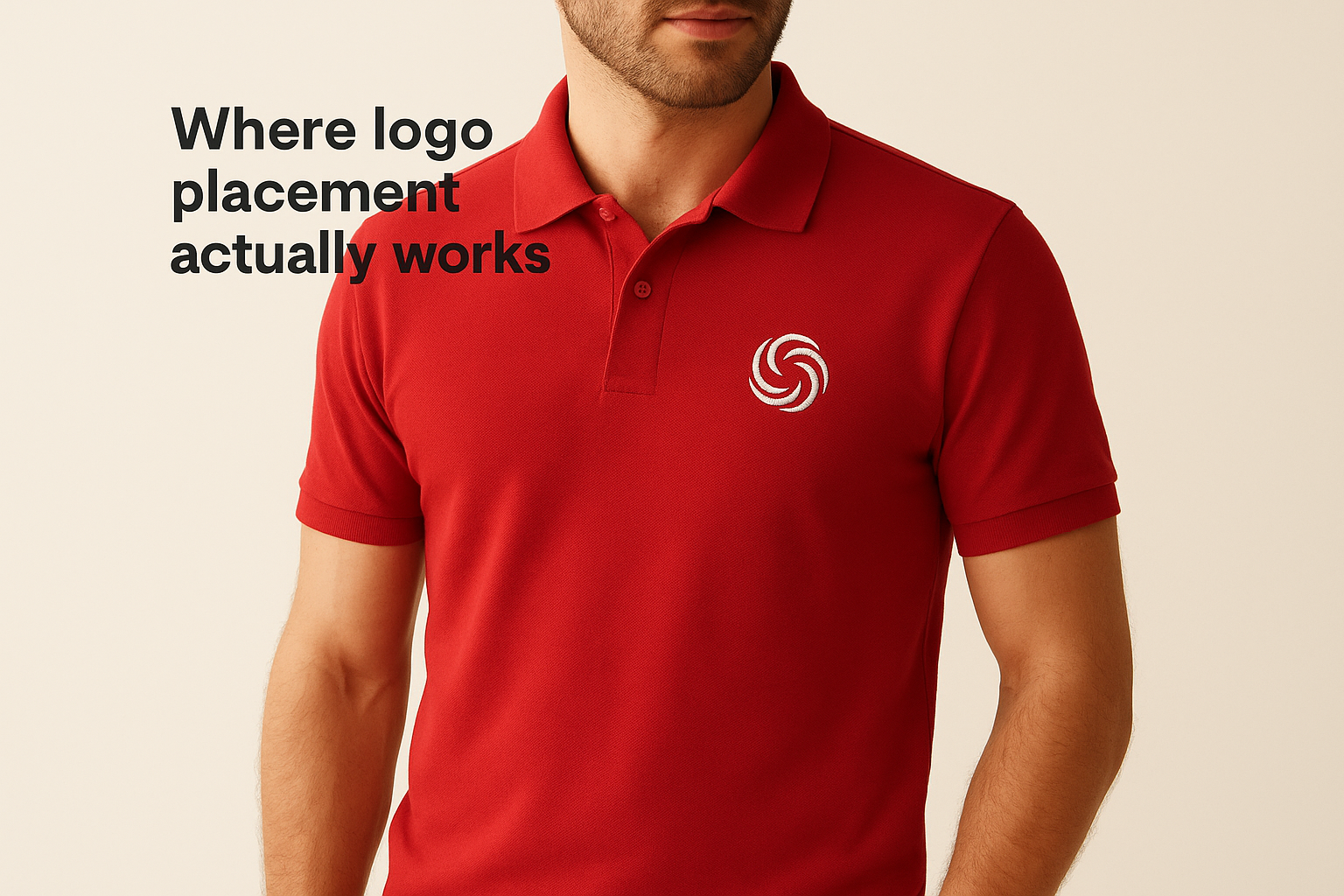
- Left chest, the standard for polos, button-downs, and most corporate branding
- Full back, ideal for larger logos or slogans on t-shirts and hoodies
- Sleeve, a subtle option often paired with a chest logo
- Cap front, for a custom embroidery hat ordered alongside apparel
Smaller, simpler logos embroider best since fine text and thin lines can blur once stitched at small sizes. If your logo has intricate detail, ask for a digitised proof at actual size before approving anything, so you can see exactly how it’ll look on the finished garment.
Embroidery versus screen printing and DTG
Deciding between stitched and printed logos comes down to how the shirt gets used, not just how it looks on day one. Screen printing lays ink through a mesh stencil, a process worth understanding before you order, which works well for large runs of the same design but starts to crack after a couple dozen washes. DTG (direct-to-garment) printing sprays ink like an inkjet printer, giving you photo-realistic colour and detail that embroidery simply can’t match on thread alone.
Pick embroidery for logos that need to survive years of washing, and printing for designs that need full colour or fine detail.
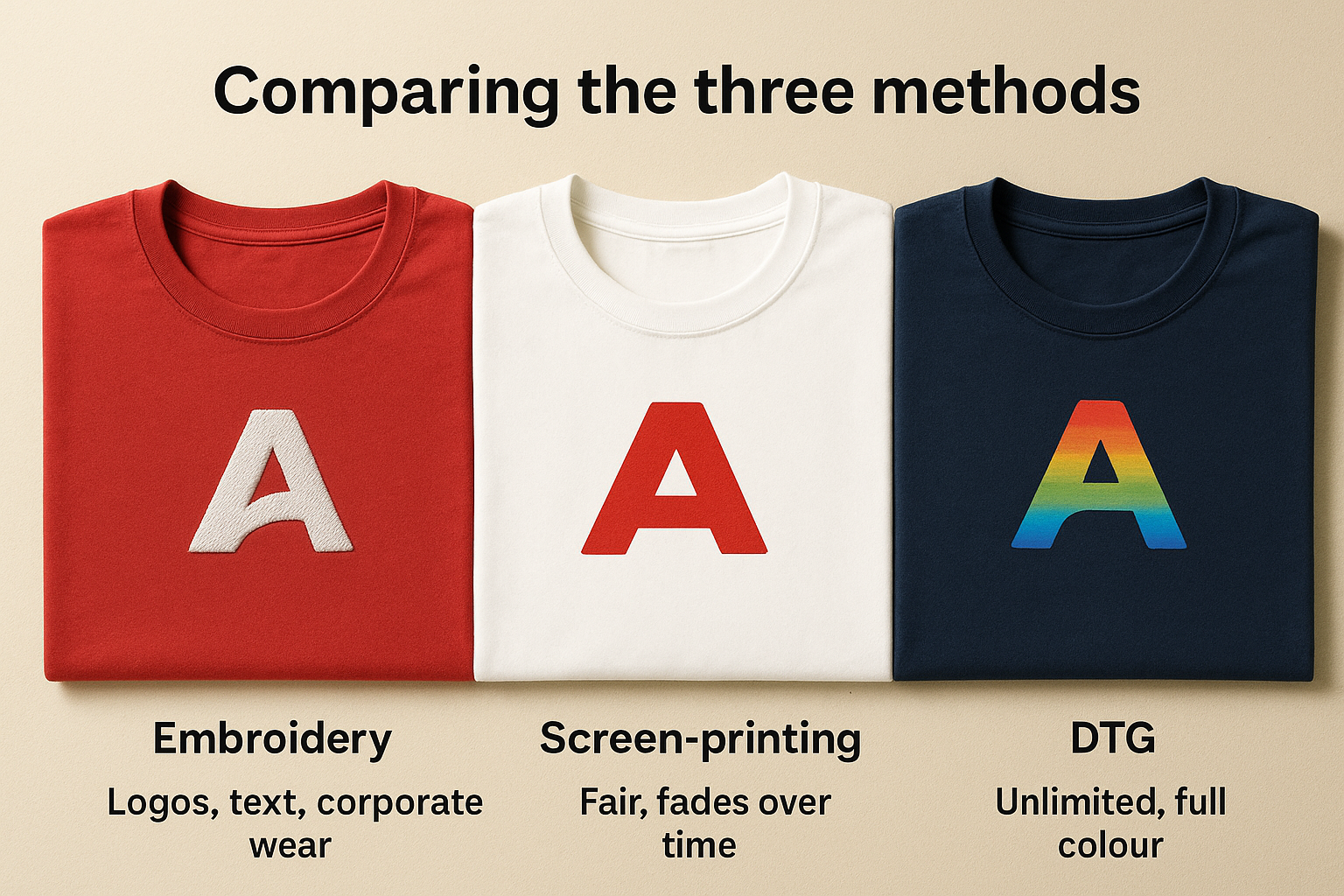
Comparing the three methods
Here’s how the three stack up on the factors that actually matter for a business order:
| Method | Best for | Durability | Colour range | Feel |
|---|---|---|---|---|
| Embroidery | Logos, text, corporate wear | Excellent, years of wear | Limited to thread colours | Raised, textured |
| Screen printing | Bulk orders, bold graphics | Good, fades over time | Great for solid colours | Flat, can crack |
| DTG | Photo prints, gradients | Fair, fades faster | Unlimited, full colour | Soft, printed feel |
Generally, custom embroidery t shirts win out for anything worn daily, like uniforms, polos, or outerwear, since the stitching won’t peel. Screen printing still makes sense for one-off event tees or giveaways where cost per unit matters more than longevity. If your design has photo-quality detail or a gradient, DTG is worth considering, though it won’t hold up as long as embroidery on a shirt that gets washed weekly for a year.
What affects cost and turnaround time
Pricing on custom embroidery t shirts isn’t a flat rate, and understanding what drives it helps you budget accurately before you request a quote. Digitising a logo, the process of converting your artwork into a stitch file, is usually a one-time cost that gets waived or reduced on repeat orders once Apex Workwear has your file on record.
Stitch count and design complexity
Simple logos with fewer colours and a lower stitch count cost less to embroider than dense, multi-colour designs packed with fine detail. A basic left-chest logo with two thread colours runs cheaper than a full-back design covering the same garment, since more thread and machine time go into larger, denser artwork.
Complexity drives cost more than size does, a small but detailed logo can cost more than a large simple one.
Order volume and rush options
Bulk pricing kicks in fast with embroidery, since setup costs get spread across more garments once you’re past a handful of pieces. Rush service adds a percentage to your total but can shave days off the standard 5-7 business day turnaround if you’re working against an event date or a new hire’s start day.
| Factor | Impact on cost | Impact on turnaround |
|---|---|---|
| Stitch count | Higher stitch count raises price | Minimal effect |
| Order quantity | Bulk pricing lowers per-unit cost | Larger orders can add a day or two |
| Rush service | Adds a fee | Cuts days off standard timeline |
Getting your logo file and sizes finalised early keeps both cost and turnaround predictable.
Where to go from here
Custom embroidery earns its place on your team’s shirts because it lasts, reads as professional, and keeps your branding consistent order after order. You now know what separates it from screen printing and DTG, what drives cost and turnaround, and how the ordering process actually flows from logo file to finished garment. The details matter here, fabric weight, stitch count, and placement all affect the final result, so it pays to get them right before production starts rather than after.
If you’re ready to move forward, the next step is simple. Get your logo file together, decide roughly how many shirts or polos you need, and reach out for a quote. Apex Workwear replies within 24 hours, guides you through fabric and placement choices, and ships most orders in 5-7 business days. See where to start ordering logo embroidered shirts in Canada and get your team looking sharp without the guesswork.