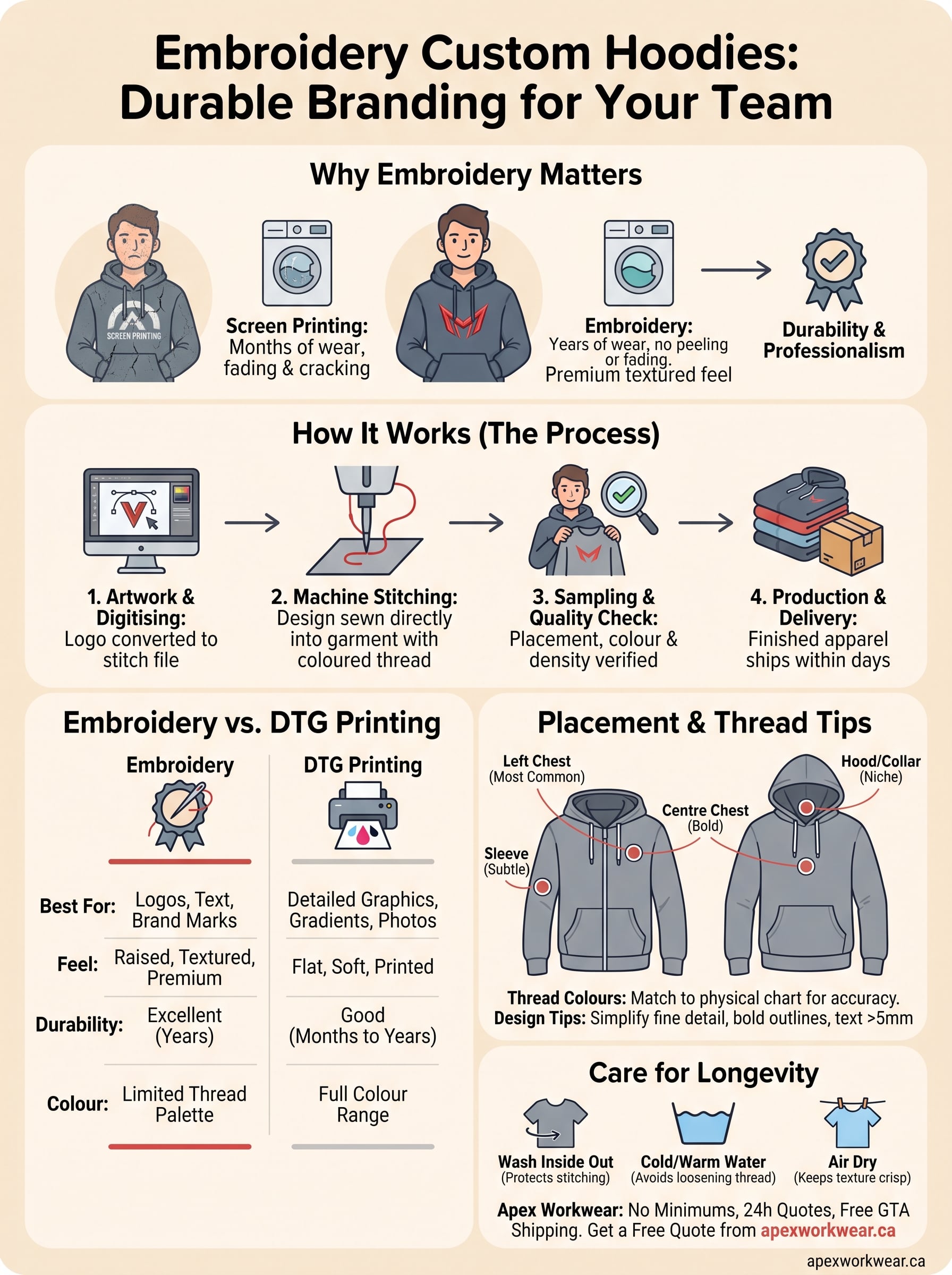
You want hoodies that look like they belong to a real brand, not a design that peels or cracks after two washes. That’s the problem embroidery custom hoodies solve. Instead of printing ink onto fabric, a machine stitches your logo or text directly into the material, giving you a raised, textured finish that holds up through years of wear and washing.
If you’re searching for how custom hoodie embroidery actually works, here’s the short answer: your artwork gets digitised into a stitch file, tested on a sample, then sewn onto your chosen garment using coloured thread that matches your brand. No guesswork, no fading, and no minimum order stopping you from getting even a handful done for your team or business.
In this article, we’ll walk through what custom embroidery sweatshirts and hoodies involve from start to finish, including digitising, thread colours, placement options, and pricing factors. We’ll also cover when embroidery beats printing, what file types work best, and how a Canadian supplier like Apex Workwear turns your design into finished apparel within days.
Why embroidered hoodies matter for your brand
A hoodie with a printed logo tells people you ordered something quick. A hoodie with custom embroidery hoodies stitched into the chest tells them you invested in your brand. That difference registers within seconds, before anyone reads a word of your marketing copy. For small business owners and contractors across the GTA, that first impression often decides whether a stranger reads your website or just keeps walking.
Durability that survives years of wear
Thread doesn’t crack, peel, or fade the way screen-printed ink does after dozens of wash cycles. Custom embroidery sweatshirts hold their shape and colour long after a printed design has started flaking at the edges, which matters if your team wears the same hoodie through a Canadian winter and into next year’s trade show season. Stitching sits inside the fabric rather than on top of it, so friction from bags, jackets, and daily wear doesn’t wear it down the way it wears down a printed logo.
A stitched logo survives the wash cycles that kill a printed one.
The impression it leaves on customers
Texture changes how people perceive quality. Running your fingers over a raised, stitched crest feels more substantial than a flat printed graphic, and customers pick up on that even if they can’t explain why. Contractors handing out branded hoodies to clients, agencies dressing booth staff, or event coordinators outfitting volunteers all benefit from that subtle signal of professionalism that embroidery hoodies custom orders provide.
Team uniforms and everyday branding
Teams need apparel that looks consistent order after order, and embroidery holds colour and placement steady across dozens of hoodies in a single run. Whether you’re kitting out a construction crew, retail staff, or a community sports team, a custom sweater embroidery run gives every piece the same crisp finish, no matter how many times you reorder over the following year.
Weighing the investment against the payoff
Embroidery costs more per piece upfront than screen printing, but it pays for itself across the life of the garment. Consider how the two options actually compare:
| Factor | Embroidery | Screen printing |
|---|---|---|
| Upfront cost per piece | Higher | Lower |
| Lifespan of design | Years, minimal fading | Months to a couple of years |
| Best for | Logos, small text, professional branding | Large graphics, bulk event giveaways |
| Feel | Raised, textured | Flat, smooth |
Once you factor in fewer reorders and fewer complaints about peeling logos, embroidery often costs less over a two or three year period than repeatedly reprinting hoodies that wear out. That’s the real reason brands lean toward embroidery hoodies custom production for anything meant to last beyond a single season.
How embroidery on hoodies actually works
Embroidery isn’t just sewing a picture onto fabric. It’s a precise manufacturing process that turns your logo into a set of machine instructions before a single stitch gets made. Understanding the steps helps you see why custom embroidery on hoodie orders take a few days rather than a few hours, and why that time pays off in a finished product that looks sharp.
Digitising the artwork
Your logo starts as a flat image, usually a PNG, AI, or EPS file, but embroidery machines can’t read pixels or vectors directly. A digitiser converts your design into a stitch file that tells the machine exactly where to move, what angle to sew at, and where to change thread colours. This step matters more than most people expect. Fine text under 5mm tall, thin gradients, and overly detailed logos often need simplifying, because a sewing needle can’t replicate the same detail a printer can.
Good embroidery starts with a digitiser, not a needle.
Stitching the design
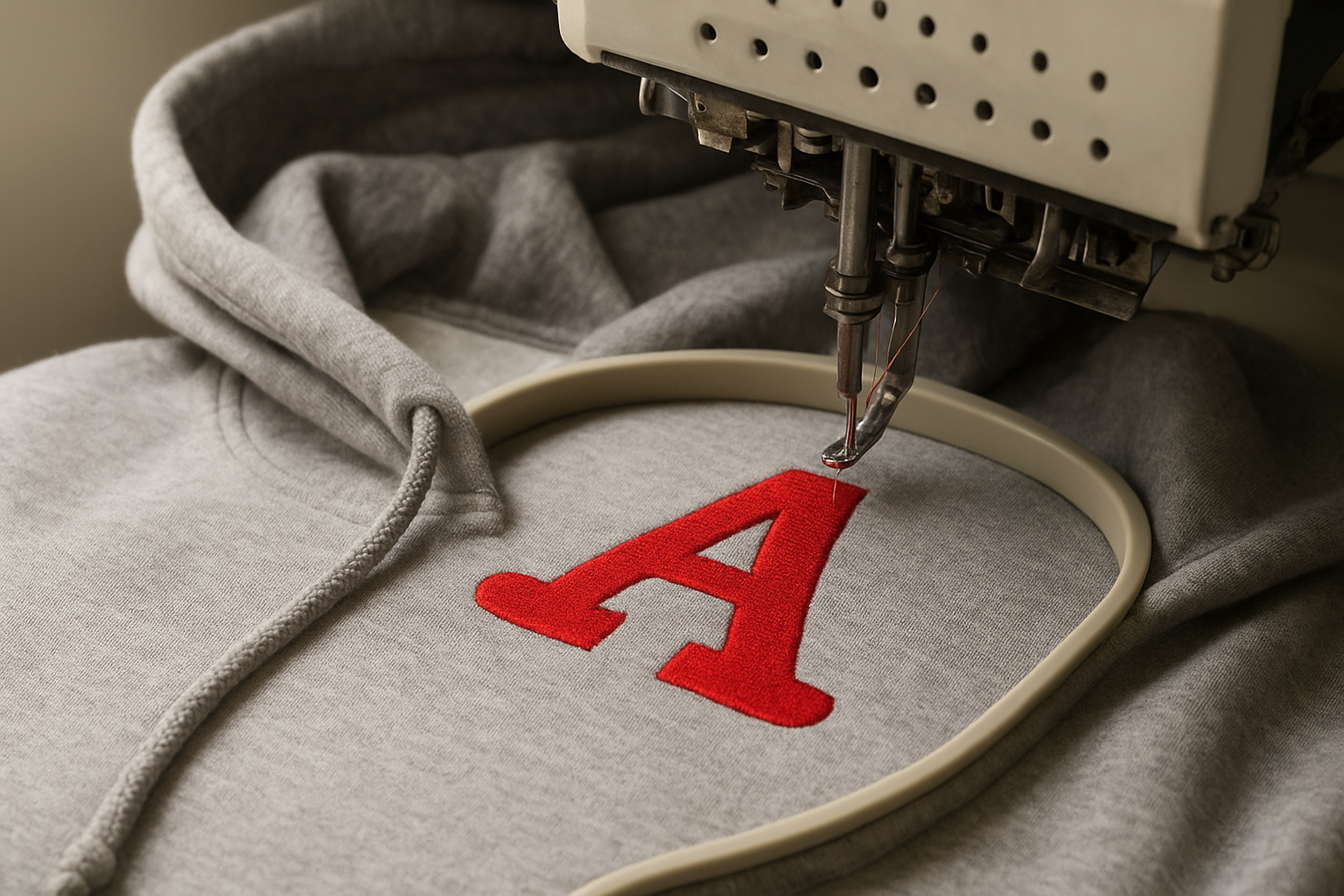
Once the file is ready, the hoodie gets loaded onto a hooped frame that holds the fabric taut under the embroidery head. The machine then sews the design using polyester or rayon thread, layering stitches to build up the raised texture that gives embroidery its signature look. A backing material sits behind the fabric during stitching to stop puckering, especially on stretchier fleece blends. This whole process usually takes only a few minutes per hoodie once the machine is set up, though setup itself, including hooping and thread changes, adds time on smaller runs.
Sampling and quality checks
Before a full batch runs, most suppliers stitch a single sample so you can check placement, thread colours, and stitch density against your approved digital proof. This is where problems like a logo sitting too high on the chest or a colour that reads differently on navy versus grey fabric get caught early. A supplier who skips this step is gambling with your whole order. At Apex Workwear, that sample check happens before production starts, not after, so what you approve is what ships.
Embroidery vs DTG printing on hoodies and sweatshirts
Both methods put your design on fabric, but they solve different problems. Direct-to-garment printing sprays ink straight onto the hoodie using a specialised inkjet, building colour and detail layer by layer. Custom embroidery sweatshirt production, on the other hand, builds the design out of thread, stitch by stitch. Neither method is universally better, but each one suits a different kind of order, and knowing which one fits your project saves you money and disappointment down the line.
When embroidery wins
Go with embroidery when your logo is small, simple, and needs to survive years of washing. Business logos, team names, and single-colour crests all embroider cleanly, and the raised texture reads as premium the moment someone touches the fabric. Custom sweatshirt embroidery also holds up better on thick fleece, since the stitching sits within the weave rather than sitting on top of a surface that flexes and stretches with wear.
Pick embroidery for logos that need to last, and DTG for designs that need full colour.
When DTG printing wins
Choose DTG when your artwork has gradients, photographic detail, or more colours than a thread palette can realistically match. Custom embroidery sweater work struggles with fine shading and soft blends, whereas DTG reproduces that detail without extra cost per colour. DTG also makes sense for one-off event shirts or short-term promotions where longevity matters less than getting a vivid, full-colour graphic onto the garment quickly.
Comparing the two side by side
Here’s how the two methods stack up across the factors that actually affect your decision:
| Factor | Embroidery | DTG printing |
|---|---|---|
| Best for | Logos, text, brand marks | Detailed graphics, photos, gradients |
| Fabric feel | Raised, textured | Flat, soft |
| Durability | Years of washing | Months to a couple of years |
| Colour limits | Thread palette, fewer shades | Full colour range |
| Cost per unit | Higher for small runs | Lower for detailed multi-colour art |
Running both methods on the same order isn’t unusual either. Many businesses embroider a chest logo for a polished front and DTG print a larger graphic on the back, giving each side of the hoodie the finish it’s actually suited for.
Choosing the right hoodie or sweatshirt for embroidery
Not every hoodie holds embroidery well. Thin, stretchy fabric puckers under stitching, and a poorly built garment can make even a perfectly digitised logo look uneven once it’s sewn. Before you pick a style, think about fabric weight, fit, and how the hoodie will actually get worn, because those choices affect how sharp your finished embroidery looks months down the road.
Fabric weight and blend matter more than colour
Heavier cotton and cotton-poly blends give the needle something stable to grip, which keeps stitching flat and even. Custom embroidery sweatshirts made from 80/20 or 50/50 blends tend to embroider cleaner than 100% cotton fleece, since the poly content resists the stretching that causes puckering around dense stitch areas. Lighter fleece works fine for smaller, simpler logos, but a full crest or lettered design needs the extra body a heavier garment provides.
Heavier fabric gives embroidery something solid to grip, and that’s what keeps a logo flat.
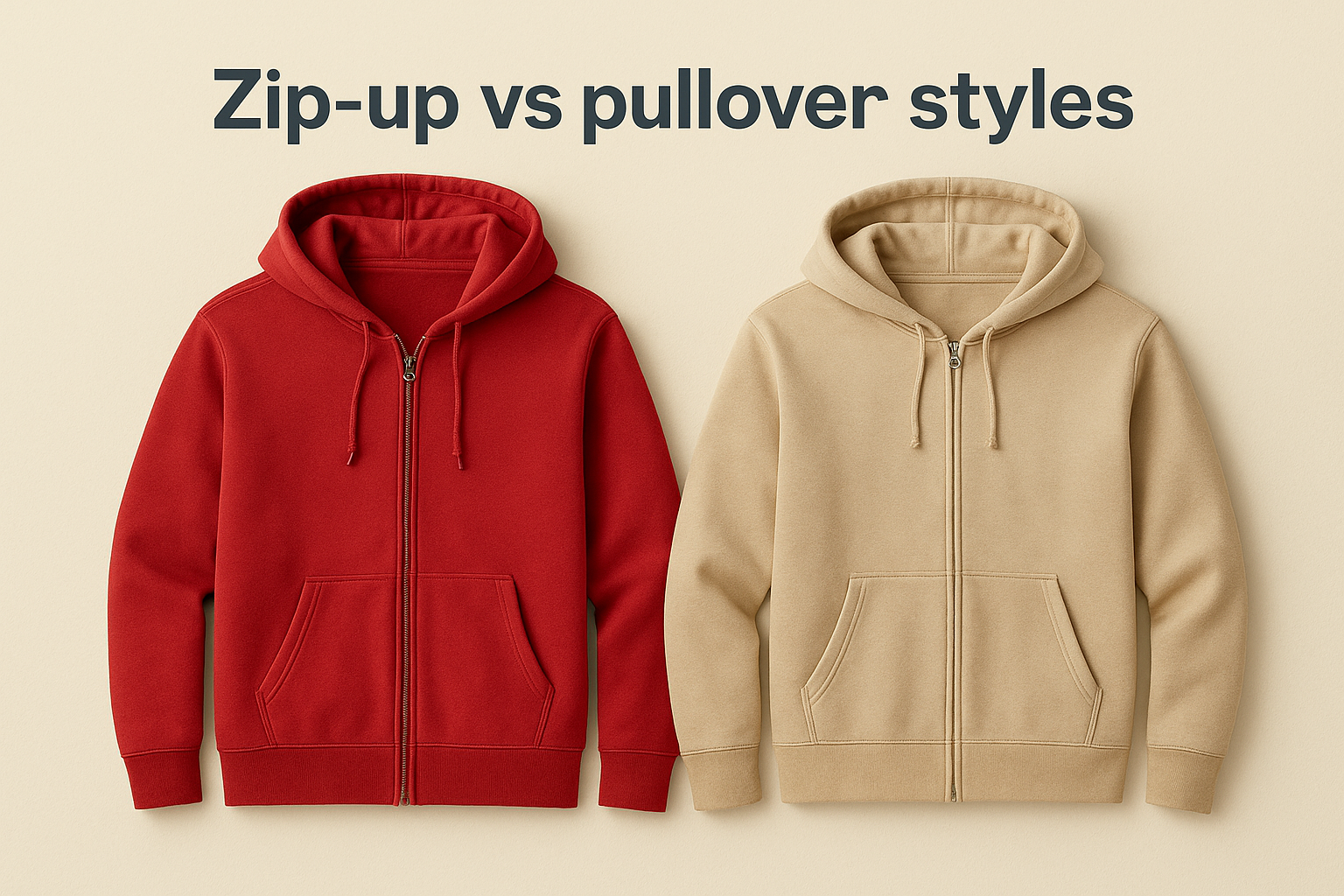
Zip-up vs pullover styles
Zip-up hoodies open up more embroidery real estate down the front placket, which works well for logos that pair with text running vertically or for brands that want visibility even when the hoodie’s unzipped. Pullovers keep the chest area clean and uninterrupted, better suited to a single centred crest or a small logo positioned above the pocket. Custom sweater embroidery on a pullover also avoids the seam interference that a zip can cause when placement sits close to the centre line.
Matching the garment to how it’ll be worn
Think about the job the hoodie needs to do before you order fabric samples. A construction crew needs something heavy enough to survive daily wear and washing, while an agency handing out hoodies at a conference might prioritise a softer, lighter feel people actually want to keep wearing.
- Everyday team wear: heavyweight fleece, pullover style, chest logo
- Client giveaways: mid-weight blend, soft hand feel, small embroidered mark
- Winter workwear: heavy cotton-poly, zip-up, larger back or sleeve embroidery
- Retail or event staff: lighter fleece, pullover, subtle front placement
Apex Workwear stocks a range of weights and styles specifically because one hoodie doesn’t fit every use case, and getting this choice right before production starts saves you from reordering later.
Placement, thread colours and design tips that hold up
Where you put your logo and how you choose your thread colours matters just as much as the stitching quality itself. Get placement wrong and even a perfectly digitised design looks off-balance the moment someone puts the hoodie on. Custom embroidery on hoodie orders succeed or fail on decisions made before the machine ever starts sewing, so it’s worth slowing down here.
Where to place your embroidery
Left chest, just above the pocket, remains the most common spot because it reads naturally when someone’s standing or sitting across a table from you. Centre chest suits a bold single logo or wordmark, while sleeve placement works well for smaller marks that don’t need to dominate the garment. Full back embroidery exists but gets expensive fast, since stitch count and machine time both climb with size. Here’s a quick guide:
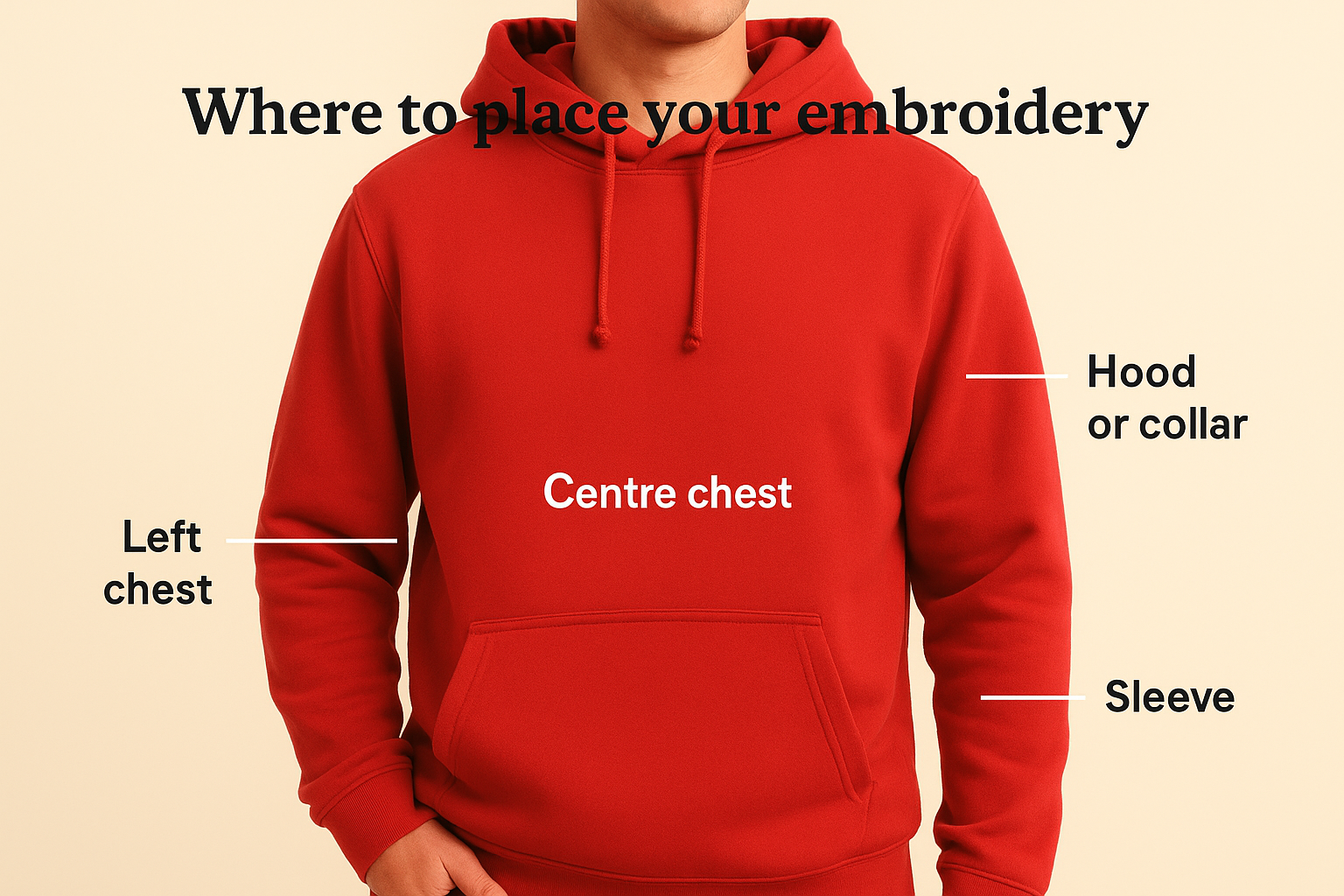
- Left chest: classic spot, works for logos and small text
- Centre chest: best for wordmarks or single bold crests
- Sleeve: subtle branding, good for team names or small icons
- Hood or collar: niche placement for taglines or dates
Choosing thread colours that actually work
Thread comes in a fixed palette, unlike ink, so your brand colours need matching against the closest available shade rather than an exact digital code. Custom embroidery sweater work on dark fabric needs contrast to stay legible, while light hoodies can carry subtler tones without the logo disappearing into the background. Ask your supplier for a thread chart before approving artwork, since guessing at colour from a screen almost always leads to disappointment when the sample arrives.
Match thread to a physical chart, never to a screen.
Design choices that survive the needle
Simplify before you digitise. Fine gradients, thin script fonts, and tiny detail lines don’t translate to thread the way they do to ink, and a digitiser will often flag these issues before production starts. Custom embroidery sweatshirt designs with bold outlines, limited colours, and text above 5mm hold their shape far better than intricate artwork squeezed into a small chest space. If your logo has fine print or a tagline, consider dropping it from the embroidered version entirely and keeping the main mark clean.
Caring for your embroidered hoodie so it lasts
Embroidery is tough, but it’s not indestructible. A stitched logo can still snag, fray, or lose its shape if you wash and dry the hoodie carelessly. Custom embroidery hoodies hold up best when you treat the stitched area with a bit more care than the rest of the garment, and that habit costs you nothing extra beyond a few minutes of attention on laundry day.
Washing without damaging the stitching
Turn the hoodie inside out before it goes in the machine. This one step protects the raised stitching from rubbing against zippers, buttons, or other garments in the load. Wash in cold or warm water rather than hot, since heat can loosen thread tension over repeated cycles, and skip the fabric softener, which coats fibres and dulls the texture that makes embroidery look sharp in the first place.
Turn it inside out, and the stitching lasts years longer.
Drying and ironing around embroidered areas
Air drying keeps embroidery looking crisp for longer than a tumble dryer does, though a low-heat cycle won’t cause serious harm if you’re short on time. If you need to iron the hoodie, avoid pressing directly onto the stitched design. Place a cloth over the embroidery first, or iron from the inside, since direct heat and pressure can flatten the raised texture that gives custom sweatshirt embroidery its premium feel.
A simple care routine
Here’s a quick checklist worth pinning near the laundry basket if you’re managing embroidered hoodies for a whole team:
- Turn the hoodie inside out before washing
- Use cold or warm water, never hot
- Skip fabric softener on embroidered pieces
- Air dry when possible, or use low heat
- Iron from the inside, or cover the design with a cloth
- Avoid bleach and harsh stain removers directly on thread
Follow that routine and a well-made embroidered hoodie will outlast several rounds of printed apparel without the logo showing any real wear. For businesses issuing hoodies to staff or clients, sharing this short list alongside the order saves you the awkward conversation about a logo that frayed after a few too many hot washes. It’s a small ask that protects the investment you made in getting the branding right in the first place.
What to expect when ordering custom embroidered hoodies
Placing an order for custom embroidery hoodies should feel straightforward, not like navigating a maze of vague pricing and unclear turnaround promises. Most reputable suppliers walk you through the same basic stages: quote, proof, sample approval, and production. Knowing what happens at each stage helps you plan around deadlines, whether you need hoodies for a trade show next month or uniforms for a crew starting next week.
Getting your quote and proof
Send your logo file and hoodie style to your supplier, and expect a free quote within 24 hours from a company like Apex Workwear. A digital proof follows, showing placement, thread colours, and stitch count before anything gets sewn. Review this proof carefully, since small text or fine detail flagged here saves you from a disappointing sample later.
Approve the proof carefully, because that’s your last chance to catch a mistake before stitching starts.
Turnaround times and rush options
Standard production for custom hoodies embroidery orders typically ships within 5 to 7 business days once you approve the proof. Rush options exist for tighter deadlines, though expect a premium for compressing the schedule. Larger orders or multiple thread colours can add a day or two, so build in buffer time if your event date is fixed.
Pricing factors worth knowing
Cost depends on more than just hoodie quality. Here’s what actually moves the price:
- Stitch count: denser designs cost more to sew
- Number of thread colours: each colour change adds machine time
- Order quantity: bulk pricing lowers the per-piece cost
- Garment quality: heavier blends cost more than basic fleece
- Placement: sleeve or back embroidery often costs more than chest logos
Having no minimum order requirement means small businesses can order a handful of custom embroidery sweaters without paying inflated per-unit prices, and free local shipping across the GTA keeps the total cost down further.
Bringing your design to life
Embroidery custom hoodies come down to a simple trade: you spend a bit more upfront for a logo that survives years of washing, travel, and daily wear without cracking or fading. From digitising your artwork to picking the right fabric weight and thread colour, every step in this process exists to protect that stitched mark on your team’s chest. Get those choices right and you end up with apparel that looks deliberate, not thrown together.
Apex Workwear handles that whole process in-house, from proof to production, with a 24-hour quote turnaround, no minimum order, and free shipping across the GTA. Whether you need a handful of hoodies for a small crew or a bulk run for an entire staff, you get the same expert review on your design before anything gets stitched. Get your free quote from Apex Workwear and see your logo on a hoodie within days, not weeks.