Vinyl banners crack in the cold, glare under fluorescent lights, and look cheap the moment they’re rolled up for storage. That’s why more businesses across the GTA are switching to fabric banner printing for trade shows, storefronts, and event backdrops. It photographs better, folds flat without creasing, and holds colour longer than the plastic sheets most print shops push by default.
If you’re trying to work out banner fabric printing before placing an order, it comes down to three things: the material weave, the print method, and how the finished piece will be used. Lightweight polyester suits indoor step-and-repeats, while heavier blackout fabric handles outdoor signage and double-sided displays. Knowing which fits your setup saves you from reordering a second banner once the first one underperforms.
This guide walks through what fabric banner printing actually involves, the fabric options worth considering, and the questions to ask before you commit to a supplier. We’ll also cover sizing, pricing expectations, and turnaround times, so if you’re searching for fabric banner printing near me, you’ll know exactly what a good Canadian provider should offer.
Why fabric banner printing matters for your brand
A banner is often the first thing a potential customer sees, whether it’s hanging above your booth at a trade show or stretched across your storefront window. Fabric banner printing gives that first impression more weight because the material itself signals quality before anyone reads a single word on it. Vinyl banners flap loudly in the wind, show every crease from folding, and reflect light in a way that washes out logos in photos. Fabric doesn’t do that. It hangs with a natural drape, absorbs light instead of bouncing it back, and reads as a considered investment rather than a last-minute print job.
Durability that holds up outside the shop
Ontario weather doesn’t make life easy for signage. Vinyl gets brittle in cold snaps and can split along the grommets after a season or two outdoors. Polyester and canvas blends used in cloth banner printing are woven to flex rather than crack, which matters if your banner is going up at an outdoor market in April and coming back down in November. Heavier blackout fabric also resists UV fading better over repeated use, so a banner ordered this summer still looks sharp at next year’s event instead of needing a reprint.
A banner that survives a full season outdoors pays for itself faster than one you replace every few months.
Why photographs and video actually matter here
Event coordinators and marketing teams care about how a banner performs on camera, not just in person. Vinyl’s glossy finish creates hotspots under stage lighting or camera flash, which ruins otherwise good event photos and social media clips. Fabric has a matte finish that eliminates glare, so your logo and colours stay true whether someone’s shooting for Instagram or a company recap video. If your brand shows up in event photography regularly, this alone justifies the switch.
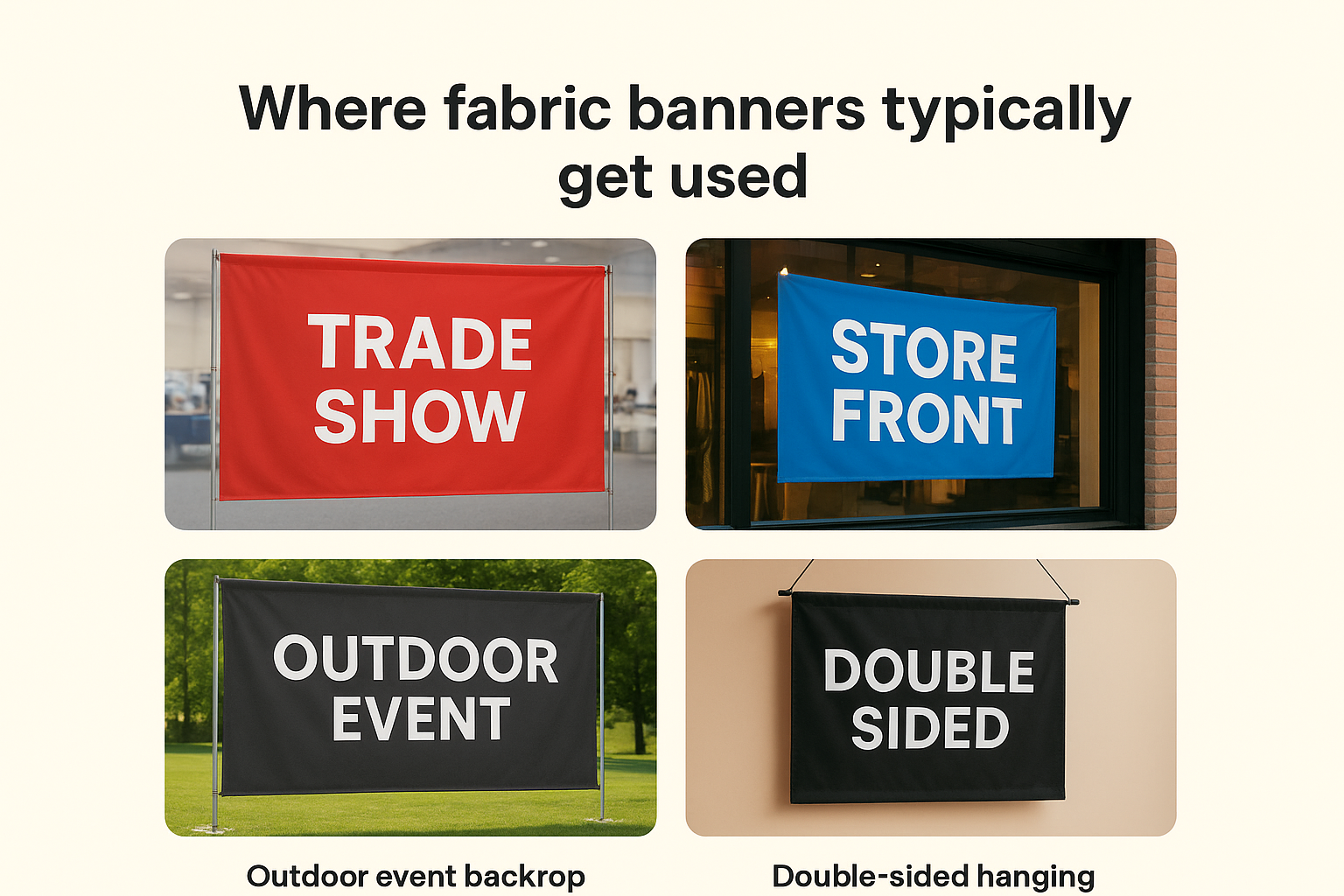
Where fabric banners typically get used
Different settings call for different weights and finishes. Here’s a quick breakdown of common applications and what tends to work best:
| Setting | Recommended fabric | Why it works |
|---|---|---|
| Trade show step-and-repeat | Lightweight polyester | Packs flat, no visible creases when unpacked |
| Storefront window display | Backlit polyester | Reads clearly with or without interior lighting |
| Outdoor event backdrop | Blackout canvas blend | Resists fading and holds shape in wind |
| Double-sided hanging display | Heavyweight blackout fabric | Prevents show-through from the opposite side |
| Conference stage banner | Stretch fabric | Wrinkle-resistant, easy to tension on a frame |
Sourcing the right material for the right job means fewer complaints from your team about a banner looking tired halfway through an event weekend.
The cost of getting it wrong
Ordering the wrong finish doesn’t just waste money, it can undercut the message you’re trying to send. A construction contractor putting a vinyl sign on a job site fence sends a different signal than one using a crisp fabric banner with clean branding. Small business owners in particular can’t afford reprints on tight marketing budgets, so getting the material right the first time matters more than chasing the lowest quoted price. Getting banner printing on cloth right the first time also protects your timeline. If a rushed vinyl order arrives creased or discoloured two days before an event, there’s rarely time to fix it. Fabric’s forgiving nature during shipping and storage means fewer surprises when you unroll it on site.
Thinking through where the banner will actually live, indoors, outdoors, on a stage, or in a shop window, before you order saves both money and last-minute stress. The next section breaks down exactly how to match fabric weight and finish to your specific setup.
How to choose the right fabric banner for your needs
Picking a banner isn’t just about picking a size and calling it done. Fabric banner printing works best when you think through where it hangs, how long it stays up, and how it travels between events. Get these details wrong and you’ll end up with a banner that sags, fades, or simply doesn’t fit the space you had in mind.
Match the fabric weight to the environment
Lightweight polyester, usually around 150 to 200 gsm, suits indoor use where there’s no wind or rain to fight against. It’s the go-to for trade show walls and step-and-repeats because it packs into a bag without creasing. Heavier blackout fabric, often 220 gsm or more, holds up outdoors and blocks light bleed-through on double-sided setups. If you’re unsure which weight your project needs, ask your supplier for a swatch before committing to a full print run. A quick physical check saves you from guessing based on a product description alone.
The right fabric weight for the job matters more than the design printed on it.
Pick the right finishing and hardware
How the banner attaches to a wall, frame, or pole changes what finishing you need. Common options include:
- Grommets along the edges for hanging on hooks or wire
- Pole pockets sewn top and bottom for pop-up frame systems
- Velcro strips for fabric wall displays and tension frames
- Hemmed edges only, for banners draped over a table or rail
Getting this wrong means a banner that looks great but has nowhere proper to attach, which turns setup into a scramble on event morning.
Decide on size and print method
Sizing depends on viewing distance. A banner read from across a parking lot needs larger type and simpler graphics than one viewed up close at a booth table. Dye sublimation printing, the standard method for fabric banner printing, works well at almost any size because the ink becomes part of the fibre rather than sitting on top of it, so there’s no cracking at the seams even on oversized prints. Talk through your dimensions with whoever’s producing the banner before finalising artwork, since resizing after the fact can distort logos or text that was designed for a different aspect ratio.
Details like these determine whether your banner holds up for one event or several seasons, which is exactly why material choice deserves its own conversation before you compare it against vinyl.
Fabric vs vinyl banners: which material wins
Every print shop offers vinyl because it’s cheap to produce and forgiving to print on, but cheap production doesn’t always translate into the best result for you. Fabric banner printing costs slightly more per square foot, yet it wins on almost every metric that actually affects how your brand looks in public. Vinyl still has a place, just a narrower one than most suppliers admit when they’re trying to move stock off the shelf.
Side-by-side comparison
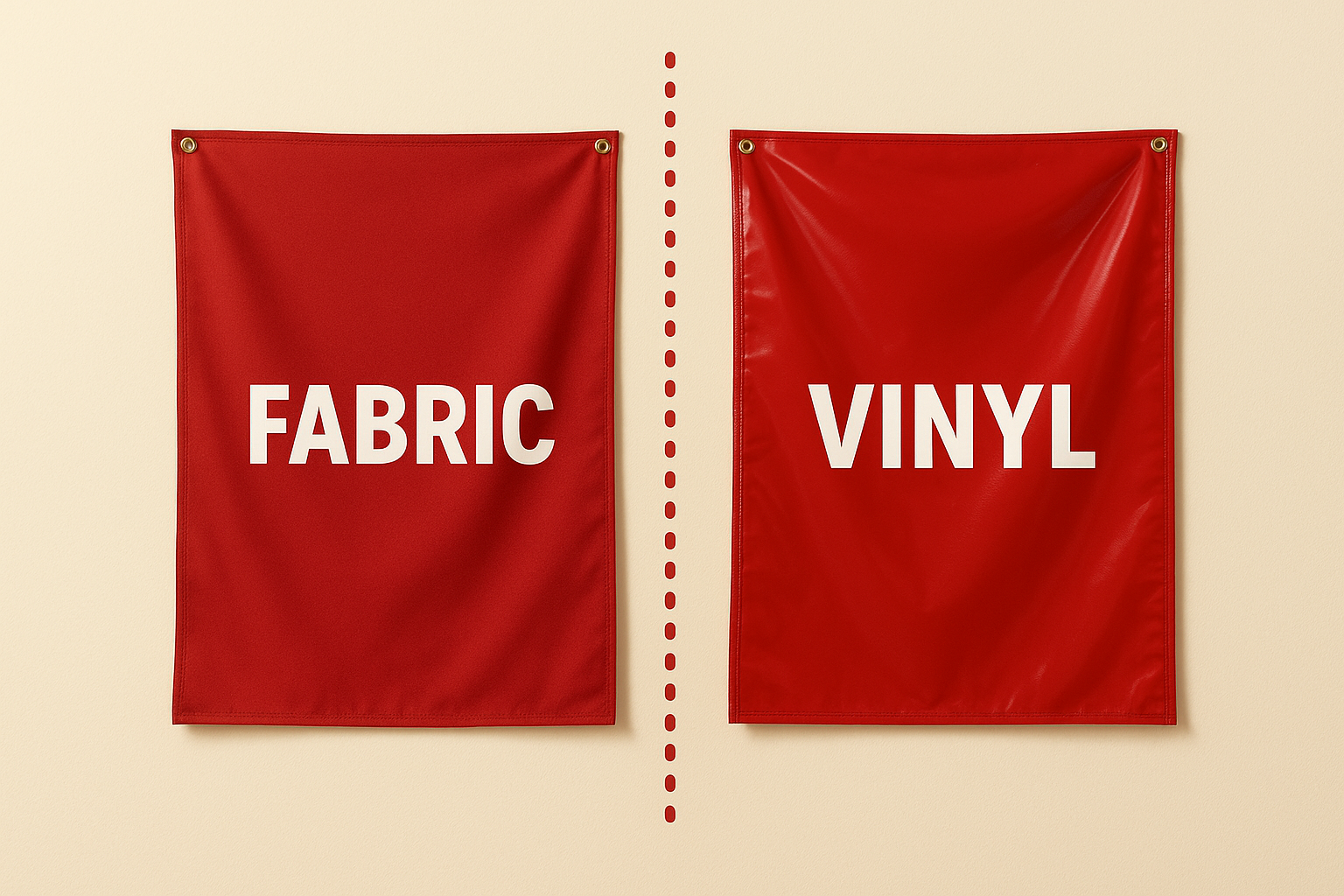
Here’s how the two materials stack up across the factors that matter most when you’re choosing between banner printing cloth and standard vinyl sheeting:
| Factor | Fabric | Vinyl |
|---|---|---|
| Weight | Light, foldable | Heavy, stiff |
| Cold weather performance | Flexes, resists cracking | Brittle below freezing |
| Glare under lighting | Matte, no hotspots | Glossy, reflects flash |
| Storage between uses | Folds flat, no creasing | Creases and cracks at folds |
| Typical lifespan (outdoor) | 1 to 2 seasons | 3 to 6 months |
| Cost per square foot | Moderate | Low |
Vinyl wins on upfront price, but fabric wins on every use after the first one.
When vinyl still makes sense
Occasionally vinyl is the right call. A single-use banner for a one-day sale, a construction site notice, or anything printed on an emergency same-day deadline doesn’t need the durability fabric offers. Grabbing vinyl for a throwaway job saves money you’d otherwise spend on a material built to last through repeat use. It’s a tool for short-term, low-stakes signage, not a long-term branding investment.
The bottom line for most GTA businesses
Most small businesses, contractors, and event coordinators reorder banners more often than they’d like, usually because the first one didn’t survive the season. Reordering costs more over a year than paying slightly more upfront for fabric that photographs well, resists weather, and doesn’t need replacing after one trade show. Switching once from vinyl to fabric tends to end the cycle of last-minute reprints altogether, which is the real reason so many GTA businesses have already made the change. Weighing that against a marginally lower sticker price makes the decision fairly straightforward once you’ve seen both materials side by side in person.
Where to order fabric banner printing in Canada
Finding a supplier for fabric banner printing in Canada means looking past the first page of search results and checking whether a shop actually produces the material in-house or just resells someone else’s print run. A local provider with its own equipment can turn around proofs faster, catch sizing errors before they hit the press, and adjust a rush order without waiting on a third party. When you type fabric banner printing near me into a search bar, prioritise shops that list Canadian production over ones that simply ship from an unnamed overseas facility.
What to check before you order
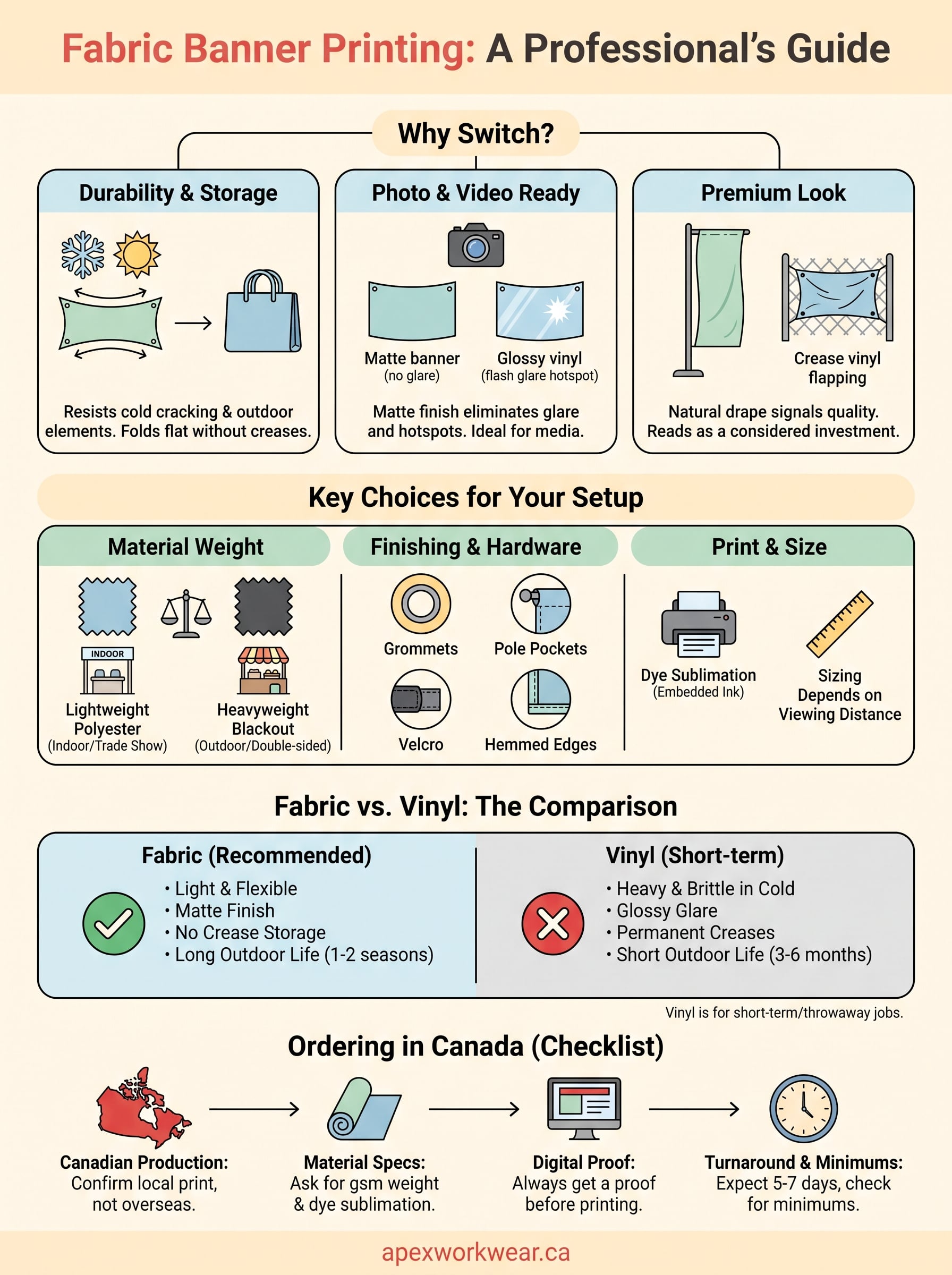
Before handing over artwork, run through this checklist:
- Production location: confirm the banner is printed in Canada, not just labelled and shipped from here
- Material specs: ask for gsm weight and whether it’s dye sublimated, not screen printed
- Proof process: a digital proof should come before printing, not after
- Turnaround time: most legitimate shops quote 5 to 7 business days, with rush options clearly priced
- Minimum order size: some suppliers require bulk orders even for a single banner
A supplier that skips the digital proof step is a supplier you should skip.
Why local production changes the experience
Ordering from a Canadian shop, especially one based in the Greater Toronto Area, usually means shorter shipping times and someone you can actually call if a colour looks off on the proof. Overseas print brokers often route orders through several middlemen, so a simple question about fabric weight can take days to answer. Proximity also matters for banner printing on cloth projects with tight event deadlines, since a local shop can sometimes hand-deliver or offer a quick pickup rather than relying on freight schedules that don’t bend for a Saturday trade show.
Getting a fair quote
Request quotes from at least two or three suppliers and compare them against the same specs: size, fabric weight, finishing, and turnaround. A quote that arrives within 24 hours, seven days a week, tells you something about how the business runs day to day, not just how it prices a single job. Watch for hidden costs on grommets, pole pockets, or rush fees that only appear after you’ve committed to artwork. Apex Workwear handles fabric banner printing entirely in Canada, with free quotes turned around within 24 hours and no minimum order required, which makes it a straightforward option if you’d rather skip the back-and-forth with overseas brokers.
Bringing your banner to life
Good fabric banner printing comes down to matching the right material to the right job, checking a supplier’s production process, and never skipping the proof stage. Get those three things right and you’ll have a banner that survives more than one event, photographs well, and actually represents your brand the way you intended. Skip them, and you’re back to reordering vinyl every season while your marketing budget quietly leaks away.
Whether you’re outfitting a trade show booth, dressing up a storefront window, or need a durable backdrop for a full event season, the fabric and finishing choices you make now decide how the banner performs later. Ready to stop guessing and get a straight answer on materials, sizing, and turnaround? Get a free quote from Apex Workwear and have Canadian-made fabric banners in hand within days, not weeks.