Large format printing refers to any print job that exceeds the dimensions of standard office printers. These prints typically measure over 18 inches wide, though many projects reach several feet or even metres in length. You see large format prints everywhere: banners hanging in storefronts, posters at events, yard signs on construction sites, and vinyl graphics on vehicles. Unlike the documents and flyers you print at your desk, large format projects use specialized equipment that can handle massive rolls of material or oversized rigid substrates.
This guide breaks down everything you need to know about large format printing. You’ll learn the standard sizes available, discover which products work best for different applications, and understand the technical process behind creating these oversized prints. We’ll also cover practical planning tips and design considerations that help you avoid costly mistakes. Whether you’re ordering your first banner or exploring new ways to promote your business, you’ll walk away with a clear understanding of what large format printing can do for you.
Why large format printing matters
Understanding the large format printing definition helps you recognise opportunities that smaller print methods simply cannot deliver. Traditional marketing channels like radio ads or online banners compete for attention in crowded spaces, but a well-placed banner or yard sign commands immediate visual attention. You control exactly where your message appears, making it easier to reach your specific audience. Local businesses particularly benefit because large format prints work around the clock, promoting your brand without ongoing costs.
Makes your message impossible to ignore
Physical presence creates impact that digital advertising struggles to match. A two-metre banner outside your storefront catches the eye of every passerby, while a vehicle wrap turns your work truck into a mobile advertisement that earns thousands of impressions daily. Yard signs guide customers directly to your location, and window graphics transform plain glass into compelling sales tools.
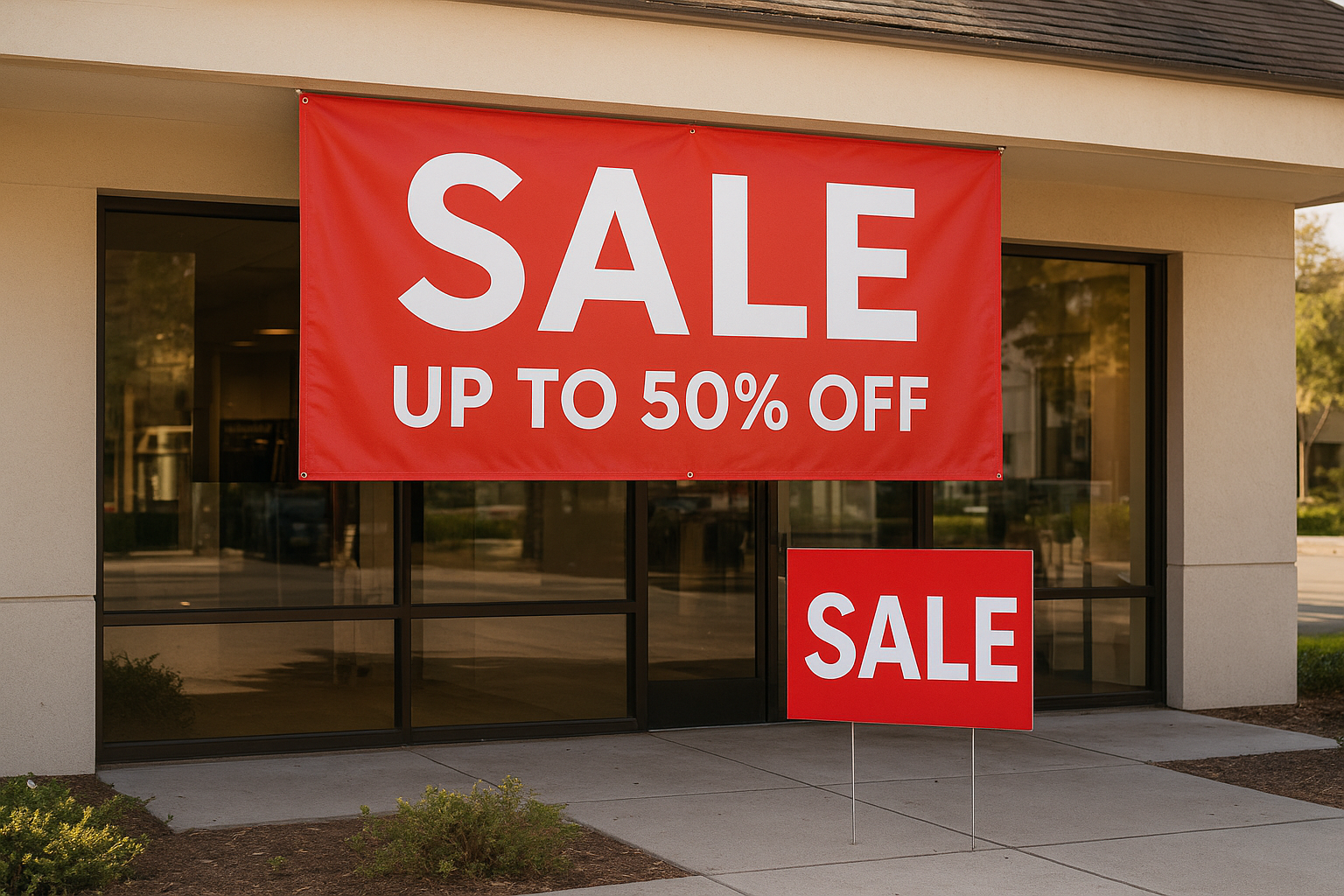
Large format prints work hardest when you place them where your customers already look.
Delivers better value than traditional advertising
You pay once and benefit for months or even years. Vinyl banners withstand harsh weather for outdoor events, while indoor posters serve your business through countless customer visits. The cost per impression drops dramatically compared to paying for repeated digital ads or broadcast spots.
How to plan a large format print project
Successful large format projects start with clear objectives and realistic timelines. You need to determine your message priority, your budget constraints, and where the print will live before you contact a printer. Planning ahead saves you money and prevents rushed decisions that compromise quality. Most printers need at least five to seven business days for standard orders, though rush services cost more.
Know your display location first
Your environment dictates almost every other decision in the planning process. Indoor prints allow for delicate paper stocks and vibrant colours that might fade outdoors, while exterior applications demand weather-resistant materials like vinyl or coroplast. Consider how far away viewers will stand from your print, as this determines the minimum text size and image resolution you need. A banner viewed from across a car park requires bolder graphics than a poster mounted at eye level in a hallway.
Choose materials based on durability needs
Temporary displays call for different solutions than permanent installations. Paper posters work perfectly for short-term promotions lasting a few weeks, but vinyl banners withstand months of outdoor exposure without deteriorating. Match your material to your timeline and budget. Foam board offers lightweight rigidity for indoor events, while aluminum composite panels deliver professional permanence for building signage.
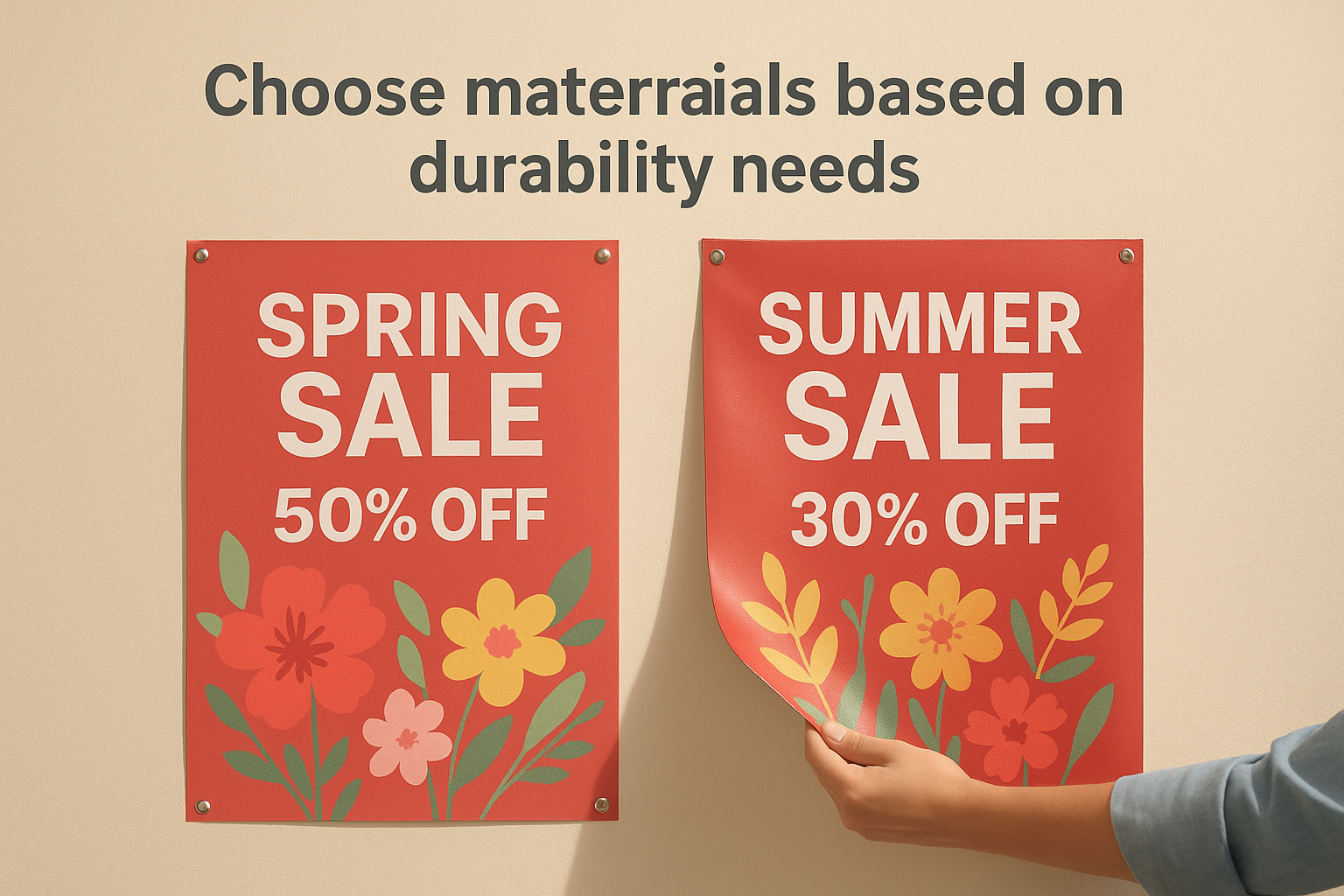
Select materials that outlast your campaign by at least 20 percent to account for weather and handling.
Get your measurements right
Double-check every dimension before placing your order. Measure the mounting surface carefully and account for any hardware like grommets or hanging systems that affect the finished size. Understanding the large format printing definition includes knowing that printers work in specific size increments, so ordering a custom dimension might cost more than choosing a standard size. Request a digital proof to verify that your layout fits properly and all critical elements appear within safe margins.
Typical sizes and formats explained
Large format printers handle materials from 18 inches wide up to 16 feet or more, giving you extensive flexibility for different projects. Most commercial printers organize their capabilities into standard width categories that accommodate common applications. Understanding the large format printing definition includes recognizing these size conventions, as they directly affect pricing and production time. Standard dimensions typically cost less than custom sizes because printers can work more efficiently with pre-configured material rolls.
Standard widths you’ll encounter
The industry works with specific width increments that dictate what you can produce. 24-inch wide printers handle small posters and most business signage, while 36-inch equipment manages architectural blueprints and medium banners. Larger facilities offer 60-inch or wider capabilities for vehicle wraps and building graphics. Your printer cuts material to your exact length requirement, but the width must fit within their equipment specifications. Most shops stock materials in these standard widths, reducing lead times and material costs.
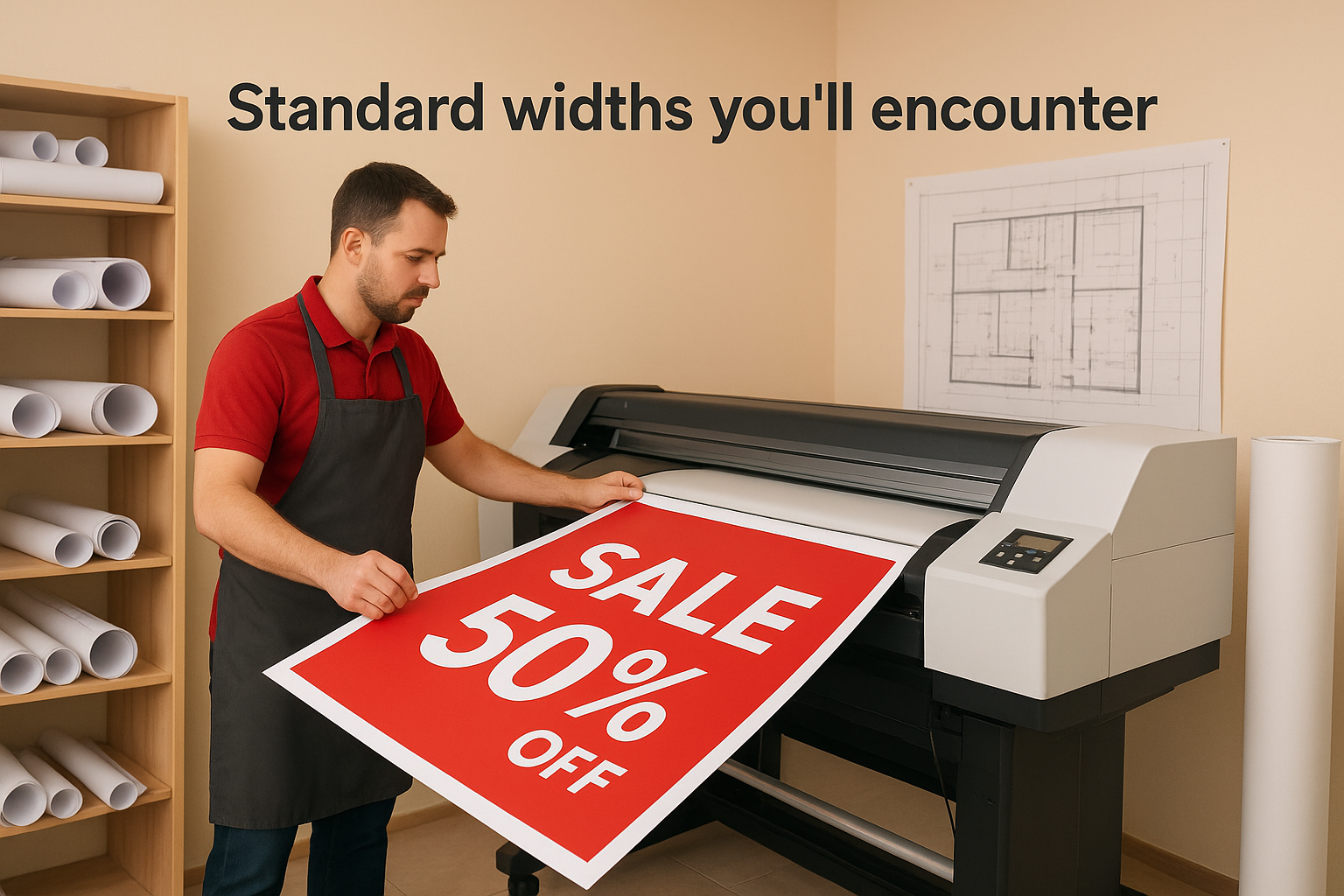
Standard widths offer faster turnaround and lower costs than requesting custom dimensions.
Custom sizing considerations
You can order virtually any dimension your project requires, but custom sizes often trigger additional charges. Non-standard widths may require special material orders or create more waste during production, increasing your final cost. Planning your design around standard dimensions helps you stay within budget while maintaining professional results. Consider how your finished piece will mount or display before finalizing dimensions, as leaving proper margins for grommets or hanging systems prevents critical elements from getting hidden.
Common large format products and materials
Printers use specialized equipment to produce dozens of different product types, each serving specific marketing and operational needs. Understanding the large format printing definition includes knowing which products suit your goals and which materials deliver the durability you require. Vinyl banners dominate outdoor advertising because they resist tearing and withstand rain, while paper posters excel at short-term indoor promotions where vibrant colours matter most. Your choice between products and substrates directly affects both your upfront costs and how long your investment serves your business.
Popular product applications
Banners work for everything from grand openings to ongoing storefront displays, with grommets allowing easy hanging from poles or building facades. Yard signs printed on coroplast guide customers to your location and promote real estate listings. Window graphics transform glass surfaces into advertising space using perforated vinyl that allows visibility from inside. Vehicle wraps turn company trucks into mobile billboards, while trade show displays create professional backdrops for events. Posters mounted on foam board present clean, rigid presentations for retail environments.
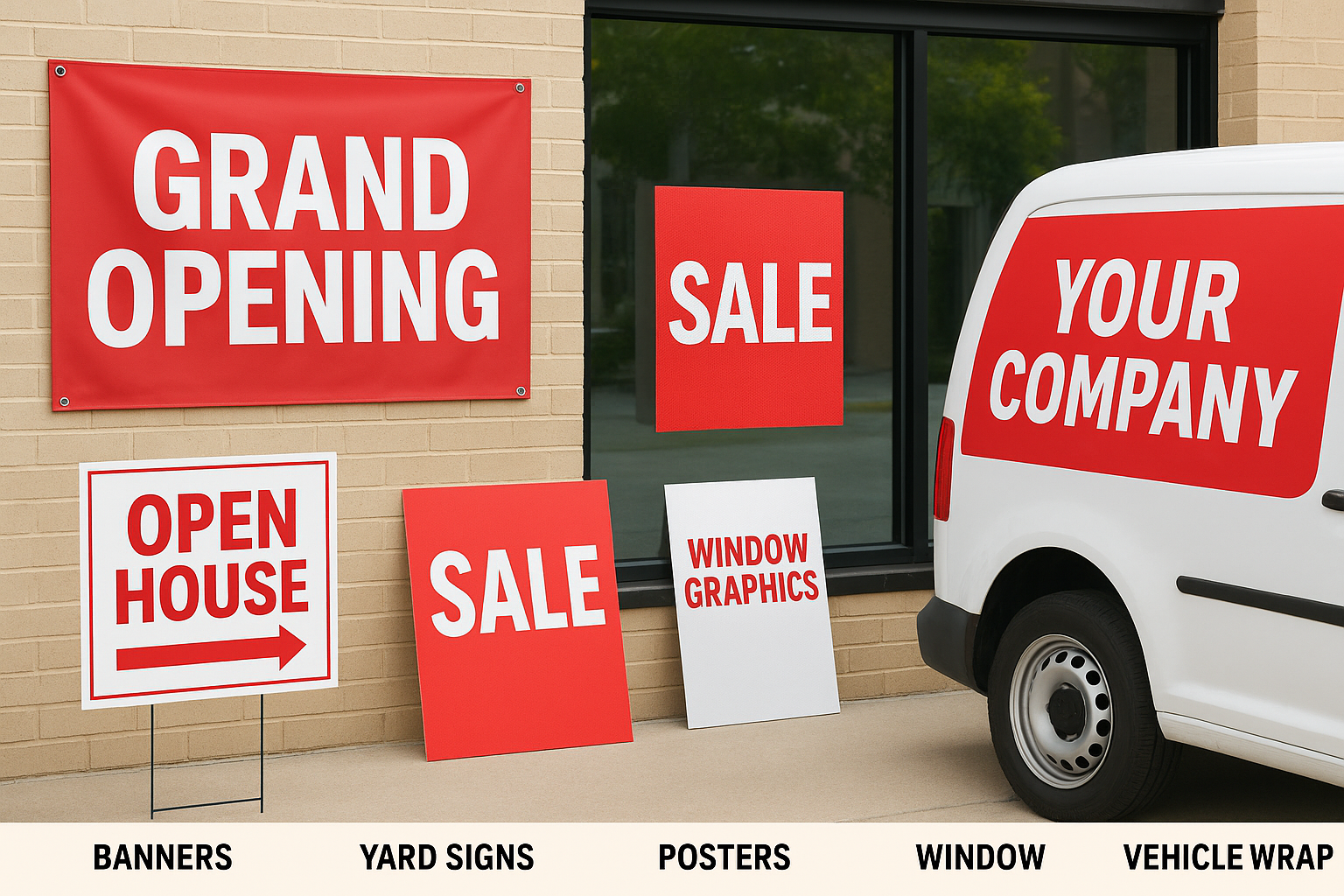
Material selection matters
Vinyl handles outdoor conditions for months without fading, making it ideal for banners and vehicle graphics. Paper stocks deliver sharp colours at lower costs for indoor posters with shorter lifespans. Coroplast provides lightweight durability for yard signs and temporary directional signage. Choose your material based on expected weather exposure and campaign duration.
Match your substrate to your timeline and environment rather than selecting the cheapest option.
Design tips for sharp large prints
Your design directly determines whether your large format print looks professional or pixelated when printed at full size. Image resolution becomes critical at larger scales because viewers see every flaw more clearly, yet working with massive file sizes slows down your design process. Understanding the large format printing definition includes grasping how viewing distance affects your design decisions. A banner viewed from ten metres away needs far less detail than a poster examined up close, allowing you to work with smaller file sizes while still achieving sharp results.
Resolution requirements scale with size
Start with 150 DPI for most large format projects, rather than the 300 DPI standard used for small prints. Banners hanging high on buildings look sharp at 72 to 100 DPI because viewers stand far away, while posters displayed at arm’s length require 150 to 200 DPI. Your printer can calculate the exact resolution you need based on the viewing distance and finished dimensions. Avoid scaling up small images to fill large spaces, as this creates visible pixelation that cheapens your final product.
Match your resolution to viewing distance rather than using one-size-fits-all settings.
Keep text large and legible
Minimum text sizes increase dramatically at distance. Body copy should measure at least 30 millimetres tall for banners viewed from across a car park, while headlines need 100 millimetres or larger to capture attention. Choose bold, simple fonts without thin strokes that disappear at distance. Test your design by viewing it at scale on your computer screen from across the room to simulate how it reads in real conditions.
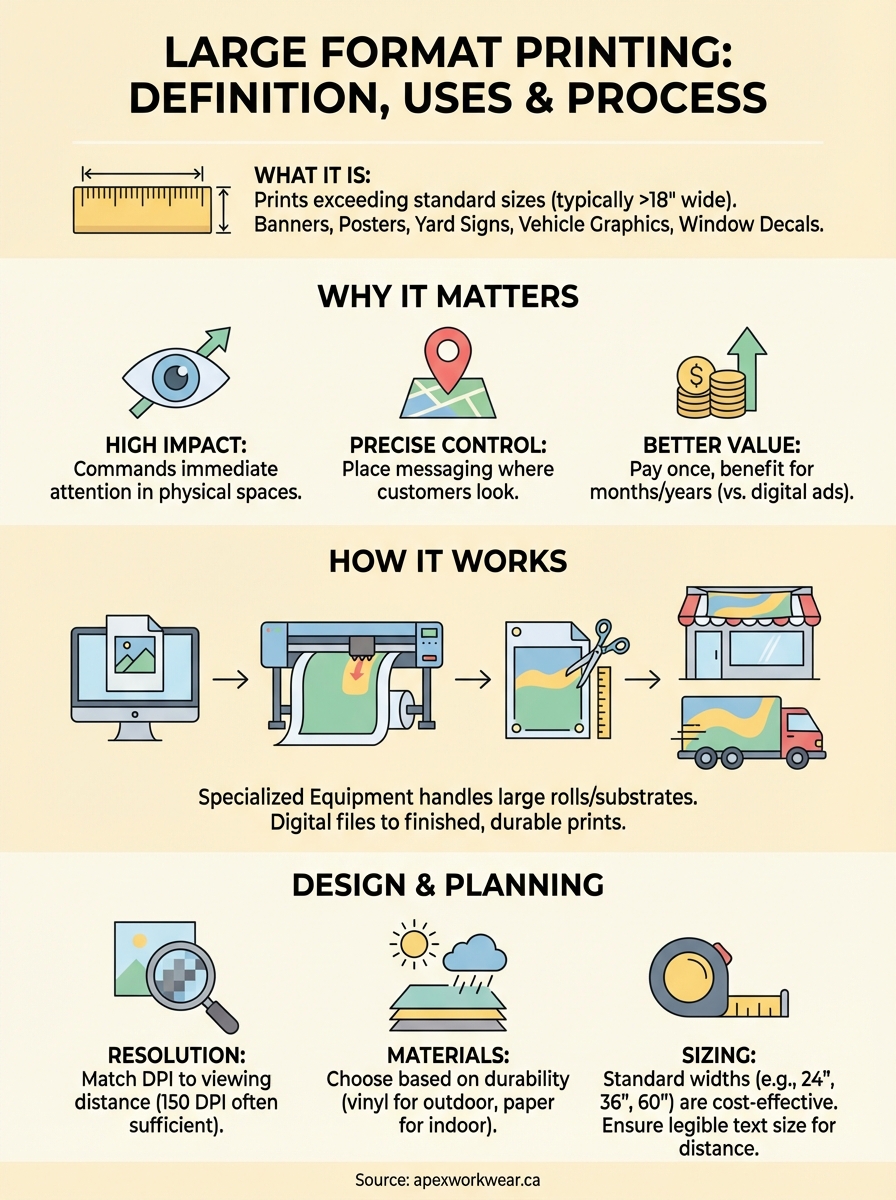
Key takeaways
Understanding the large format printing definition opens up powerful marketing opportunities that smaller print methods cannot match. Banners, signs, and vehicle wraps deliver consistent visibility without recurring costs, making them ideal for businesses that need to maximize their marketing budget. You control placement, messaging, and duration, giving you far more flexibility than traditional advertising channels. Physical prints work around the clock to promote your brand.
Planning ahead saves you time and money. Choose materials based on your timeline and environment, measure your display location carefully, and design with viewing distance in mind. Work with standard sizes when possible to reduce costs and speed up production. Ready to bring your brand to life with custom large format printing? Get a free quote from Apex Workwear and see how professional printing solutions can help your business stand out.