If you’ve ever asked what is sticker printing, the short answer is: it’s the process of producing custom adhesive labels and decals using various printing methods and materials. The longer answer, the one that actually helps you make smart decisions, covers the differences between printing methods, the materials that hold up (or don’t), and what you should expect to pay.
Stickers are one of the most versatile branding tools a small business can use. They go on packaging, products, vehicles, laptops, storefronts, and just about anything else with a flat surface. But not all stickers are created equal. The method and material you choose directly affect how your stickers look, feel, and last, and that’s exactly what this guide breaks down for you.
At Apex Workwear, we print custom stickers and labels right here in Canada as part of our full range of print products for businesses, teams, and individuals. Whether you need a handful of logo stickers or a bulk run of product labels, we handle it with no minimums, fast turnaround, and free shipping in the GTA. Below, we’ll walk you through the methods, materials, and costs involved so you can order with confidence.
Why sticker printing matters for businesses
Stickers punch well above their weight as a marketing tool. A single custom sticker on a product package can turn a forgettable unboxing into a branded experience. For small businesses that need to look professional without a large print budget, sticker printing offers one of the best returns per dollar of any physical marketing material you can produce.
Brand visibility at a low cost
Custom stickers give your brand a physical presence in spaces you would never reach with a digital ad. When a customer sticks your logo on their laptop, water bottle, or car window, you get ongoing exposure at zero additional cost. That is passive advertising working for you long after the sticker leaves your hands.
A well-designed sticker placed in the right hands can travel further than a flyer ever will.
Consider the range of situations where stickers deliver real business value:
- Product labels that identify and brand your goods on shelves or in shipments
- Packaging seals that close boxes or envelopes with a branded touch
- Promotional giveaways at events, markets, or in-store visits
- Window and vehicle decals that turn everyday surfaces into advertising space
Stickers build customer loyalty
Understanding what is sticker printing also means recognising what stickers do beyond just looking professional. When you include a free branded sticker in an order, customers notice that attention to detail. It signals that your brand cares about the full experience, not just the transaction itself. That small gesture builds goodwill and gives people a reason to remember you.
Stickers keep your business visible consistently, across multiple touchpoints, at a cost that works for businesses of every size regardless of budget.
Sticker materials and finishes
The material you choose determines how long your sticker lasts and where it works best. Part of understanding what is sticker printing means knowing that not every material suits every application. Some break down outdoors, others won’t stick to curved surfaces, and some simply look cheap once printed.
Vinyl and paper: the core options
Vinyl stickers are the most durable choice for outdoor use, product labels, and vehicle decals. They resist water, UV light, and general wear. Paper stickers cost less and work well for indoor use like packaging seals, envelopes, or short-term promotions, but they won’t hold up against moisture or prolonged sun exposure.
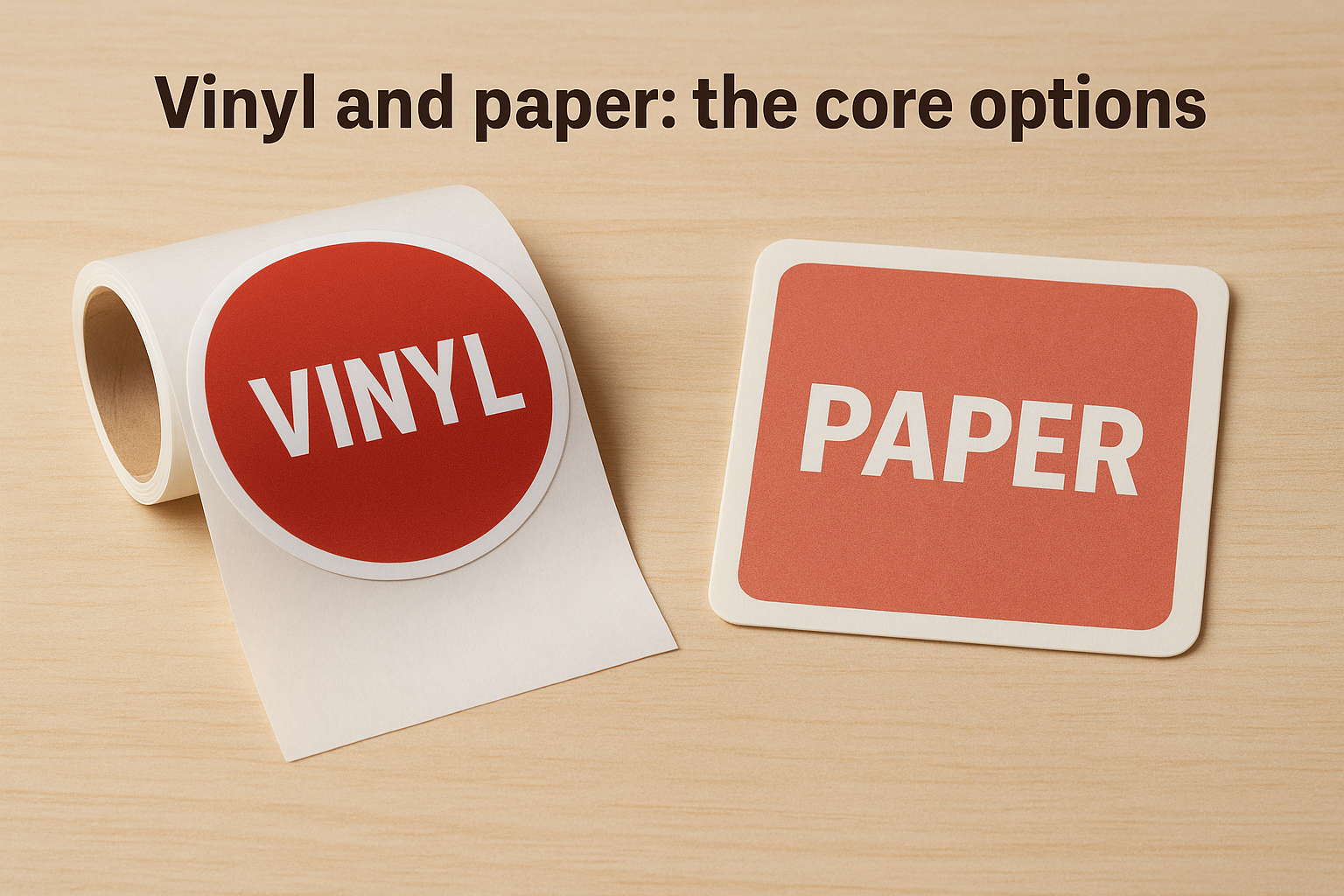
If your stickers will live outdoors or on products that get handled frequently, vinyl is worth the extra cost.
Finishes that affect look and feel
Your finish choice changes how the final sticker reads in person. Gloss finishes make colours pop and give stickers a clean, high-contrast appearance. Matte finishes reduce glare and suit premium or minimalist designs well. Clear vinyl lets the surface beneath show through, which works for brands that want a no-label look on their packaging without sacrificing a polished finish.
Sticker printing methods and equipment
The printing method behind your stickers affects print quality, minimum quantities, and cost per unit. Part of understanding what is sticker printing is knowing that different equipment suits different jobs, and choosing the wrong method for your volume or design can cost you money.
Digital printing
Digital printing is the most common method for custom stickers today. It uses high-resolution inkjet or laser printers loaded with vinyl or paper stock, and it handles full-colour artwork, gradients, and fine detail without the setup fees that older methods require. This makes it the right choice for small runs, one-off orders, and designs with many colours.
Digital printing gives you professional results at quantities that actually make sense for a small business.
Die-cutting and finishing
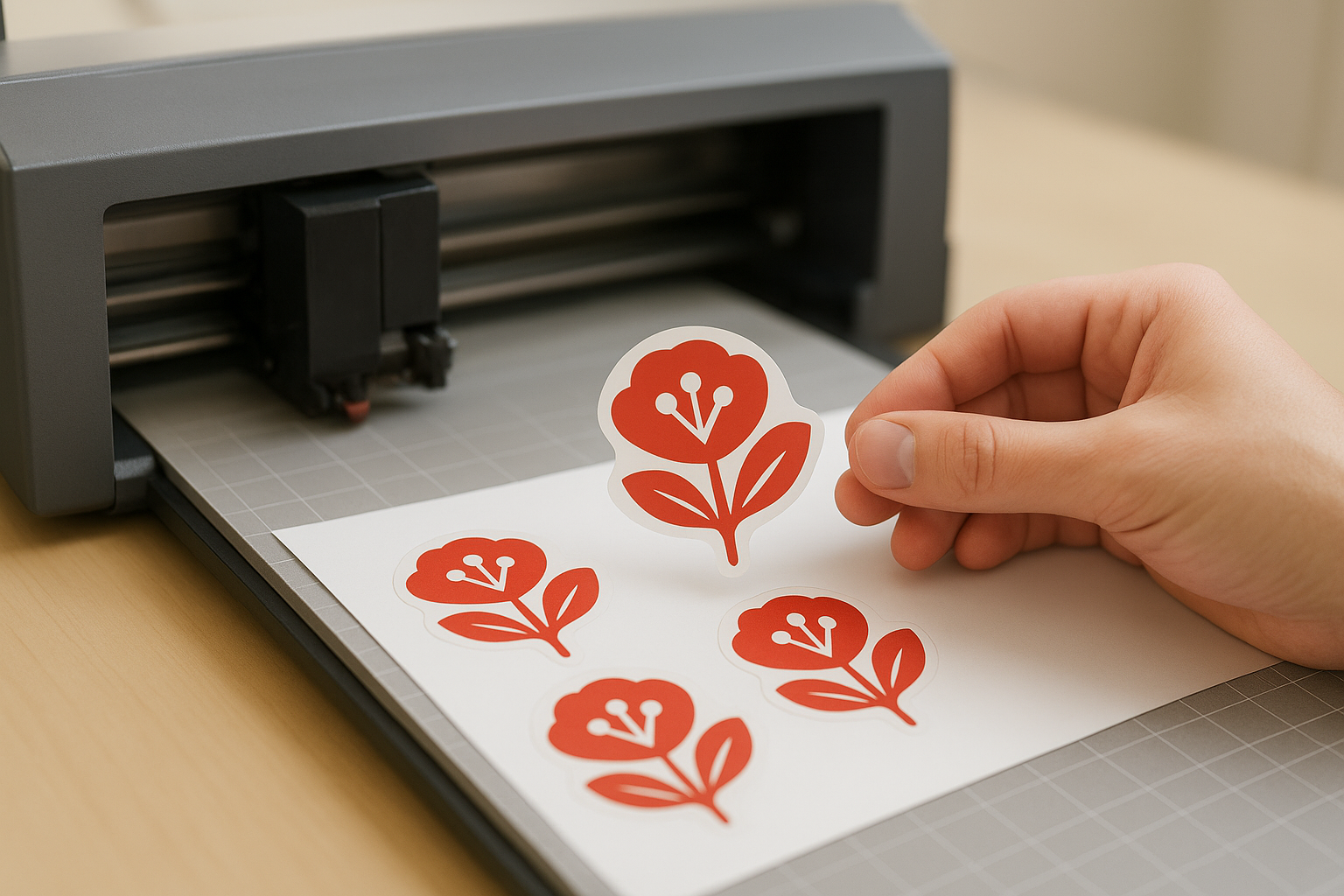
Most professional sticker jobs combine printing with die-cutting, which trims each sticker to a custom shape rather than leaving it as a basic rectangle. Your printer runs a blade or laser along the outline of your design, giving you clean, precise edges that match your artwork exactly. Kiss-cut stickers leave the backing sheet intact for easy peeling, while through-cut stickers separate each piece completely, which suits bulk sheet orders or individual unit stickers for product packaging.
How sticker printing works step by step
Knowing what is sticker printing in practice helps you prepare better files and avoid delays. The process moves through a few clear stages, from your design file to the finished sticker sheet, and each step directly affects the quality of the final result.
Getting your artwork right before production saves you time and prevents costly reprints.
Prepare your artwork
You start by supplying a print-ready file, ideally in a vector format such as PDF or AI, at the correct dimensions with bleed included. Your printer reviews the file for resolution, colour mode, and any layout issues.
If your design needs minor adjustments, a good print partner handles basic edits before sending you a digital proof to review and approve before anything goes to press.
Print, cut, and deliver
Once you approve the proof, the printer loads the correct material stock and runs your artwork through a digital press. After printing, the cutter trims each sticker to your chosen shape, whether a rectangle, circle, or a custom die-cut outline that follows your design exactly.
Your finished order is then quality-checked and packaged, then shipped directly to you once it passes inspection.
Sticker printing costs in Canada
Part of understanding what is sticker printing is knowing what to budget before you place an order. Prices vary depending on material, quantity, size, and finish, but Canadian print services generally offer competitive rates that work for both small runs and bulk orders.
Ordering more units per run drops your cost per sticker significantly, so plan your quantities around your actual usage.
What affects your price
Material choice is the biggest cost driver. Vinyl stickers cost more than paper because the stock itself is more durable. Die-cutting and custom shapes add a small premium over standard rectangle or circle cuts, and gloss or matte laminate finishes increase the unit price slightly but improve the final result.
Typical price ranges
For a small run of 50 to 100 stickers on standard vinyl, you can expect to pay roughly $30 to $80 CAD depending on size and finish. Larger runs of 500 or more units can bring your cost per sticker down to under $0.20 each. Paper stickers sit at the lower end of these ranges, while clear vinyl and premium laminated finishes push pricing toward the higher end. Rush turnaround adds to the total as well.
Next steps for your stickers
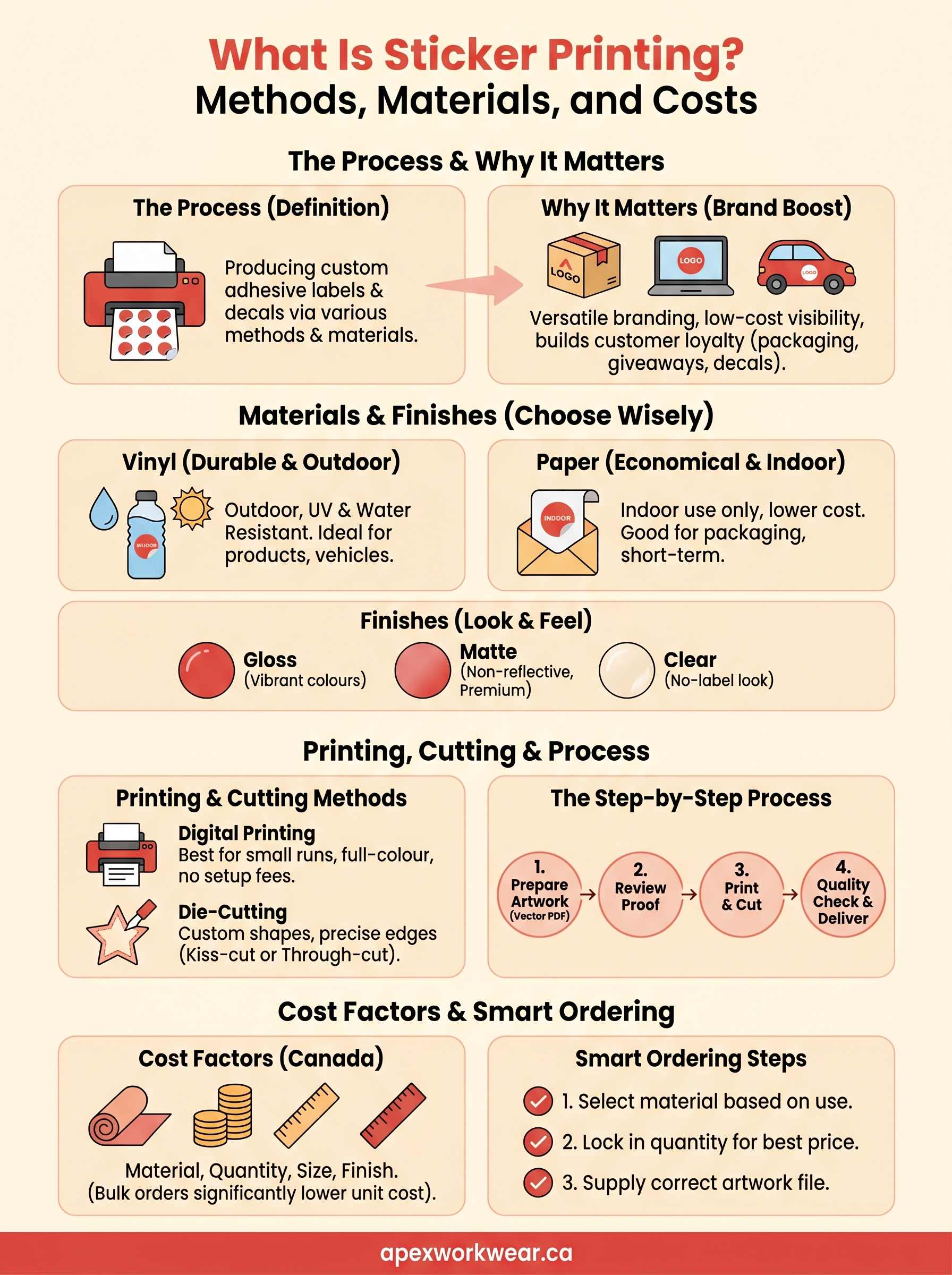
Now that you understand what is sticker printing and what goes into a quality order, you can move forward with a clear plan. Start by deciding on your material and finish based on where your stickers will actually live. Outdoor use means vinyl. Indoor packaging and short-run promotions work fine on paper. Once you know your material, lock in your quantity so you can take advantage of better pricing on larger runs.
Your artwork file matters as much as the material you choose. Supply a vector PDF at the correct size with bleed included, and a good print partner will review it and send you a proof before anything gets printed. Getting that proof right saves you from receiving stickers that don’t match your expectations.
If you’re ready to order custom stickers printed right here in Canada, get a free quote from Apex Workwear and have your estimate back within 24 hours.