When you’re ordering 50 t-shirts for a team event, the process is straightforward. But what happens when you need 500? Or 5,000? High volume apparel printing operates differently from small batch orders, and understanding those differences can save you significant time and money.
Whether you’re outfitting an entire workforce, launching a merchandise line, or supplying uniforms for a franchise, bulk apparel printing requires a different approach to artwork, production timelines, and pricing. The good news? When done right, larger orders typically mean lower per-unit costs and more consistent quality across every piece.
At Apex Workwear, we handle bulk orders for businesses across Canada, from corporate uniform programmes to event merchandise runs. This guide breaks down exactly how high volume apparel printing works, from minimum order thresholds to turnaround expectations, so you can plan your next large order with confidence.
What high volume apparel printing means in Canada
High volume apparel printing refers to bulk orders of custom-printed clothing that exceed the typical small batch minimums most print shops handle. In Canada, these orders usually start at 100 pieces or more, though some printers set their threshold at 250 or 500 units depending on their equipment and business model.
The key difference isn’t just quantity. When you place a bulk order, you’re accessing production workflows designed for efficiency and consistency across large runs. This means your order moves through dedicated equipment, often with simplified colour palettes and standardized sizing to maintain quality control across hundreds or thousands of garments.
When orders qualify as "high volume"
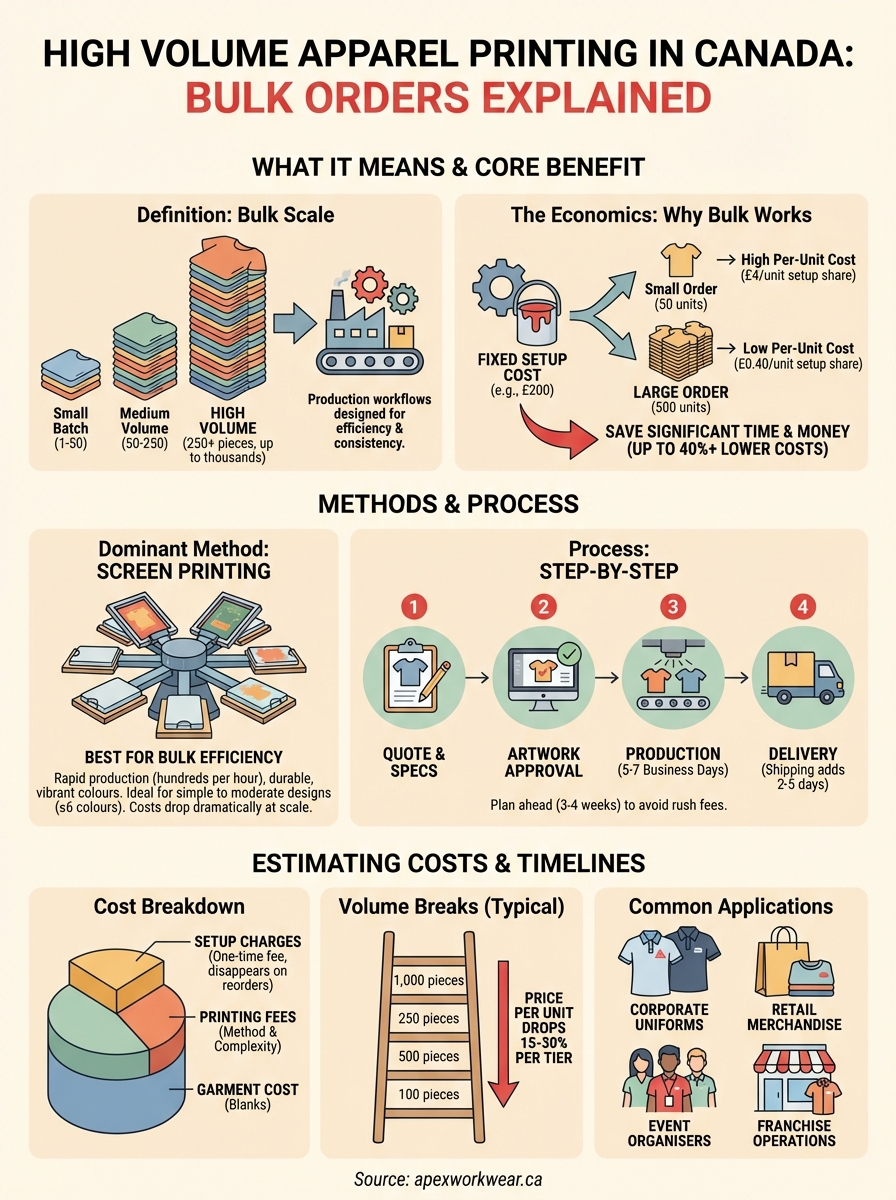
Most Canadian print shops categorize orders into three tiers. Small batch runs cover 1 to 50 pieces, medium volume spans 50 to 250 pieces, and high volume orders begin at 250 pieces and extend into the thousands. These thresholds shift based on the printing method, with screen printing favouring larger minimums than direct-to-garment (DTG) printing.
Your order qualifies as high volume when the per-unit cost decreases significantly with quantity increases. At this scale, setup costs get distributed across more pieces, making bulk production economically advantageous for both you and the printer.
High volume orders unlock pricing that simply doesn’t exist at smaller quantities, sometimes reducing costs by 40% or more per piece.
Common applications for bulk printing
Businesses ordering in bulk typically fall into specific categories. Corporate uniform programmes require matching apparel for entire teams or locations, whilst retail merchandise operations need inventory to stock shelves or fulfil online orders. Event organisers order hundreds of matching shirts for conferences, whilst franchise operations outfit multiple locations with branded workwear.
Schools, sports leagues, and promotional companies also rely on high volume apparel printing to meet their ongoing garment needs at sustainable price points.
Why bulk apparel printing works differently
Bulk apparel printing operates on fundamentally different economics than small orders. When you order 500 shirts instead of 50, the production setup costs remain roughly the same, but those fixed expenses now spread across ten times more garments. This changes everything from pricing models to the printing methods your supplier will recommend.
Setup costs get distributed across more pieces
Every print job requires preparation work. Your printer must create screens or load digital files, mix inks to match your brand colours, and test the setup on sample garments. These fixed costs might total several hundred pounds whether you print 50 pieces or 500. At higher volumes, that same setup fee gets divided across more units, dramatically reducing your per-piece expense.
Production efficiency changes at scale
High volume apparel printing justifies different equipment and workflows. Instead of switching between multiple small jobs throughout the day, production teams dedicate entire shifts to your order, eliminating the time lost to constant changeovers. Quality control becomes systematic rather than ad hoc, with dedicated inspection stages that catch issues before hundreds of garments pass through.
When production runs uninterrupted, consistency improves and costs drop, creating the pricing advantages bulk orders are known for.
How bulk orders work step by step in Canada
Placing a high volume apparel printing order follows a structured process that differs from quick-turnaround small jobs. You’ll work through multiple approval stages before production begins, ensuring your investment delivers exactly what you need at the scale you require.
Getting your quote and specifications locked in
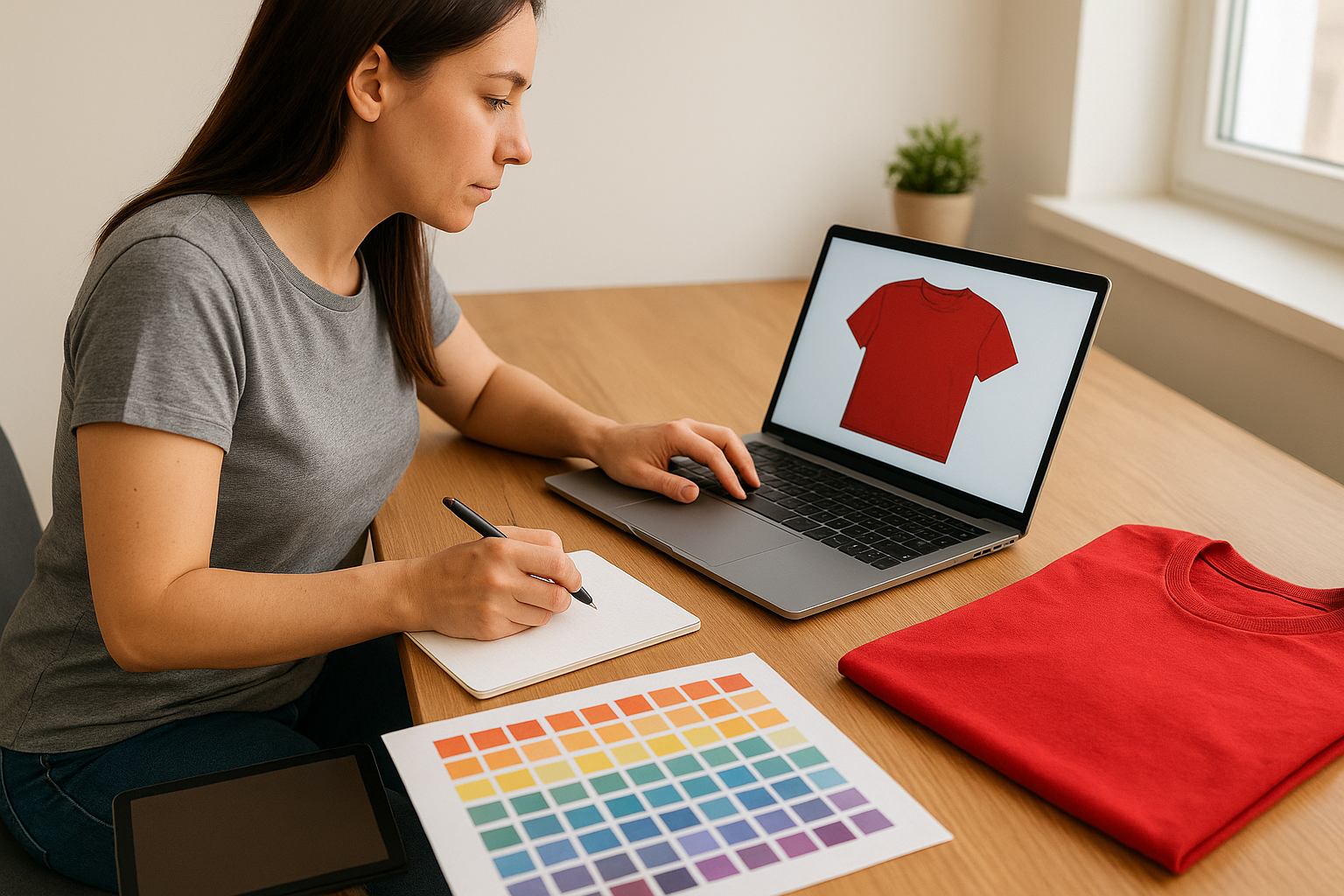
Your first step involves requesting a detailed quote that accounts for garment style, sizes, quantities, and print locations. You’ll specify whether you need 100 pieces in five sizes or 500 pieces in a single style. Canadian printers typically respond within 24 to 48 hours with pricing that reflects bulk discounts, and this quote becomes your production blueprint.
Artwork approval and production scheduling
Once you approve the quote, your artwork moves into pre-production preparation. The printer converts your files into production-ready formats, creates colour matches to your brand standards, and generates a digital proof for your final approval. After you sign off, your order enters the production queue, which for bulk runs typically spans five to seven business days in Canada, though rush services exist for urgent timelines.
Proper artwork preparation at this stage prevents costly delays once production begins, so review proofs carefully before approving.
Printing methods that scale for large runs
Not all printing techniques deliver the same cost efficiency at high volumes. Your printing method determines both your per-unit costs and production speed, making this choice fundamental to successful bulk orders. Canadian printers typically recommend specific techniques based on your quantity, design complexity, and turnaround requirements.
Screen printing for bulk efficiency
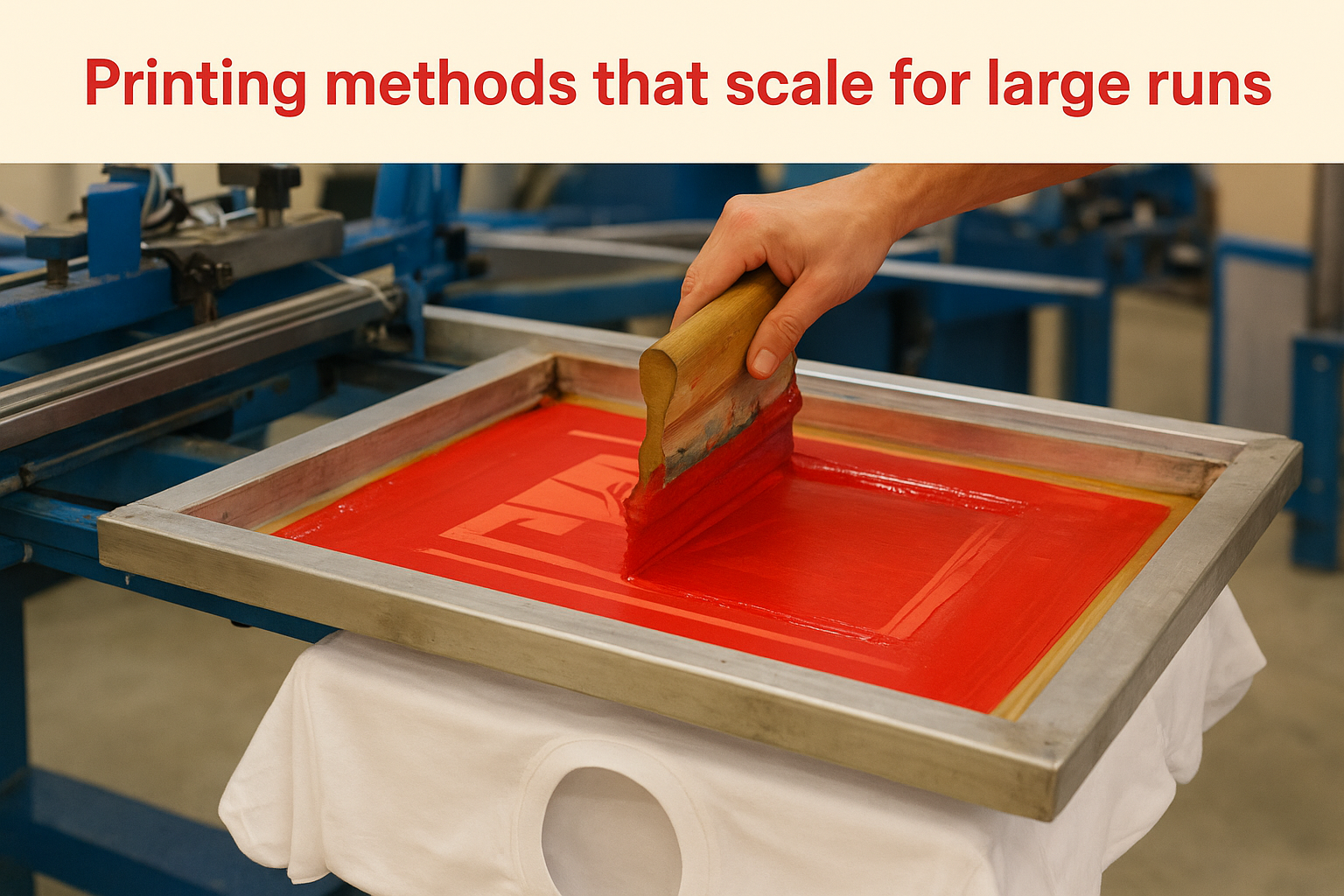
Screen printing remains the dominant method for high volume apparel printing in Canada. This technique creates individual screens for each colour in your design, then pushes ink through mesh directly onto garments. The setup requires time and expense, but once screens are made, production moves rapidly, often printing hundreds of pieces per hour.
Your costs drop dramatically with screen printing at scale. While a 50-piece order might cost £8 per shirt, a 500-piece run could drop to £3 per shirt using identical artwork. The method handles simple to moderately complex designs best, with most printers recommending six colours or fewer for optimal cost control.
Screen printing delivers unmatched durability and vibrant colours that withstand commercial laundering, making it ideal for workwear and uniforms.
Direct-to-garment considerations for larger orders
Direct-to-garment (DTG) printing works differently, using specialized inkjet technology to print designs directly onto fabric. This method excels with complex, full-colour designs but typically costs more per piece than screen printing. Some Canadian printers use DTG for bulk orders requiring extensive colour variation or personalization, though you’ll pay premium pricing compared to screen printing’s efficiency.
How to estimate pricing, timelines, and logistics
Planning a bulk apparel order requires accurate cost projections and realistic timeline expectations. Canadian printers base their quotes on garment costs, printing methods, quantities, and decoration complexity, with shipping logistics adding another variable to your total investment. Understanding these factors helps you budget properly and avoid production delays.
Breaking down your total costs
Your high volume apparel printing costs include three main components. Blank garment costs form the foundation, typically ranging from £2 to £12 per piece depending on quality and style. Printing fees stack on top, varying from £1 to £5 per piece based on colour count and technique. Finally, setup charges between £50 and £200 get added to your first order, though these fees disappear on reorders using existing screens or files.
Volume breaks typically occur at 100, 250, 500, and 1,000 pieces, with each threshold dropping your per-unit cost by 15 to 30 percent.
Planning production and delivery windows
Standard production for bulk orders runs five to seven business days after artwork approval in Canada. Shipping adds another two to five days depending on your location, with free delivery often available in the Greater Toronto Area. Rush services can compress timelines to 48 to 72 hours, though expect premium pricing for expedited production.
Next steps
Your next high volume apparel printing order starts with clear specifications and accurate quantities. Calculate your size breakdown, finalize your artwork to match your brand standards, and request quotes from Canadian printers who specialize in bulk production. Compare not just pricing but also turnaround times and quality guarantees, as these factors impact your total cost beyond the per-unit price.
Planning ahead gives you leverage. Orders placed three to four weeks before your deadline allow for proper production scheduling and avoid rush fees. You’ll also have time to review samples before committing to the full run, protecting your investment in what becomes hundreds or thousands of branded garments.
Ready to get started? Contact Apex Workwear for a free quote on your bulk apparel order. We handle high volume printing for businesses across Canada, delivering consistent quality whether you need 250 pieces or 2,500, with production completed right here in Canada and free shipping available in the Greater Toronto Area.