Choosing between booklet sizes (5.5×8.5 vs 8.5×11) often comes down to more than just preference, it affects how your content looks, feels, and functions in your reader’s hands. Whether you’re producing product catalogues, training manuals, or event programmes, the size you pick shapes everything from design layout to printing costs.
At Apex Workwear, we print booklets for Canadian businesses daily, and this question comes up constantly. The 5.5×8.5 format offers portability and a compact feel, while the 8.5×11 size gives you more real estate for detailed content and visuals. Each has distinct advantages depending on your goals and how your audience will actually use the finished piece.
This guide breaks down both sizes in plain terms, covering dimensions, common applications, file setup considerations, and which scenarios suit each format best, so you can move forward with confidence.
Why booklet size choice matters
Your booklet size directly affects how readers interact with your content and how much your project costs to produce. A format that works beautifully for a corporate annual report might feel awkward for a field guide that technicians carry on job sites. The dimensions you choose influence everything from page layout and image placement to shipping weight and production timelines.
Beyond aesthetics, booklet sizes (5.5×8.5 vs 8.5×11) impact your bottom line in measurable ways. Larger formats typically require more paper stock, increase postage costs if you’re mailing, and take up more space during transport. Smaller booklets often print more economically per unit but give you less room for detailed charts, diagrams, or photography that needs breathing space to make an impact.
Impact on readability and user experience
The physical size of your booklet shapes how comfortably readers can hold and navigate your content. A 5.5×8.5 booklet fits easily in one hand, slips into a bag or large pocket, and feels approachable for quick reference materials. Your audience can flip through pages on a crowded transit commute or tuck it beside a laptop during a workshop without it dominating their workspace.
A format that matches how your audience actually uses the material will get more engagement than one chosen purely for design appeal.
Larger 8.5×11 booklets demand more deliberate reading environments like desks or conference tables. They suit scenarios where readers need to spread out materials, take notes in margins, or study detailed visuals without squinting. This format also conveys a more formal, substantial presence that can reinforce authority in technical documentation or premium product catalogues.
Cost and practical considerations
Printing costs scale with paper consumption, so an 8.5×11 booklet uses four times the surface area of a 5.5×8.5 format for the same page count. That affects not just your paper bill but also ink coverage, production time, and storage requirements before distribution. Shipping becomes more expensive as size and weight increase, particularly for bulk orders sent across Canada.
Smaller booklets also integrate more easily into multi-touch campaigns where you’re pairing print with digital assets or including them in welcome kits alongside other promotional items. They stack efficiently, ship in standard envelopes, and cost less to store in inventory if you’re printing batches over time.
5.5×8.5 vs 8.5×11 at a glance
Understanding the core differences between booklet sizes (5.5×8.5 vs 8.5×11) helps you make faster, more confident decisions before production starts. These two formats represent the most common dimensions for booklet printing in Canada, each bringing distinct physical characteristics and practical trade-offs that affect how your finished piece performs.
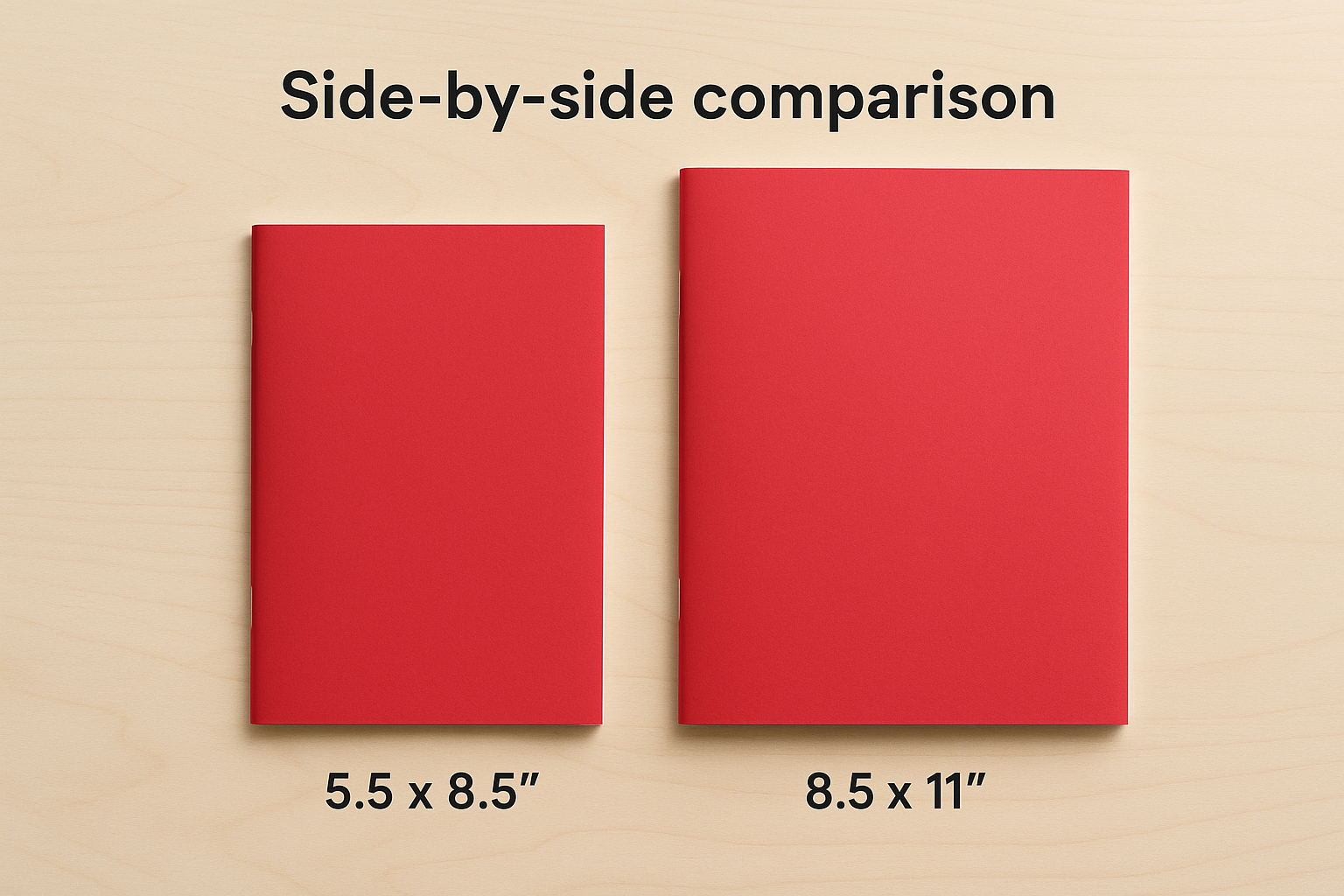
Side-by-side comparison
The table below breaks down the essential specifications you need to evaluate when comparing these formats:
| Feature | 5.5×8.5 | 8.5×11 |
|---|---|---|
| Finished size | 5.5" x 8.5" (digest) | 8.5" x 11" (letter) |
| Aspect ratio | 1.55:1 (more vertical) | 1.29:1 (more balanced) |
| Portability | Fits in bags, large pockets | Requires briefcase or desk space |
| Content capacity | Moderate text per page | High text and image capacity |
| Typical page count | 16–48 pages | 12–64 pages |
| Production cost | Lower per unit | Higher per unit |
Your 5.5×8.5 booklet creates a more intimate reading experience with its vertical orientation, while the 8.5×11 format matches standard North American letter paper, making it familiar and professional. The smaller format prints from a half-sheet of letter stock, which streamlines production but limits how much content fits comfortably on each spread.
Choose the format that matches how your audience will physically handle and reference your booklet, not just what looks appealing on screen.
Both sizes accept saddle-stitch or perfect binding, though thicker page counts perform better with perfect binding on the larger 8.5×11 format.
Best use cases for each booklet size
Matching your booklet format to its intended purpose saves you from costly reprints and ensures your content lands the way you planned. Different scenarios demand different dimensions, and understanding where booklet sizes (5.5×8.5 vs 8.5×11) excel helps you align production choices with real-world outcomes.
When 5.5×8.5 works best
The compact 5.5×8.5 format shines in situations where portability and quick reference matter more than expansive layouts. Event programmes, pocket guides, product catalogues with moderate detail, and training manuals for field staff all benefit from this size because readers can carry them easily and consult them on the go.
You’ll also find this format ideal for direct mail campaigns where postage costs add up quickly, or for handouts at trade shows and conferences where attendees already juggle bags full of materials. The smaller footprint makes your booklet less likely to get left behind or tossed in favour of slimmer takeaways.
Choose 5.5×8.5 when your audience needs to reference your content in diverse environments, not just at a desk.
When 8.5×11 is the right choice
Larger 8.5×11 booklets suit projects that demand detailed visuals, charts, or technical specifications your audience needs to study carefully. Annual reports, product specifications with complex diagrams, course materials, and property listings all perform better in this format because you can present information without cramping layouts or forcing readers to squint.
This size also works well when you want to convey authority and substance through physical presence alone. Corporate presentations, franchise operation manuals, and high-end catalogues benefit from the professional weight and familiar dimensions that match standard business documents readers already handle daily.
How to set up your file for print
Setting up your files correctly prevents production delays and ensures your finished booklets match your expectations. The technical requirements differ slightly depending on whether you’re printing 5.5×8.5 or 8.5×11 formats, but both share fundamental principles around bleed, resolution, and colour mode that protect your design during the printing and trimming process.
Bleed and trim requirements
You need to extend your background colours and images 0.125 inches beyond the finished trim line on all sides to account for minor shifts during cutting. This bleed zone prevents white edges from appearing if the paper shifts slightly when the printer’s blade cuts through your stack of pages.
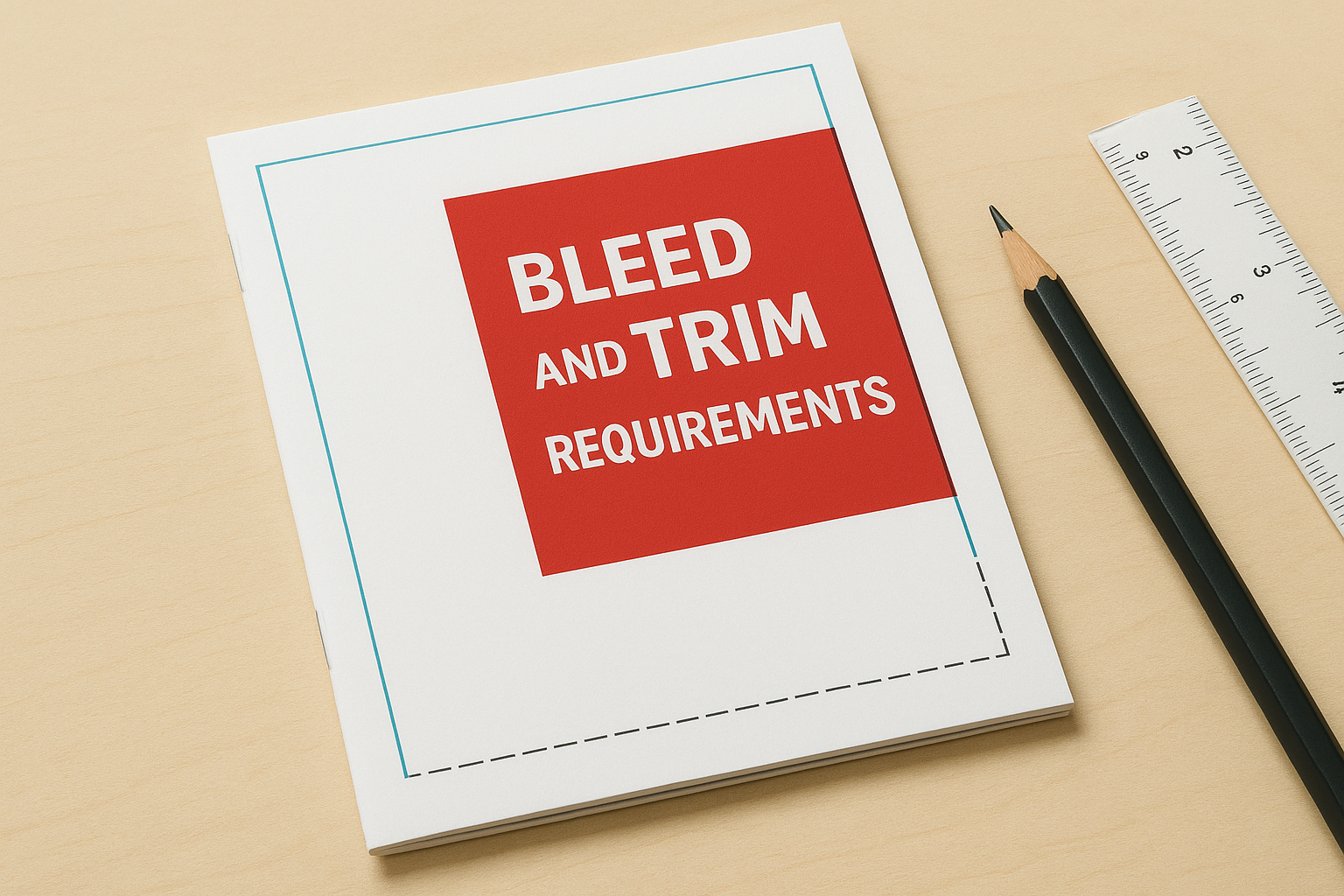
For booklet sizes (5.5×8.5 vs 8.5×11), your actual document dimensions should measure 5.75×8.75 inches or 8.75×11.25 inches respectively when you include bleed. Keep all critical text and logos at least 0.25 inches inside the trim line to avoid accidental cropping. Most print shops provide templates that show safe zones, bleed areas, and trim marks to guide your layout.
Set up your document with bleed from the start rather than trying to add it later, which often creates scaling issues that throw off your entire layout.
Resolution and colour mode
Your images need to sit at 300 DPI (dots per inch) at the actual printed size to avoid pixelation or blurry photos in your finished booklets. Lower resolution files that look crisp on screen often print poorly because digital displays only require 72 DPI, while printing demands much higher detail to maintain sharpness.
Always work in CMYK colour mode rather than RGB when designing for print, as printers mix cyan, magenta, yellow, and black inks to create colours. RGB colours often shift dramatically when converted during production, leaving you with unexpected results that don’t match what you saw on your monitor.
Printing and finishing considerations
Your choice between booklet sizes (5.5×8.5 vs 8.5×11) influences production decisions beyond just layout dimensions. Different formats perform better with specific paper weights and binding methods, and understanding these technical factors helps you avoid production hiccups that delay delivery or compromise the finished product’s durability.
Paper stock and binding methods
Thicker paper stocks add substantial weight and bulk to larger 8.5×11 booklets, making them feel premium but potentially awkward to handle if you exceed 40 pages with heavy cover stock. Your 5.5×8.5 format tolerates heavier paper more gracefully because the smaller dimensions keep overall thickness manageable even with robust materials.
Saddle-stitch binding works well for both sizes up to 48 pages, but perfect binding becomes necessary for thicker booklets where staples can’t penetrate the spine cleanly. The larger format benefits from perfect binding at lower page counts because it reinforces the spine and prevents curling at the edges, particularly useful for reference materials that get handled frequently.
Match your binding method to how often readers will open and close your booklet, not just to page count alone.
Turnaround time and quantity
Smaller 5.5×8.5 booklets typically print faster because they fit more units per press sheet, reducing the number of printing passes your order requires. Production timelines also compress when you choose standard specifications rather than custom sizes that demand special setup time on printing equipment.
Bulk orders see better cost savings on the larger 8.5×11 format because setup costs spread across more units, though you’ll pay more per piece than the compact alternative regardless of quantity.
Quick recap and next step
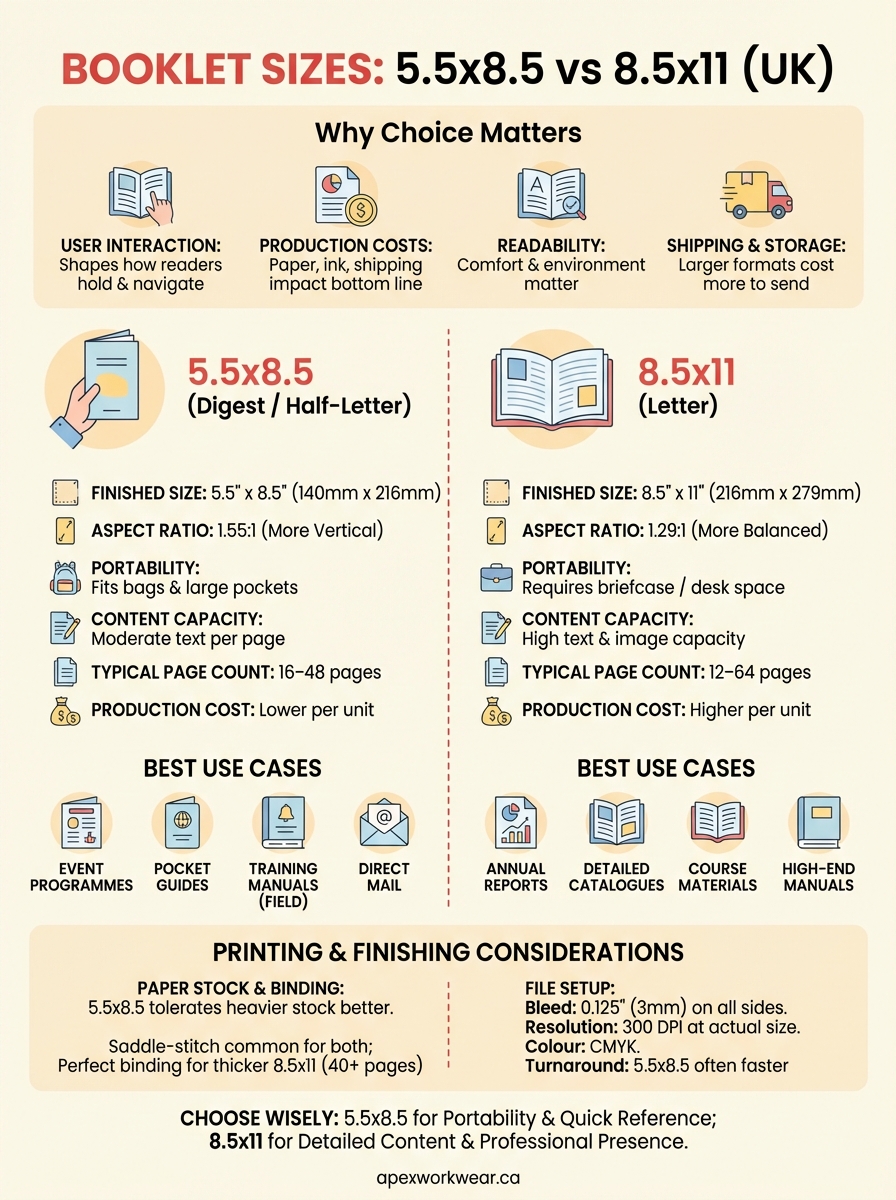
Your choice between booklet sizes (5.5×8.5 vs 8.5×11) ultimately depends on how your audience will use the finished piece and what fits your project budget. The compact 5.5×8.5 format delivers portability and cost savings for materials readers carry on the go, while the larger 8.5×11 size provides more room for detailed content and projects a substantial, professional presence that suits desk reference materials perfectly.
Both formats work well for Canadian businesses when you match the dimensions to your specific content type and intended distribution method. Start by considering where readers will actually reference your booklet, how much information each page needs to hold, and whether shipping costs or storage space factor significantly into your overall project decision.
Ready to move forward with your booklet printing project? Get a free quote from Apex Workwear for custom booklet printing with fast turnaround times and expert guidance on file setup specifications. Our production team reviews your design files and helps you choose the right format before printing starts, so you avoid costly delays or reprints.