When you need a professional-looking manual, training guide, or product catalogue that lies flat and stays open, wire-o binding printing is often the smartest choice. Those distinctive double-loop metal spines do more than hold pages together, they give your printed materials a polished, functional finish that spiral binding simply can’t match.
Whether you’re producing client presentations, employee handbooks, or technical reference guides, understanding your options for sizes, paper stocks, and finishes helps you get exactly what your project requires. The right binding method can make the difference between materials that impress and ones that end up in a drawer.
At Apex Workwear, we handle custom print projects across Canada, from business cards to large-format signage, and that includes professionally bound documents for businesses throughout the GTA and beyond. This guide breaks down everything you need to know about wire-o binding: standard sizing options, available finishes, and what influences pricing so you can order with confidence.
Why businesses choose wire-o binding
Your choice of binding method sends a message before anyone reads a single word. Wire-o binding delivers a polished, professional appearance that sets your materials apart from standard stapled reports or flimsy spiral notebooks. The clean metal spine and crisp edges signal quality and attention to detail, qualities your clients and employees notice immediately.
Professional presentation quality
When you hand a wire-o bound proposal to a potential client or distribute training manuals to your team, you’re making a statement about your standards. The consistent, structured spine gives materials a finished look that elevates your brand image. Unlike coil binding, which can snag on bags and clothing, wire-o binding printing creates a smooth, professional edge that maintains its appearance through repeated handling and transport.
"The right binding method transforms good content into materials people actually want to keep and reference."
Functional advantages for reference materials
You need documents that people can actually use, not just admire. Wire-o bound books lie completely flat when opened, making them perfect for cookbooks, training guides, instruction manuals, and calendars that users reference while working. Your team can photocopy pages without fighting curved spines, and the 360-degree rotation allows readers to fold the book back on itself without damaging the binding or breaking the spine.
Durability for long-term use
Materials bound with wire-o withstand heavy use without falling apart. The double-loop metal wire doesn’t crack, fray, or loosen like plastic coils, meaning your manuals and reference guides remain intact through months or years of daily handling. If you need to update content, pages can be removed and replaced individually without compromising the entire document, an advantage you won’t find with perfect binding or saddle-stitching.
Wire-o sizes and page count limits
Choosing the right size for your wire-o bound documents starts with understanding standard dimensions and how many pages each wire thickness can accommodate. Your project requirements dictate both the page size and spine thickness, and getting these specifications right ensures your finished materials look professional while staying within budget.
Standard dimensions
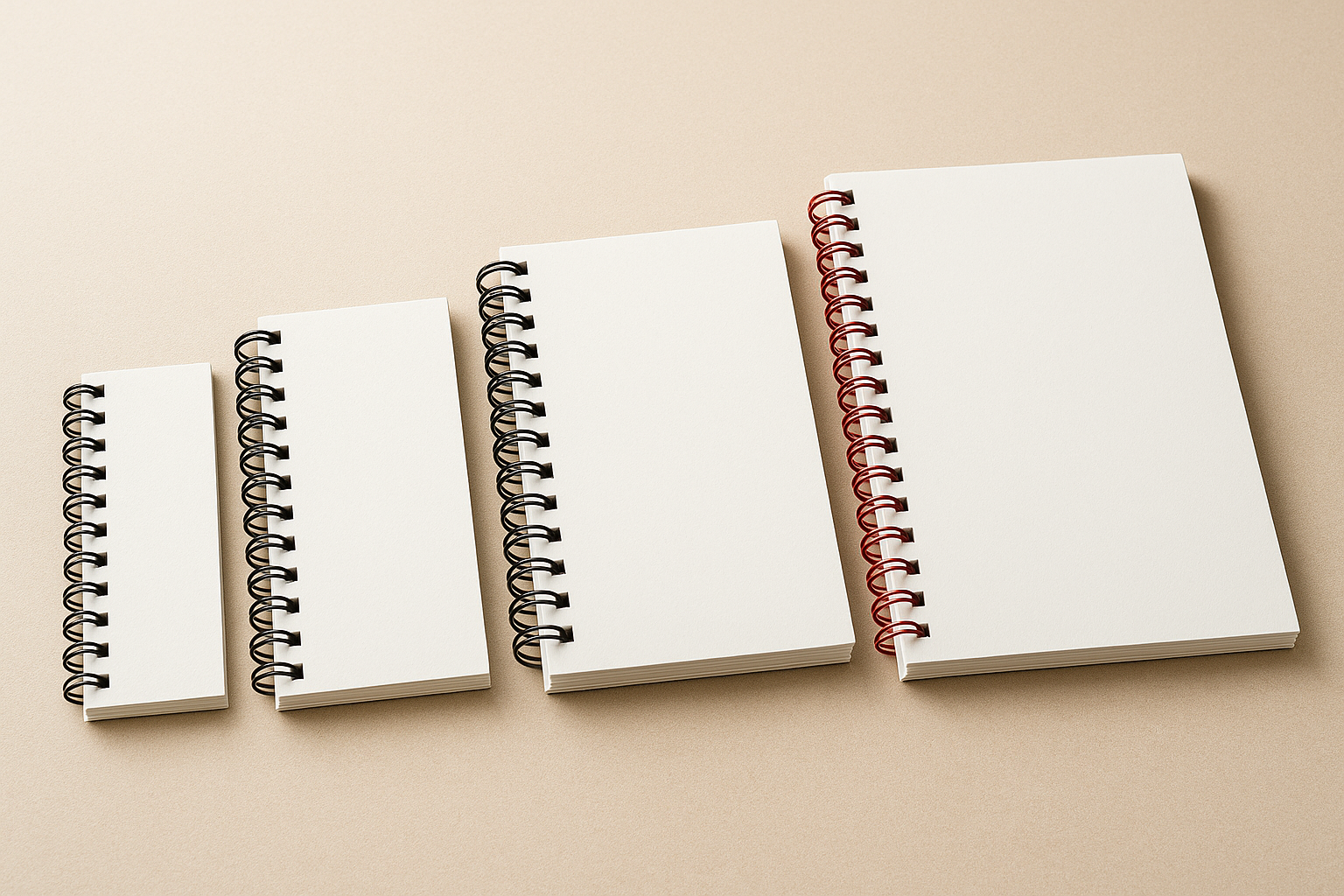
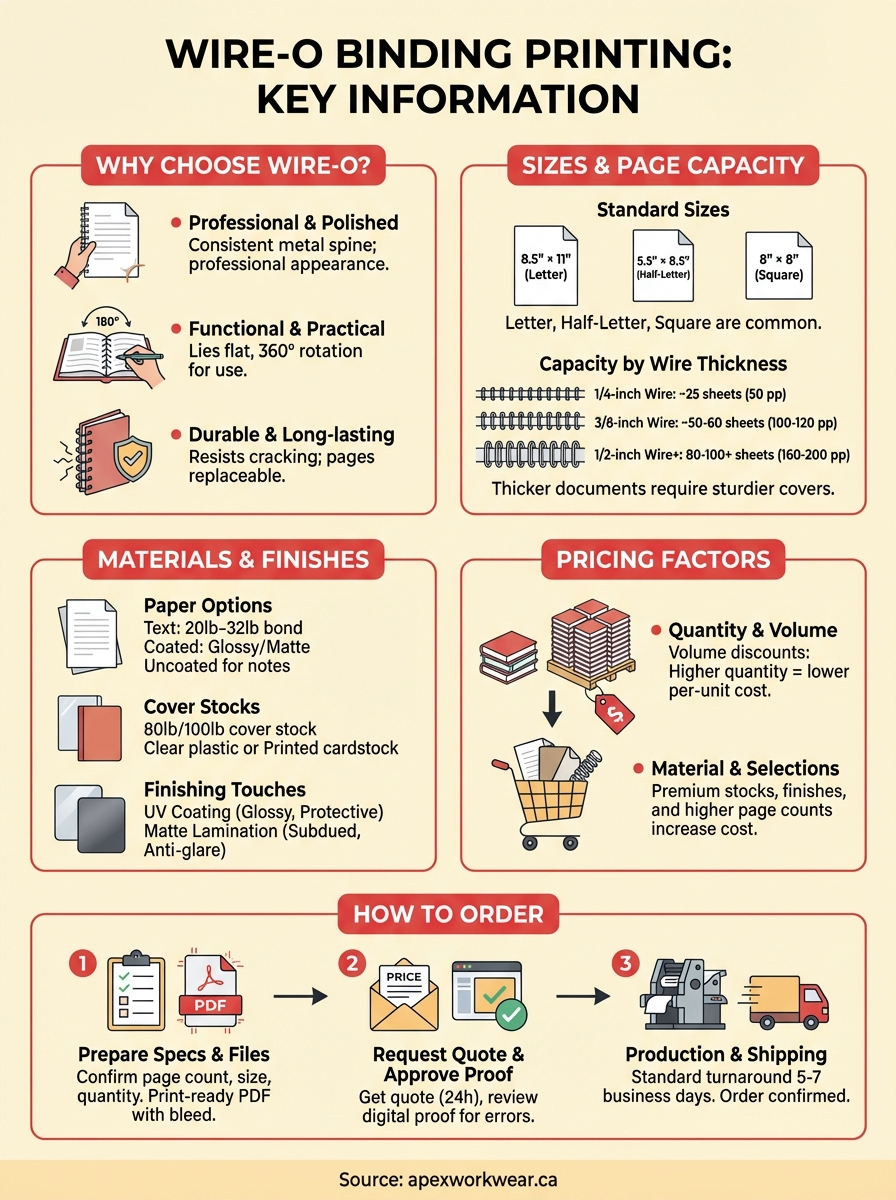
Most wire-o binding printing uses standard document sizes that match common business formats. You’ll find 8.5" × 11" (letter size) is the most popular choice for manuals, reports, and training materials, while 5.5" × 8.5" (half-letter) works well for smaller guides and notepads. Square formats like 8" × 8" suit portfolios and presentation books, and custom sizes can accommodate specific project needs, though they typically cost more due to special cutting requirements.
Page capacity by wire thickness
Wire-o spines come in different diameters to handle varying page counts. A 1/4-inch wire typically binds up to 25 sheets (50 pages), making it suitable for slim booklets and short guides. 3/8-inch wire accommodates 50-60 sheets (100-120 pages), the sweet spot for most business manuals and catalogues. Thicker 1/2-inch or 9/16-inch wires can bind 80-100 sheets (160-200 pages), though heavier documents require sturdier cover stock to prevent warping and ensure the book maintains its shape during use and storage.
"Matching your wire thickness to page count prevents both underbinding thin documents and overbulking thicker ones."
Paper, covers, and finishing options
Your choice of paper, cover materials, and finishing techniques determines how your wire-o bound documents look, feel, and hold up over time. These decisions directly impact both the professional impression your materials make and how well they withstand repeated use. Understanding your options helps you match specifications to your project’s purpose and budget.
Paper weight and stock options
Interior pages typically use 20 lb or 24 lb bond paper for standard text documents, though heavier 28 lb or 32 lb stocks work better for presentations that get frequent handling. Glossy or matte coated stocks suit catalogues and portfolios with full-colour images, while uncoated paper remains the practical choice for documents where people need to write notes or annotations directly on pages.
Cover materials
Front and back covers require heavier stock than interior pages to protect your document and maintain structural integrity. Most wire-o binding printing uses 80 lb or 100 lb cover stock, which provides enough rigidity without adding excessive bulk. You can choose clear plastic front covers for professional presentations, allowing your title page to show through, or opt for matching printed cardstock covers that coordinate with your brand colours and design.
Finishing touches
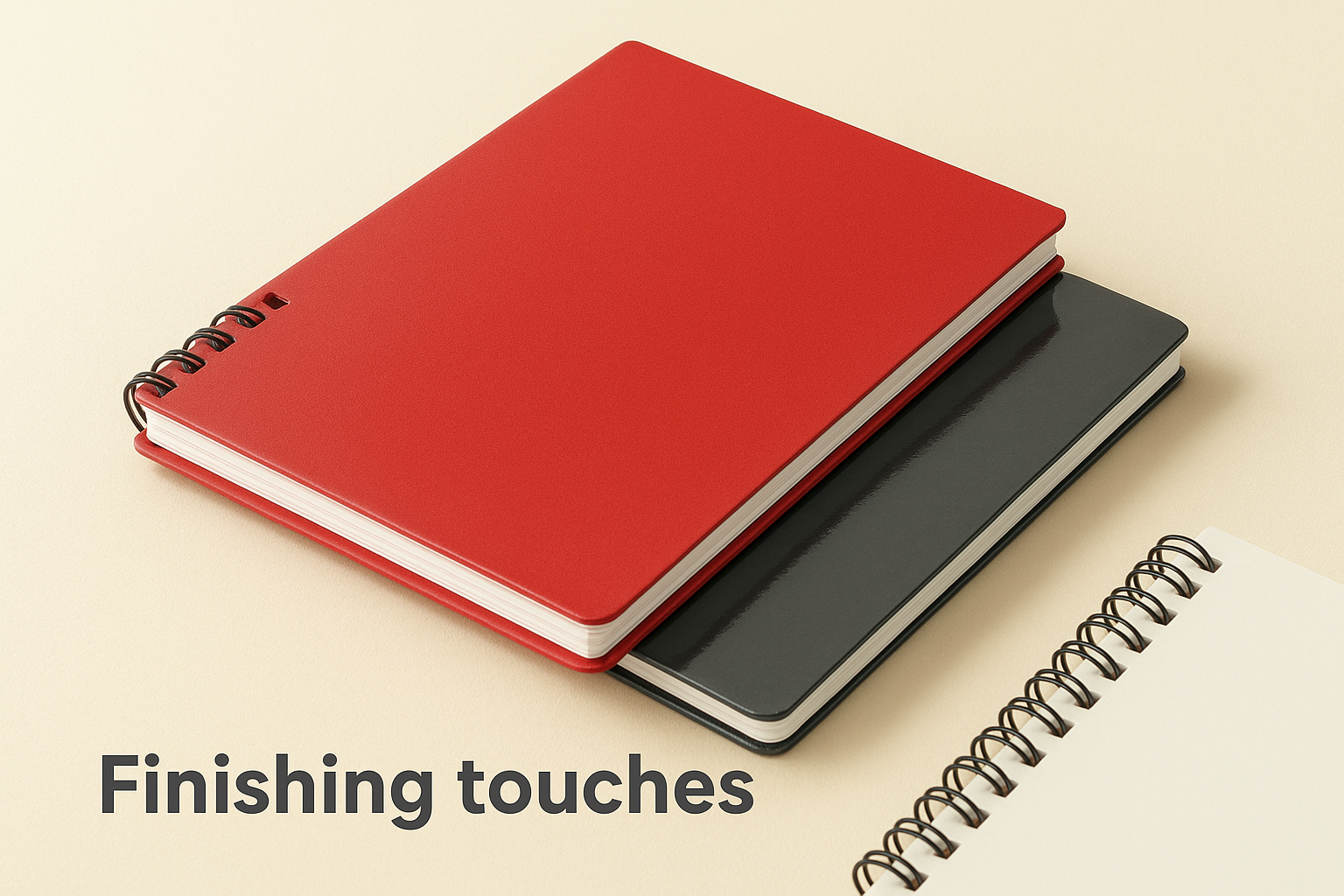
Protective coatings extend the life of your covers and enhance appearance. UV coating adds a glossy shine and resists fingerprints and scratches, while matte lamination gives covers a sophisticated, subdued finish that reduces glare under office lighting.
"The right combination of paper stock and finishing creates documents that look sharp and stay that way."
Pricing: what affects wire-o costs
Understanding what drives wire-o binding printing costs helps you budget accurately and make informed choices about specifications. Your final price depends on several interconnected factors, from the number of copies you order to the materials and finishes you select. Knowing these variables lets you balance quality against budget constraints without sacrificing the professional results your project demands.
Quantity and per-unit pricing
Volume makes the biggest difference in your per-unit cost. Ordering 50 copies versus 500 copies dramatically reduces the price per book because setup costs like plate making and machine calibration get distributed across more units. Printers often offer tiered pricing structures, where unit costs drop at specific quantity thresholds, so ordering 250 copies might cost only marginally more than 200 while significantly reducing your per-piece expense.
Material and specification choices
Your selections for paper weight, cover stock, and finishing treatments directly impact pricing. Heavier paper stocks and premium cover materials cost more than standard options, while protective coatings like UV or lamination add to both material and processing expenses. Page count affects pricing too, since thicker wire spines and additional sheets increase material costs and binding time.
"Strategic choices about materials and quantities can keep your project within budget without compromising quality."
How to order wire-o bound books in Canada
Ordering wire-o binding printing doesn’t require complicated technical knowledge, but you do need to provide clear specifications upfront to get accurate quotes and avoid delays. Canadian print shops like Apex Workwear streamline the process by offering digital proofs before production begins, giving you a chance to catch errors or make adjustments before ink hits paper.
Preparing your files and specifications
Start by confirming your exact page count, finished size, and quantity needs. Your printer requires print-ready PDF files with proper bleed and margin settings, typically 0.125" bleed on all sides and at least 0.5" margin from the spine edge to prevent text getting caught in the wire binding. Specify your paper stock for interior pages and covers, wire colour (black, white, or silver are standard), and any protective coatings you want applied.
Requesting quotes and turnaround times
Contact your printer with complete specifications to receive an accurate quote within 24 hours. Most orders ship within 5 to 7 business days from approval, though rush options exist if you’re working against tight deadlines. Ask about bulk pricing thresholds if you’re considering larger quantities, since ordering slightly more units often reduces your per-piece cost significantly.
"Providing complete specifications upfront eliminates back-and-forth delays and gets your project into production faster."
Next steps
You now understand the core specifications for wire-o binding printing, from standard sizes and page capacities to paper stocks and pricing factors. Armed with this knowledge, you can order confidently and make informed decisions about materials and finishes that match your project’s purpose and budget.
Getting started requires only your print-ready files and clear specifications. Most Canadian print shops provide digital proofs before production, giving you a final chance to review everything before binding begins. If you’re uncertain about paper weights or cover options, ask for samples or recommendations based on how your documents will be used.
Apex Workwear produces high-quality wire-o bound materials for businesses across Canada, with free shipping in the GTA and fast turnaround times on most orders. Request a quote with your specifications, and our team will respond within 24 hours with accurate pricing and production timelines for your project.