If you’ve ever searched for corporate apparel meaning, you’re probably trying to figure out what counts as corporate clothing, how it differs from a basic uniform, and whether it’s worth investing in for your team. The short answer: corporate apparel is any clothing that represents a company, from embroidered polos and branded jackets to custom hats and printed workwear. But there’s a lot more to it than slapping a logo on a shirt.
Corporate apparel shapes how customers perceive your business, how your team presents itself, and how consistent your brand looks across every touchpoint. Whether you’re outfitting a trade show crew, a construction team, or your front-of-house staff, the right apparel does more than dress people, it communicates professionalism and builds trust.
At Apex Workwear, we help Canadian businesses create custom apparel that fits their brand and their budget. This article breaks down exactly what corporate apparel is, walks through real-world examples, and explains the different ways businesses use it to strengthen their identity. By the end, you’ll have a clear picture of what corporate apparel looks like in practice, and how to make it work for you.
What corporate apparel means and what it includes
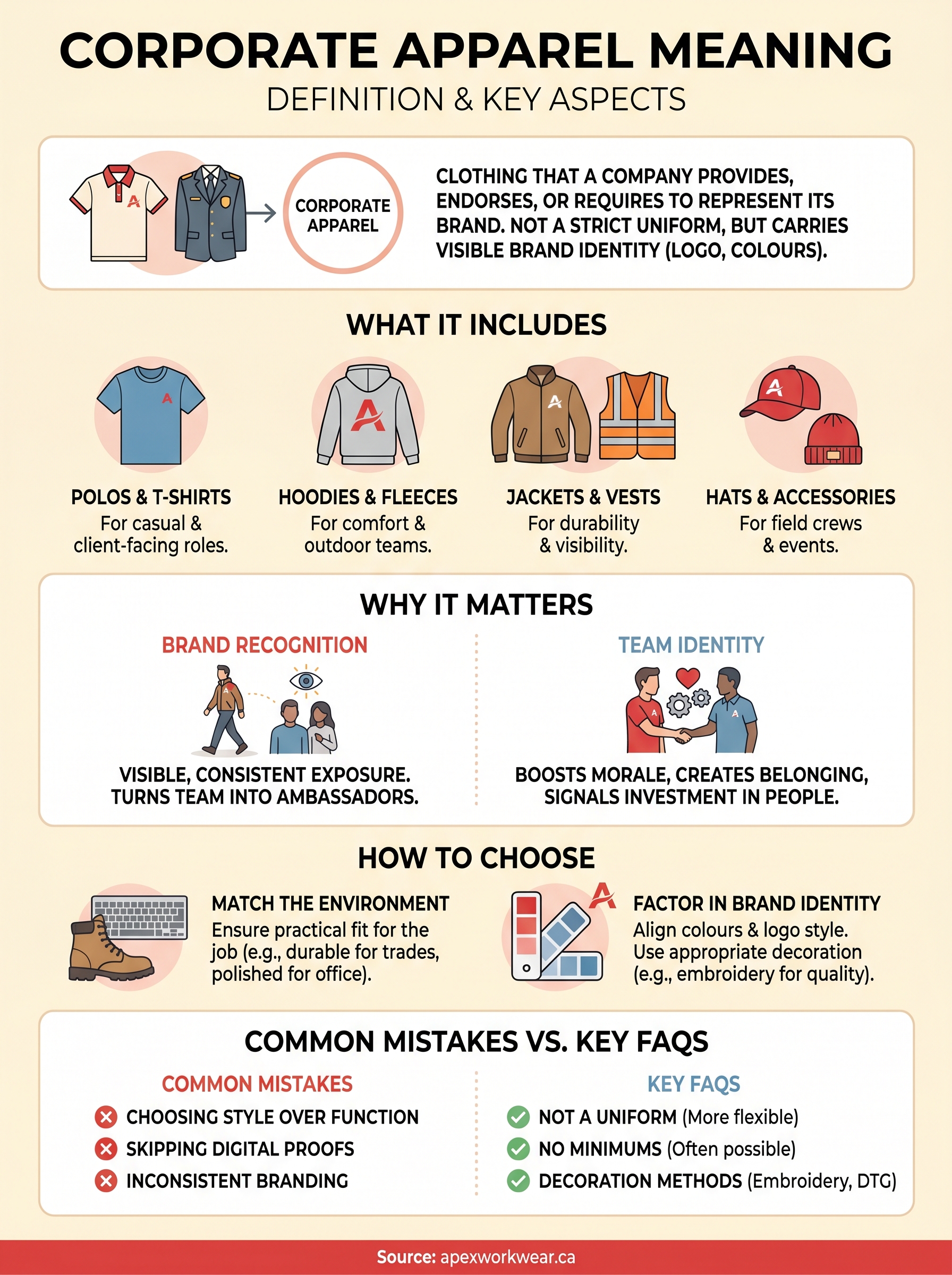
At its core, the corporate apparel meaning is straightforward: it refers to clothing that a company provides, endorses, or requires to represent its brand. This covers everything from a simple embroidered polo to a fully outfitted team uniform. The key distinction is that the clothing carries some element of brand identity, whether that’s a logo, a colour scheme, or a specific style tied to the company’s image.
The core definition
Corporate apparel is not the same as a strict uniform. A uniform is about consistency and function, like the identical outfits worn by airline staff or fast-food workers. Corporate apparel is broader. It includes any branded or company-approved clothing that helps people identify your team, represent your brand in public, or build internal culture. A hoodie with your company’s logo that you give to new hires counts. So does a custom jacket your sales team wears at industry events.
Corporate apparel bridges the gap between a professional dress code and active brand promotion, making your team a visible representation of your company wherever they go.
What falls under the corporate apparel category
Corporate apparel covers a wide range of clothing types, and what qualifies varies by industry. The most common items include branded T-shirts, polos, hoodies, jackets, hats, and hi-vis workwear. As long as the item carries your company’s identity in some form, it counts.
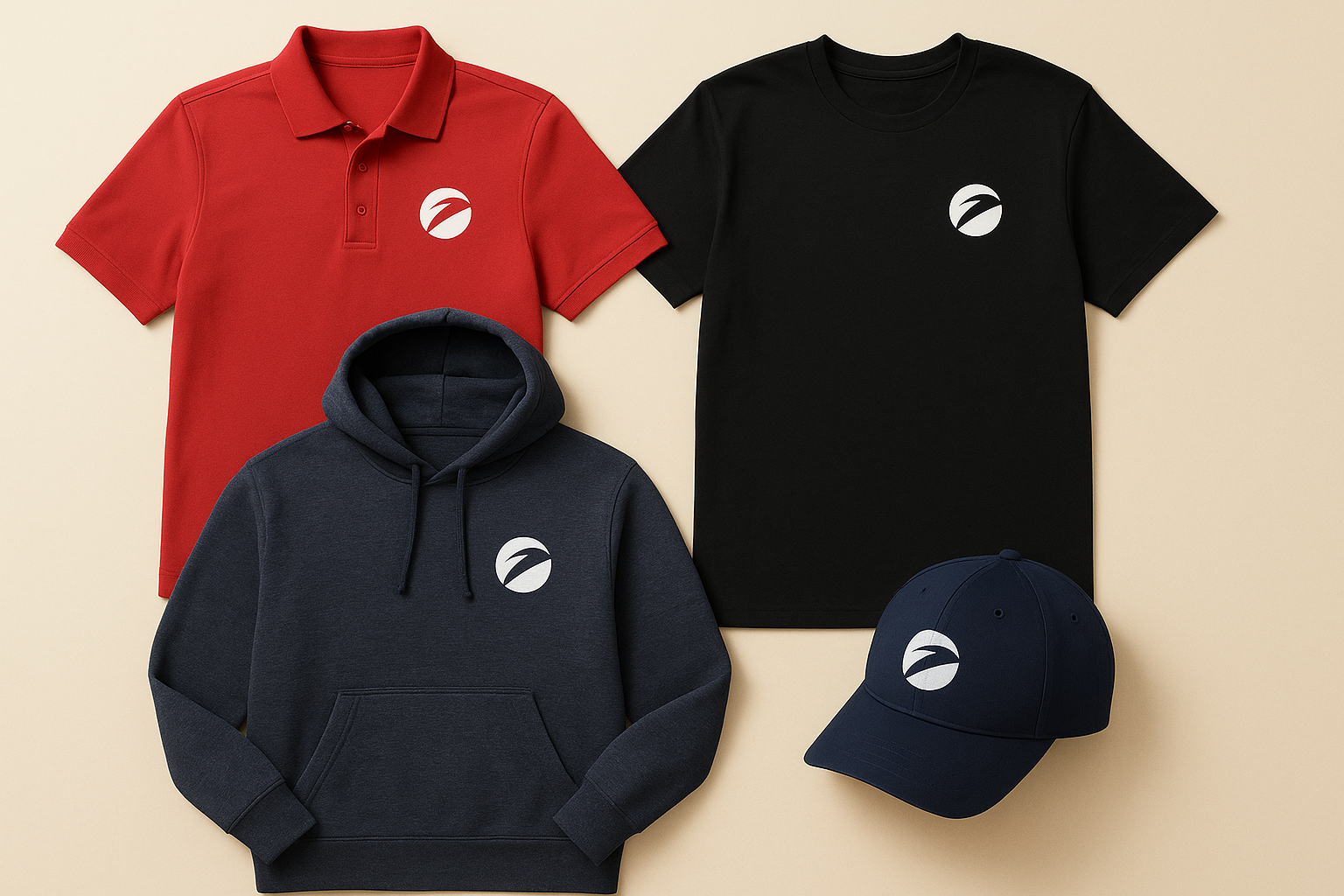
- T-shirts and polos with embroidered or printed logos
- Hoodies and fleeces for casual or outdoor work environments
- Hats and caps for field teams, events, or branded merchandise
- Jackets and vests for client-facing staff or outdoor crews
- Workwear and hi-vis gear with company branding for trades and construction
Your industry and workplace culture will determine which items make the most sense. A tech startup might lean toward branded hoodies and tees, while a contracting company would focus on durable hi-vis workwear with printed logos.
Why corporate apparel matters for teams and brands
Corporate apparel does real work for your business beyond simply dressing your team. When customers see your staff in consistent, branded clothing, they immediately register your company as organised and professional. That first impression carries significant weight, especially for small businesses competing with larger, more established brands. What you wear speaks before you do.
It builds brand recognition
Every time your team wears branded apparel in public, your logo and colours get in front of new people. This is low-cost, ongoing exposure that you don’t pay for repeatedly. A crew wearing your company’s jackets at a job site, an event, or even just commuting extends your reach without any extra marketing spend. Over time, that visual consistency reinforces your identity in the minds of clients and prospects.
Branded apparel turns your team into visible representatives of your business, reinforcing your identity every time they’re seen.
It strengthens team identity
Understanding the full corporate apparel meaning goes beyond marketing. Giving your team quality branded clothing signals that you invest in your people, which boosts morale and creates a genuine sense of belonging. Staff who feel represented by their company tend to take more pride in their work and present themselves more confidently to clients.
Examples of corporate apparel in real workplaces
The corporate apparel meaning shifts depending on your industry, but the goal stays consistent: your team’s clothing should represent your brand clearly and suit the practical demands of the work. Seeing how other businesses use corporate apparel helps you understand what the right approach could look like for your own team.
Industries and what they typically wear
Different sectors approach branded clothing in distinct ways. Trades and construction companies often go with hi-vis vests, printed jackets, and durable workwear that keeps workers visible and on-brand at the same time. Retail and hospitality businesses lean toward branded polos or shirts that help customers spot staff instantly on a busy floor.

Branded apparel is most effective when it fits both the environment and the people wearing it.
Corporate offices tend to use embroidered button-downs or custom fleeces for client-facing roles and event crews. Creative and agency teams often favour branded hoodies or casual tees that reflect a relaxed culture while still maintaining a clear visual identity. Each of these examples shows how the right apparel choice depends entirely on your specific context, team size, and how your customers interact with your staff.
How to choose the right corporate apparel for your business
Picking the right items starts with understanding the full corporate apparel meaning for your specific context. Think about where your team works, who they interact with daily, and what demands the clothing will face. Those three questions will guide every decision you make.
Match the apparel to your environment
Outdoor and trade teams need durable items like hi-vis vests or printed jackets that hold up under physical work. Staff in offices or client-facing roles suit embroidered polos or branded fleeces that look professional without being stiff.
Apparel that fits your work environment gets worn consistently, which is exactly what makes it effective.
Choose styles your team will actually reach for. If the clothing feels uncomfortable or out of place for the job, it will not get used, and that defeats the purpose entirely.
Factor in your brand identity
Your brand colours and logo style should drive your clothing choices. Match your logo’s palette as closely as possible across all items. Use embroidery for a premium, lasting finish on client-facing garments, and direct-to-garment printing for detailed or colourful artwork on casual wear. Keeping these details consistent across your range ensures your team looks unified wherever they show up.
Common mistakes and quick answers to FAQs
Understanding the full corporate apparel meaning helps you avoid the most common pitfalls. Many businesses choose the wrong items, skip consistency, or under-communicate their brand identity across different garments.
Mistakes that cost you results
Ordering without a clear brief leads to items that look off-brand or feel cheap, and your team will not wear them. Another frequent error is choosing style over function, particularly for outdoor or trade-focused teams who need durable, practical clothing first. Skipping a digital proof before printing is also a mistake that causes costly reprints.
The most expensive piece of corporate apparel is one your team leaves in the drawer.
Quick answers to common questions
Is corporate apparel the same as a uniform? No. Uniforms are standardised and functional. Corporate apparel is broader and includes any branded clothing that represents your company.
Do you need a minimum order? At Apex Workwear, no minimum orders apply to many products, so even a small team can get started without committing to large quantities.
What decoration method should you use? Embroidery suits client-facing garments, while DTG printing works best for complex or colourful designs on casual wear.
Next steps
Now that you have a clear picture of the corporate apparel meaning, the practical step is to decide which items fit your team, your industry, and your brand. Start with the basics: a branded polo or jacket for client-facing staff, or hi-vis workwear for field crews. You do not need to overhaul everything at once.
Once you know what you need, get a quote before committing. Pricing, turnaround time, and decoration options all affect which direction you take, so having those details upfront saves you time and avoids surprises. Small teams can start without large minimum orders, which makes testing a style or design straightforward.
Apex Workwear works with Canadian businesses of all sizes to produce custom apparel that fits your brand and budget, with fast turnaround and free local shipping across the GTA. Visit Apex Workwear to request a free quote and get your order moving within 24 hours.