Nothing kills a custom t-shirt faster than vinyl that cracks, peels, or fades after a few washes. If you’ve been searching for the best heat transfer vinyl for t shirts, you already know the market is flooded with options, and not all of them hold up. The difference between a professional-looking garment and a peeling mess often comes down to the specific HTV you choose before you ever touch a heat press.
At Apex Workwear, we produce custom apparel daily from our Canadian facility, so we’ve seen firsthand what separates vinyl that lasts from vinyl that doesn’t. Whether you’re pressing shirts for your small business, outfitting a team, or building a side hustle with a Cricut or Silhouette, the right HTV matters more than technique. You can nail your temperature, pressure, and timing, but if the vinyl itself is subpar, your results will disappoint.
In this guide, we break down nine heat transfer vinyl products that actually perform, ones known for clean weeding, strong adhesion, and durability through dozens of wash cycles. We tested, compared, and evaluated each option based on real-world use, not just spec sheets. By the end, you’ll know exactly which HTV suits your project, your budget, and your expectations for quality. Let’s get into it.
How to pick HTV that won’t peel
Choosing the best heat transfer vinyl for t shirts is not just about grabbing whatever’s available on Amazon. Several technical factors determine whether your design survives a year of washing or starts lifting after the third cycle. Understanding these factors before you buy saves you time, money, and wasted shirts. Here’s what actually matters.
Material type and fabric compatibility
The base material of your HTV directly affects how it bonds with different fabrics. Standard PU (polyurethane) vinyl works well on most cotton and polyester blends, while stretch-specific formulas are built to flex with performance fabrics without cracking. If you press a rigid vinyl onto a stretchy athletic shirt, the design will crack along stress points no matter how well you applied it. Always match your HTV type to your fabric before pressing a single sheet.
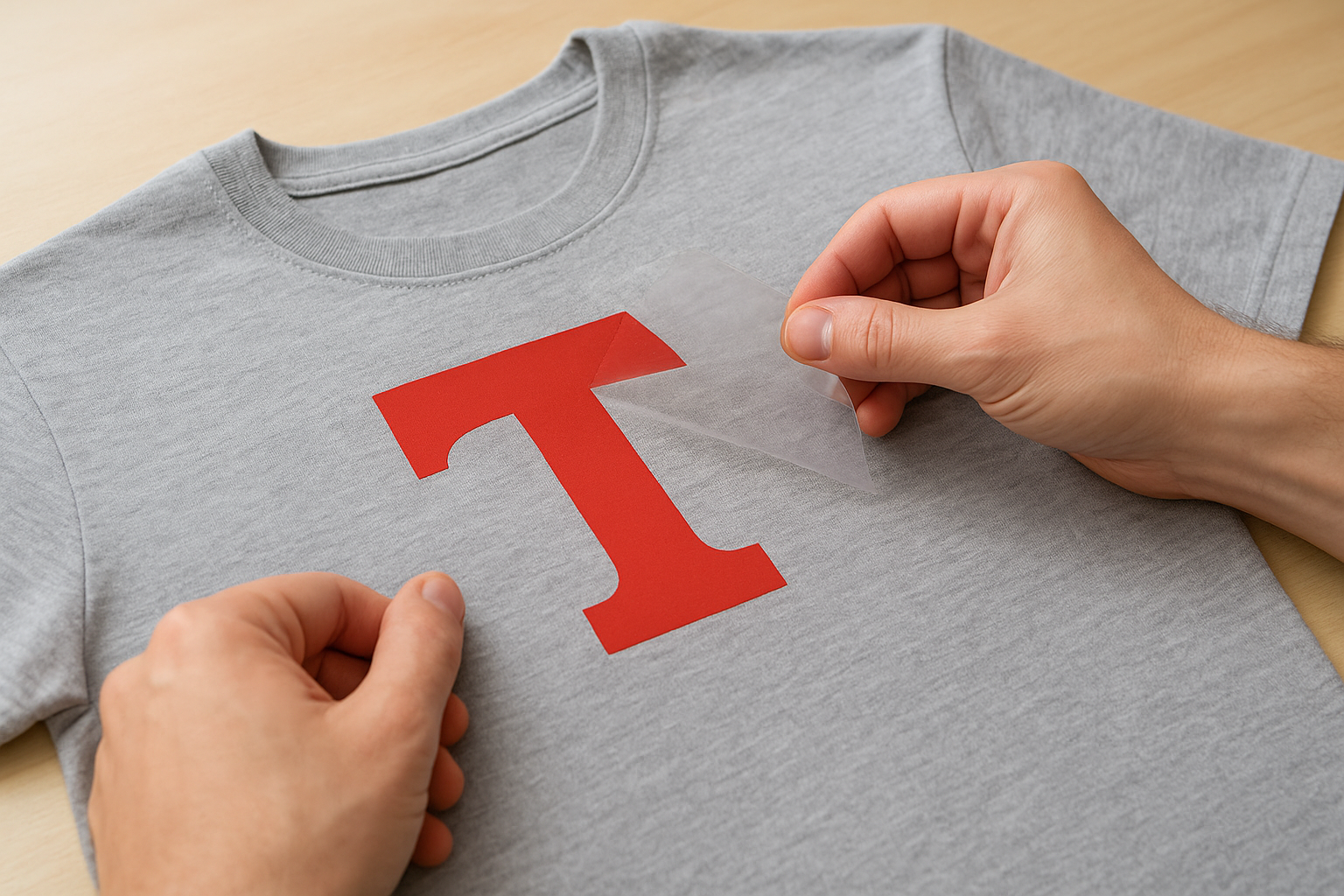
The single biggest cause of premature peeling is using the wrong HTV for the fabric, not incorrect press technique.
Adhesive quality and coating weight
Not all adhesive layers are equal. Thicker adhesive coatings grip fabric fibres more aggressively and resist delamination through repeated washing. Budget HTV often skimps here, using thin adhesive that bonds initially but releases under heat and moisture from washing machines. Look for products from established brands that disclose adhesive weight or coating thickness in their spec sheets. Brands like Siser and Stahls publish this information openly, which is a good sign of quality control.
Peel type: hot, cold, or warm
Peel type affects how cleanly the carrier sheet releases from your design and how firmly the vinyl bonds to the fabric during that critical moment. Hot-peel vinyl lets you remove the carrier immediately after pressing, which speeds up production but requires confidence in your press settings. Cold-peel vinyl stays down until the transfer cools, which generally produces a stronger initial bond. Some vinyls offer a warm-peel option that splits the difference. Neither is universally better, but using the wrong peel method for your specific vinyl guarantees problems.
Weeding ease and detail retention
If the vinyl tears during weeding or leaves small pieces behind in intricate areas, your finished product will look unprofessional regardless of how the application goes. Fine detail work such as small text, thin lines, or complex logos requires HTV with a clean cut and consistent thickness across the sheet. Inconsistent material thickness causes the cutter to score too deeply in some spots and too shallow in others, leading to ragged edges and broken letterforms. Check whether the brand you’re considering is known for weeding performance, particularly if you’re running detailed designs regularly.
Wash durability ratings
Some manufacturers publish wash cycle ratings for their vinyl, typically ranging from 50 to 100 washes under standard conditions. These ratings are not marketing numbers; they reflect real adhesion performance when applied correctly. Vinyl without published durability data is harder to trust, especially for commercial applications where clients expect garments to hold up for years. Ask your supplier directly if the spec sheet doesn’t include this information.
HTV vs DTF vs DTG for T-shirts
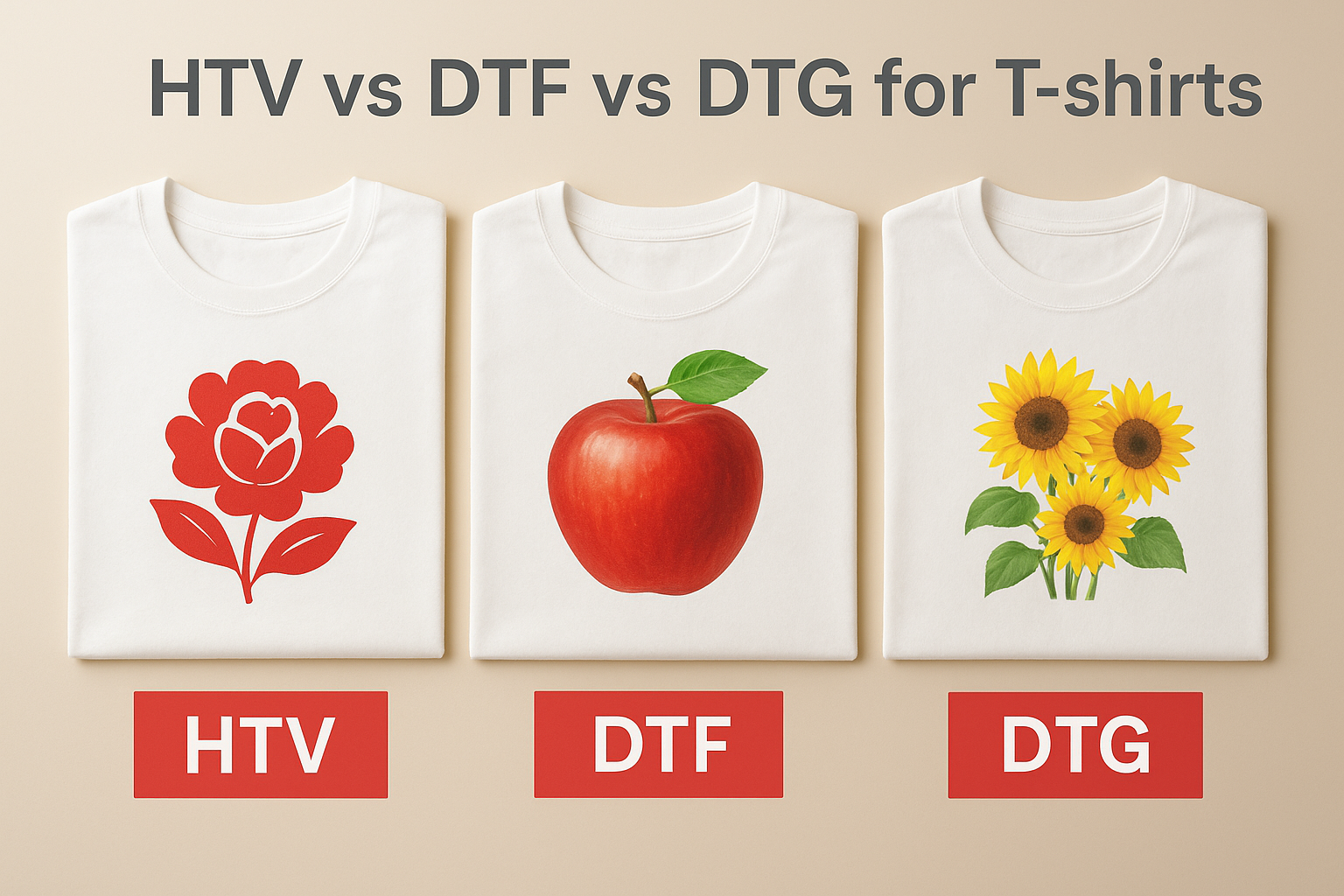
When you’re exploring your options for custom t-shirts, heat transfer vinyl is just one of three common decoration methods. The other two, direct-to-film (DTF) and direct-to-garment (DTG), each have genuine strengths, but they serve different use cases. Understanding how they compare helps you decide whether pressing HTV yourself is the right call or whether outsourcing to a professional printer makes more sense.
What sets HTV apart
HTV involves cutting a pre-coloured vinyl sheet into your design shape, weeding away the excess, and pressing the remaining vinyl onto fabric with heat and pressure. The result is a solid, layered design with a slight surface texture. HTV works best for bold graphics, text, and single-colour or layered designs where sharp edges matter. It’s also ideal for small runs since there’s no setup cost per print, just the cost of the vinyl sheet and your time.
HTV gives you the most control over per-unit costs on small batches, but it doesn’t scale as efficiently for complex, photo-realistic artwork.
How DTF compares
DTF printing transfers a full-colour printed film directly onto fabric. Because it handles gradients, photographic images, and fine details far better than vinyl, it suits designs that HTV simply can’t replicate cleanly. DTF also works across a wider range of fabrics, including dark materials and synthetic blends that can be tricky with standard HTV. The tradeoff is that you typically need professional equipment or a print shop to produce DTF transfers.
Where DTG fits in
DTG prints ink directly into the fabric fibres using a modified inkjet-style printer. It excels at full-colour runs on cotton-heavy garments and produces a soft, breathable finish. However, DTG requires significant equipment investment and works best on lighter coloured cotton. For anyone looking for the best heat transfer vinyl for t shirts because they want to press designs at home or in a small studio, DTG is generally out of reach without a commercial setup.
Pressing and care mistakes that cause peeling
Even the best heat transfer vinyl for t shirts will fail if you apply it incorrectly or wash the finished garment the wrong way. Application errors and poor care habits are responsible for the majority of peeling complaints, even when the vinyl itself is perfectly suited for the job. Before blaming your material, check whether your process is working against you.
Temperature, pressure, and timing errors
Incorrect temperature is the most common application mistake. Too low and the adhesive never fully activates, leaving you with a bond that looks solid at first but releases after a few washes. Too high and you risk scorching the fabric or causing the vinyl to bubble and distort. Every HTV product has a specific temperature window, typically listed in degrees Celsius or Fahrenheit on the product’s spec sheet, and pressing outside that range creates problems regardless of your technique.
Pressure matters just as much as heat. Uneven or insufficient pressure leaves sections of the design bonded less firmly than others, which creates edge-lifting over time. If your press has hot spots or soft areas, the transfer will reflect those inconsistencies. Always test your press with a pressure gauge and calibrate before running production batches.
Timing is the variable most people overlook. Under-pressing by even five seconds can leave the adhesive only partially activated, which accelerates peeling from the very first wash.
Washing habits that lift vinyl early
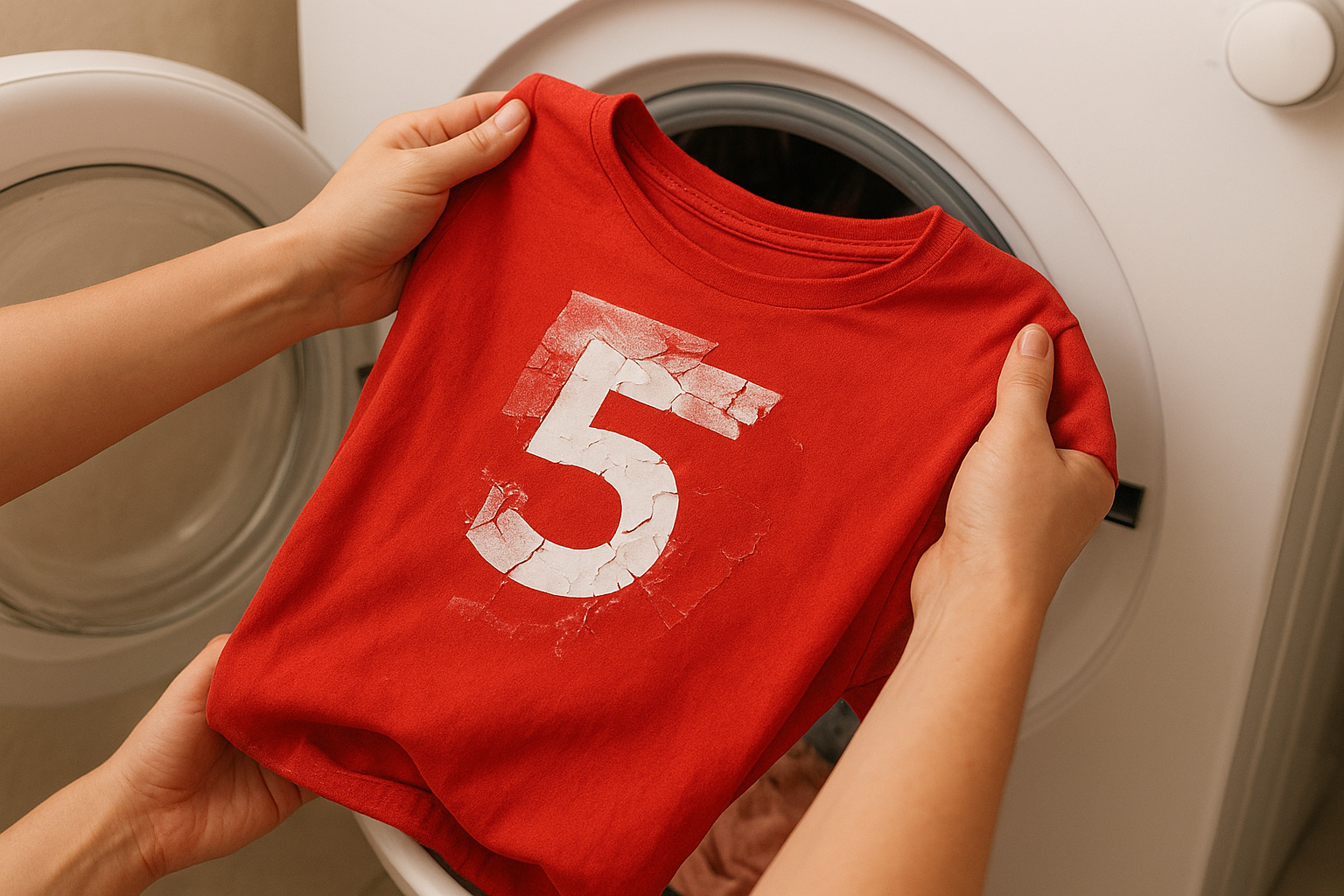
Once the shirt is pressed, how you wash it determines how long the design lasts. Hot water, high-spin cycles, and tumble drying on high heat all stress the adhesive layer with every cycle. Turn garments inside out before every wash to reduce direct friction on the vinyl surface, and use cold water on a gentle cycle. The following habits apply regardless of brand:
- Wash in cold water (30°C or below)
- Use a gentle or delicate cycle
- Tumble dry on low heat or air dry flat
- Avoid fabric softeners directly on the print
- Do not iron directly over the vinyl
Skipping even one of these steps consistently will shorten the lifespan of a well-applied design.
1. Apex Workwear custom HTV T-shirts
If you want the best heat transfer vinyl for t shirts without owning a cutter, heat press, or dealing with vinyl sourcing, Apex Workwear handles the entire process for you. Based in Canada, Apex produces custom HTV apparel in-house, so every shirt goes through quality-controlled pressing rather than being outsourced to a third party with unknown equipment standards.
Why it lasts on T-shirts
Apex uses commercial-grade heat presses and professional HTV materials calibrated for consistent temperature, pressure, and timing across every garment. Because production happens in a single Canadian facility, there is no variability between batches. The adhesive bonds properly from the start, which means your design enters its first wash cycle already at full bond strength, not hoping the application was close enough.
Professional equipment and controlled press settings eliminate the two most common causes of early peeling: uneven pressure and incorrect temperature.
Best for
Apex Workwear is the right choice when you need production-quality results without investing in your own equipment. It suits small business owners, contractors, sports teams, and event coordinators who want custom shirts that look sharp and hold up through regular use. You get:
- No minimum order requirements on select products
- Digital proofs before printing
- Free shipping on eligible orders within the GTA
- Rush turnaround options for time-sensitive projects
Pressing and peel notes
Because Apex handles pressing in-house, you receive finished garments rather than transfers to apply yourself. There are no peel steps, temperature guesses, or timing errors on your end. The shirts arrive ready to wear, with the design already bonded and inspected before shipping.
Price and availability in Canada
Apex offers transparent pricing with no hidden setup fees, and bulk discounts apply as your order size grows. Quotes come back within 24 hours, seven days a week. Production and shipping are entirely Canada-based, so you avoid cross-border delays and duties that slow down orders placed through international suppliers.
2. Siser EasyWeed
Siser EasyWeed is one of the most widely used HTV products among hobbyists and professional decorators alike, and for good reason. It consistently earns its reputation as one of the best heat transfer vinyl for t shirts through reliable adhesion, clean weeding, and a proven track record across thousands of production runs.
Why it lasts on T-shirts
Siser EasyWeed uses a polyurethane-based formula that bonds firmly to cotton, polyester, and most cotton-poly blends without requiring aggressive press settings. The adhesive layer activates cleanly within the standard temperature range and holds through repeated wash cycles without cracking or edge-lifting when applied correctly. Independent decorators regularly report 50-plus washes with no visible degradation when they follow Siser’s published press specs.
EasyWeed’s durability edge comes from consistent material thickness across the roll, which means your cutter scores evenly and the adhesive contacts the fabric uniformly during pressing.
Best for
EasyWeed suits anyone working with standard cotton or cotton-blend t-shirts who needs a reliable, everyday vinyl for text, logos, and clean graphic shapes. It works well for:
- Small business uniforms and branded workwear
- Team jerseys and event shirts
- Home-based decoration setups using Cricut or Silhouette cutters
- Beginners who need forgiving material that cuts and weeds predictably
Pressing and peel notes
EasyWeed presses at 150-160°C (305-320°F) with medium pressure for approximately 10-15 seconds, depending on your garment fabric. It uses a hot-peel carrier, meaning you can pull the backing away immediately after lifting the press. This speeds up workflow significantly when you’re pressing multiple shirts in a session. For best results, do a short re-press of 5 seconds with parchment paper after peeling to seat the edges.
Price and availability in Canada
Siser EasyWeed is widely available through Canadian craft and sign supply retailers, both online and in-store. It typically sells by the sheet or roll in standard 12-inch widths, with pricing that scales down on bulk roll orders. Expect to pay competitive mid-range pricing relative to budget alternatives, with far better long-term value per finished shirt.
3. Stahls CAD-CUT Premium Plus
Stahls is one of the oldest names in the heat transfer industry, and CAD-CUT Premium Plus reflects decades of refinement in adhesive technology and material construction. If you regularly press shirts for commercial clients or high-volume team orders, this product sits firmly among the best heat transfer vinyl for t shirts at the professional tier.
Why it lasts on T-shirts
CAD-CUT Premium Plus uses a dense polyurethane formula that produces strong adhesion on both natural and synthetic fibres. The material bonds deeply into fabric rather than sitting on the surface, which is what separates it from thinner, cheaper alternatives that peel at the edges after a handful of washes. Stahls rates this product for 50 or more wash cycles when applied within the correct parameters, and professional decorators consistently back up that claim in real production environments.
The deeper the adhesive penetrates the fabric weave during pressing, the more resistant the bond becomes to the heat and agitation of a washing machine.
Best for
This vinyl performs best when you need professional durability on high-use garments such as workwear, uniforms, and team apparel that see frequent laundering. It handles:
- Bold single-colour logos and text
- Multi-layer designs on cotton and polyester blends
- Commercial pressing setups where consistent quality across large batches is non-negotiable
Pressing and peel notes
CAD-CUT Premium Plus presses at 160°C (320°F) with firm pressure for 10 to 15 seconds. It is a cold-peel vinyl, so you let the transfer cool completely before removing the carrier sheet. Rushing the peel while the material is still warm risks lifting edges and weakening the bond before it fully sets. Allow at least 30 seconds of cooling time before peeling.
Price and availability in Canada
CAD-CUT Premium Plus sits at the upper end of the consumer price range, which reflects its commercial build quality. You can source it through Canadian sign supply distributors and select online retailers. Bulk roll pricing makes it more cost-effective when you’re pressing ten or more garments per session.
4. ThermoFlex Plus
ThermoFlex Plus from Heat Press Nation is a professional-grade HTV that has built a solid following among decorators who press high volumes and need consistent results across every batch. If you want to find the best heat transfer vinyl for t shirts that performs reliably under commercial conditions, ThermoFlex Plus earns serious consideration.
Why it lasts on T-shirts
ThermoFlex Plus uses a thick polyurethane construction that bonds deeply into fabric fibres rather than sitting on the surface. This deeper bond is what keeps edges from lifting after repeated washing, as the adhesive has more contact points within the garment’s weave to hold against heat and agitation. The material also maintains colour vibrancy through extended wash cycles, which matters when you are producing shirts that clients expect to look sharp for more than a season.
The key to ThermoFlex Plus longevity is its above-average adhesive weight, which grips fabric more aggressively than lighter-build alternatives at a similar price point.
Best for
ThermoFlex Plus works well across cotton, polyester, and cotton-poly blends, making it versatile enough to handle most standard t-shirt projects without switching products between runs. It suits decorators who work with:
- Bold logos and block text on business or event shirts
- Multi-colour layered designs where each layer needs firm adhesion
- Medium to large production runs where material consistency across the roll matters
Pressing and peel notes
Press ThermoFlex Plus at 150-160°C (300-320°F) with medium-to-firm pressure for 10 to 15 seconds. It operates as a hot-peel vinyl, so you can pull the carrier immediately after lifting the press plate. Like most hot-peel products, doing a short five-second re-press with a sheet of parchment paper after peeling helps seat any lifted edges and strengthens the overall bond before the shirt cools.
Price and availability in Canada
ThermoFlex Plus sits in the mid-range price bracket and is available through Canadian heat transfer supply retailers and online distributors. Bulk roll pricing drops the per-metre cost considerably, making it a practical choice for decorators pressing frequent batches who want professional adhesion without jumping to top-tier commercial pricing.
5. Poli-Tape Turbo
Poli-Tape Turbo is a European-engineered HTV that has earned a following among professional decorators who press high volumes and refuse to compromise on edge durability. It consistently ranks among the best heat transfer vinyl for t shirts when clean finishes and long-term adhesion on cotton-heavy garments are the priority.
Why it lasts on T-shirts
Poli-Tape Turbo uses a dense, calendered polyurethane film that bonds tightly to cotton and cotton-blend fabrics under standard press conditions. The adhesive layer has a slightly heavier coating weight than many competing products in the same price range, which means it grips the fabric weave more firmly and resists the lifting and cracking that typically start at design edges after repeated washing.
Heavier adhesive coatings make a measurable difference on garments that go through regular laundering, because more adhesive contact points within the fabric weave means more resistance to heat and agitation over time.
Best for
Turbo suits decorators who focus on bold, single-colour or limited-colour graphics on standard t-shirts, workwear, and promotional apparel. It performs well when you need sharp edges on text-heavy designs and clean separation between layered colours. This vinyl is a strong fit for:
- Business uniforms and branded polos
- Event shirts with block logos or names
- Small studio setups where consistent roll quality reduces weeding frustration across batches
Pressing and peel notes
Press Poli-Tape Turbo at 150-160°C (300-320°F) with firm, even pressure for 10 to 15 seconds. It is a warm-peel product, which means you wait roughly 10 to 15 seconds after lifting the press before peeling the carrier sheet. Pulling too early risks edge lifting before the adhesive has fully set into the fabric, so patience at this step protects your finished result.
Price and availability in Canada
Poli-Tape Turbo sits in the mid-to-upper price range and is available through select Canadian sign and apparel supply distributors. Roll purchases offer better value per metre than sheet buying, making it a cost-effective option for decorators who press regularly and want reliable results batch after batch.
6. Siser Stretch
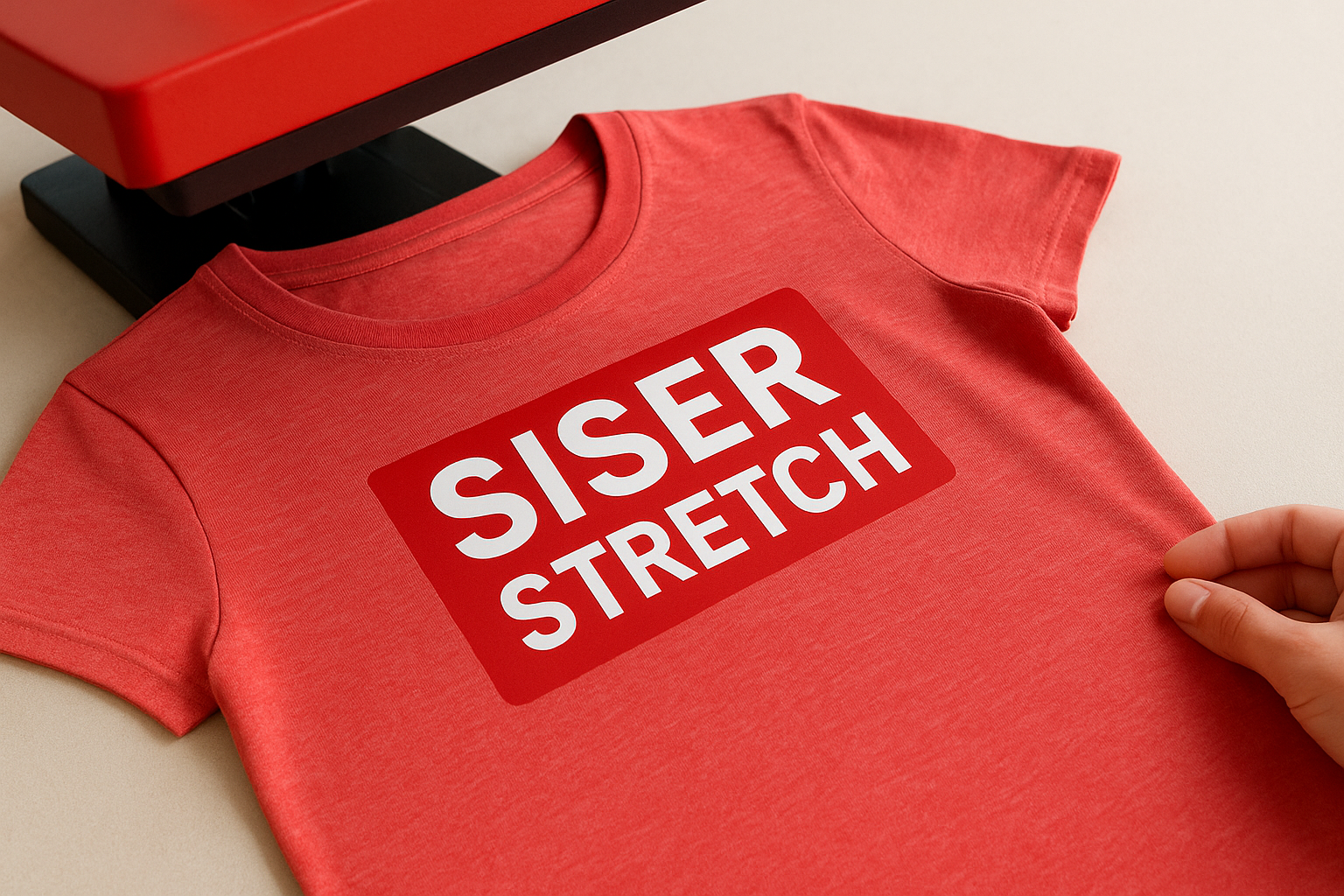
Siser Stretch is a specialist HTV built specifically for performance fabrics and high-elasticity garments. If you regularly press athletic shirts, yoga wear, or anything with a significant spandex or elastane content, Siser Stretch consistently delivers among the best heat transfer vinyl for t shirts that need to move without cracking.
Why it lasts on T-shirts
Standard PU vinyl bonds well to stable fabrics but cracks under repeated stretching, because the material itself cannot flex far enough before the adhesive breaks away from the fibres. Siser Stretch uses an elastomeric polyurethane formula engineered to stretch alongside the garment rather than resist it. This means the adhesive layer remains intact through bending, pulling, and washing cycles that would split a rigid vinyl design.
The stretch tolerance built into this vinyl’s adhesive is what separates it from general-purpose options on performance fabrics.
Best for
Siser Stretch performs best on fabrics with at least 20% spandex, lycra, or elastane content, including athletic jerseys, compression shirts, leggings, and swimwear. It also handles cotton-poly blends well. This vinyl suits decorators who work with:
- Gym and fitness brands requiring flexible, durable logos
- Sports teams ordering jerseys that see intense physical use
- Activewear lines where design integrity through repeated washing matters
Pressing and peel notes
Press Siser Stretch at 135-150°C (275-305°F) with medium pressure for 10 to 15 seconds. The lower temperature range compared to standard PU vinyls protects heat-sensitive synthetic fibres from scorching or distorting. It operates as a warm-peel product, so wait roughly 10 seconds after lifting the press before pulling the carrier sheet. Removing it too early risks edge lifting before the adhesive fully contacts the fabric.
Price and availability in Canada
Siser Stretch sits in the mid-range price bracket and is available through Canadian craft and apparel supply retailers in 12-inch and 20-inch roll widths. Because it serves a specialist purpose, buying by the roll rather than by the sheet reduces cost per transfer significantly for decorators who press performance garments regularly.
7. StarCraft SoftFlex
StarCraft SoftFlex is a budget-friendly HTV that consistently outperforms its price point, making it a practical pick for decorators who want the best heat transfer vinyl for t shirts without spending at the premium tier. Its defining characteristic is a softer hand feel compared to standard PU vinyls, which makes finished designs sit more naturally against the fabric rather than feeling like a rigid layer stuck on top.
Why it lasts on T-shirts
SoftFlex uses a thin, flexible polyurethane construction that conforms closely to the fabric surface during pressing, reducing the gap between adhesive and fibre that causes edge lifting over time. Its lighter build means the design moves with the shirt through wear and washing rather than resisting movement and cracking at stress points. Decorators regularly report 40 to 50 wash cycles with no significant edge lifting when applied within the correct temperature and pressure range.
SoftFlex’s thin construction is both its strength and its limitation: it bonds well on smooth fabrics but can struggle on heavily textured weaves where the adhesive needs more contact surface to grip.
Best for
SoftFlex suits decorators working with smooth, stable cotton and cotton-poly blend t-shirts who want a soft-feel finish on text-heavy designs, small logos, and layered graphics. It works well for:
- Branded merchandise and promotional event shirts
- Small studio setups running Cricut or Silhouette cutters on tight budgets
- Designs where a low-profile, soft finish matters more than maximum adhesion on performance fabrics
Pressing and peel notes
Press SoftFlex at 150-160°C (300-320°F) with medium pressure for 10 to 15 seconds. It is a warm-peel vinyl, so allow the transfer to cool for roughly 10 seconds before pulling the carrier sheet. Rushing the peel while the adhesive is still active risks pulling edges away from the fabric before the bond fully sets.
Price and availability in Canada
SoftFlex sits at the lower end of the price range and is available through Canadian craft supply retailers and online distributors in standard roll widths. Sheet pricing makes it accessible for occasional projects, while roll purchases drop the per-transfer cost significantly for decorators pressing regular batches.
8. Cricut Everyday Iron-On
Cricut Everyday Iron-On is the go-to choice for home crafters and small-batch decorators who already own a Cricut cutting machine and want a vinyl that works seamlessly with it. While it’s not a commercial product, it consistently earns its place among the best heat transfer vinyl for t shirts at the hobbyist level because of its predictable cutting behaviour and reliable bonding on standard cotton and cotton-blend garments.
Why it lasts on T-shirts
Everyday Iron-On uses a standard polyurethane adhesive formulated specifically to perform within the temperature range of home heat presses and iron setups. The adhesive activates cleanly at lower heat levels, which suits crafters who cannot dial in commercial press accuracy. Material thickness is consistent across sheets, which means your Cricut cuts through it evenly, and the adhesive contacts the fabric uniformly during pressing rather than leaving thin spots that lift after washing.
When you use a Cricut cutter with Cricut’s own Iron-On material, the pre-loaded cut settings remove the guesswork that trips up beginners on third-party vinyl.
Best for
Everyday Iron-On suits decorators who work with Cricut Explore or Maker machines on small personal or low-volume commercial projects. It handles smooth cotton and polyester blends well and fits projects like:
- Custom family event shirts and personalised gifts
- Small branded batches for local businesses or clubs
- Beginner projects where predictable cutting behaviour matters more than maximum adhesion
Pressing and peel notes
Press Everyday Iron-On at 160°C (315°F) with firm pressure for 25 to 30 seconds using a household iron, or 10 to 15 seconds on a dedicated heat press. It is a warm-peel product, so wait for the transfer to cool for at least 15 seconds before pulling the carrier sheet. Skipping this cooling step risks lifting edges before the adhesive fully bonds to the fabric.
Price and availability in Canada
Cricut Everyday Iron-On is widely available across Canada through major retailers including Michaels and Amazon.ca, in individual sheets and multi-pack rolls. Pricing sits at the mid-range for consumer-grade HTV, and the accessibility makes it easy to reorder quickly between projects.
9. HTVRONT HTV
HTVRONT has carved out a large share of the budget HTV market by offering affordable vinyl in bulk packs that appeal to beginners, hobbyists, and small-batch decorators watching their costs closely. If you are searching for the best heat transfer vinyl for t shirts on a tight budget and pressing occasional projects rather than high-volume commercial runs, HTVRONT is worth understanding before you commit to a purchase.
Why it lasts on T-shirts
HTVRONT uses a standard polyurethane adhesive that bonds adequately to cotton and cotton-poly blends when you apply it within the correct temperature range. The material performs best on smooth, stable fabrics where the adhesive has a consistent surface to grip across the entire design area. Experienced decorators note that HTVRONT holds up respectably for 30 to 40 wash cycles on cotton garments when pressed correctly, though it falls short of premium brands in edge retention on heavier-use items.
Consistent press technique matters more with budget vinyl than with premium options, because the adhesive tolerance window is narrower and less forgiving of small errors.
Best for
HTVRONT suits decorators who work on low-volume personal projects and want to keep material costs down while learning the craft. It handles:
- Simple text and bold graphics on standard cotton t-shirts
- Starter projects where practising technique matters more than maximum durability
- Casual or one-time-use garments such as event shirts that will not see heavy laundering
Pressing and peel notes
Press HTVRONT at 150-160°C (300-320°F) with medium pressure for 10 to 15 seconds. The carrier uses a warm-peel method, so give the transfer 10 seconds to cool before pulling the backing sheet away. Rushing the peel while the adhesive is still active is the most common mistake with this product and the fastest way to lift edges before the bond fully sets into the fabric.
Price and availability in Canada
HTVRONT is widely available on Amazon.ca in multi-colour bulk packs, making it one of the most accessible budget options for Canadian decorators. The per-sheet cost drops significantly in larger packs, which suits crafters who want variety without committing to full rolls of a single colour.
Pick the right vinyl and it will last
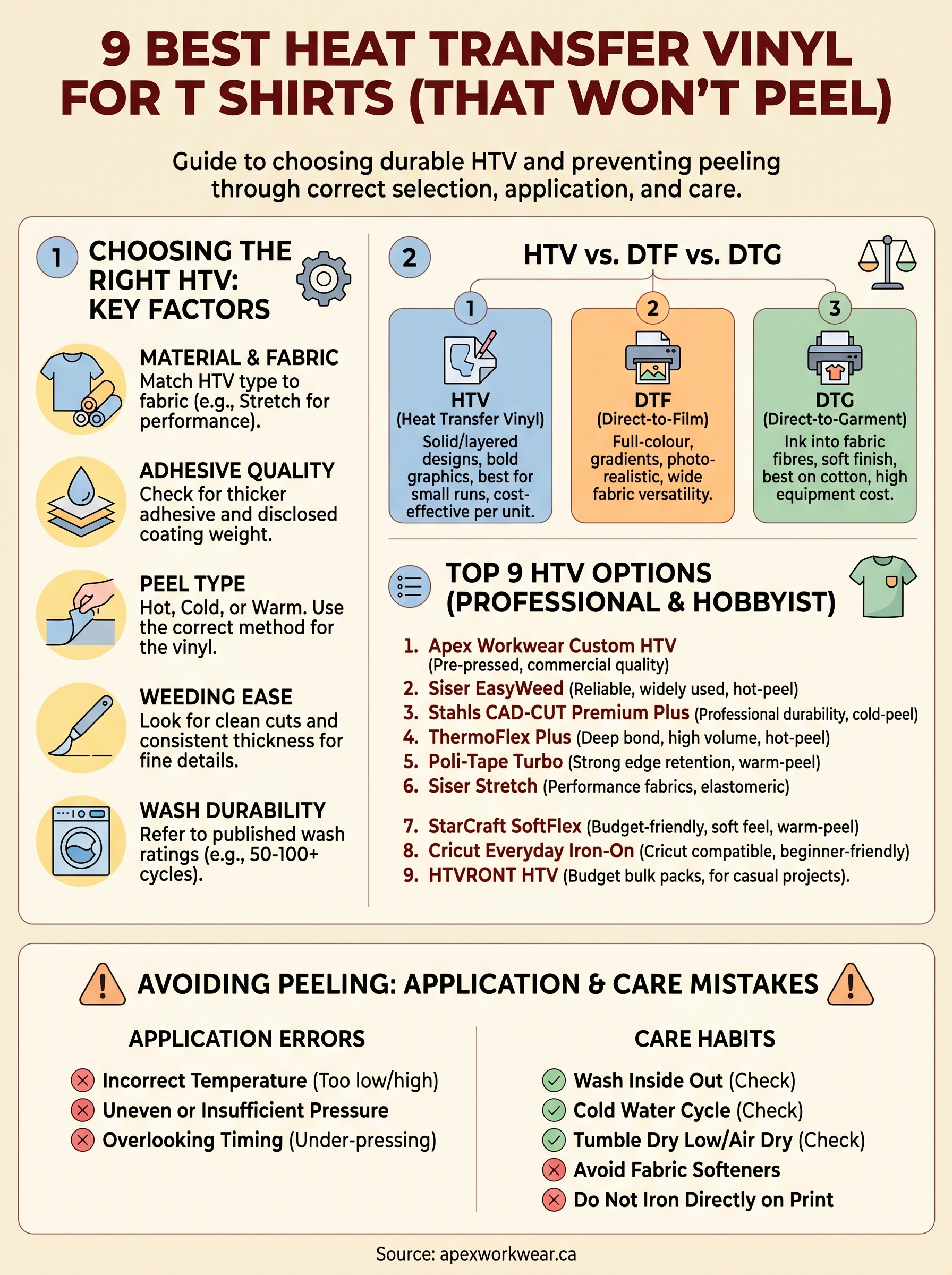
The best heat transfer vinyl for t shirts is not a single product. It is the right product for your specific fabric, your design complexity, and your production volume. Whether you choose a professional option like Siser EasyWeed or Stahls CAD-CUT for commercial runs, or a budget-friendly pack like HTVRONT for casual projects, matching your vinyl to your application is what keeps designs looking sharp through dozens of wash cycles.
Every product on this list holds up when you apply it correctly, use the right temperature and pressure, and care for your garments properly after pressing. The peeling problem is almost always preventable. If you would rather skip the equipment, the sourcing, and the guesswork entirely, order custom HTV t-shirts from Apex Workwear and get professionally pressed garments delivered directly to you, with no minimums and free shipping on eligible GTA orders.