You just picked up a batch of custom screen-printed tees for your crew, and they look sharp. But a few washes in, you start wondering: how long does screen printing last before it starts cracking or fading? It’s a fair question, especially when you’ve invested in branded apparel for your business or team. The short answer is that a well-made screen print can hold up for 50 washes or more, often lasting the full life of the garment itself.
The longer answer depends on several factors: the quality of the ink, the type of fabric, how the print was cured, and, perhaps most importantly, how you care for it after it leaves the press. A cheap print on a thin shirt, tossed in a hot dryer every week, won’t hold a candle to a properly produced piece that’s washed and dried with a bit of intention.
At Apex Workwear, we handle custom apparel printing for small businesses, contractors, and teams across Canada, so we see firsthand what makes prints last and what causes them to fall apart early. This guide breaks down the real lifespan of screen printing, what affects durability, and the specific care steps that keep your designs looking crisp wash after wash. Whether you’re ordering your first run of printed shirts or trying to get more life out of the ones you already own, you’ll find practical answers here.
Why screen print longevity matters
When you order printed apparel, you’re making a real investment in your brand. Whether it’s staff uniforms for a contracting crew, branded merchandise for a product launch, or team shirts for a community event, the pieces your people wear represent your business every time they’re pulled on. A print that starts cracking or fading after a handful of washes doesn’t just look poor, it signals to customers and colleagues that quality and attention to detail aren’t priorities for your operation.
The real cost of prints that fail early
Replacing printed apparel costs more than the sticker price on a new order. You also spend time re-ordering, coordinating sizes, and waiting on turnaround, all while some team members walk around in worn-out gear. For a small business managing a tight budget, that’s a disruption you don’t need. A print that lasts two years instead of six months effectively cuts your per-shirt cost significantly, which adds up fast across even a modest run of 20 or 30 shirts.
Your staff experience matters here too. People wear gear they feel good in. When the design on a work shirt still looks crisp and intact after months of regular use, employees are more likely to wear it consistently and proudly. That consistency means your brand gets more visibility without any extra spend on your part. Worn-out prints tend to end up at the back of the drawer, which defeats the purpose of ordering them in the first place.
How print durability affects your brand image
Every time someone wears your printed shirt on a job site, at a trade show, or around the neighbourhood, that garment is doing active marketing work for you. A sharp, well-maintained design reinforces that your business is professional and takes pride in the details. A faded or peeling logo sends the opposite message, and it’s one you can’t control once the shirt is out in the world.
A single cracked logo on a team shirt can quietly undermine the impression your brand makes, far more than most business owners expect.
Your printed apparel also has a cumulative effect. One shirt at a local event is one impression. Twenty shirts worn across a busy workweek by your crew is twenty impressions a day. The longer each piece holds up, the longer that visibility compounds without additional cost. This is especially true for businesses in the trades, food service, or retail, where team members are visible to customers daily.
This is exactly why understanding how long does screen printing last is worth your time before you place an order. Knowing what separates a durable print from a disposable one lets you ask better questions, choose the right products, and care for what you receive so it works for your brand as long as possible. The next section looks at what that lifespan actually looks like in practice.
How long screen printing lasts in real life
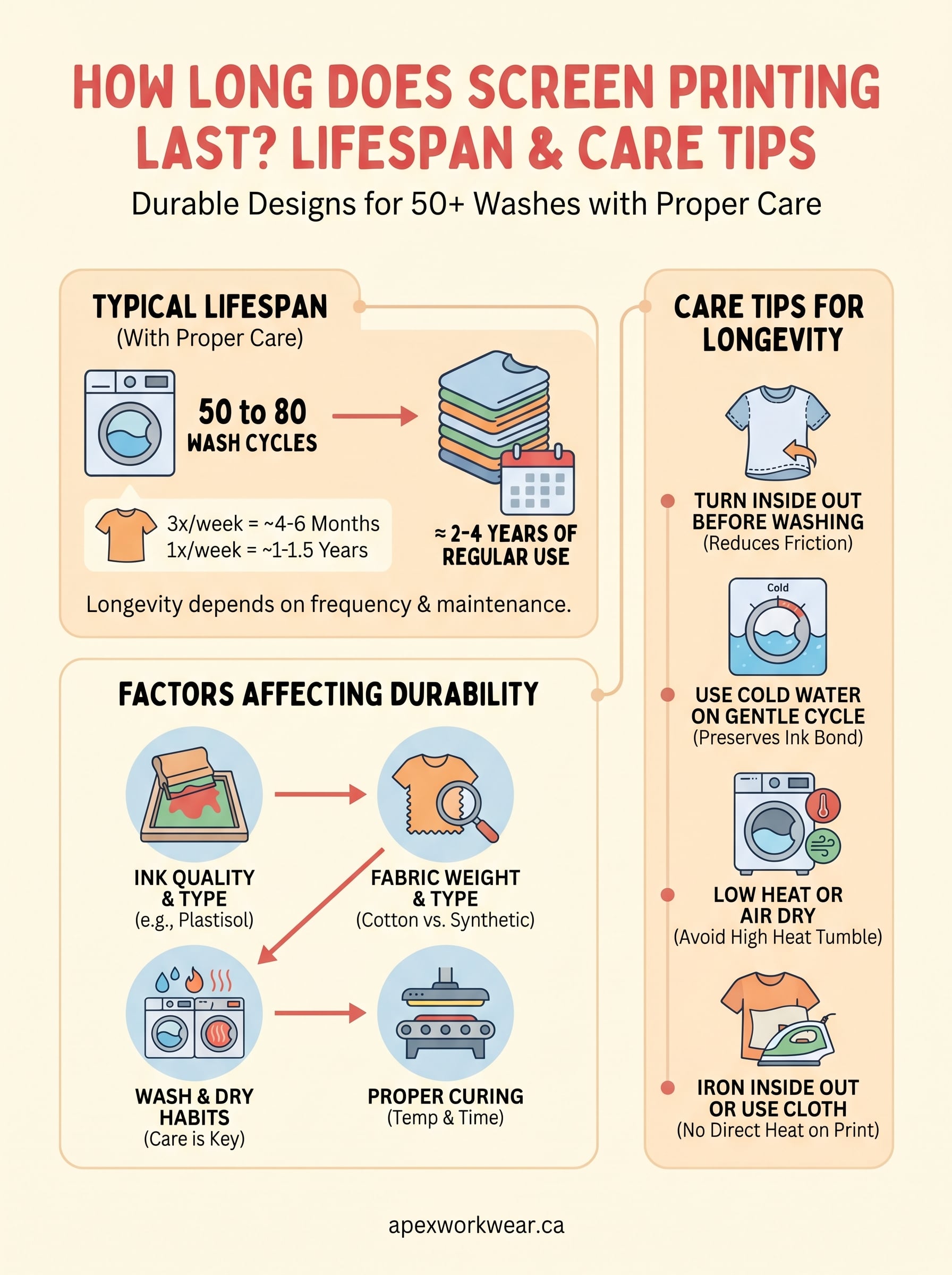
A high-quality screen print, applied correctly and cared for properly, typically lasts between 50 and 80 wash cycles before noticeable wear sets in. On a shirt that gets washed once or twice a week, that translates to roughly two to four years of regular use. For workwear that gets heavy laundering, you might see fading or cracking sooner. For a garment worn occasionally and washed with care, the print can outlast the fabric itself.
What the numbers look like in practice
Understanding how long does screen printing last gets easier when you connect wash counts to real-world use patterns. If you’re washing a uniform shirt three times a week, 50 washes happens in about four months. Wash that same shirt once a week and you’re looking at closer to a year before the design shows meaningful wear. How you wash matters just as much as how often, which we cover in detail later in this guide.
| Wash frequency | ~50 washes reached | ~80 washes reached |
|---|---|---|
| 3x per week | ~4 months | ~6 months |
| 2x per week | ~6 months | ~10 months |
| 1x per week | ~1 year | ~18 months |
When prints start to show wear
Most well-produced screen prints don’t fail all at once. You’ll typically notice subtle fading in the lightest colours first, followed by minor cracking along the edges of thick ink coverage. Heavily used areas, like spots that rub against a seatbelt or bag strap regularly, tend to break down before the rest of the design does.
Spotting early wear signs, like slight edge cracking, means you can adjust your wash routine before the damage spreads further.
Prints on low-quality or very thin fabrics tend to degrade faster regardless of how well they were applied, because the garment itself doesn’t hold the ink as firmly. Choosing a mid-weight fabric from the start gives your print a much stronger foundation to adhere to and last longer on.
What affects how long screen printing lasts
No two screen-printed garments age at exactly the same rate. Several variables combine to determine whether your print holds up for years or starts showing wear within months. Understanding these factors helps you make better decisions when ordering, and gives you a clearer picture of how long does screen printing last under different conditions.
Ink quality and curing
The ink itself is one of the biggest variables. Plastisol ink, the most commonly used type in screen printing, is known for durability when applied and cured properly. Water-based inks produce a softer feel but can wear faster if not handled correctly. Curing is where many prints fail: the ink needs to reach a precise internal temperature (typically around 160°C) to bond permanently with the fabric fibres. Under-cured prints feel fine initially but crack and peel after just a few washes because the ink never fully set.
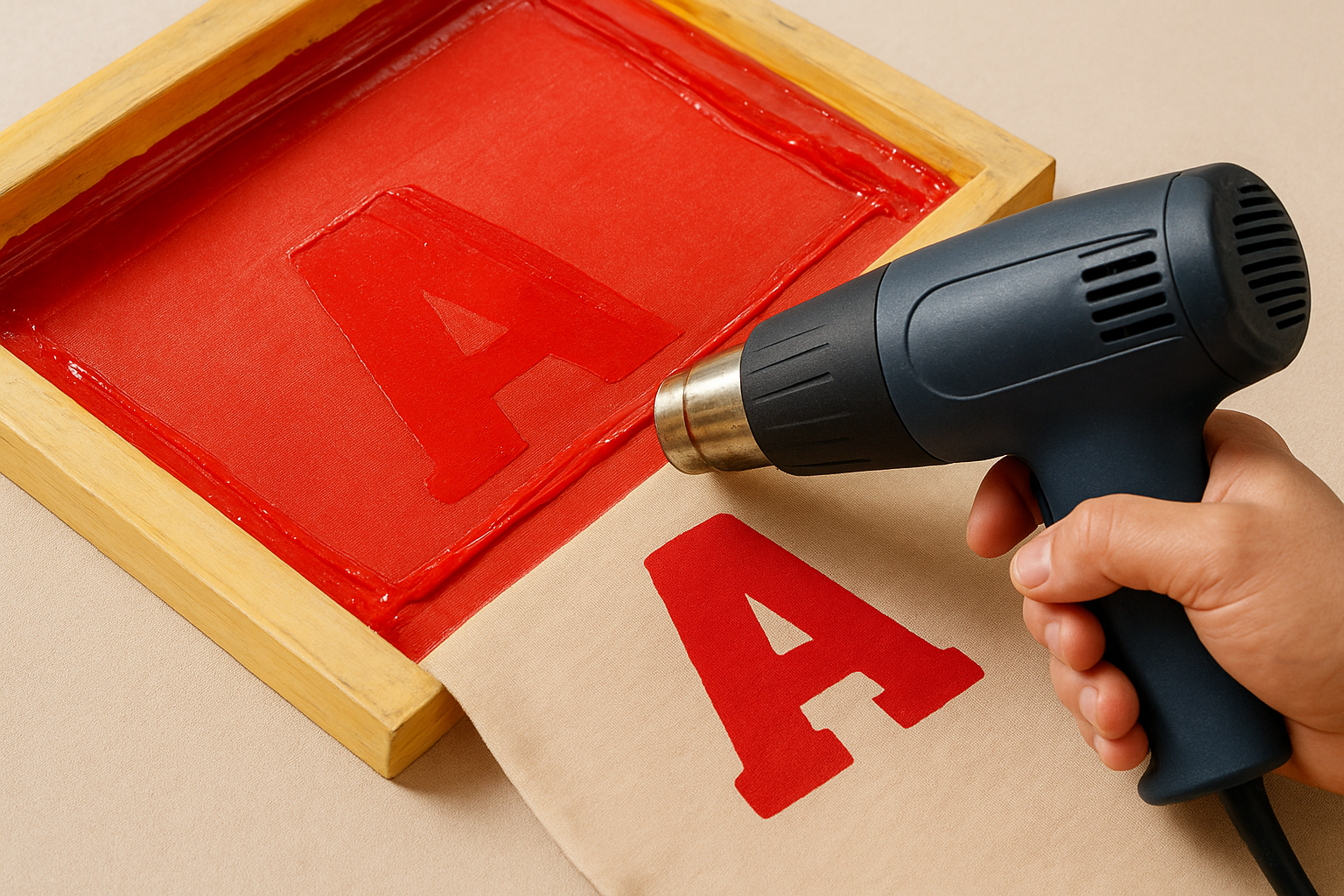
A print can look perfect coming off the press and still fail early if the curing stage was rushed or the temperature wasn’t monitored correctly.
Fabric type and weight
The garment itself plays a significant role in how well a print holds. Heavier, tighter-woven fabrics, such as a 180 to 200 gsm cotton, give the ink a stable surface to bond with. Thin, loosely knit fabrics flex and stretch more with each wash, which accelerates cracking. Polyester and synthetic blends can also be tricky, since the fibres don’t absorb ink the same way natural cotton does, sometimes reducing adhesion and long-term wear.
Ink coverage and print complexity
Thick, heavily laid ink requires more precise curing and can be more prone to cracking under repeated stress than a thinner pass. Designs with large solid blocks of ink tend to show wear more visibly along edges and flex points. Simpler designs with lighter coverage often age more gracefully because there’s less ink mass to crack or separate from the fabric over time.
How to make screen-printed items last longer
The care you give a screen-printed garment after it leaves the press is the single biggest factor you control. Good washing and storage habits can add months, sometimes years, to a print’s lifespan, and understanding how long does screen printing last in your specific situation starts with how you treat it at home or at your facility.
Wash and dry with care
Washing is where most prints take their damage. Turning the garment inside out before every wash reduces direct friction on the printed surface, which is the simplest change you can make for immediate impact. Use cold water on a gentle cycle and avoid hot water entirely, since heat softens and weakens the ink bond over repeated cycles.
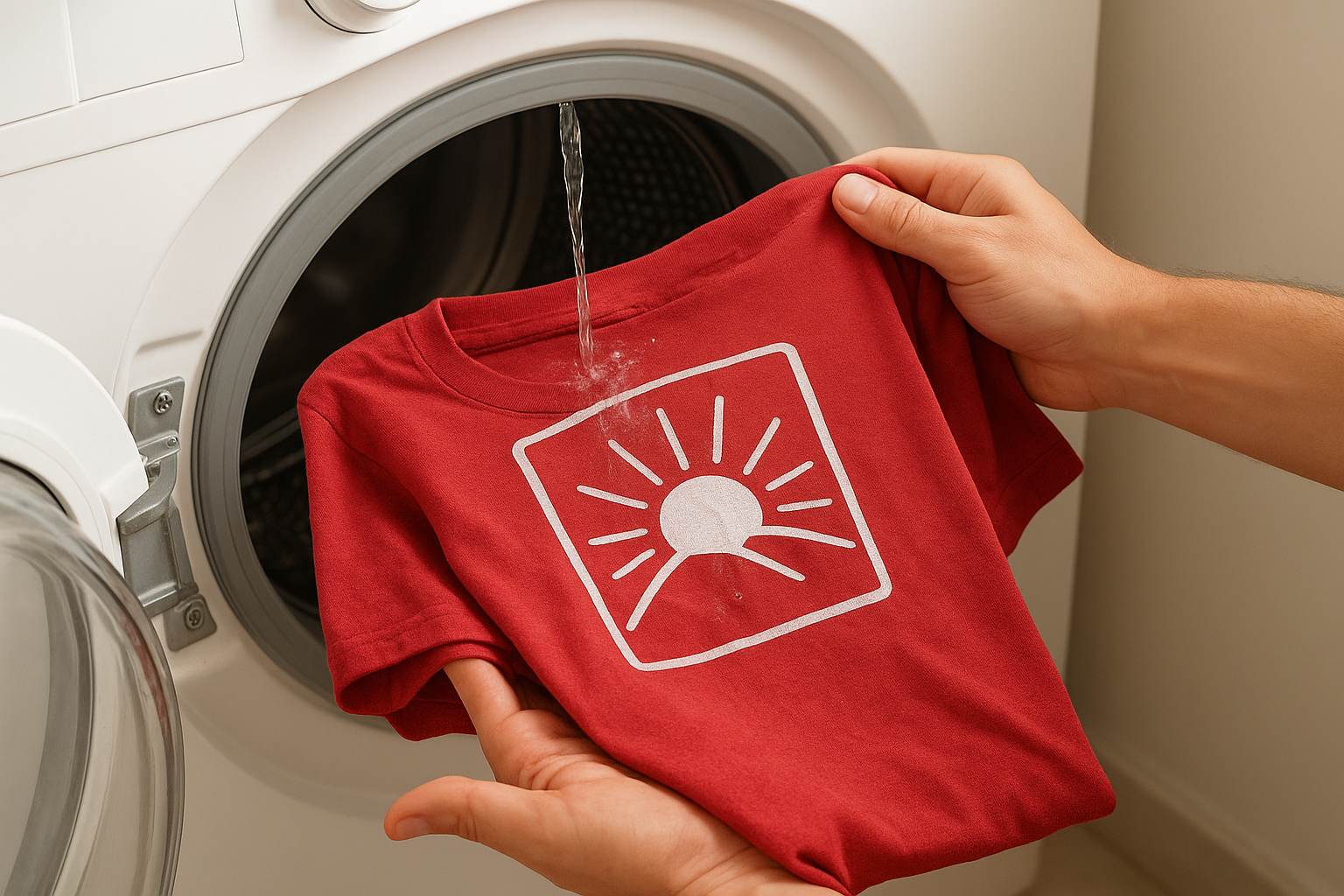
Switching from a hot to a cold wash cycle alone can noticeably extend the life of screen-printed designs across a full year of regular laundering.
When it comes to drying, low heat or air drying is far kinder to printed ink than a high-heat tumble dry. If you use a dryer, keep it on the lowest setting and remove the garment while it’s still slightly damp. Avoid ironing directly over the print; if the garment needs pressing, iron it inside out or place a thin cloth between the iron and the design.
Store and handle prints properly
How you store printed garments matters more than most people expect. Folding shirts with the print facing inward reduces surface exposure and keeps the design from rubbing against other items in a drawer or bin. For printed workwear stored in bulk, avoid compressing garments under heavy stacking for extended periods, since sustained pressure can cause ink to crack along fold lines.
For branded apparel worn on job sites, encourage staff to avoid rough contact with abrasive surfaces where possible. Small habits like these don’t take extra time, but they protect the print from the kind of mechanical wear that shortens its usable life quickly.
Screen printing vs other print methods for durability
When you’re comparing options for custom apparel, print method makes a meaningful difference in how long a design holds up. Screen printing consistently ranks as one of the most durable methods available, largely because the ink is pressed directly into the fabric fibres rather than sitting on top of them. Understanding where it stands relative to other common methods helps you make a better decision when placing your next order.
How screen printing compares to DTG
Direct-to-garment (DTG) printing sprays ink onto the fabric using a specialised printer, which produces excellent detail and works well for complex, multi-colour designs. However, DTG ink typically sits closer to the surface of the fabric rather than bonding as deeply as screen print ink does under proper curing. As a result, DTG prints tend to fade more noticeably after 20 to 30 washes if the garment isn’t pre-treated well or cared for correctly. Screen printing generally outlasts DTG on high-use items like workwear or uniforms, which is a key reason it remains the go-to method for bulk runs.
When you’re asking how long does screen printing last compared to DTG, the answer often comes down to wash frequency and garment use.
Heat transfer and vinyl prints
Heat transfer printing, which applies a pre-printed design onto fabric using heat and pressure, is quick and accessible but tends to have a shorter lifespan than screen printing. The printed film or transfer layer sits on top of the fabric rather than integrating with it, which makes peeling and cracking more likely after repeated washing and drying cycles. Vinyl prints, commonly used for single-colour names and numbers on sports gear, face similar limitations since the vinyl bond weakens with heat exposure over time.
For items you need to look sharp over an extended period, screen printing offers a more reliable return on your investment than most heat-based alternatives.
Final takeaways
Screen printing is one of the most durable print methods available, and a well-produced print on quality fabric can last 50 to 80 washes or more with proper care. The lifespan depends on ink quality, curing precision, and fabric weight, as well as how you wash and store your garments. Cold water, gentle cycles, and low-heat drying make a real difference over time.
Understanding how long does screen printing last in your specific situation helps you order smarter and care for what you receive. For businesses investing in branded workwear or uniforms, that longevity directly affects your cost per wear and the impression your team makes every day.
Ready to order custom printed apparel that’s built to last? Get a free quote from Apex Workwear and our team will help you choose the right products and print method for your needs from the very first run.