Postcard paper thickness refers to how thick your cardstock is, measured in points (pt), mils, or grams per square metre (GSM). This measurement determines whether your postcards will survive the mail without bending, tearing, or getting rejected by postal services. Most postcards range from 9pt to 16pt (roughly 250 to 400 GSM), with 14pt being the sweet spot for mailing.
This guide walks you through everything you need to know about choosing the right thickness for your postcards. You’ll learn about standard weight ranges, Canada Post mailing requirements, how different thicknesses affect durability and cost, and common mistakes that waste money or delay delivery. Whether you’re printing promotional postcards for your business or sending out direct mail campaigns, understanding paper thickness helps you make smarter decisions and avoid costly errors.
Why postcard paper thickness matters
Your postcard paper thickness directly affects whether your mail arrives intact or gets damaged in transit. Thin paper bends easily, tears at corners, and can get jammed in sorting machines, which means your marketing message never reaches your customers. Canada Post processes millions of pieces daily through automated equipment that puts physical stress on every postcard, so choosing the right thickness protects your investment and ensures your message gets delivered.
Durability during handling and transit
Postal systems subject your postcards to rough handling at multiple stages. Machines grab, sort, and push your mail through conveyor belts and rollers at high speeds. Thinner stocks (below 12pt) often arrive bent or with damaged corners, which makes your business look unprofessional. Thicker cardstock (14pt or above) resists this punishment and maintains its crisp appearance, ensuring recipients see your brand exactly as you intended.

Postcards that arrive damaged get thrown away before anyone reads your message.
Meeting postal standards and controlling costs
Canada Post requires specific thickness ranges to accept your postcards at standard rates. If your stock falls outside these parameters, you’ll pay higher postage or face rejection at the post office. Heavier paper (16pt+) costs more to print and mail, which cuts into your marketing budget without necessarily improving results. Finding the right balance between durability and cost helps you maximise your return on investment whilst keeping your postcards compliant with mailing regulations.
How to choose postcard thickness for mailing
Selecting the right postcard paper thickness starts with understanding how your postcards will be printed, handled, and delivered. Your choice affects everything from production costs to postal rates to how recipients perceive your brand. Three key factors guide your decision: your mailing method, your campaign objectives, and practical testing before you commit to a large print run.
Consider your mailing method and volume
Different mailing approaches require different thickness levels. If you’re hand-delivering postcards at trade shows or local events, you can use thinner stocks (9pt to 12pt) since they won’t face postal sorting machines. For bulk mail campaigns through Canada Post, you need heavier stock (14pt minimum) to withstand automated processing and multiple handling points. Volume matters too because larger print runs with thicker paper cost significantly more in both printing and postage, so balance durability against your budget constraints.
Match thickness to your campaign goals
Your marketing objectives shape your thickness choice. Premium products or high-value services benefit from thicker cardstock (16pt) that signals quality and professionalism the moment someone picks it up. Budget-conscious campaigns promoting sales or events can succeed with standard 14pt stock that still looks professional without breaking your budget. Consider your audience too, because B2B prospects expect more substantial materials than casual consumer offers, and first impressions through touch influence whether recipients read your message or bin it immediately.

The thickness you choose sends a message about your brand before anyone reads a single word.
Test samples before committing to large runs
Order physical samples of different thicknesses before printing thousands of postcards. Hold them, bend them gently, and compare how they feel in your hand because weight and stiffness vary more than numbers suggest. Ask your printer for test pieces in your actual design, printed with your chosen inks and finishes, since coatings affect perceived thickness. Mail a few samples to yourself to see how they arrive, checking for corner damage or bending that reveals stock inadequacy before you waste money on a failed campaign.
Standard postcard weights and thickness ranges
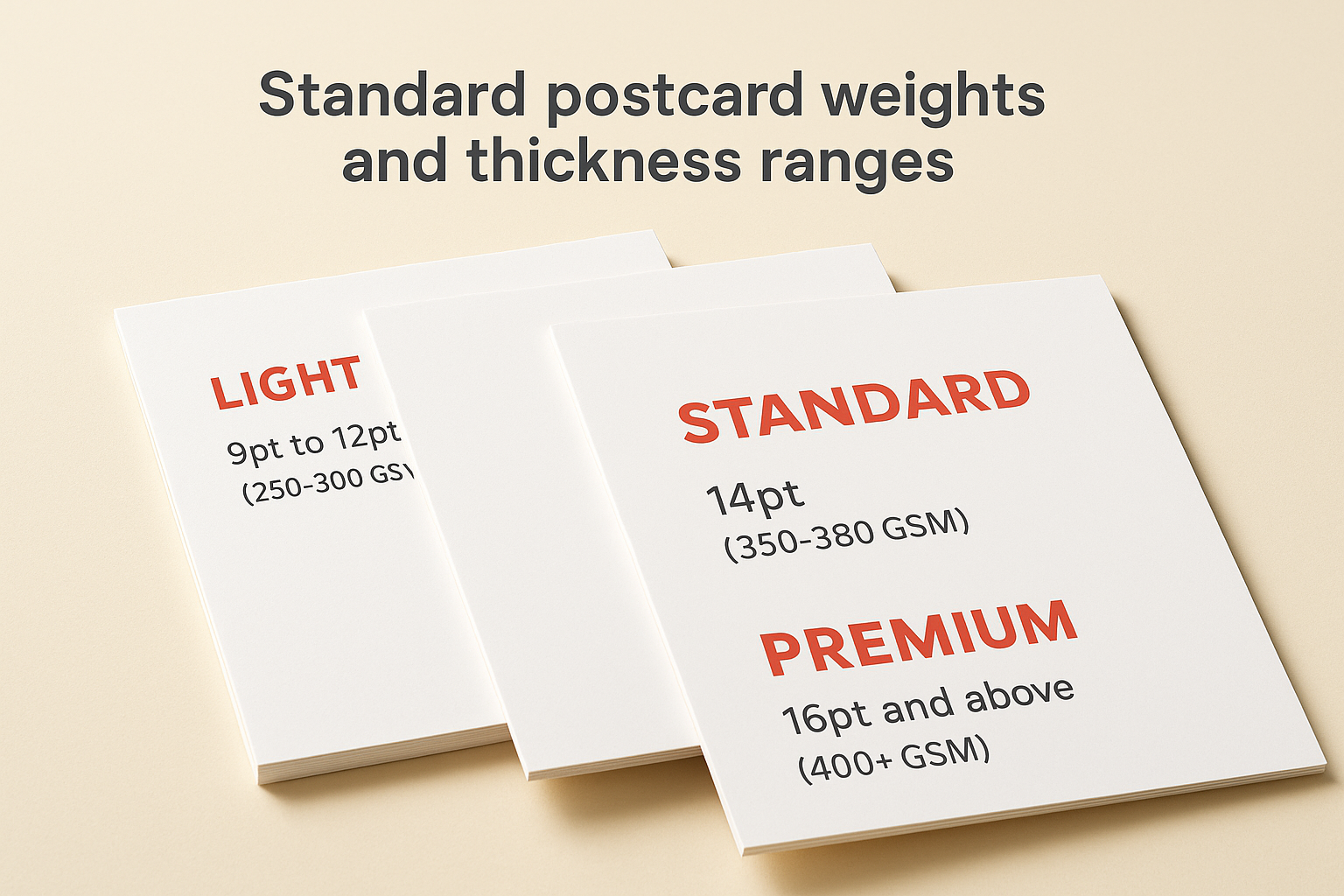
Postcard paper thickness falls into three main categories that balance cost, durability, and mailing requirements. Understanding these standard ranges helps you select stock that meets your needs without overpaying for unnecessary weight or risking damage with inadequate thickness. Most printers offer these common options, measured in points (pt) or GSM (grams per square metre), with each range serving different purposes and budgets.
Light postcard stock (9pt to 12pt)
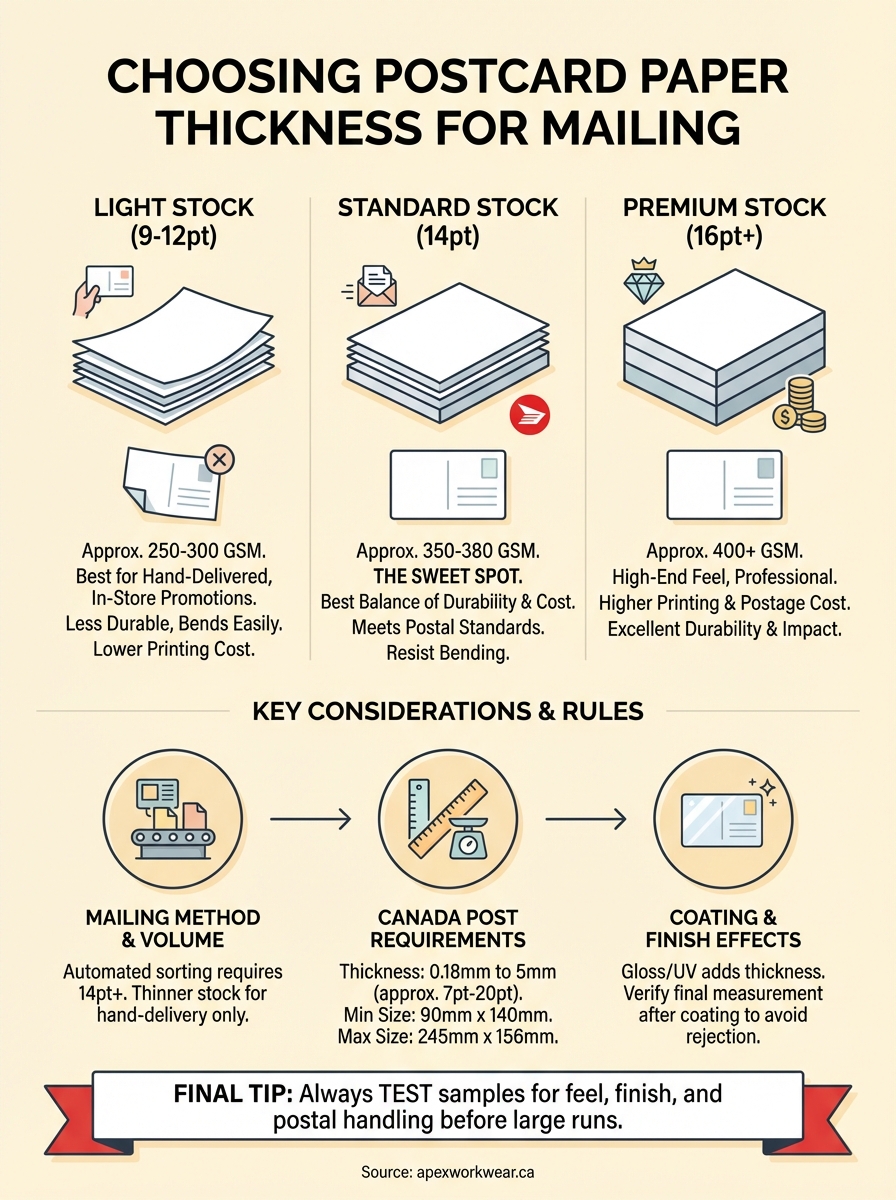
Light cardstock ranging from 9pt to 12pt (approximately 250 to 300 GSM) works for hand-delivered postcards or low-budget campaigns where postal durability matters less. You’ll find this thickness suitable for in-store promotions, event handouts, or inserts in packages where your postcards avoid automated mail sorting. The thinner profile reduces printing costs significantly, but these stocks bend easily under pressure and rarely survive rough postal handling without visible wear. Budget-conscious businesses use this range for high-volume local distribution where recipients get postcards directly rather than through the mail system.
Standard postcard stock (14pt)
14pt cardstock (roughly 350 to 380 GSM) represents the industry standard for mailed postcards, offering the best balance between durability and affordability. This thickness satisfies Canada Post requirements whilst providing enough rigidity to resist bending during sorting and transit. Your postcards printed on 14pt stock arrive looking professional, handle well during addressing and stamping, and cost less than premium options without compromising quality. Most print shops stock this weight readily, which means faster turnaround times and better pricing through economies of scale.
Standard 14pt stock handles the majority of direct mail campaigns without issues.
Premium postcard stock (16pt and above)
Premium stocks at 16pt or thicker (approximately 400+ GSM) create an impressive tactile experience that signals high-end quality immediately. These heavier weights suit luxury brands, real estate marketing, or high-value service promotions where every detail reinforces your premium positioning. The extra thickness costs more for both printing and postage, but recipients notice the difference instantly when they pick up your postcard. Consider this range when your marketing targets affluent audiences or when you need your materials to stand out physically in a pile of standard mail.
Mailing thickness rules and standards
Canada Post enforces strict guidelines on postcard paper thickness to ensure your mail processes smoothly through automated sorting equipment. Your postcards must fall within specific measurement ranges to qualify for standard lettermail rates, and falling outside these parameters means paying more or facing rejection at the counter. Understanding these regulations before printing saves you from costly surprises and ensures your direct mail campaigns reach recipients without delays or additional fees.
Canada Post thickness requirements
Canada Post requires postcards to measure between 0.18 mm and 5 mm thick to qualify as standard lettermail, which translates to roughly 7pt to 20pt cardstock. Your postcards also need minimum dimensions of 90 mm x 140 mm and maximum dimensions of 245 mm x 156 mm to meet lettermail specifications. Items exceeding these thickness limits automatically move into parcel rates, which cost significantly more and slow delivery times. Most standard postcards at 14pt thickness fall comfortably within these parameters, giving you peace of mind that Canada Post will accept and process your mail at standard rates without complications.

Staying within postal thickness limits protects your marketing budget from unexpected surcharges.
Weight and rigidity standards
Postal regulations also consider your postcard’s weight per piece alongside thickness measurements. Standard lettermail accepts items up to 50 grams, which accommodates most cardstock thicknesses without issues. Your postcards need sufficient rigidity to feed through sorting machines without jamming, which means avoiding stocks thinner than 9pt that bend too easily. Canada Post recommends stocks between 12pt and 16pt for optimal processing, as these weights resist bending whilst remaining flexible enough to navigate equipment curves and rollers. Testing your chosen stock with actual postal equipment before large runs prevents mechanical failures that delay entire campaigns.
Coating and finish considerations
Glossy coatings and laminations add thickness to your base cardstock, which affects whether your postcards meet postal standards. A 14pt card with UV coating might measure closer to 15pt after finishing, so account for these additions when selecting your base stock. Canada Post measures total thickness including all layers and treatments, not just the paper itself. Verify final dimensions with your printer after applying finishes to avoid surprises at the post office.
Common mistakes to avoid with postcard stock
Businesses waste thousands of pounds annually by making preventable errors when selecting postcard paper thickness. These mistakes lead to damaged mail, rejected campaigns, or unnecessary costs that erode your marketing budget. Learning from common pitfalls helps you avoid expensive reprints and ensures your postcards deliver results rather than disappointment.
Choosing thickness based on price alone
Selecting the cheapest cardstock option typically backfires when your postcards arrive bent or torn. You save a few pence per piece upfront but lose the entire campaign investment when recipients bin damaged mail without reading your message. Price-focused decisions ignore durability requirements and postal standards, which means paying twice when you need emergency reprints. Balance cost against quality by choosing 14pt stock as your baseline, then adjust based on specific campaign needs rather than budget constraints alone.
Ignoring finish and coating effects
Many businesses forget that glossy coatings and laminations add thickness to base cardstock, potentially pushing your postcards outside postal thickness limits. Your 14pt stock becomes 15pt or thicker after UV coating, which affects postage rates and processing. Always verify final measurements with your printer after applying finishes to avoid surprises at the post office and ensure your postcard paper thickness stays within acceptable ranges.
Coatings change more than appearance; they alter whether Canada Post accepts your mail at standard rates.
Skipping test mailings
Printing thousands of postcards without sending test samples through actual mail guarantees problems you could have caught early. Test mailings reveal whether your chosen thickness survives postal handling, meets delivery timelines, and arrives looking professional.
Final thoughts
Choosing the right postcard paper thickness protects your marketing investment and ensures your message reaches customers looking professional. Most businesses succeed with 14pt cardstock that balances durability against cost whilst meeting Canada Post requirements without complications. Your thickness choice affects everything from how recipients perceive your brand to whether your postcards survive automated sorting machines, so testing samples before committing to large print runs saves money and prevents campaign failures.
Remember that thicker isn’t always better when postage costs and postal regulations factor into your decision. Match your stock weight to your campaign goals, verify final measurements after applying coatings, and always confirm your chosen thickness falls within acceptable mailing standards. When you’re ready to print professional postcards that arrive intact and impress recipients, Apex Workwear offers high-quality printing services with expert guidance on selecting the perfect stock for your next direct mail campaign.