If you’ve ever wondered what is business stationery, the short answer is: it’s the collection of printed materials that carry your brand across every professional interaction. Think letterheads, business cards, envelopes, notepads, and invoices, all designed with a consistent visual identity that tells people who you are before you say a word.
Good stationery does more than look polished. It builds recognition, reinforces trust, and gives even the smallest operation a sense of permanence. For contractors, startups, and small businesses across the GTA and beyond, these materials often serve as a first point of contact with potential clients. That’s exactly why we print them at Apex Workwear, because your brand details matter, whether they’re on a hoodie or a letterhead.
This guide breaks down the core items in a business stationery suite, explains how each one is used in day-to-day operations, and covers what you need to know before placing your first order. Whether you’re building a brand from scratch or refreshing materials you’ve outgrown, you’ll walk away with a clear picture of what to prioritise and why.
What counts as business stationery
When people ask what is business stationery, they’re usually thinking of business cards. The full picture is wider than that. Business stationery covers every printed item that carries your brand identity and supports your day-to-day business communications, from the paper you send proposals on to the envelope it arrives in.
A complete stationery suite works as a system, so every touchpoint reinforces the same brand to every person who receives it.
Core printed items
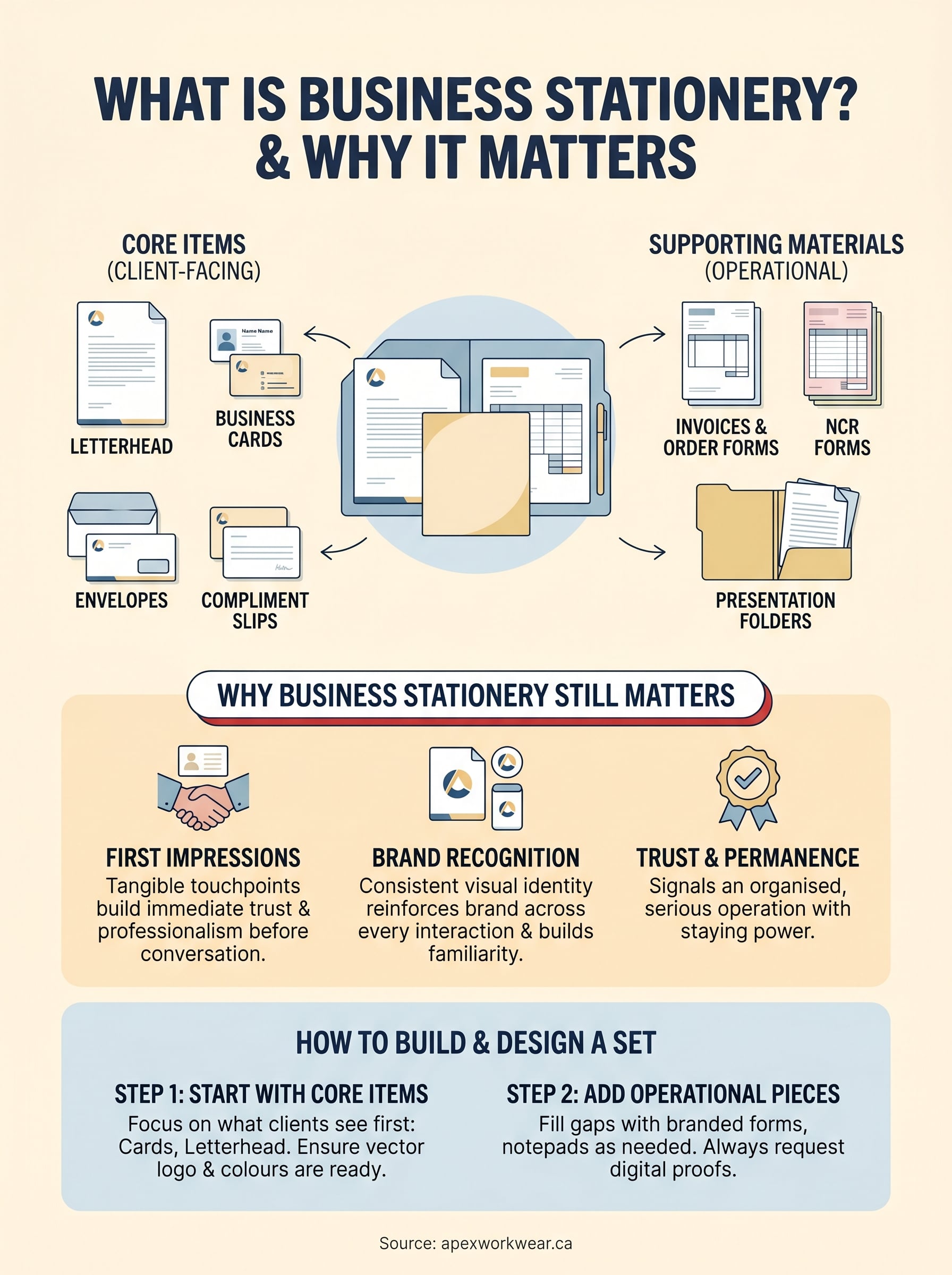
The foundation of any stationery set includes the pieces your contacts will see most often. A letterhead sits at the top of every formal document you send, carrying your logo, address, and contact details in a consistent format. Business cards give people a physical record of who you are after a meeting, a handshake, or a trade show conversation. Compliment slips and branded envelopes round out the basics, tying everything together whenever you send physical correspondence.
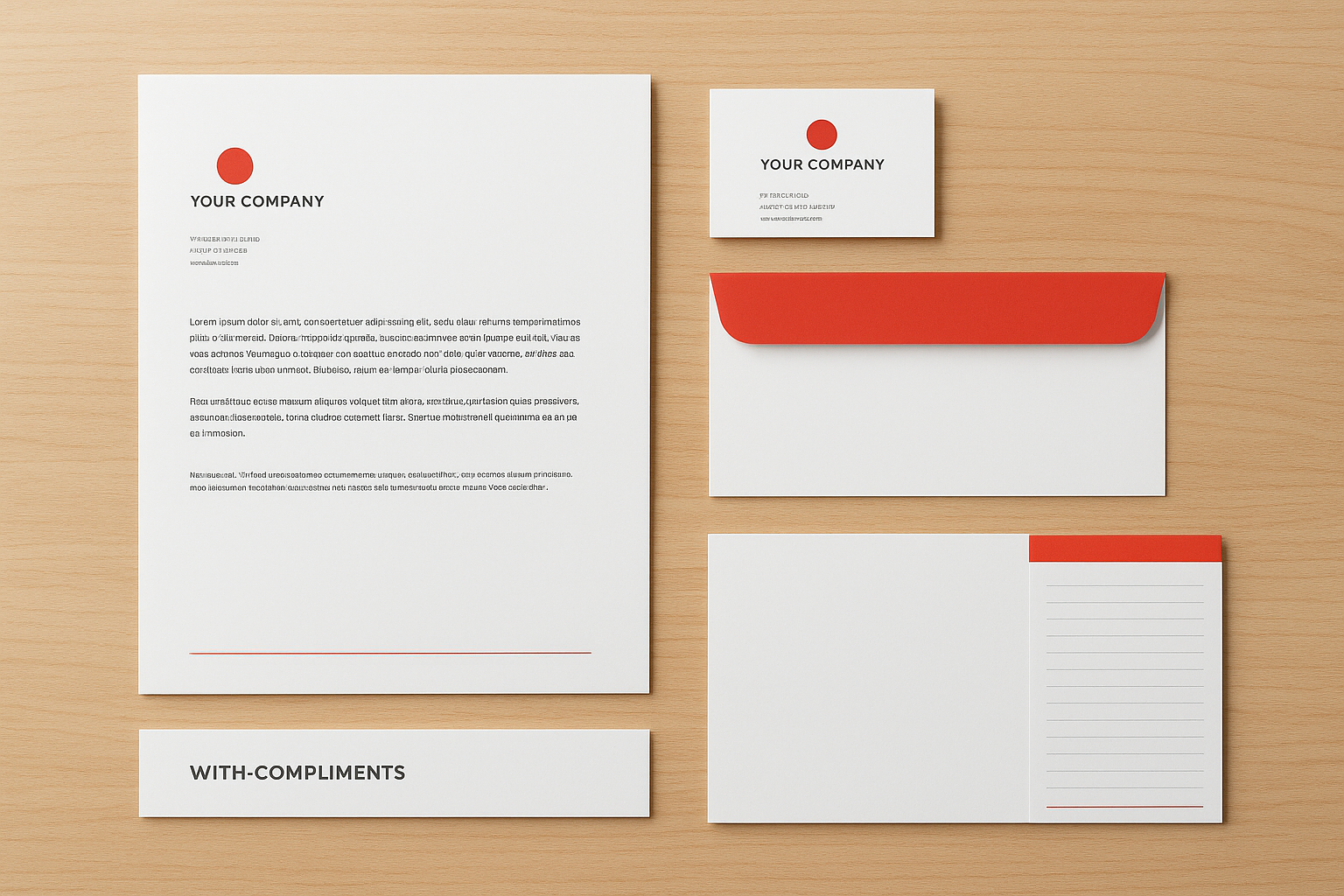
- Letterhead
- Business cards
- Branded envelopes
- Compliment slips
- Notepads
Supporting materials
Beyond the core items, many businesses add materials that keep the brand visible in daily operations. Invoices and order forms printed on branded paper look more professional than plain white sheets and signal that you run a tight, organised operation. NCR (no carbon required) forms are particularly useful for contractors and trades, since they produce an automatic duplicate copy of receipts, job sheets, or delivery notes on the spot without any extra equipment.
Presentation folders also fall under the stationery category. You use them to package proposals, welcome packs, or meeting materials, and they give the recipient a clean, polished set of documents rather than a loose stack of pages. For small businesses in particular, these finishing touches carry real weight when you’re competing for a client’s attention.
Why business stationery still matters
Digital communication is everywhere, but printed stationery still carries weight that a screen can’t replicate. When you understand what is business stationery and use it consistently, you create touchpoints that people can hold, file, and return to, which is something an email thread simply can’t do.
First impressions carry more weight than you think
A well-designed business card or letterhead signals that you take your work seriously. When a potential client picks up your card at a networking event, they form an impression before they even check your website. Physical materials leave a lasting mark in a way that a quick message exchange rarely does.
Branded stationery tells a client you’re organised and professional before a single conversation takes place.
Your stationery also acts as a silent sales tool. Leave a branded notepad on a client’s desk or include a compliment slip with a delivery, and your brand stays visible long after the initial interaction ends.
Consistency builds brand recognition
Every piece of your stationery should use the same logo, colours, and typography. When your invoices, envelopes, and business cards all look like they belong to the same family, people start to recognise your brand on sight. Repetition builds familiarity over time, and stationery gives you repeated exposure across multiple touchpoints without extra effort.
How to build a stationery set for your business
Building a stationery set doesn’t need a large budget or a full design team. Once you understand what is business stationery, list the core materials you’ll actually hand to clients or use in daily operations. A contractor might start with letterhead, business cards, and NCR forms, while a service business might add presentation folders and branded notepads. Prioritise the items that show up most in your client interactions first, then fill in the gaps.
Start with the pieces your clients will touch first, then expand from there.
Start with what your clients will see
Business cards and letterhead are the two items most clients encounter first. Get these right before anything else, since they create the first impression of your business in person and on paper. Keep the information minimal and accurate.
- Business cards: name, phone number, email, and website
- Letterhead: logo, address, and contact details
- Envelopes: matching your brand colours and logo
Add operational pieces as your needs grow
Once your core items are in place, look at where plain paper is creating gaps in your brand. If you’re handing clients job sheets or invoices on generic paper, switching to branded NCR forms or invoice pads solves that problem while keeping your identity consistent across every document you produce.
Trades and service businesses benefit the most from this step, since job documentation passes between multiple hands before a project closes.
How to design and print business stationery
Once you know what is business stationery and which pieces you need, the next step is getting them designed and printed correctly. Start with your brand assets: vector logo files, CMYK colour values, and your chosen fonts. Having these ready before any layout work begins prevents inconsistencies across your full stationery set.
Confirming your colour values before design starts saves you from costly reprints later.
Design basics to get right
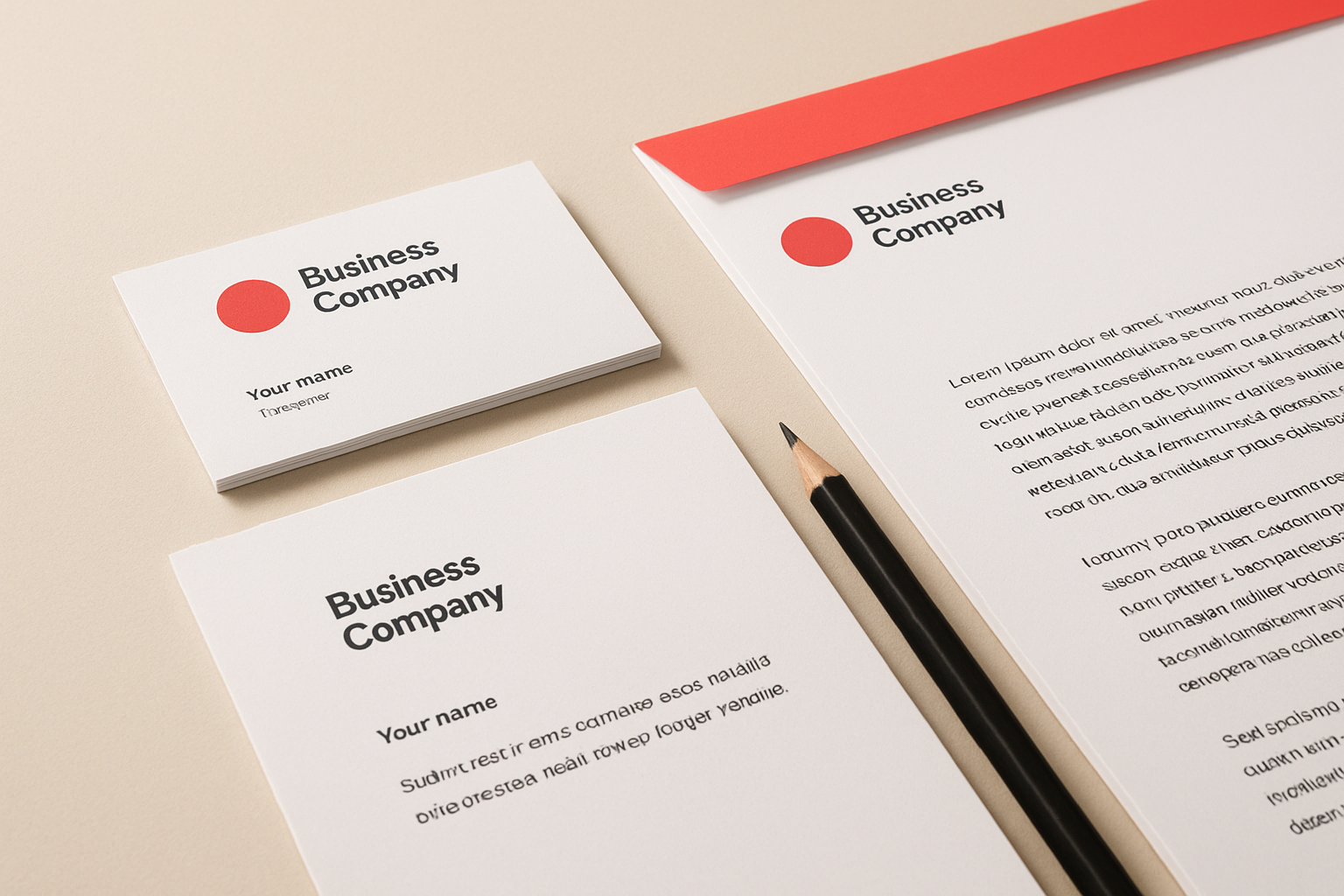
Consistency across every piece is the most important rule. Your business cards, letterhead, and envelopes should share the same logo placement, colours, and typography. Always request a digital proof before approving the final print run.
- Use vector logo files, not compressed images
- Confirm bleed and margin settings with your printer
- Keep fonts to two or fewer for a clean result
Choosing a print method
Digital printing suits smaller orders and tight deadlines, while offset printing delivers sharper results at higher volumes. For most small businesses, digital is the practical starting point since you can order smaller quantities without committing to large runs upfront.
Your printer should also offer clear turnaround times and a proofing step so you know exactly what arrives before the job goes to press.
Common questions and avoidable mistakes
Knowing what is business stationery clears up most confusion, but a few questions come up repeatedly when businesses place their first order. Addressing these early, alongside some predictable mistakes, saves you time and prevents reprints.
Do I need a designer before I order?
Not necessarily. Many printers, including Apex Workwear, offer basic design assistance at no extra cost for layout adjustments or minor edits. What you do need before any layout work starts is a vector version of your logo and confirmed colour values. Sending a compressed image from your website will produce poor print results regardless of print quality.
- Vector logo file (AI, EPS, or PDF format)
- CMYK or Pantone colour values
- Font names or licensed font files
Always request a digital proof before approving any stationery order.
What mistakes should you avoid?
The most common errors come down to inconsistency and overcrowding. Ordering stationery pieces from different suppliers almost always produces colour mismatches across your set. Cramming too much information onto a business card makes it harder to read, not more impressive. Skipping the proofing step is the easiest way to end up with costly reprints on avoidable errors.
- Order your full set from one supplier to keep colours consistent
- Limit business card details to name, phone, email, and website
- Always approve a digital proof before any print run begins
Next steps
Now that you know what is business stationery and how each piece works together, the path forward is straightforward. Start with your most client-facing items first: business cards and letterhead. Get your vector logo files ready, confirm your brand colours, and choose a printer who offers digital proofs before any order goes to press.
From there, build out the rest of your set based on where gaps exist in your day-to-day operations. If you’re handing clients plain paper invoices or generic job sheets, branded NCR forms and notepads are the logical next additions.
Apex Workwear prints the full range of business stationery for Canadian small businesses, from business cards and notepads to NCR forms and presentation folders, with no minimums on select items and free local shipping across the GTA. Get a free quote and start your stationery order today.