Digital ads get scrolled past. Emails get deleted. But a physical postcard? It gets held, read, and often pinned to a fridge or bulletin board. That’s why direct mail postcards Canada campaigns continue to deliver strong results for businesses looking to reach local customers. Whether you’re promoting a grand opening, announcing a seasonal sale, or simply staying top-of-mind with your audience, postcards offer a tangible marketing touchpoint that cuts through the digital noise.
At Apex Workwear, we print high-quality postcards right here in Canada, alongside custom apparel, business cards, flyers, and other branded materials. We’ve seen firsthand how a well-designed postcard campaign can drive real foot traffic and phone calls for small businesses, contractors, and service providers across the GTA and beyond. No massive print runs required, and no confusing pricing structures to navigate.
This guide breaks down everything you need to know about direct mail postcards in Canada: what they cost, which sizes work best, and how the entire process works from design to delivery. By the end, you’ll have a clear picture of whether postcard marketing fits your goals, and how to get started.
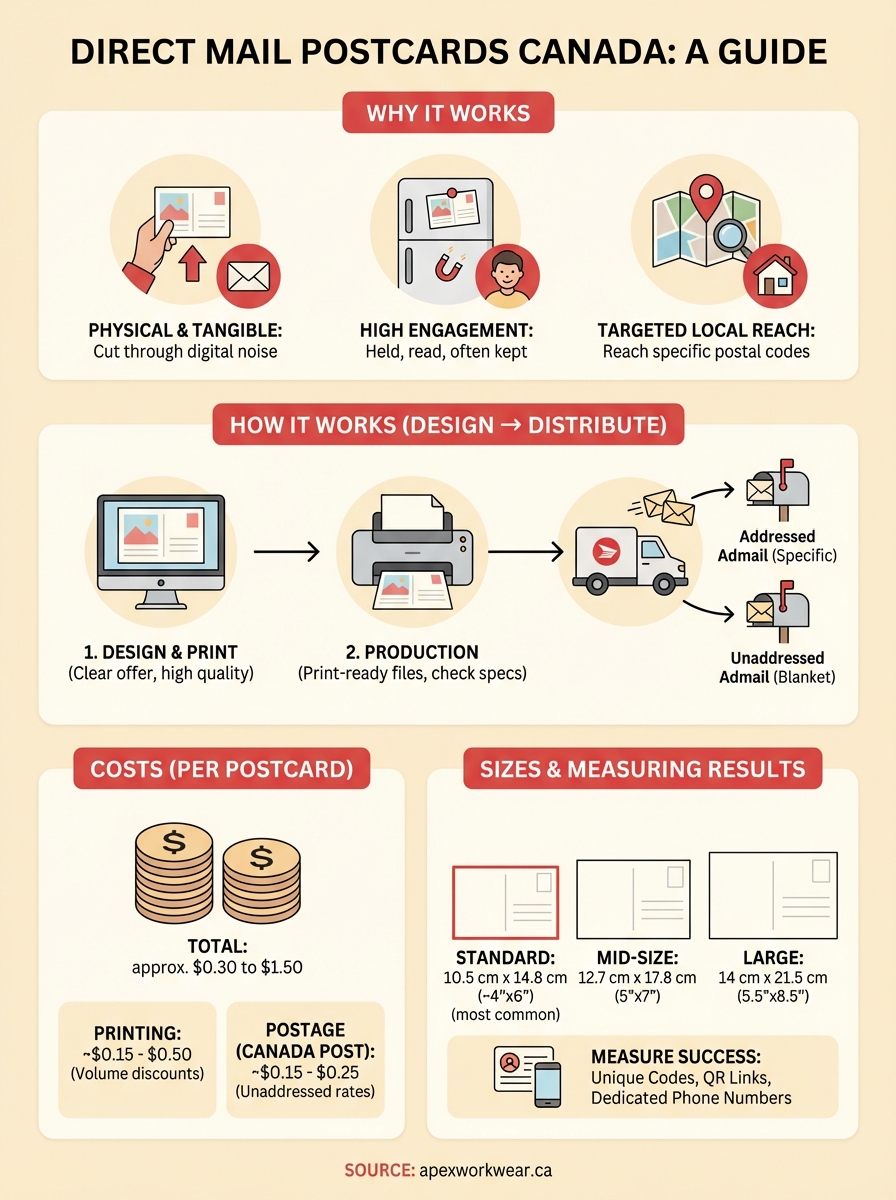
Why direct mail postcards still work in Canada
Your potential customers receive hundreds of digital messages every day, but they only get a handful of physical mail pieces. That scarcity alone makes postcards valuable. When someone pulls your postcard from their mailbox, they physically interact with your brand. They touch it, flip it over, and read your message before deciding what to do next. No spam filter blocks it, and no algorithm buries it in a feed.
Physical touchpoint in a digital world
Canadians still check their mailboxes daily, making postcards a guaranteed delivery channel that reaches your target audience. Unlike emails that land in promotions folders or social ads that get scrolled past in seconds, a postcard sits on a kitchen counter or gets pinned to a fridge. This extended visibility means your message stays in front of potential customers for days or even weeks. You create a tangible reminder of your business that fits right into your audience’s daily routine at home.
Physical mail generates response rates that often exceed digital channels by 5 to 9 times, according to industry studies.
Higher engagement for local businesses
Direct mail postcards Canada campaigns perform especially well for service providers, contractors, and retailers targeting specific neighbourhoods or postal codes. You can reach homeowners in a particular area without competing against hundreds of online advertisers. Your message arrives when your audience is relaxed at home, not distracted by endless browser tabs. The combination of targeted delivery and physical presence creates a marketing moment that digital channels struggle to replicate. Small businesses use this advantage to build recognition and drive action in their immediate service areas.
How direct mail postcards work in Canada
You design your postcard, get it printed, and then send it to your target audience through Canada Post. The process breaks down into three main stages: creating your design, producing the printed cards, and distributing them to specific postal codes or addresses. Most businesses complete the entire campaign within two to three weeks from start to finish, depending on print volumes and distribution complexity.
The design and printing phase
Your postcard needs a clear message on both sides: front and back. The front typically features an eye-catching image or headline, while the back includes your offer, contact details, and call to action. You work with a printer (or handle design yourself) to create print-ready files that meet Canada Post’s specifications. Professional printers check your artwork for issues like bleed, resolution, and colour accuracy before production begins.
Canada Post requires specific dimensions and formatting standards to ensure your postcards process smoothly through their mail sorting equipment.
Distribution through Canada Post
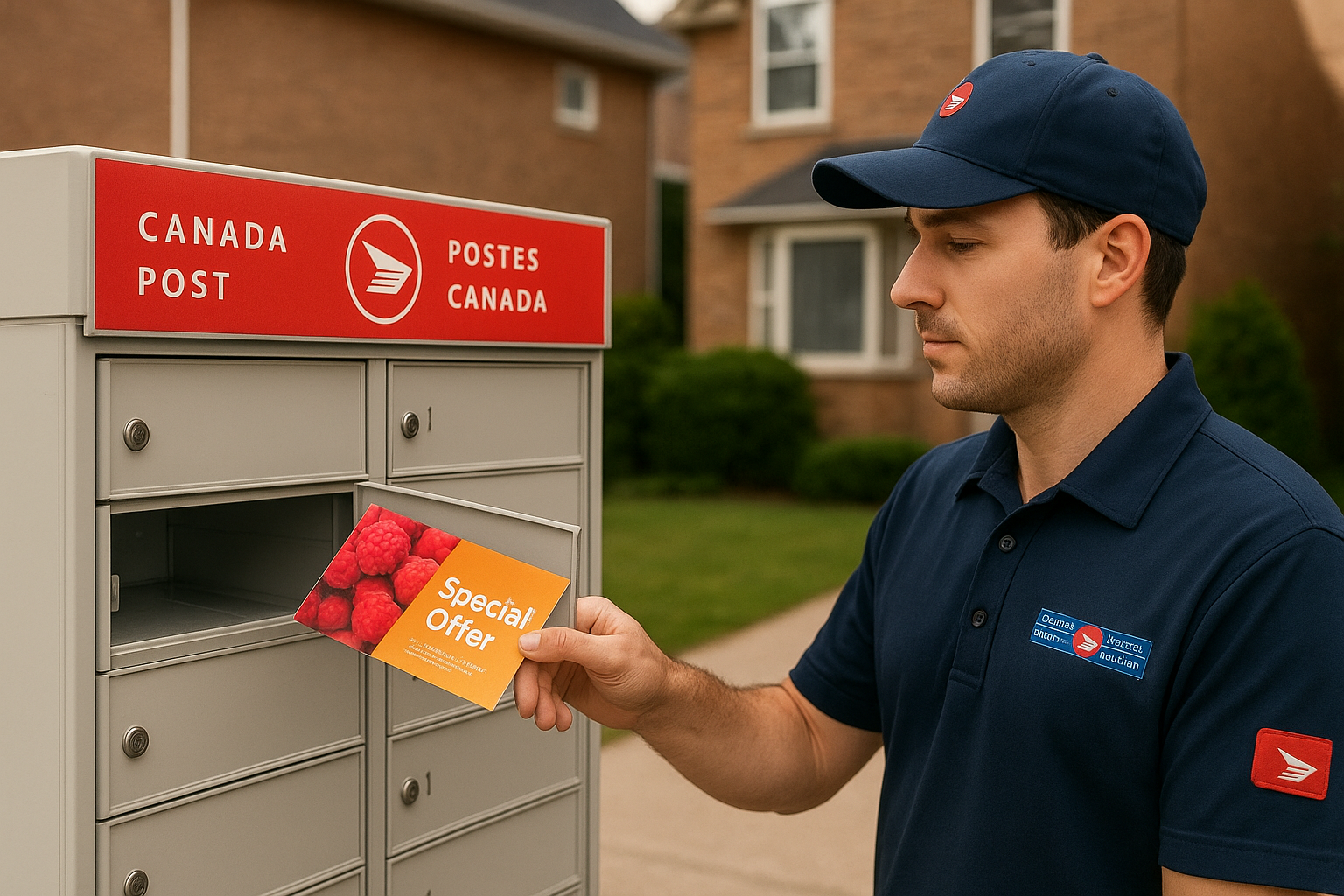
Canada Post offers Addressed Admail (sending to specific names and addresses) and Unaddressed Admail (delivering to all homes in chosen postal codes). You provide your mailing list or target areas, and Canada Post handles the sorting and delivery. Unaddressed mail reaches every household in your selected neighbourhoods, making it perfect for local businesses targeting geographic areas rather than individual contacts with direct mail postcards Canada campaigns.
Costs for direct mail postcards in Canada
Your total campaign cost includes printing charges and Canada Post distribution fees. Printing costs drop significantly as your order quantity increases, while mailing costs depend on whether you choose addressed or unaddressed delivery. Budget between $0.30 to $1.50 per postcard for a complete campaign, though this range shifts based on design complexity, paper stock, and distribution method.
Printing costs per postcard
Expect to pay $0.15 to $0.50 per card for printing, depending on your volume and specifications. A run of 500 standard postcards typically costs more per unit than 5,000 cards printed at once. Premium finishes like UV coating or thicker cardstock add $0.05 to $0.15 per piece to your base printing cost. Most Canadian printers offer bulk discounts that make larger campaigns more economical per postcard delivered.
Ordering 2,500 postcards instead of 500 can cut your per-unit printing cost by 40% or more.
Canada Post distribution fees
Canada Post’s Unaddressed Admail service charges approximately $0.15 to $0.25 per piece for delivery to households within specific postal codes. Addressed Admail costs slightly more but lets you target named recipients with direct mail postcards Canada campaigns. You pay less per piece when mailing larger volumes, and rates vary by postal code density and delivery specifications.
Postcard sizes and Canada Post requirements
Canada Post accepts specific postcard dimensions that ensure your mail processes smoothly through their automated sorting equipment. Your postcard must fall within defined size ranges and meet weight restrictions to qualify for Admail rates. Choosing the wrong size or paper stock can bump your campaign into higher postage categories or cause processing delays that affect delivery timing.
Standard postcard dimensions
The most common postcard size for direct mail postcards Canada campaigns measures 10.5 cm x 14.8 cm (approximately 4" x 6"), which matches Canada Post’s preferred specifications for automated processing. You can also use 12.7 cm x 17.8 cm (5" x 7") or 14 cm x 21.5 cm (5.5" x 8.5") formats. Canada Post requires all postcards to be rectangular with square corners, and your minimum size must exceed 9 cm x 14 cm to avoid rejection.
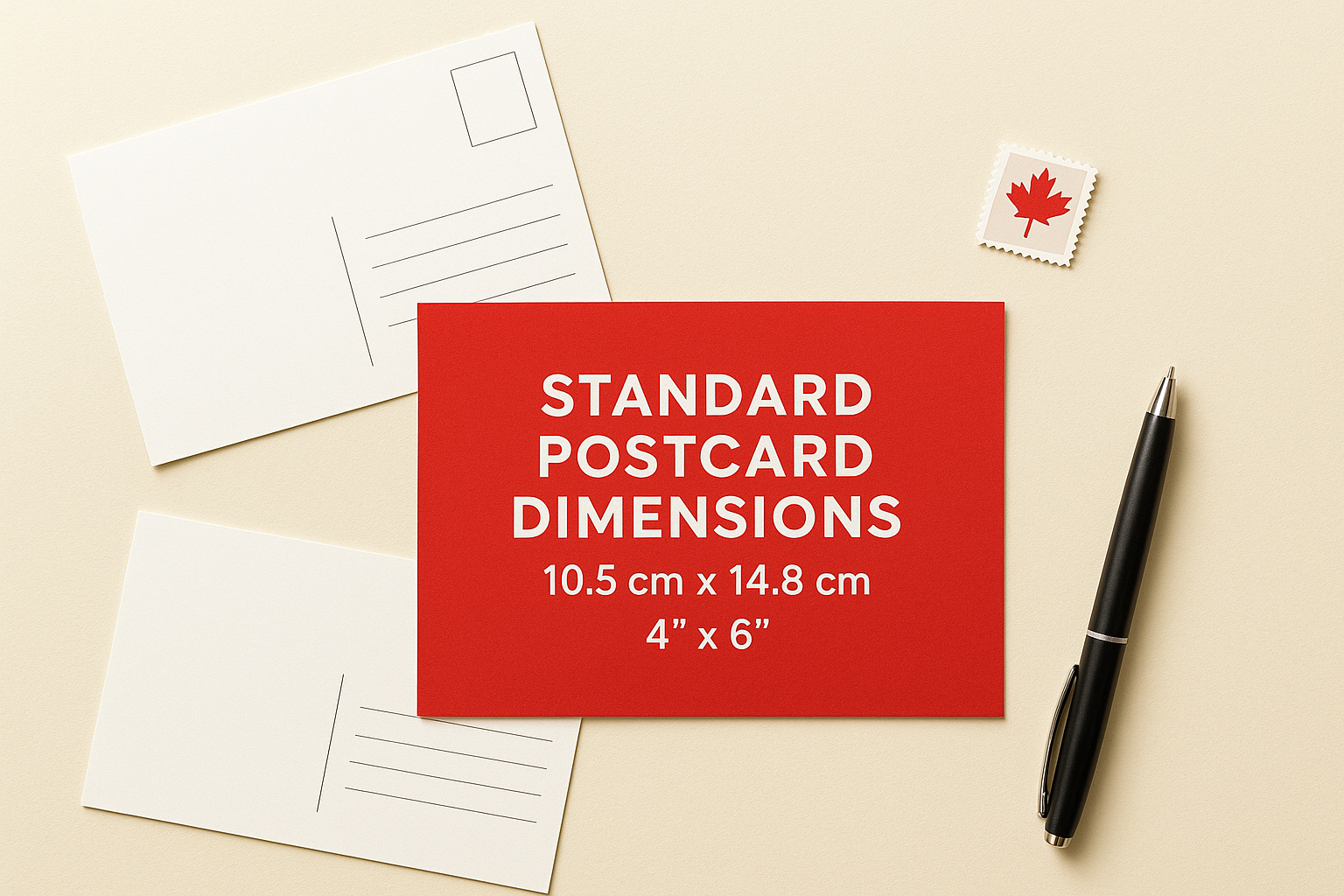
Postcards smaller than minimum dimensions or larger than maximum specifications get returned or charged higher postage rates.
Mailing preparation requirements
Your postcards need sufficient card stock weight (typically 12-14 pt) to withstand automated sorting equipment. Canada Post requires addressing areas to remain clear of graphics or dark backgrounds so their scanners can read information properly. You must leave specific margin space around addresses and include return addresses on addressed campaigns. Most printers familiar with direct mail automatically format your design files to meet these technical specifications before production begins.
Targeting, mailing options, and measuring results
You control exactly who receives your postcards by selecting specific postal codes or providing your own mailing list of customer addresses. Canada Post’s Geographic Targeting Tool lets you choose neighbourhoods based on household income, dwelling type, or demographics. This precision means you avoid wasting budget on areas outside your service zone or demographic profile with direct mail postcards Canada campaigns.
Choosing your target audience
Unaddressed Admail works best when you want blanket coverage of specific neighbourhoods or postal codes. You reach every household in your chosen area without needing individual names and addresses. Addressed Admail requires a customer database but delivers to named recipients, making it ideal for following up with past customers or reaching business contacts. Most local businesses start with unaddressed campaigns to build brand awareness, then layer in addressed mailings for repeat customer outreach.
Tracking campaign performance
Include unique phone numbers or promotional codes on your postcards to measure response rates directly. You track how many calls come through your dedicated campaign number or how many customers mention your specific offer code. QR codes linking to custom landing pages let you count digital engagement alongside traditional responses, giving you complete visibility into which neighbourhoods generate the strongest results.
Testing different offers or designs across postal codes helps you refine future campaigns based on real performance data.
What to do next
You now understand how direct mail postcards Canada campaigns work, what they cost, and which sizes meet Canada Post requirements. The process combines targeted distribution with tangible marketing materials that reach your specific audience at home. Your next step depends on whether you have design files ready or need help creating your postcard from scratch.
Start by identifying your target postal codes and calculating your budget based on print volume and distribution costs. Most campaigns require two to three weeks from design approval to delivery, so factor in production timelines when planning your launch date. Choosing the right paper stock, finalizing your offer, and preparing your artwork all happen before printing begins.
Apex Workwear prints postcards alongside custom apparel, business cards, and other branded materials right here in Canada. We offer no minimum orders on select products, free design reviews, and fast turnaround times that keep your campaign on schedule. Contact us for a quote within 24 hours and start reaching your local customers with professional printed postcards.