
A business card says something about you before you ever speak. The finish you choose, whether it’s gloss business cards, matte, or spot UV, shapes that first impression in ways most people don’t think about until they’re holding a card that feels cheap or looks washed out. The finish matters just as much as the design itself, and picking the wrong one can undermine an otherwise solid brand.
At Apex Workwear, we print business cards right here in Canada and work with small businesses, contractors, and startups across the GTA every day. One of the most common questions we get is simple: should I go glossy or not? The answer depends on your brand, your budget, and how you plan to use the cards. It’s not always straightforward, but it’s worth getting right.
This article breaks down the main types of gloss finishes, high gloss, spot UV, and soft-touch laminate, along with how they compare to matte. We’ll cover durability, print quality, and cost so you can make a decision based on facts rather than guesswork. Whether you’re ordering your first batch or refreshing an existing design, you’ll walk away knowing exactly which finish fits your needs.
Why gloss business cards still work in 2026
Digital networking tools keep growing, but business cards have not disappeared. A well-made card still creates a stronger and more lasting impression than a LinkedIn connection request or a quick phone number swap. The physical act of handing someone a card carries real weight, and when that card feels premium, people hold onto it rather than tossing it in a bag and forgetting about it.
A glossy card that catches the light is more likely to sit on a desk than end up in a bin.
The psychology of a premium finish
When someone picks up a gloss business card, the finish signals quality before they read a single word. Your brain processes tactile information almost instantly, which means the surface of the card shapes how the person perceives your brand within seconds. Glossy surfaces reflect light in a way that makes colours appear more vivid and images sharper, and that visual contrast grabs attention in a stack of plain white cards.
People also associate shine with professionalism. That association is not accidental; high-gloss products have historically been positioned at the premium end of consumer markets, from packaging to print. Your business card benefits from the same perception without requiring a large budget to achieve it.
Colour and photography still look best on gloss
If your card includes a full-colour logo, a photograph, or bold design elements, gloss remains the best surface for bringing those details to life. Matte and uncoated finishes absorb more ink, which can soften colours and reduce contrast. Gloss reflects light instead, so deep blacks appear richer and bright colours stay vivid. For industries like photography, real estate, and hospitality, where visual presentation is part of the product, that difference is genuinely noticeable and worth the small cost difference.
Gloss, high gloss, UV, and spot UV explained
Not all gloss finishes are the same, and understanding the differences helps you avoid paying for something that does not match your actual needs. The terms get used interchangeably online, but each option produces a noticeably different result in hand.
Standard gloss vs high gloss
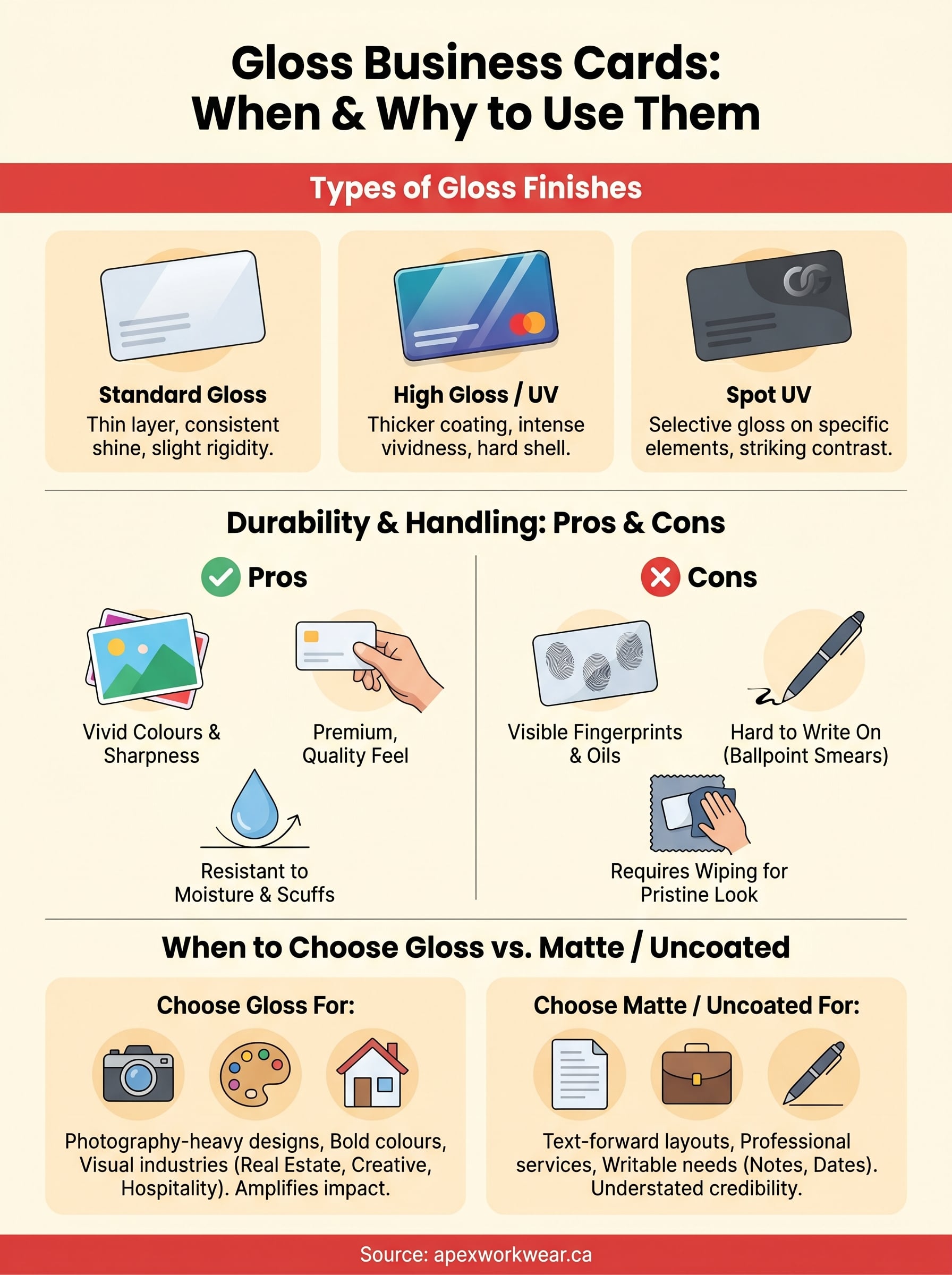
Standard gloss laminate adds a thin layer over the card stock that gives it a consistent shine and slight rigidity. High gloss, sometimes called UV gloss, pushes that reflectivity further with a thicker, harder coating that makes colours appear almost saturated. For most gloss business cards, standard gloss is sufficient, but photography-heavy designs genuinely benefit from the extra vividness of high gloss.
If your card relies on bold imagery or rich colour, high gloss is worth the small price difference.
UV coating and spot UV
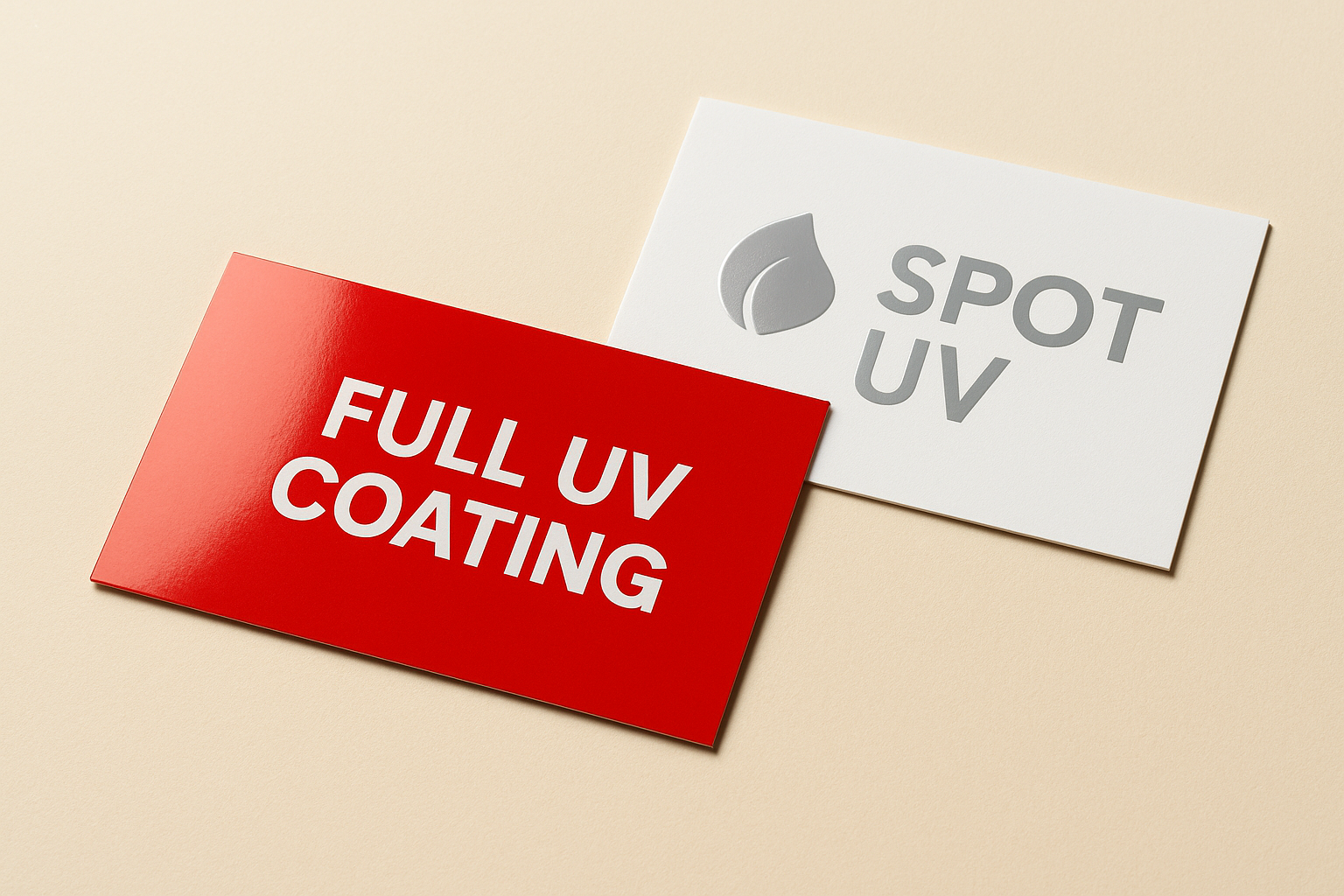
Full UV coating covers the entire card surface in a liquid that cures under ultraviolet light, creating a hard, glossy shell. Spot UV applies that same coating selectively, highlighting specific elements like a logo or name while leaving the rest matte. The contrast between the two finishes is striking and works well for premium brand presentations without adding heavy cost to your order.
Durability and handling: fingerprints, scuffs, writing
Gloss laminate makes your card more resistant to moisture and minor bending, which extends its lifespan compared to uncoated stock. The coating acts as a barrier, so everyday handling and light friction rarely damage the printed surface beneath. That said, gloss does have specific trade-offs worth knowing before you order.
Fingerprints and surface oils
The same reflective surface that makes gloss business cards look sharp also shows fingerprints more clearly than matte. Oils from your hands transfer onto the coating and become visible when the card catches light at certain angles.
Spot UV cards give you the visual impact of gloss with slightly less visible smudging on the matte areas.
High-traffic situations, like handing cards out at events or trade shows, tend to make this more noticeable. Wiping the card on fabric removes most smudges quickly, but it is worth factoring in if pristine presentation at every handoff matters to your brand.
Writing on gloss surfaces
Most standard ballpoint pens will not write cleanly on a full-gloss surface. The ink sits on top rather than absorbing into the stock, which leads to smearing. If you regularly handwrite notes on your cards, such as a personal number or follow-up date, request a matte finish or ask about uncoated stock as an alternative before placing your order.
When to choose gloss vs matte or uncoated
The finish you pick should match how you actually use your cards and what your brand communicates. Gloss business cards work best when visual presentation is central to your work, while matte and uncoated stock serve different practical and aesthetic needs.
Choose gloss when visual impact leads
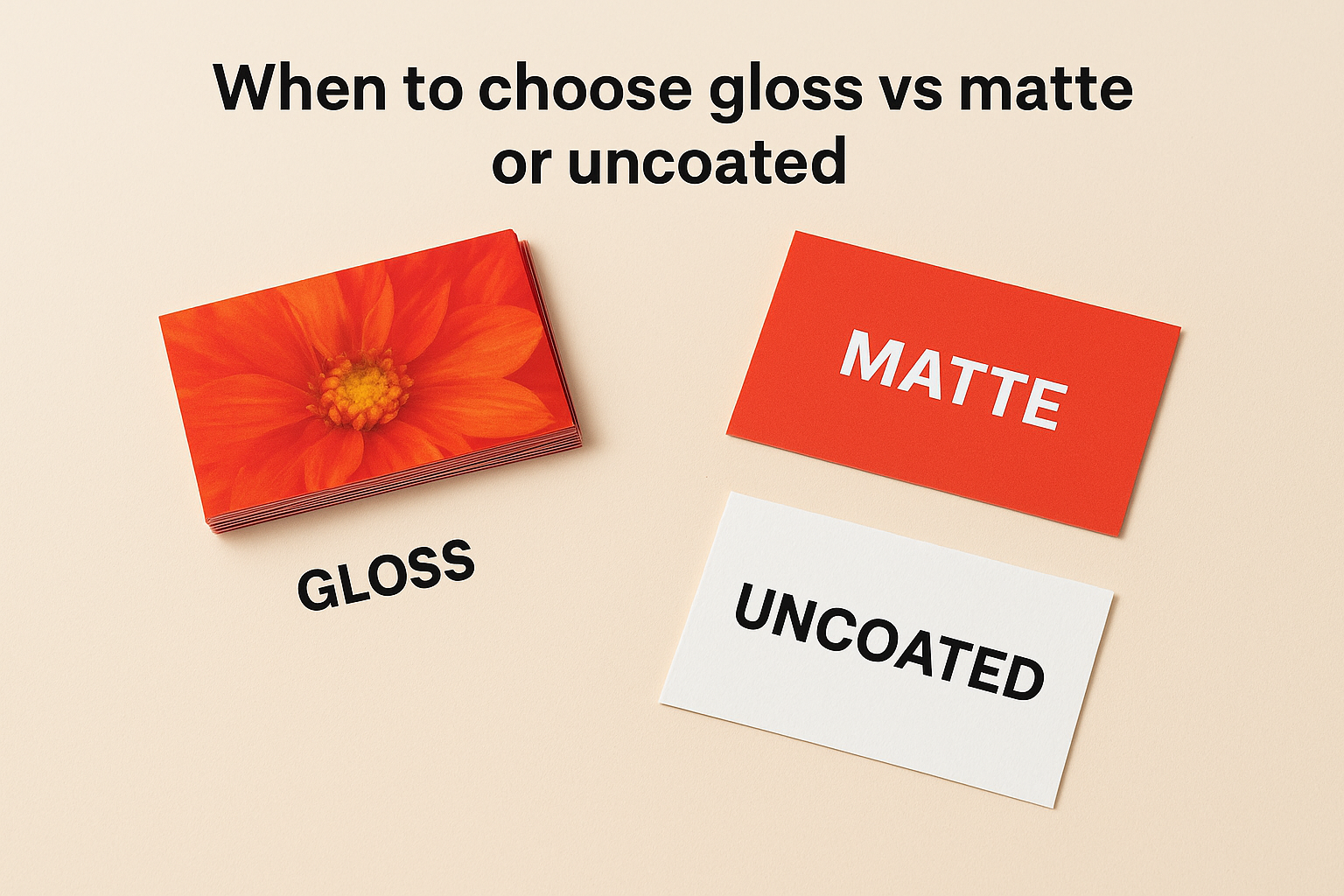
If your card carries photography, bold colour gradients, or a logo with rich detail, gloss is the right call. Industries like real estate, creative services, and hospitality benefit most because the finish amplifies colour saturation and image sharpness in a way that matte simply cannot match.
Gloss works hardest when your card design needs to hold attention before someone reads a single word.
Choose matte or uncoated when function matters more
Matte laminate suits brands that want a clean, understated look, particularly in finance, law, or consulting, where restraint signals credibility. Uncoated stock is the practical choice if you need to write on your cards regularly, as it absorbs ink from most pens without smearing.
Here is a quick guide to help you decide:
- Gloss: photography-heavy designs, bold colour, visual industries
- Matte: text-forward layouts, professional services, luxury minimalism
- Uncoated: hand-written notes, casual handoffs, budget-conscious orders
Design and ordering checklist for glossy cards
Before you place your order, it helps to run through a short checklist so your gloss business cards come back exactly as you intended. Small oversights in file preparation or finish selection add delays and cost, neither of which you want when you are working to a deadline.
Getting the file right before you submit saves more time than any rush option can recover.
File and design checks
Make sure your artwork is set up at 300 DPI or higher and that all fonts are embedded or outlined before submission. Colours should be in CMYK format, not RGB, since RGB files shift during the print conversion and the result rarely matches what you saw on screen.
Finish and stock confirmation
Confirm your card stock weight with your printer before approving the proof. A heavier stock, typically 16pt or above, pairs better with gloss laminate and holds its shape through repeated handling. Verify whether you want single-sided or double-sided gloss, since coating one side only is a common option that reduces cost without sacrificing front-facing impact.
- File resolution: 300 DPI minimum
- Colour mode: CMYK
- Card stock: 16pt or heavier recommended
- Finish: single or double-sided gloss
- Bleed and margins: follow your printer’s template
Final tips before you print
Gloss business cards reward careful preparation. Before you approve your proof, confirm your printer uses CMYK colour profiles and that your file includes a bleed allowance so no white edges appear after trimming. Request a digital proof and check it on multiple screens before signing off, since colours render differently depending on your monitor settings.
Order a small batch first if you are testing a new design or finish for the first time. A short run lets you assess the actual card in hand before committing to a larger quantity, which protects your budget and gives you room to adjust anything that does not look right at full scale.
When you are ready to order, work with a printer who reviews your file before it goes to press and offers a proof as standard. Get a free quote from Apex Workwear and have your glossy cards printed in Canada, with expert guidance from start to finish.