You have probably seen vinyl stickers on water bottles, car bumpers, and outdoor equipment and wondered if they can actually handle a soaking or just a light splash. It is a fair question, especially if you are ordering labels for products that sit in coolers, decals for a boat, or stickers for gear that lives outside in Canadian weather most of the year.
The short answer is yes, are vinyl stickers waterproof is true for genuine vinyl material, but the real story depends on the adhesive, the laminate, and how the sticker was printed. A cheap paper-based sticker with a glossy finish might look similar on the shelf, yet it will bubble and peel the first time it gets wet. Proper vinyl material with the right lamination is a different product altogether, built to resist moisture, UV rays, and temperature swings without falling apart.
In this article, we will break down what actually makes a sticker waterproof versus just water-resistant, how outdoor durability varies between printing methods, and what to check before you place an order. As a Canadian print shop that produces custom labels and decals daily, we will also share what holds up best in real conditions, not just in a lab test.
Why it matters whether your vinyl stickers are truly waterproof
Getting this wrong costs real money. If you print product labels on a material that only resists a light drizzle, and those bottles end up in a fridge, a cooler, or a delivery truck in the rain, you will see edges lifting and ink running within days. For a small business, that means reprints, refunds, and a brand that looks unprofessional right when a customer is deciding whether to trust you. Water damage on packaging is one of the fastest ways to lose repeat orders.
Think about where your stickers actually live once they leave your shop or workshop. A decal on a food truck window gets hosed down weekly. A safety label on a contractor’s toolbox sits through snow, road salt, and summer humidity. A logo sticker on a water bottle gets tossed in a dishwasher or left in a gym bag with a sweaty shirt. None of these are edge cases in Canada, they are normal use. If the sticker material cannot handle that moisture exposure, the branding effort you paid for disappears within a season.
A sticker that fails in the rain is not a design problem, it is a material problem, and it is the one thing you can fix before you order.
There is also a safety and compliance angle worth mentioning. Warning labels, equipment tags, and outdoor signage often need to stay legible for the life of the product or installation. If a hazard label on a piece of machinery fades or peels because moisture got under the print, that is not just an aesthetic issue, it can become a liability issue on a job site. Contractors and event coordinators we work with often ask specifically about waterproof labels for this reason, not just for looks but for functionality.
Understanding true water resistance also saves you money on the wrong side of the budget. Paying a premium for laminated vinyl on something that will live indoors in a climate-controlled office is unnecessary. But cutting corners on outdoor decals to save a few cents per unit almost always costs more later in reprints and lost time. Knowing the difference upfront lets you spend correctly the first time.
How to make sure your vinyl stickers stay waterproof
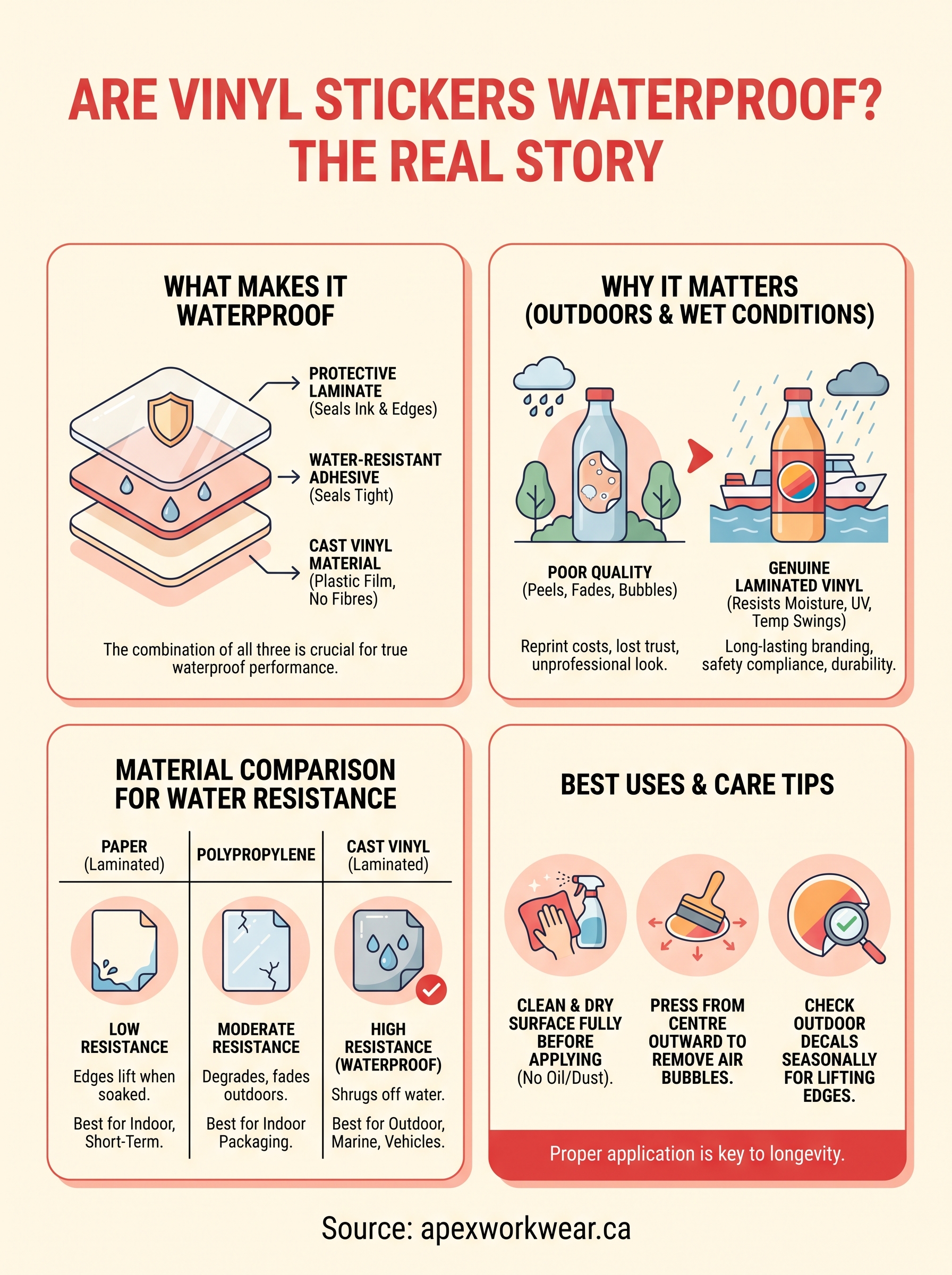
Getting a genuinely waterproof result comes down to three things: the base vinyl, the ink or print method, and the laminate on top. Skip any one of these and you are gambling on how long the sticker survives outside. Self-adhesive vinyl on its own resists water reasonably well, but it is the laminate layer that seals the ink and edges against moisture getting underneath.
Confirm the printing method
Here is a quick way to vet a supplier before you order:
- Ask if they print on calendared or cast vinyl (cast holds up longer outdoors)
- Confirm the print is sealed with a laminate, not left bare
- Check if the adhesive is rated for outdoor or wash-down use
- Request a sample if the order is going on boats, coolers, or equipment
If a supplier can’t tell you what laminate they use, assume the sticker is water-resistant at best, not waterproof.
Requesting matters more than most buyers realise. A shop that cannot answer these questions on the spot is usually reselling stock material without knowing its limits.
Durability also depends on how the sticker is cut and applied. Rough edges or air bubbles under the surface give water a path to seep in, even with premium vinyl. Once you have the right material and lamination sorted, proper application, pressing out air pockets and sealing edges cleanly, is what turns a good sticker into one that survives a full Canadian winter without lifting.
Vinyl versus other sticker materials for water resistance
Not every sticker material handles moisture the same way, and comparing options side by side makes the gap obvious fast. Paper stickers with a laminate coating can survive a light spill, but water eventually creeps in through the edges or any tiny scratch in the coating. Polypropylene labels cost less and work fine indoors, yet they crack and fade after a season of sun and rain. Vinyl, by contrast, is built as a plastic film from the start, so there is no fibre base for water to soak into.
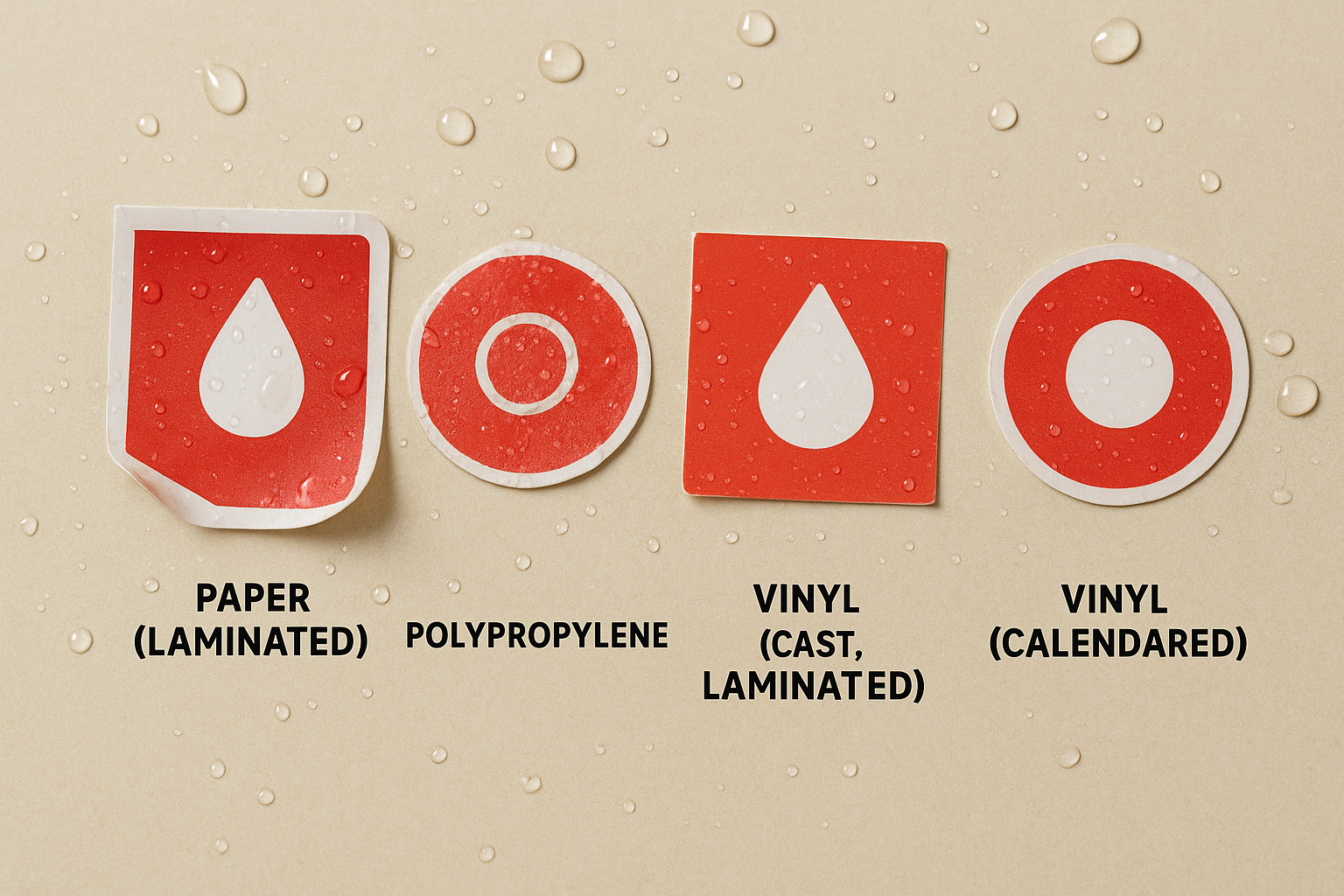
| Material | Water resistance | Best for |
|---|---|---|
| Paper (laminated) | Low, edges lift when soaked | Indoor labels, short-term use |
| Polypropylene | Moderate, degrades outdoors over time | Indoor packaging, promo stickers |
| Vinyl (cast, laminated) | High, fully waterproof | Outdoor decals, product labels, marine use |
| Vinyl (calendared) | Moderate to high | Short-term outdoor signage |
Vinyl is the only common sticker material engineered to shrug off water rather than just tolerate it.
Understanding outdoor durability across materials helps you avoid paying for a premium finish you don’t need or skimping on one you do. If your stickers stay on a shelf or in an office, paper or polypropylene will do the job cheaply. Vehicles, coolers, marine gear, and anything exposed to washdowns or Canadian winters call for genuine vinyl with the right laminate. That distinction, more than brand or price, is what actually determines whether your stickers survive contact with water.
Best uses and care tips for waterproof vinyl stickers
Waterproof vinyl earns its keep in specific jobs, not everywhere. Product labels on bottles, jars, and coolers benefit most, since they face condensation, fridge storage, and handling with wet hands. Vehicle decals, marine signage, and equipment tags also make sense for laminated vinyl, given how often they sit through rain, road spray, and snow melt without any shelter. If a sticker never leaves a desk or an indoor display, you can save money and skip the premium laminate altogether.
Applying and maintaining your stickers
Even the best material fails early if it goes on wrong or gets neglected afterwards. Follow these steps to get the full lifespan out of a waterproof sticker:

- Clean and dry the surface fully before applying, oil or dust under the vinyl breaks the seal
- Press from the centre outward to push out air bubbles as you go
- Avoid folding or creasing the edges, since that’s where water finds a way in
- Skip high-pressure washes directed straight at the edges for the first 48 hours
- Re-check outdoor decals each season for lifting corners, especially after freeze-thaw cycles
A sticker applied badly on great vinyl fails just as fast as a cheap sticker applied well.
Routine checks matter more in Canada than in milder climates. Salt spray in winter and UV exposure in summer both stress the adhesive edges long before the printed surface fades, so a quick seasonal inspection catches problems while a simple re-press still fixes them.
Choosing the right sticker for your needs
So, are vinyl stickers waterproof? Genuine cast vinyl with proper lamination is, but the label lying next to it on the shelf might not be. The difference comes down to material, print method, and how well the edges are sealed, not the price tag or the shine on the surface. Before you order, match the sticker to where it will actually live. Outdoor decals, product labels, and anything facing washdowns need true waterproof vinyl. Indoor signage and short-term promos don’t need to pay that premium.
Getting this right the first time saves you from reprints, peeling labels, and a brand that looks careless. If you want stickers built for real Canadian conditions rather than a best-case scenario, get a free quote from Apex Workwear and we’ll help you pick the right vinyl for the job.