Sticker Mule labels are one of the most searched custom label options in North America, and for good reason, the company has built a reputation around quick ordering and a polished user experience. But before you place an order, it’s worth understanding exactly what you’re getting, what it costs, and whether their products actually fit your needs.
Labels and stickers might sound interchangeable, but the distinction matters more than most people realise, especially if you’re using them for product packaging, branding, or everyday business operations. Choosing the wrong format can mean wasted budget or a result that doesn’t quite land the way you pictured. At Apex Workwear, we print custom labels and stickers right here in Canada, so we know the details that separate a good label order from a great one.
This article breaks down Sticker Mule’s label types and pricing, walks through how their labels compare to their stickers, and gives you the context you need to decide what’s right for your project. Whether you end up ordering from Sticker Mule or exploring a Canadian-based alternative like us, you’ll have a clear picture of what to expect.
Why label choice matters for your packaging
The label you put on a product does more than identify it. It tells a customer how professional you are and whether your brand is worth trusting at a glance. A label that peels at the corner, fades after a week, or simply doesn’t adhere to your packaging material can undo a lot of work you’ve already put into the product itself. This is why getting the specification right before you order matters.
Material and finish affect more than looks
The material of your label directly determines how it performs in the real world. A paper label works fine on a dry product stored indoors, but it won’t survive moisture, temperature changes, or outdoor exposure. If you’re labelling water bottles, food containers, or anything that sits in a fridge or gets handled repeatedly, you need a waterproof or polypropylene film label instead.
Choosing the wrong label material is one of the most common and costly mistakes small business owners make when ordering custom labels for the first time.
Finish plays a role too. Matte finishes tend to photograph better and feel more premium on shelf, while gloss finishes offer stronger colour vibrancy and a wipe-clean surface. Many people ordering sticker mule labels overlook the finish entirely until the product arrives, and by then a reprint is the only fix.
Size and shape impact shelf presence
Your label’s dimensions and cut shape affect how it sits on your packaging and how much information you can actually fit. A label that’s too small forces you to shrink your logo and contact details to the point where they become unreadable. Getting the die-cut shape right from the start saves you reprinting costs and makes your product look considered rather than rushed.
Types of Sticker Mule labels you can buy
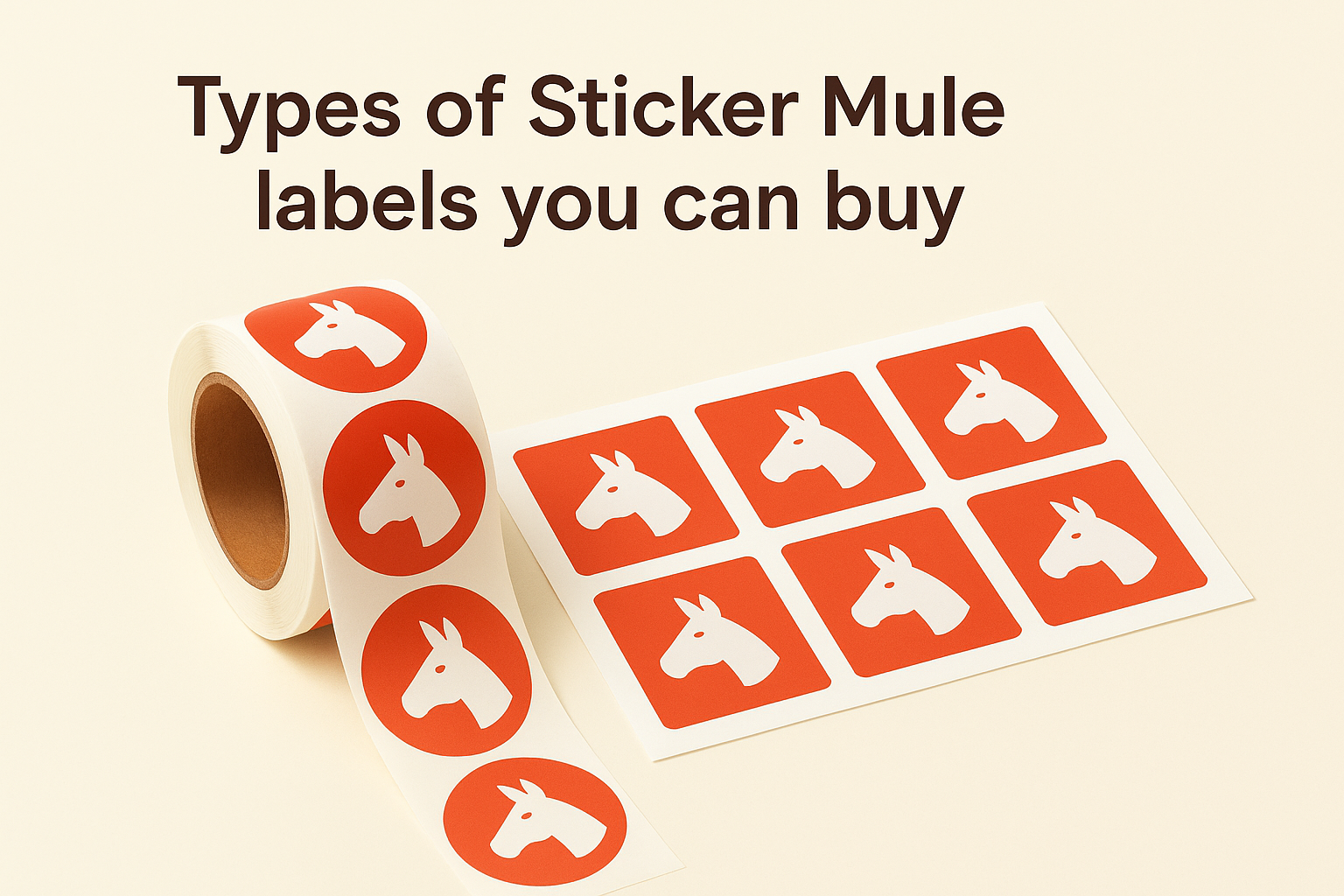
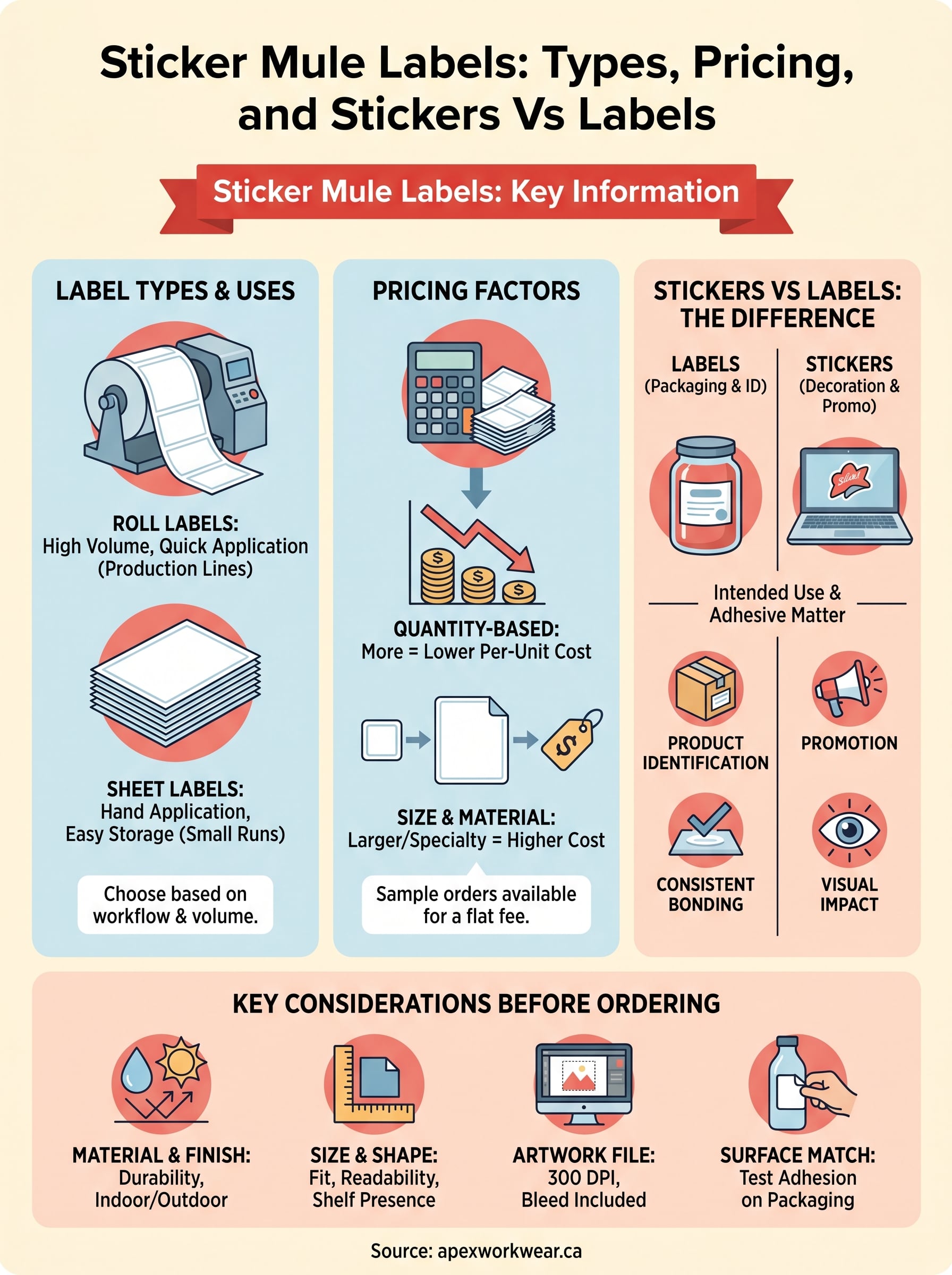
Sticker Mule offers a focused range of label products rather than an overwhelming catalogue. Understanding what’s available helps you pick the right format for your packaging before you spend time uploading artwork or requesting a sample.
Roll labels
Roll labels are their most popular label format, and they suit businesses that need to apply labels quickly to a high volume of products. You get a custom die-cut shape printed on a continuous roll, which works with most standard label applicators. This format suits food producers, candle makers, cosmetic brands, and anyone running a production line at even a modest scale.
Roll labels are the go-to choice for businesses that apply labels regularly and want a process that scales without slowing them down.
Sheet labels
Sheet labels come printed on individual flat sheets rather than a roll. You handle each label by hand, which makes them a practical option for smaller runs or irregular labelling needs where a dispenser isn’t part of your workflow.
Sticker Mule labels in sheet format also tend to be easier to store and transport, particularly if you’re fulfilling orders from a home studio or small workspace.
Sticker Mule label pricing and what affects it
Sticker Mule labels follow a quantity-based pricing model, meaning the more you order, the lower your per-unit cost drops. This structure suits businesses that plan ahead and order in batches, but it can catch you off guard if you only need a small run and end up paying a premium for it.
Quantity and size drive the base cost
Your total label quantity is the biggest lever on price. A small order of 10 roll labels will cost significantly more per label than an order of 500. Label size is the second major factor, with larger labels requiring more material and therefore pushing the price up proportionally. Both variables interact, so always check the pricing calculator on their site before finalising your design dimensions.
Ordering more than you need upfront is often cheaper than placing two smaller orders, so plan your volume before you commit.
What a sample order costs you
Sticker Mule offers sample packs for a small flat fee, which gives you a chance to check print quality and material before committing to a full run. This is genuinely useful if you have never ordered from them before. Shipping costs are added at checkout and vary depending on your location in Canada, so factor that into your total budget before comparing prices with local suppliers.
Sticker Mule stickers vs labels
Sticker Mule sells both stickers and labels, and the two product categories look similar on the surface. The real difference comes down to intended use and adhesive design. Stickers are made for decoration or promotion, things you apply to a surface for display. Labels are designed for product identification and packaging, and they need to adhere consistently, stay flat, and remain readable through handling and transit.
What sets labels apart from stickers
The most practical distinction is adhesive strength and material choice. Sticker Mule labels use adhesives calibrated for packaging surfaces like glass, plastic, and card, where consistent bonding matters. Stickers, on the other hand, prioritise visual impact and are often printed on a thicker, more textured stock suited to laptops, water bottles, or promotional handouts.
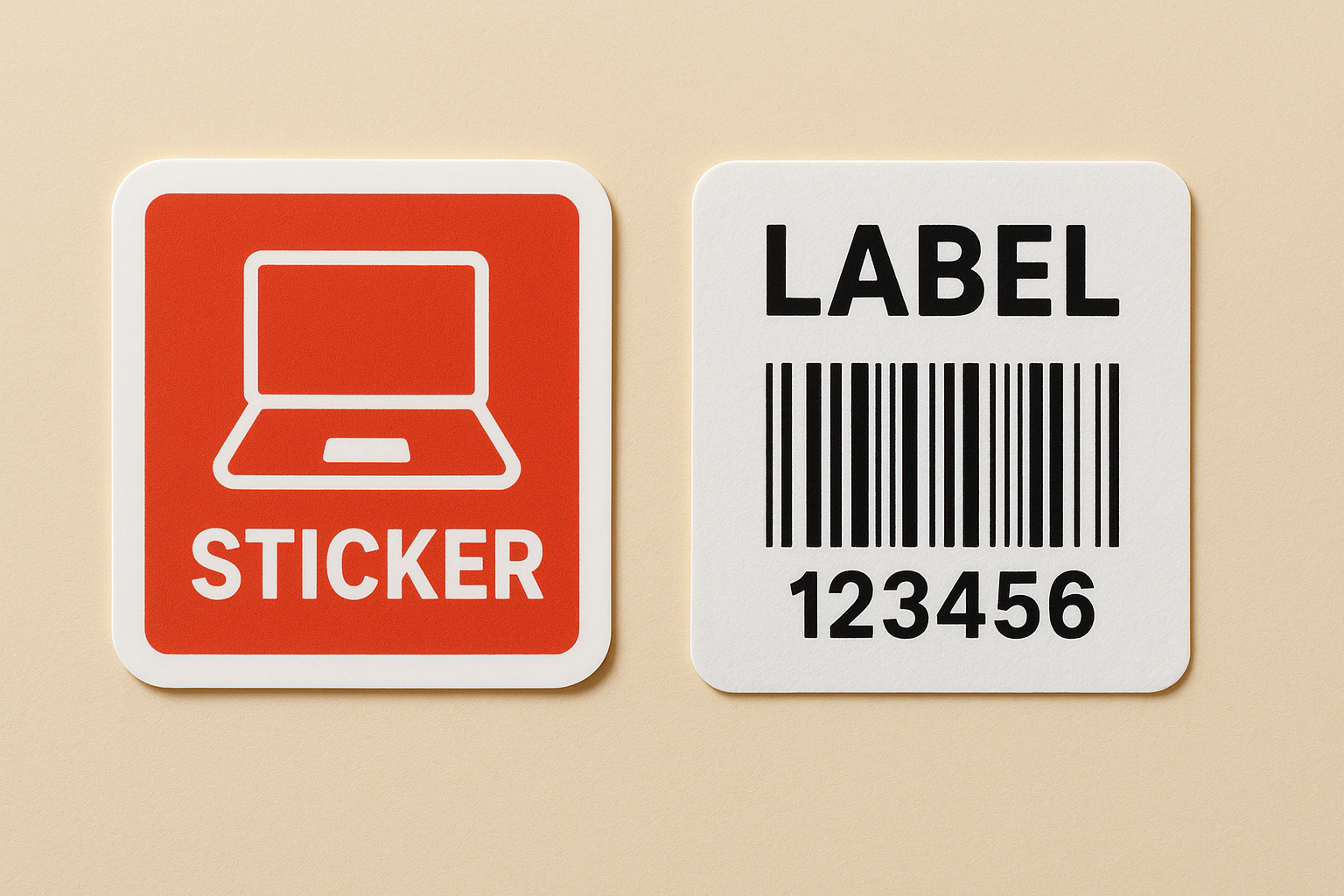
If you are labelling a product that gets handled repeatedly or stored in variable conditions, a label will hold where a sticker may not.
Which format fits your project
Your choice comes down to what the item will endure. Decorative or marketing uses suit stickers well. Consistent product labelling at any volume suits the label format, and that is where sticker mule labels earn their place in a professional workflow rather than a promotional one.
How to order and design labels that apply cleanly
Ordering sticker mule labels is straightforward once you know what to prepare before you start. Getting your artwork file and label dimensions confirmed before uploading will save you from multiple rounds of revision and potential reprint costs.
Set up your artwork file correctly
Your design should be submitted at 300 DPI minimum with bleed applied around the label edge. Bleed prevents white borders from appearing if the cut shifts slightly during production. Keep all critical text and logos within the safe zone, typically 3mm inside the cut line, so nothing important gets trimmed at the edge.
A correctly prepared file on the first submission almost always results in a cleaner, faster approval process.
Choose the right surface match
Test your label on the actual packaging surface before placing a full order. Different materials, glass, matte plastic, and kraft card, accept adhesives differently. If your packaging has a curved surface or noticeable texture, confirm with the supplier that the label stock you selected will lay flat without bubbling or lifting at the edges. Placing a small sample order before committing to a full run is worth the modest upfront cost and protects you from receiving labels that will not perform in real conditions.
Next steps
You now have a clear picture of what sticker mule labels offer, how their pricing works, and where labels and stickers serve different purposes. The most important step from here is confirming your label material, size, and finish before you upload any artwork, since those three decisions shape everything from shelf presence to how well your labels survive handling and transit.
If you are based in Canada and want a local alternative with faster communication and no international shipping costs, Apex Workwear prints custom labels and stickers right here in Canada, with expert design review included. You get digital proofs before anything goes to print, which means fewer surprises and fewer reprints. Whether you need a small run or a larger batch, the process is straightforward from start to finish. Get a free custom label quote from Apex Workwear and find out what a Canadian printer can do for your packaging.