If you’ve ever searched for coil binding vs spiral binding, you’ve probably noticed the terms get used interchangeably, and then wondered if you’re actually looking at two different products. It’s one of the most common points of confusion when ordering bound documents like training manuals, catalogues, or presentation booklets. The short answer: they refer to the same binding method. But there’s more to the story, especially when you’re comparing it against other options like wire or comb binding.
At Apex Workwear, we handle custom print products for small businesses, contractors, and teams across Canada every day, from business cards and brochures to bound booklets and operational documents. Coil (spiral) binding comes up regularly in those conversations, and we’ve seen firsthand how a little clarity upfront saves time and money down the line.
This article breaks down what coil binding actually is, how it stacks up against wire and comb binding, and what it typically costs. Whether you’re putting together employee handbooks, client-facing proposals, or field manuals, you’ll walk away knowing exactly which binding style fits your project, and your budget. Let’s get into it.
Coil vs spiral binding: are they the same?
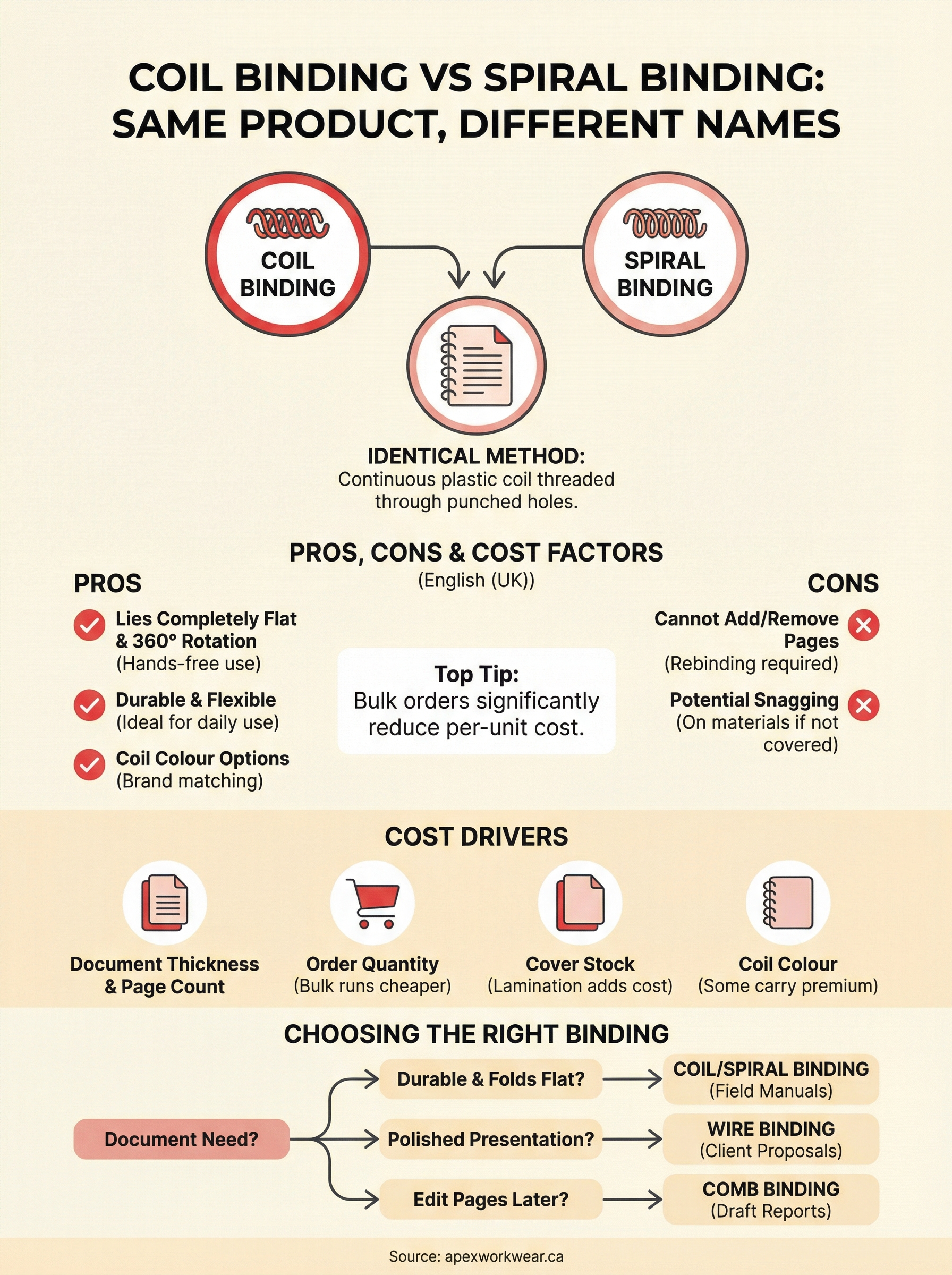
Yes, coil binding and spiral binding are the same thing. Both names describe a single binding method where a continuous plastic (or occasionally metal) coil is threaded through evenly punched holes along the spine of your document. Whether the print shop you’re talking to uses one term or the other comes down to regional habit or house style, not a difference in product. When you’re comparing coil binding vs spiral binding, you are not comparing two separate methods, you’re looking at one product under two names.
The product is identical regardless of which name appears on your quote.
Where the confusion comes from
The mix-up persists because two visually similar binding styles share overlapping vocabulary. Spiral binding is the older, broader term that some people also apply to twin-loop wire binding, sometimes called Wire-O or double-loop wire. That crossover in language is where genuine confusion starts. If you’ve ever received a quote for "spiral wire binding," the supplier likely meant wire binding, not plastic coil binding, and those are two distinct products with different looks, costs, and practical uses.
What coil (spiral) binding actually looks like
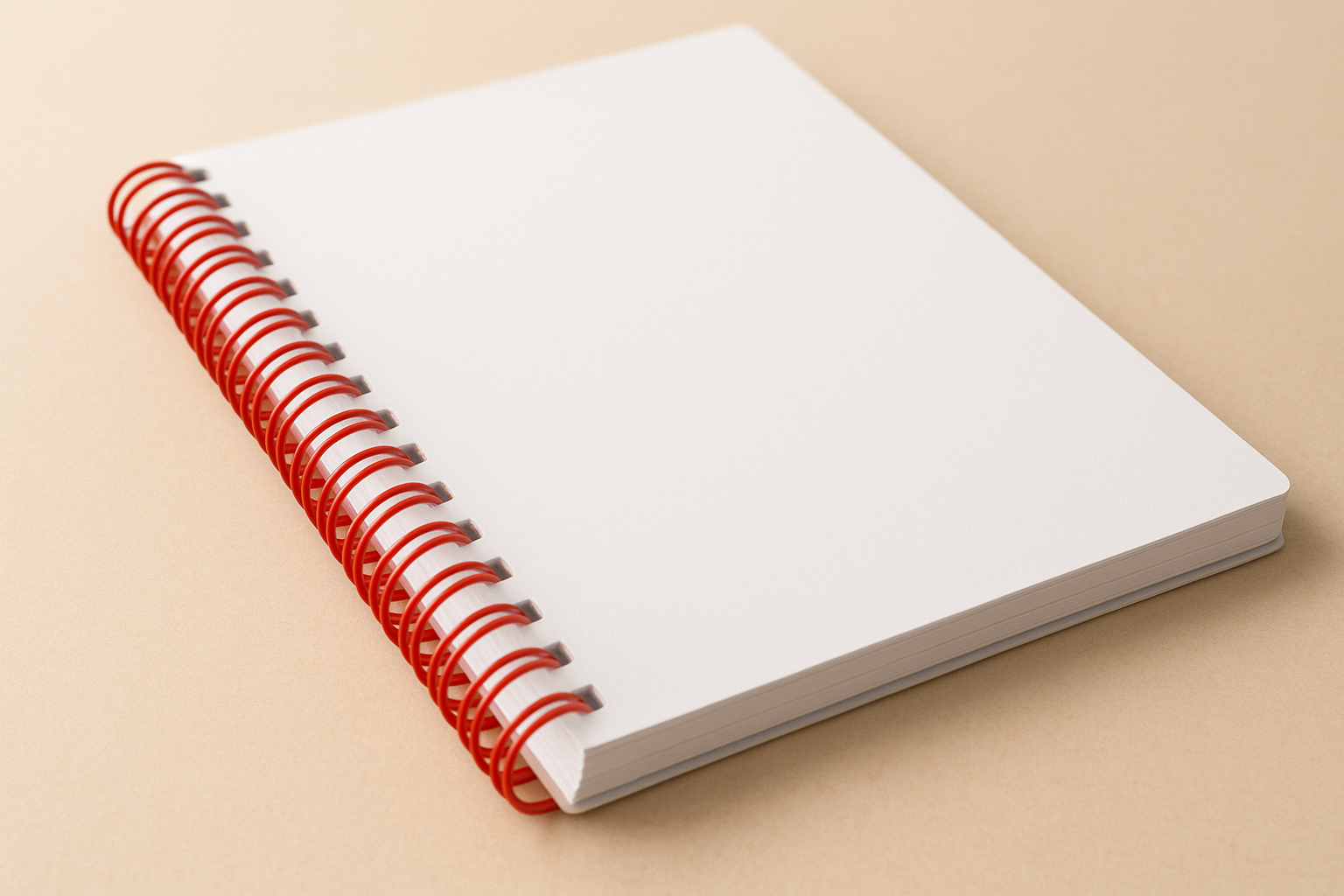
A coil-bound document uses a single, tightly wound helix of plastic that runs the full length of the spine. Pages open flat and rotate a full 360 degrees, which makes it a strong choice for documents that need to lie flat on a desk or fold completely back on themselves. You’ll recognise it by the smooth, rounded coil visible along the left edge of notebooks, field guides, and training manuals. The coil typically comes in a range of colours, so you can align it with your brand or the specific project you’re producing.
Why this binding choice matters
When you’re ordering bound documents for your business, the binding style affects more than aesthetics. It affects how your document sits on a desk, how easy it is to write in, and whether it survives daily use on a job site or in a client meeting. Getting this wrong means reprints, which costs you time and money.
The document’s job determines the format
Think about what the document actually needs to do. A field manual for a construction crew needs to fold flat and take some punishment. A client proposal needs to look professional and hold its shape through a meeting. Coil (spiral) binding handles both scenarios well, but it’s worth confirming coil binding vs spiral binding terminology with your supplier early so you’re both talking about the same product.
Asking your printer to confirm the specific binding type before production prevents costly misunderstandings.
Your choice of binding also signals quality to whoever receives the document. Coil-bound reports and manuals carry a polished, organised impression that a stapled or folded booklet simply does not. For small businesses building a professional reputation in Canada, that detail matters more than most people expect.
Pros and cons of coil and spiral binding
Understanding where coil binding excels and where it falls short helps you make the right call before committing to a print run. When comparing coil binding vs spiral binding (same product, different name), the strengths and limitations apply equally regardless of which term your supplier uses.
Strengths worth knowing
Coil-bound documents lay completely flat and rotate a full 360 degrees, which makes them practical for workspaces where you need both hands free. The plastic coil is durable enough for repeated daily use, holds pages securely, and resists the spine cracking that saddle-stitched booklets often develop over time. You also get flexibility on coil colour, so matching it to your brand is straightforward.
Coil binding is particularly well-suited for documents that people reference frequently, like field manuals or training guides.
Limitations to consider
Coil binding does have trade-offs. Adding or removing pages after binding is not possible without rebinding the entire document, so it works best for finalised content rather than drafts you’re still revising. The coil can also snag on nearby materials if documents are stacked loosely or stored without protective covers, which is worth considering for high-volume storage situations.
Cost factors and typical price ranges in Canada
Pricing for coil-bound documents in Canada depends on several variables, and understanding those variables helps you budget accurately before you order. When comparing coil binding vs spiral binding quotes from different suppliers, remember you are comparing identical methods, so focus on what actually moves the price rather than the terminology.
What drives the price
Document thickness is the biggest single factor. Thicker documents require a wider diameter coil, which costs more. Page count, paper weight, and coil colour all contribute to the final figure, as does your order quantity and any cover upgrades like laminated or heavier card stock.
Here are the main cost drivers to keep in mind:
- Page count and thickness: higher page counts need wider, more expensive coils
- Order quantity: bulk runs reduce the per-unit cost noticeably
- Cover stock: laminated or heavier covers add to the total
- Coil colour: some colours carry a small premium over standard black
Ordering in bulk almost always reduces the per-unit binding cost significantly, so consolidate your print runs where possible.
Typical price ranges in Canada
For a standard 20-50 page document, coil binding typically adds $2-$5 CAD per unit at a professional Canadian print shop. Larger documents or lower quantities push that figure higher. A 100-page bound manual in a single-unit run can reach $8-$12 CAD for binding alone, excluding printing costs. Always request an itemised quote so you can see exactly what you are paying for.
How to choose the right binding for your job
Choosing the right binding comes down to three questions: how the document gets used, how long it needs to last, and what impression it needs to make. Answer those, and the choice between coil, wire, and comb binding becomes clear.
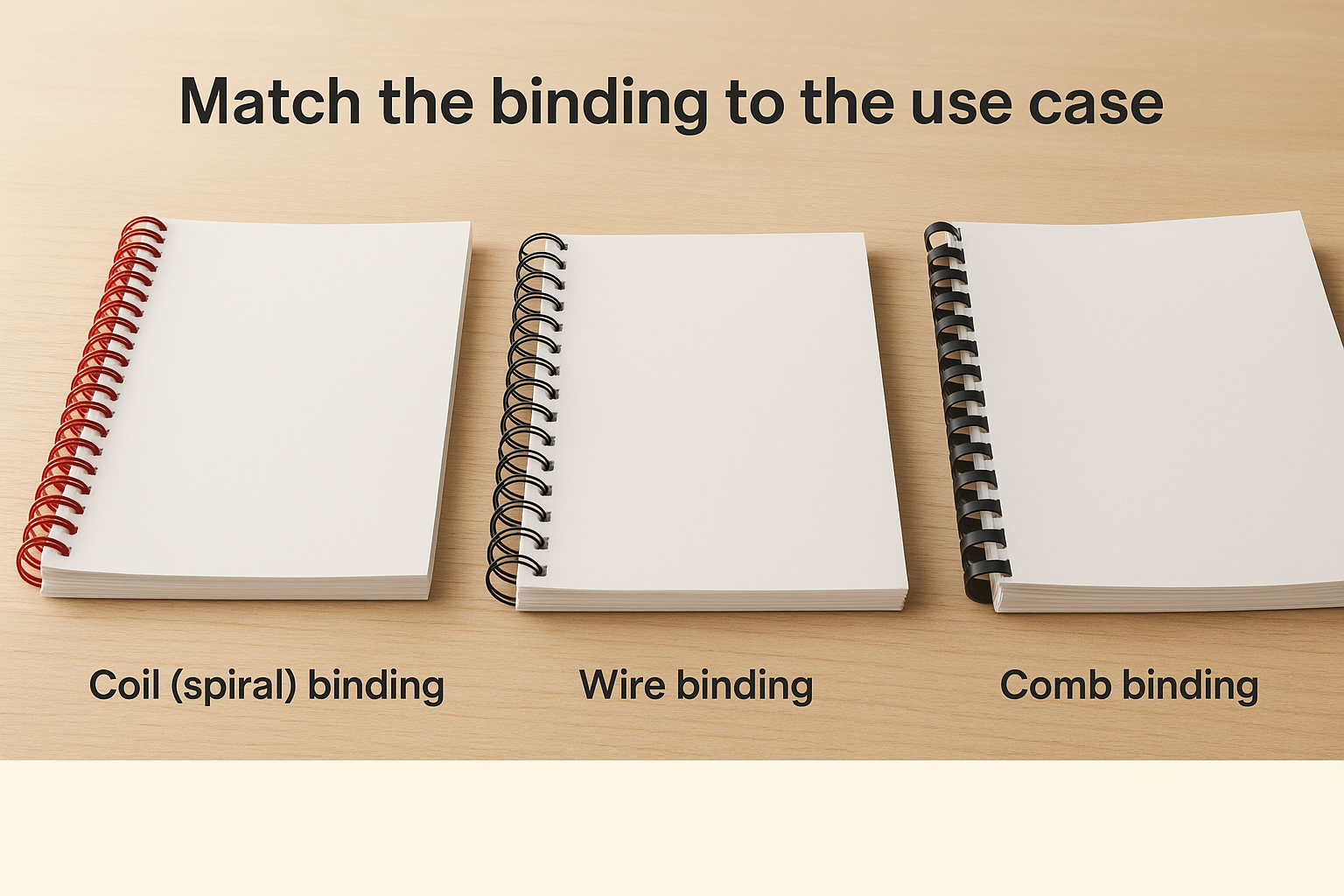
Match the binding to the use case
Coil (spiral) binding works best for documents that lie flat or fold back completely, like training manuals and field guides. Wire binding suits presentation documents where a clean, formal spine matters. Comb binding is practical when you need to add or remove pages after the initial run.
If your document will be handled daily or used outdoors, the coil binding vs spiral binding terminology aside, plastic coil is your most durable option.
Your document’s audience also shapes the decision. A client-facing proposal benefits from wire binding’s polished look, while an internal manual used by your crew every day is better served by coil’s flexibility and durability.
Consider your timeline and quantity
Rush turnarounds and smaller quantities favour coil binding because setup is fast with no complex finishing required. Consider these key factors when finalising your choice:
- Order volume: bulk runs reduce per-unit cost significantly
- Deadline: coil binds faster than wire for urgent jobs
- Document purpose: client-facing vs. internal use
Final takeaways
The coil binding vs spiral binding debate has a simple answer: they are the same product. Both names describe a plastic helix threaded through punched holes along a document’s spine, and whichever term your printer uses makes no difference to what you receive. What does matter is choosing the right binding for your specific use case, budget, and timeline.
Coil binding suits documents that need to lay flat, survive regular handling, or fold back completely. Wire binding works better when you need a formal, polished presentation. Comb binding is the right call when you need to update pages later. Match the format to the job, confirm the terminology with your supplier upfront, and order in bulk when you can to bring the per-unit cost down.
If you need bound documents that look sharp and hold up to daily use, get a custom print quote from Apex Workwear and have your order ready within days.