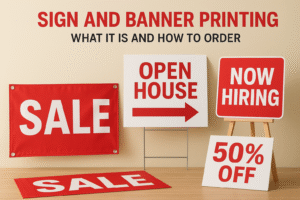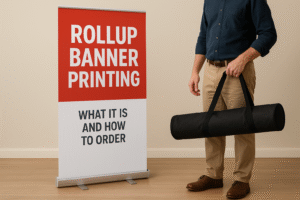
You need a banner for a trade show, a yard sign for a job site, or a poster that actually gets noticed, and you’re stuck trying to figure out who prints that stuff and how the process even works. Large format digital printing covers exactly this: banners, posters, foam boards, aluminum signs, and coroplast yard signs, all printed directly from a digital file onto oversized material. No plates, no long setup, just your artwork scaled up to the size you need.
If you’re searching for digital printing large format services, you’re likely wondering what the process actually involves and which materials suit your project. The short answer: it depends on where the piece will live, indoors or outdoors, short-term or permanent, and how much detail needs to survive at a distance.
This article walks through what digital large format printing actually means, the common materials and finishes available, and how to get from a rough idea to a finished sign or banner without guessing. We’ll also cover what to expect when you order through a Canadian print shop like Apex Workwear, including turnaround times and design support along the way.
Why large format digital printing matters for your business
Signs and banners do the selling before anyone walks through your door. A contractor’s yard sign tells a whole street who’s working nearby. A trade show banner pulls people to your booth from thirty feet away. Large format digital printing gives small businesses the same visual presence as bigger competitors, without the cost of traditional offset printing or long production runs.
First impressions at scale
Materials matter more here than in standard print work. A poster viewed from two feet needs different resolution and colour handling than a banner read from across a parking lot. Digital printing large format work is built for exactly this range, letting one process scale from a small window cling to a building-sized banner without losing sharpness. Businesses that get this right see the payoff quickly: a well-placed sign at a job site or event routinely generates more walk-up enquiries than a flyer ever will.
A sign or banner is often the only advertising a passerby sees before they decide to stop or keep walking.
Cost and speed advantages
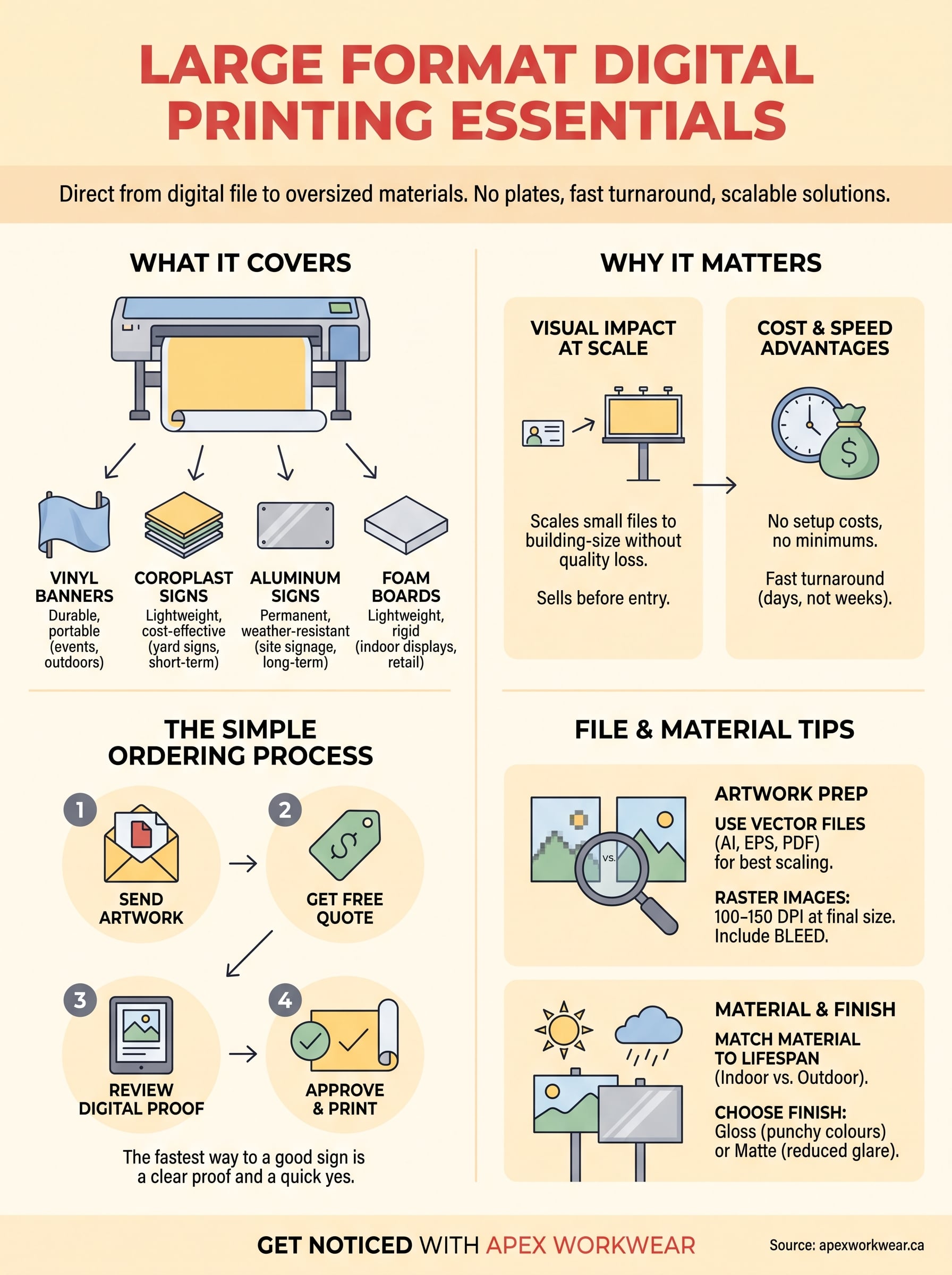
Digital output also removes the setup costs that used to make large-format work expensive. There are no plates to prepare and no minimum print runs to justify, so a single banner or a handful of yard signs costs about the same per unit as a bulk order. Ordering becomes simple:
- Order one or one hundred without a minimum quantity penalty
- Get proofs digitally before anything goes to print
- Turn around jobs in days, not weeks, since there’s no plate-making stage
Events, construction sites, and pop-up promotions all run on short timelines, and this kind of flexibility keeps signage from becoming the bottleneck in your marketing plan.
How to order large format digital printing
Ordering a banner or sign shouldn’t feel complicated, and with the right print shop it isn’t. Most jobs follow the same basic path from file to finished product, whether you’re printing one aluminum sign or a stack of yard signs for a whole neighbourhood.
The typical process
Getting a quote first means you know your budget before committing to a design. Here’s what the process usually looks like:
- Send your artwork or idea to the print shop, even a rough sketch works if you need design help.
- Get a free quote within 24 hours, including material and size recommendations.
- Review a digital proof before anything goes to production.
- Approve the file and confirm turnaround, with rush options if you’re on a deadline.
- Receive your order, shipped free locally across the GTA or picked up in person.
The fastest way to a good sign is a clear proof and a quick yes.
Need help translating a logo into a print-ready file? A good shop reviews your design before production and flags issues like low resolution or missing bleed, so you’re not paying to reprint a job that came out blurry or cropped wrong.
No minimums, no guesswork
Apex Workwear’s large format printing service works this way by design, no minimum order sizes, digital proofs on every job, and expert guidance if your file isn’t quite print-ready yet.
Popular large format print products and their uses
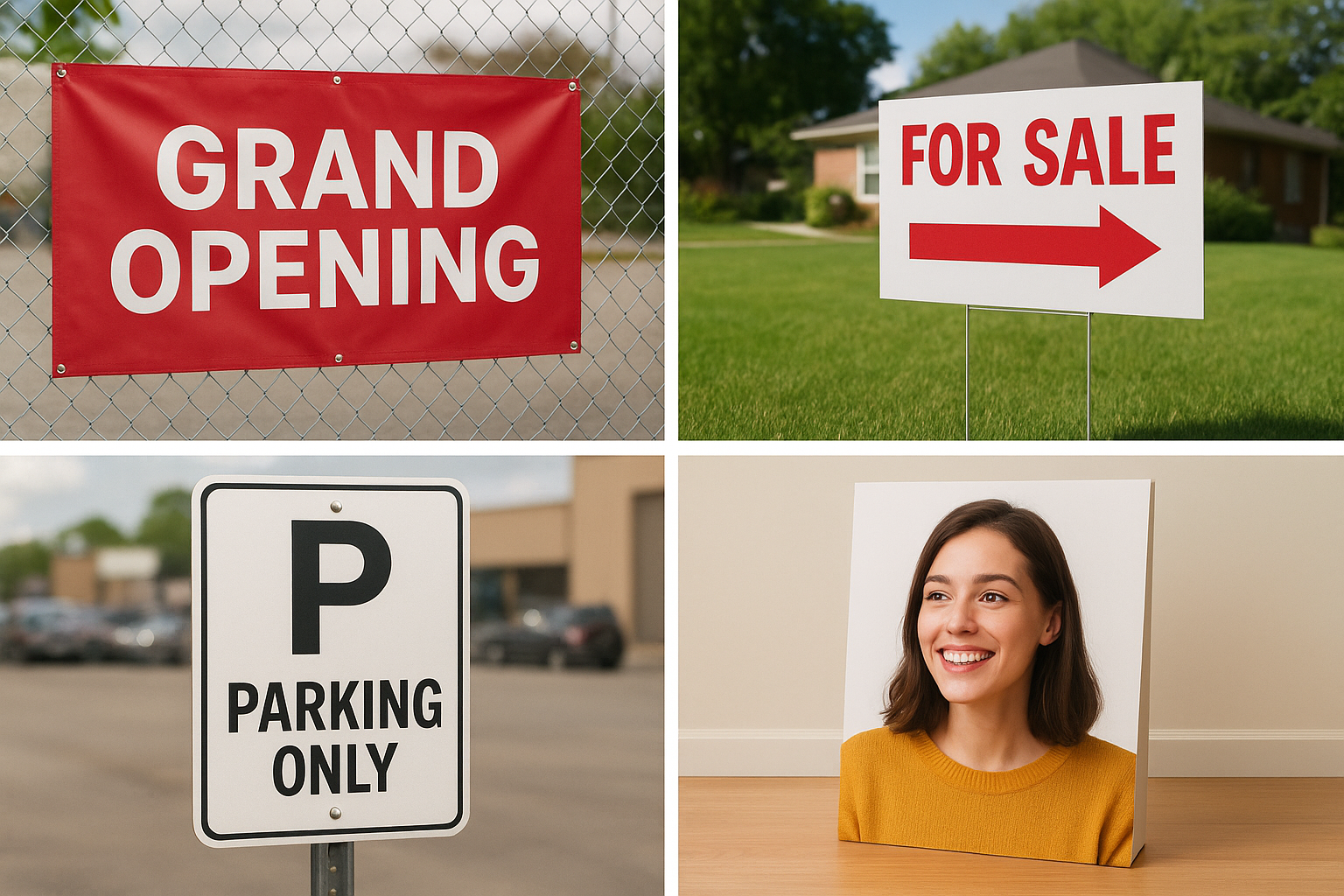
Banners top the list for a reason. They’re cheap, portable, and work equally well tied to a fence at a construction site or hung behind a registration table at a conference. Vinyl banners handle wind and rain without curling, which makes them the default choice for outdoor events that run over a weekend.
Signs built for the outdoors
Coroplast yard signs dominate real estate listings and election campaigns because they’re light, cheap to produce in bulk, and disposable once the job’s done. Aluminum signs cost more but last for years outside, so they suit permanent site signage, parking restrictions, or building directories where large format digital printing needs to survive weather and UV exposure without fading.
Indoor displays and point-of-sale
Foam board strikes a balance between rigidity and weight, ideal for retail displays, presentations, or photo backdrops that need to stand up straight without a frame. Posters remain the cheapest option per square foot for temporary indoor promotion.
| Product | Best for | Typical lifespan |
|---|---|---|
| Vinyl banner | Events, storefronts | Weeks to months |
| Coroplast sign | Yard signs, campaigns | Weeks |
| Aluminum sign | Permanent outdoor use | Years |
| Foam board | Indoor displays | Months |
Match the material to the job’s lifespan, not just the budget.
Choosing the right materials and finishes
Weather exposure decides most material choices before design even enters the picture. A banner living outside for a weekend event doesn’t need the same durability as a sign bolted to a fence for two years, and paying for aluminum when coroplast would do just wastes budget. Shops usually stock a handful of core substrates and a standard range of large format print sizes, so narrowing the list comes down to where the piece sits and how long it needs to last.
Matching finish to environment
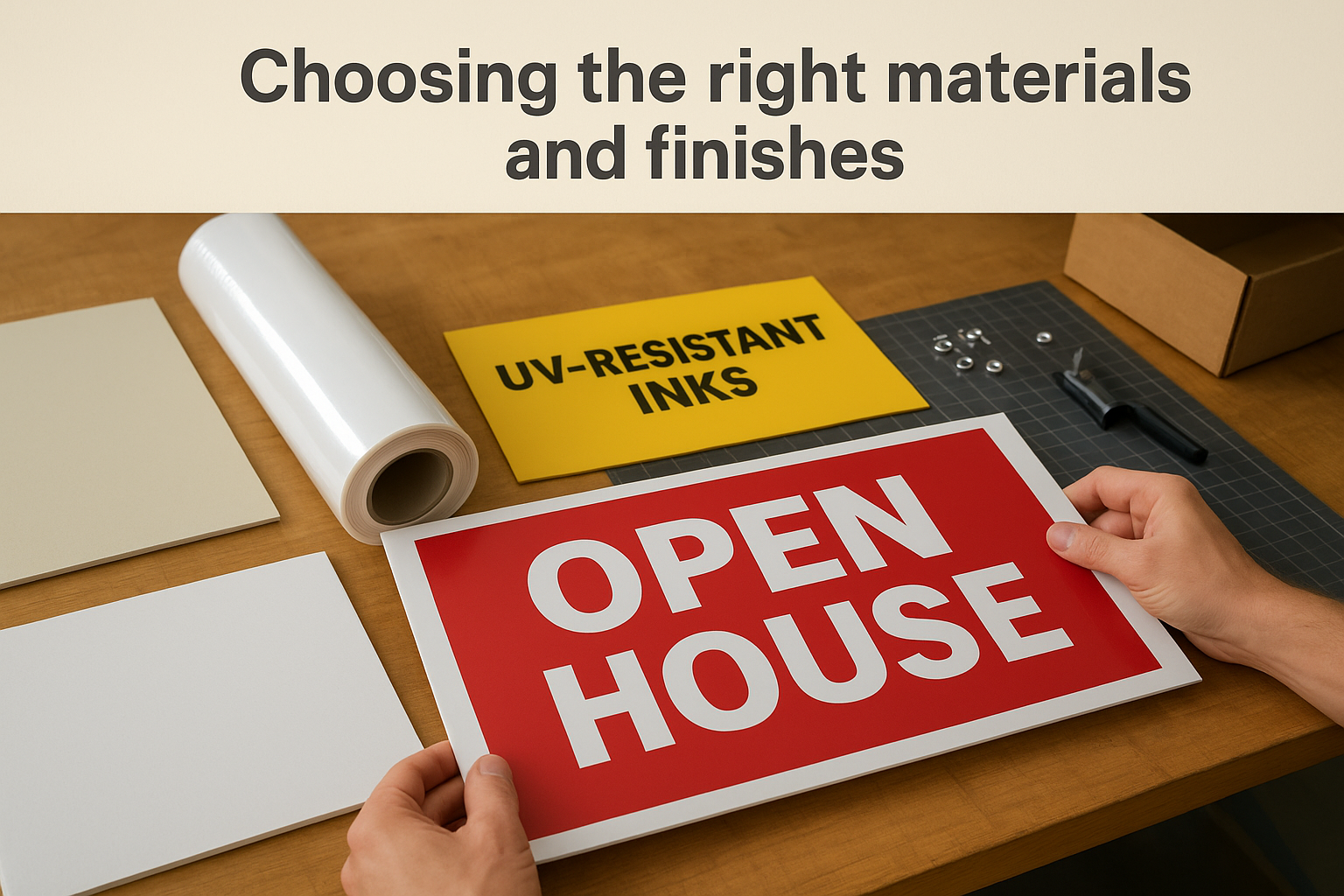
Gloss laminate adds punch to colours and protects against scuffing, which suits retail displays and trade show graphics that get handled or bumped. Matte finishes cut glare, making them the better pick for anything viewed under bright sun or harsh overhead lighting, like an aluminum sign near a storefront window.
- UV-resistant inks for anything left outdoors longer than a few weeks
- Laminate coating for high-traffic or handled pieces
- Double-sided printing for signs viewed from two directions, like A-frames
The right finish protects the print long after the ink has dried.
Outdoor jobs also benefit from grommets or stakes built into the order, saving a separate trip to source hardware.
Getting the best results from your artwork files
File quality decides whether your sign looks sharp or pixelated once it’s scaled up to banner size. A logo that looks fine on a business card can turn blurry and jagged the moment it’s stretched across six feet of vinyl, so knowing how to set up artwork for oversized output matters far more here than in everyday print work.
Resolution and file setup
Good print shops ask for vector files (AI, EPS, or PDF) whenever possible, since these scale to any size without losing detail. Raster images like JPEGs or PNGs need to be sized at the final output dimensions and set to at least 100-150 DPI at that scale, not the standard 300 DPI used for smaller prints. Bleed and safe zones also matter: build in a small margin around the edges so nothing important gets trimmed off during finishing.
A file built at the wrong resolution won’t fix itself once it’s printed.
When your file isn’t quite ready
Most small businesses don’t have a designer on staff, and that’s fine. A shop offering large format digital printing should flag low-resolution files, missing bleed, or colour issues before production starts, not after. Basic layout fixes or text swaps shouldn’t cost extra, and a digital proof should always come before the job goes to print.
Bringing your project to print
Getting a banner, sign, or poster made doesn’t need to be complicated. Once you know where the piece will live and how long it needs to last, picking the right material and finish is straightforward. Large format digital printing takes care of the rest, scaling your artwork cleanly from a small window cling to a building-sized banner without losing sharpness.
Everything comes down to three things: a print-ready file, a material suited to the job, and a shop that checks your proof before anything goes to production, which is worth knowing before you order a sign or banner. Skip any of those steps and you risk paying twice for the same sign.
If you’ve got a project ready to go, or just a rough idea and a deadline, send it over and get a straight answer on cost and timing. Browse Apex Workwear’s banner, sign, and poster printing to get a free quote and see your design turned into a finished print within days, not weeks.