Choosing between DTG printing vs screen printing usually comes down to one order sitting in front of you: a batch of hoodies for a construction crew, or fifty tees for a weekend event. Pick the wrong method and you either overpay for a small run or end up with prints that crack after a few washes. Neither outcome helps a small business trying to look sharp without blowing the budget.
The short answer is that screen printing wins on large, simple-colour orders where cost per unit drops fast, while DTG printing suits smaller runs, detailed designs, and photo-quality graphics where setup costs would make screen printing impractical. Which one actually saves you money and holds up depends on your quantity, artwork, and how the garment gets worn.
Below, we break down how each method performs on quality and colour detail, how they compare on durability after repeated washing, and where the price gap actually sits once you factor in setup fees and order size. By the end, you’ll know exactly which process fits your next apparel order, and how Apex Workwear’s Canadian production team can get it printed and shipped without the guesswork.
Why the right printing method matters for your brand
Custom apparel is often the first physical thing a client, customer, or new hire touches that represents your company. A cracked logo on a crew’s hoodies or a faded design on event T-shirts tells people something about how much attention you pay to detail, whether that’s fair or not. Getting the print method right protects the impression your brand makes long after the invoice is paid.
First impressions ride on print quality
A hi-res logo with gradients and fine text looks sharp with DTG printing, because the process lays down ink pixel by pixel like an inkjet printer, only onto fabric instead of paper. Screen printing, by contrast, pushes ink through a mesh stencil one colour at a time, so it excels at bold, solid shapes but struggles with tiny text or photographic detail. Choose the wrong one for your artwork and you’ll notice it the moment the garments arrive, not months later.
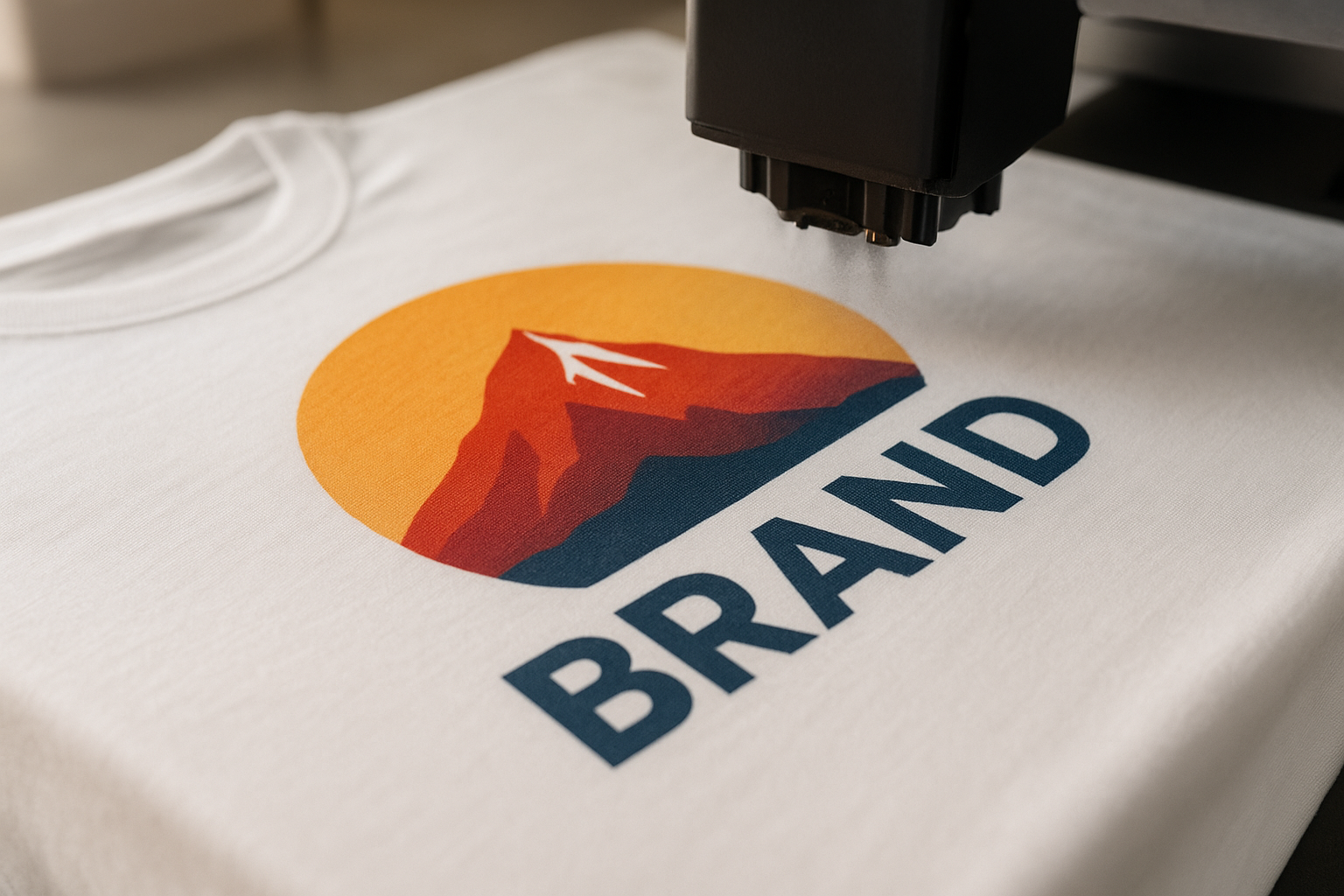
The printing method you choose is a direct reflection of how your brand is perceived, on-site, at events, and in every photo someone takes wearing your gear.
Getting the maths wrong costs you twice
Screen printing needs a screen burned for each colour in the design before a single shirt gets printed, which typically runs somewhere between $20 and $40 per colour. Order five shirts with a four-colour logo and you’re paying setup fees that dwarf the cost of the garments themselves. DTG skips that step entirely, since the design prints straight from a digital file, so a five-piece order costs roughly the same per unit as a five-hundred piece order. Get the process wrong for your quantity and you’ll either overpay setup fees on a small run or watch per-unit costs balloon on a large one, because DTG doesn’t get materially cheaper as volume climbs.
Durability decides whether your brand looks good in month six
A logo that peels after ten washes does more damage to your brand than no logo at all, because it signals the shirt, and by extension the company on it, wasn’t built to last. Screen-printed ink sits as a thick layer on the fabric surface and, when cured properly, can outlast the garment itself, which is why it remains the standard for workwear that gets washed daily. DTG ink bonds into the fibres rather than sitting on top, giving a softer feel but a print that can fade faster on heavily worn cotton blends, particularly around high-friction areas like collars and cuffs. Should your crew wear the same hoodie three times a week for a year, this difference shows up fast.
The stakes go beyond looks
Beyond appearance, the right method affects your budget planning for the season ahead. A contractor ordering hi-vis vests every quarter needs a process that scales predictably as headcount grows, while an event coordinator ordering a one-off run of fifty tees needs low upfront cost more than long-term wash resistance. Neither method is universally better, they’re built for different jobs, and matching the job to the process is what actually saves money and protects your image over time.
How to choose between DTG and screen printing
Picking a method isn’t guesswork once you know the three factors that actually decide the answer: order quantity, artwork complexity, and fabric type. Run through these before you request a quote, and you’ll save yourself a call back from your printer asking which process you actually want.
Start with your quantity
Quantity is usually the deciding factor before anything else gets considered. Screen printing rewards volume because the screen setup cost gets spread across every unit, so a run of 100 shirts might cost half as much per piece as a run of 20. DTG printing charges roughly the same per garment regardless of batch size, which makes it the practical choice for small orders like a five-person office team or a one-off retirement gift. As a rough guide:
- Under 25 pieces: DTG usually wins on total cost
- 25 to 75 pieces: depends on colour count in your design
- Over 75 pieces: screen printing almost always comes out cheaper
Look closely at your artwork
Complexity of the design matters just as much as quantity. Simple logos with one, two, or three flat colours print cleanly through screens and hold their vibrancy for years. Gradients, photographs, and designs with more than four colours push screen printing costs up fast, since each colour needs its own screen and setup fee, while DTG printing handles unlimited colours and fine detail for the same price as a single-colour job.
If your design has a photo, a gradient, or more than four colours, DTG is almost always the smarter and cheaper option.
Factor in the fabric and how it’ll be worn
Fabric composition changes the outcome too. DTG needs a high cotton content, ideally 100%, to absorb ink properly, so it struggles on polyester blends and performance wear common in athletic or hi-vis apparel. Screen printing works across almost any fabric, including blends and technical materials, which is why it remains standard for workwear and safety gear that mixes cotton with synthetic fibres for durability.
Ask how the garment will actually be used
Use case ties everything together. A hoodie a labourer wears daily on-site needs the wash resistance screen printing offers, while a promotional tee for a trade show only needs to survive one event and look sharp in photos. Weighing quantity, artwork, and fabric against how hard the garment will actually work tells you almost everything before you even see a price quote.
Cost, quality and durability compared
Numbers settle arguments faster than opinions do, so here’s how DTG printing and screen printing actually stack up once you put them side by side. The table below pulls together what matters most when you’re comparing quotes: setup fees, per-unit pricing at different volumes, and how each method holds up over time.
| Factor | DTG Printing | Screen Printing |
|---|---|---|
| Setup cost | None or minimal | $20-$40 per colour, per design |
| Best order size | 1-50 pieces | 50+ pieces |
| Cost at 10 units | Lower | Higher (setup dominates) |
| Cost at 200 units | Higher per piece | Lower per piece |
| Colour limit | Unlimited, photo-quality | Best under 4 colours |
| Fabric requirement | High cotton content | Works on most blends |
| Print feel | Soft, absorbed into fibres | Slightly raised, sits on top |
| Wash durability | 30-50 washes typical | 50+ washes, often life of garment |
Cost breakdown side by side
Budget conversations get easier once you see the crossover point. Screen printing carries a fixed setup charge before a single shirt rolls off the press, so small orders absorb that cost badly, while large orders spread it thin enough that per-unit pricing can drop below two dollars a piece for simple one-colour jobs. DTG flips that logic entirely: no setup fee means a five-piece order and a fifty-piece order cost roughly the same per shirt, but that price never really drops as volume climbs, because every garment still gets printed individually.
Screen printing gets cheaper as you order more; DTG stays flat no matter how many you order.
Quality differences you can see and feel
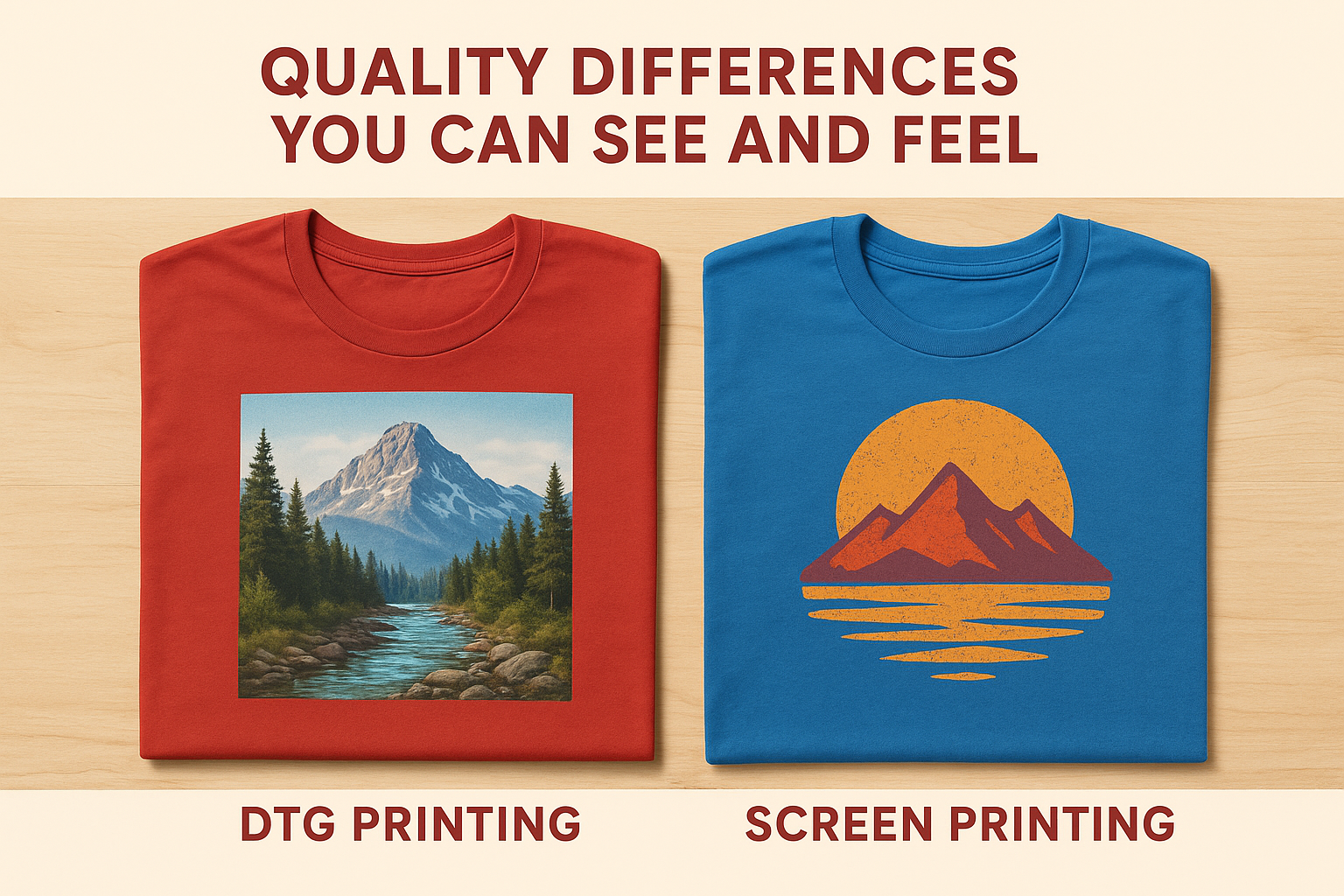
Colour handling is where the two methods diverge most obviously. Photographic detail, gradients, and multi-colour artwork print crisply with DTG because the printer lays down full-colour images the same way a desktop inkjet does, just onto cotton. Screen printing produces bolder, punchier colour on flat designs but can’t reproduce a photograph without the image being broken into simplified colour separations first, which changes how it looks.
Durability under real-world wear
Washing is the real test, not the day the garments arrive. Cured screen-printed ink forms a durable layer that resists cracking through years of laundering, which is why it dominates uniforms and workwear washed weekly. DTG prints hold up well too, generally 30 to 50 washes before noticeable fading, but they’re more sensitive to high heat dryers and rough fabric, so garment care instructions matter more with this method than with screen printing.
Which method suits your project
Every order type has a natural fit once you match it against quantity, artwork, and how the garment gets used. Below are the scenarios we see most often at Apex Workwear, along with the method that consistently wins for each one.
Startups and small teams
Small businesses ordering branded T-shirts for a five-person team or a single retirement gift almost always come out ahead with DTG printing. You’re not carrying setup fees on a run that size, and if your logo has more than one colour or a bit of shading, DTG reproduces it without extra charges. Startups also tend to reorder in small batches as they hire, so a flat per-unit price that doesn’t punish small quantities matters more than squeezing out the lowest possible cost per shirt.
Contractors and daily workwear
Contractors need garments that survive a job site, not a photo shoot. Hi-vis vests, branded hoodies, and crew shirts worn several times a week for years call for screen printing’s thicker, more wash-resistant ink. Order quantities are usually higher too, since crews grow and turnover means replacing gear regularly, so the setup cost spreads across enough units to make screen printing the cheaper option overall.
Match the method to how hard the garment actually works, not just how the design looks on screen.
Event coordinators and one-off runs
Event organisers ordering fifty tees for a weekend conference rarely need the shirts to survive fifty washes. DTG suits this use case well because setup is minimal, turnaround is fast, and the design only needs to look sharp for a day or two of photos and social posts. If the run climbs past 75 pieces with a simple one- or two-colour logo, screen printing starts pulling ahead on cost even for short-term use.
Creative agencies and detailed branding
Agencies working with clients on complex, multi-colour branding typically lean on DTG, since gradients, photography, and fine typography print cleanly without the colour-separation work screen printing demands. A quick way to check which fits your project:
- Detailed, colourful design + small order → DTG
- Simple logo + large order → screen printing
- Daily wear over months or years → screen printing
- Short-term use, sharp visuals → DTG
Running your project through that list before requesting a quote saves back-and-forth and gets you pricing that actually matches what you need.
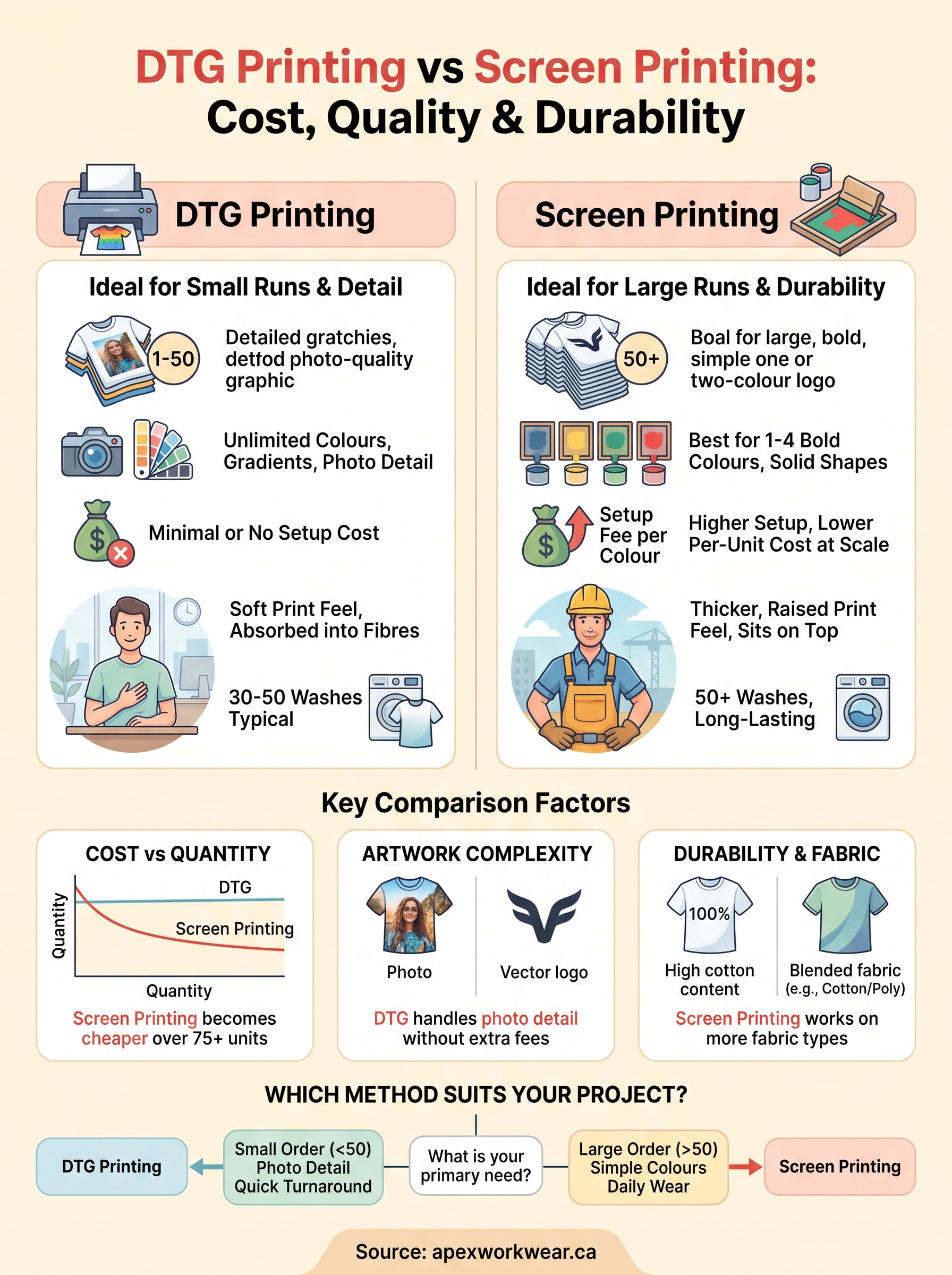
Getting your custom apparel right
Neither method is better in every situation, they’re just built for different jobs. Screen printing earns its keep on large, simple-colour orders that need to survive daily wear for years. DTG printing wins on small runs, detailed artwork, and projects where speed matters more than wash count. Match the method to your quantity, your design, and how hard the garment actually works, and you’ll stop overpaying or underdelivering on every order.
Once you know which process fits, the next step is finding a printer who won’t make you guess on pricing or turnaround. Apex Workwear runs both processes in-house across Canada, with no minimums on most items and quotes back within 24 hours. If you’re ready to put this comparison into practice, get a free quote from Apex Workwear and let their team confirm the right method for your next order before you commit to a single shirt.