
Choosing between heat transfer vinyl vs screen printing can feel like a coin toss when you don’t know how each method actually performs where it matters, cost, durability, and design flexibility. Both are widely used in custom apparel production, but they serve very different purposes depending on what you’re printing, how many you need, and how long the prints need to last.
At Apex Workwear, we work with Canadian businesses, teams, and individuals on custom apparel projects every day, from small runs of branded hoodies to large batches of crew T-shirts. One of the most common questions we hear is which printing method gives the best results for the budget. The honest answer? It depends entirely on your project.
This article breaks down the real differences between heat transfer vinyl (HTV) and screen printing across the factors that actually affect your decision: per-unit cost at different volumes, print durability over time, design complexity, and ideal use cases. By the end, you’ll have a clear picture of which method fits your needs, and when it might make sense to use one over the other.
What heat transfer vinyl and screen printing are
Before you can decide between the two, you need to understand how each process actually works. Heat transfer vinyl and screen printing are both popular methods for applying graphics to fabric, but they use completely different techniques and materials to get there.
How heat transfer vinyl works
Heat transfer vinyl (HTV) is a pressure-sensitive material that gets cut into a design shape, then pressed onto fabric using a heat press machine. The heat activates an adhesive on the back of the vinyl, bonding it directly to the fibres of the garment. You can layer multiple colours by pressing each one individually, which makes it practical for detailed, multi-colour designs without the setup costs that come with other methods.
HTV works well for small runs and one-off pieces because there is no screen preparation involved. You cut the design, weed out the excess vinyl, and press. That simplicity is exactly why it is a go-to for personalised items, team kits with individual names and numbers, or custom orders that require quick turnaround on a handful of pieces at a time.
How screen printing works
Screen printing forces ink directly through a mesh stencil stretched over a frame, pressing it onto the garment in layers. Each colour in your design requires a separate screen, so the setup process takes more time and carries an upfront cost. Once those screens are prepared, though, you can print the same design repeatedly at speed, which brings the per-unit cost down significantly as your order volume grows.
Screen printing is built for volume. The more units you print, the more the setup cost spreads across each piece, making it one of the most cost-efficient methods available for bulk custom apparel.
When comparing heat transfer vinyl vs screen printing, the core difference comes down to this: HTV suits low-quantity, personalised, or complex layered work, while screen printing rewards you with better economics and ink durability on larger, consistent runs. Knowing that distinction shapes every other decision you make about your project.
Cost and turnaround for each method
Understanding the cost structure of heat transfer vinyl vs screen printing helps you budget accurately before you place an order. Neither method is universally cheaper. What you pay depends almost entirely on your order quantity and how quickly you need the finished garments.
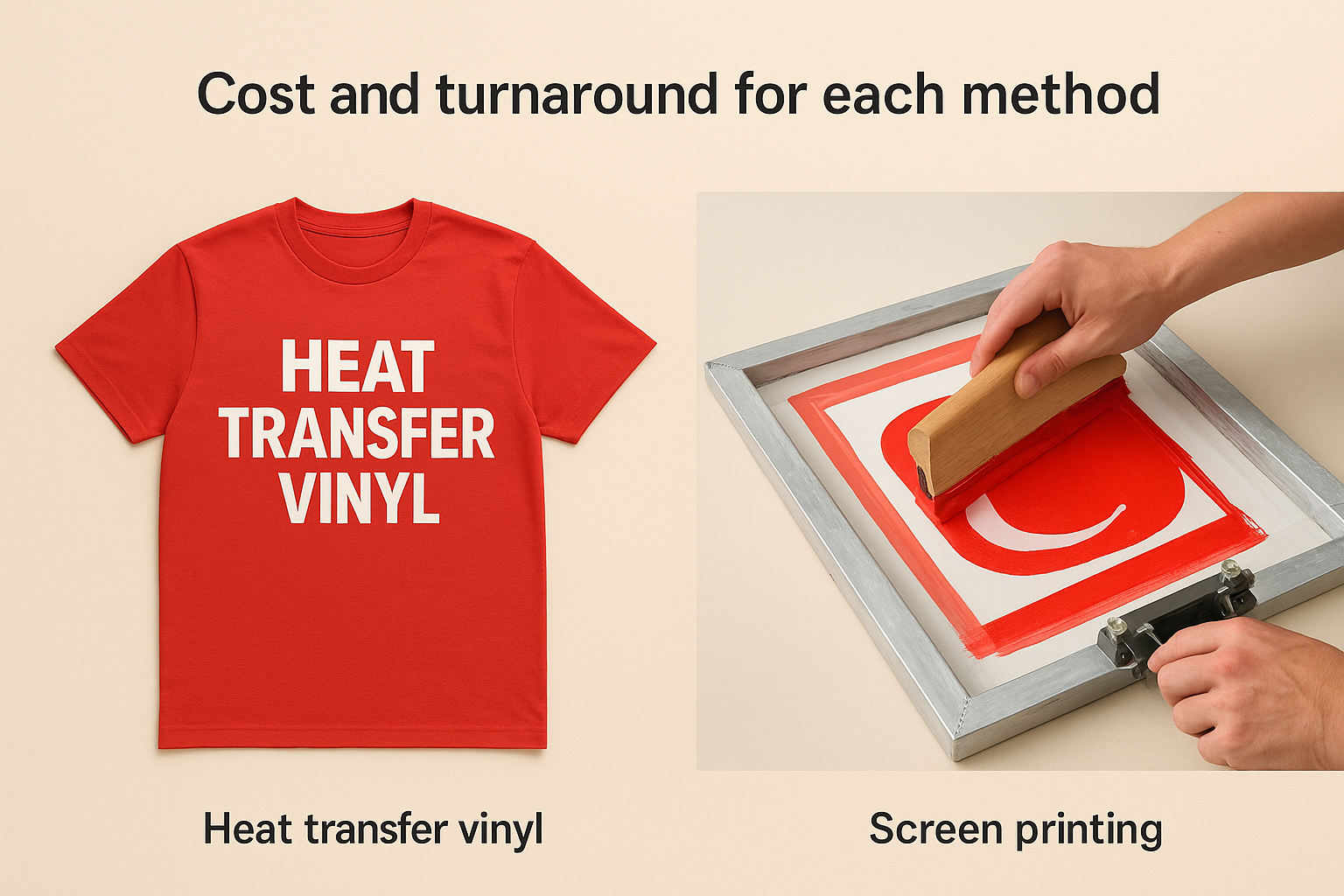
What HTV costs and how fast it delivers
Heat transfer vinyl carries no screen setup fees, which makes it the more affordable option for small quantities. On a run of one to twenty pieces, HTV typically keeps your per-unit cost lower because you are not absorbing preparation costs across a handful of items. Turnaround is also fast since the process moves from file to finished garment quickly, often within two to three business days for straightforward designs.
The fewer pieces you need, the more HTV works in your favour on cost.
What screen printing costs and how fast it delivers
Screen printing involves a setup charge per colour, covering the time and materials needed to prepare each individual screen. On a run of ten pieces, that cost hits hard on your per-unit price. On a run of seventy-two or more pieces, the setup fee spreads thin and your per-unit cost drops well below what HTV would deliver at the same volume. Production speed on large runs is fast once screens are ready, but the preparation stage means screen printing typically requires five to seven business days before your order ships.
Durability, comfort, and how prints age
When you compare heat transfer vinyl vs screen printing on durability, the biggest factor is how each method bonds with the garment. HTV sits on top of the fabric, while screen print ink is pushed into the fibres. That difference shapes how each print holds up after dozens of washes and regular use.
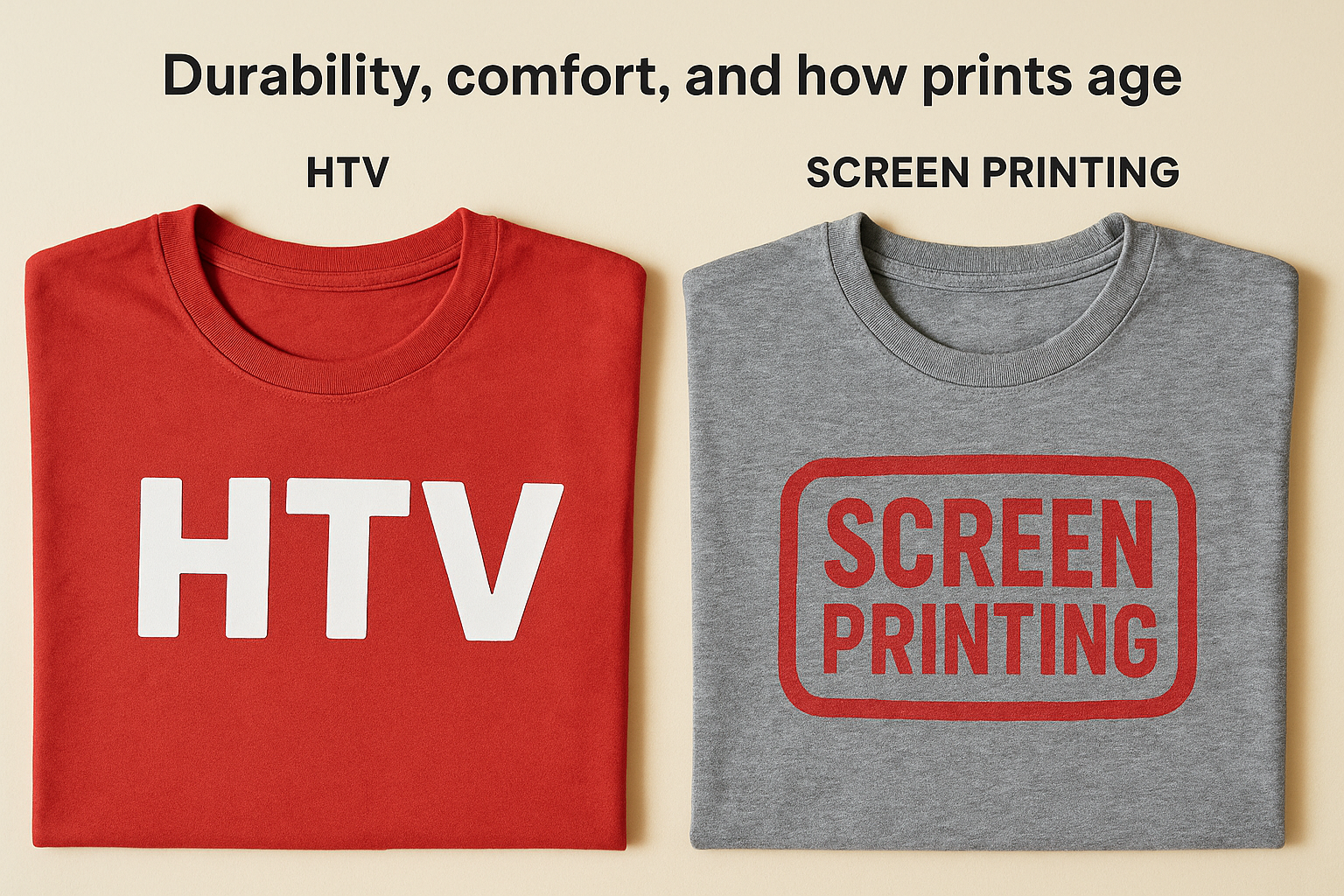
How HTV wears over time
HTV is durable enough for everyday wear, but it has limits. On smaller designs like names, numbers, or simple logos, it holds well for years if you wash garments inside-out in cold water and avoid high-heat drying. On larger coverage areas, the vinyl is more likely to crack or peel at the edges as the adhesive weakens through repeated washing and heat cycles.
The larger and less flexible the HTV design, the faster you will notice wear at the edges.
From a comfort standpoint, HTV adds a noticeable plastic texture to the surface of the fabric. Some wearers find this perfectly fine; others dislike the rigid feel against skin, particularly on areas sitting close to the body during extended wear.
How screen printing wears over time
Screen printing ages more gracefully on high-wear garments. Because the ink bonds directly into the fabric weave, it moves with the garment rather than sitting rigid on top. You get a softer hand feel from the start, and the print stays comfortable through regular washing cycles.
Fading can occur over many washes, but cracking and peeling are far less common than with vinyl. For branded workwear, uniforms, or any garment that sees frequent laundering, screen printing holds up better over the long run.
How to choose the right method for your job
The decision between heat transfer vinyl vs screen printing comes down to three practical questions: how many pieces you need, how complex your design is, and how long you expect the garments to stay in rotation. Answer those honestly and the right method becomes clear.
Pick HTV for small runs and personalisation
HTV is the stronger choice when you need fewer than around 24 pieces, or when each garment carries a unique name, number, or detail. It is also the right call when you need a fast turnaround and cannot wait for screens to be prepared. Custom team kits, gifts, and branded items for a single event are all solid use cases for HTV.
If your design includes fine detail or layered colours across a small quantity, HTV handles that cleanly without the per-colour setup costs that screen printing would add at low volumes.
Pick screen printing for bulk and long-term wear
Screen printing suits you when your design stays consistent across every garment and your order volume is large enough to absorb the setup fees. Branded uniforms, staff T-shirts, and promotional runs where every piece looks identical are the strongest fit.
Once your order crosses the 24-piece mark, screen printing almost always delivers better value per unit and a more durable result.
The softer feel and longer print life make it the preferred method for garments that see heavy, regular use. If your team wears the same shirt five days a week, screen printing will outlast HTV by a significant margin.
Mistakes to avoid and care tips for longer wear
Even the right choice between heat transfer vinyl vs screen printing can fail early if you handle the garments incorrectly. Most premature print damage comes down to avoidable washing and drying habits rather than anything wrong with the print itself.
Common mistakes that damage prints early
The most frequent mistake people make with HTV is washing garments inside-out in hot water, then tumble drying on high heat. That combination loosens the adhesive bond faster than regular wear ever would. With screen printing, the damage usually comes from harsh detergents or bleach-based products that break down the ink over time, causing fading and a rough texture on the print surface.
Skipping the digital proof stage before printing is another costly error. Always confirm your design looks exactly as intended before any production begins.
How to care for each print type
For HTV garments, turn each piece inside-out before washing, use cold water on a gentle cycle, and air dry or tumble dry on the lowest heat setting available. Keep irons away from the vinyl surface directly, and avoid folding the garment so the print sits in a compressed crease for extended periods.
Screen printed garments tolerate slightly more in the wash, but cold water and a mild detergent still extend print life considerably. Wash similar colours together and avoid overloading the machine, since friction between garments during a heavy load accelerates surface wear on any print type.
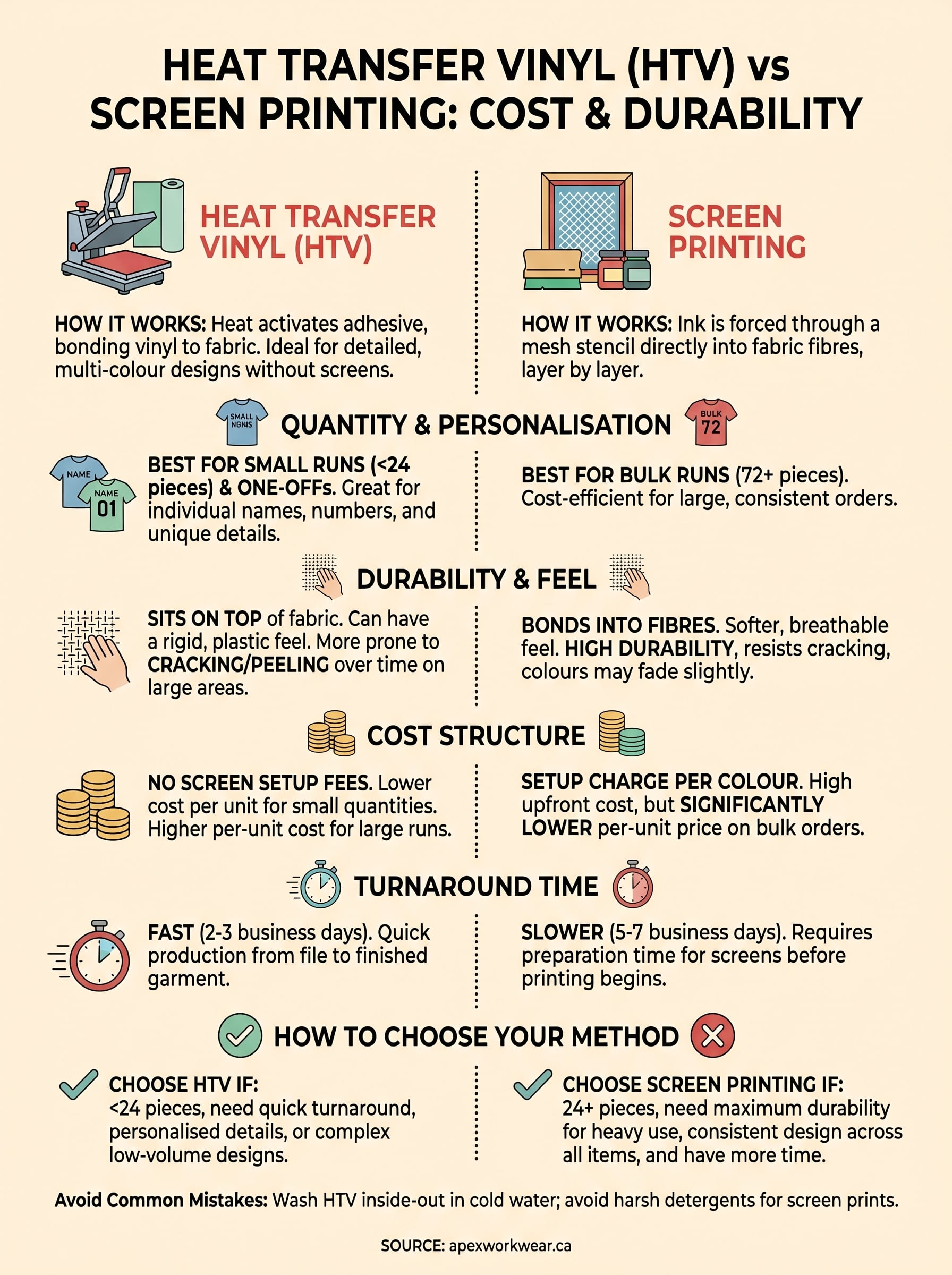
Key Takeaway
The choice between heat transfer vinyl vs screen printing is not about which method is better overall. It is about which one fits your specific project, based on quantity, design complexity, and how long the garments need to hold up.
HTV wins when you need small quantities, personalised details, or a quick turnaround. Screen printing wins when your order volume is large, your design stays consistent across every piece, and you need maximum print durability through heavy, regular use.
Protect your investment by washing garments with care, always confirming your artwork on a digital proof before production starts, and matching the method to your actual order size rather than guesswork. Both techniques deliver strong results when you apply them to the right job.
Ready to get your custom apparel sorted? Get a free quote from Apex Workwear and our team will help you pick the right printing method for your project.