If you have been shopping around for custom apparel and keep seeing the term pop up in quotes and product listings, you are probably asking what is DTF printing and whether it beats the method you have used before. It is a fair question, especially when suppliers throw around DTG, sublimation, vinyl, and screen printing as if you already know the difference. You do not need a printing degree to make a smart decision, just a clear explanation.
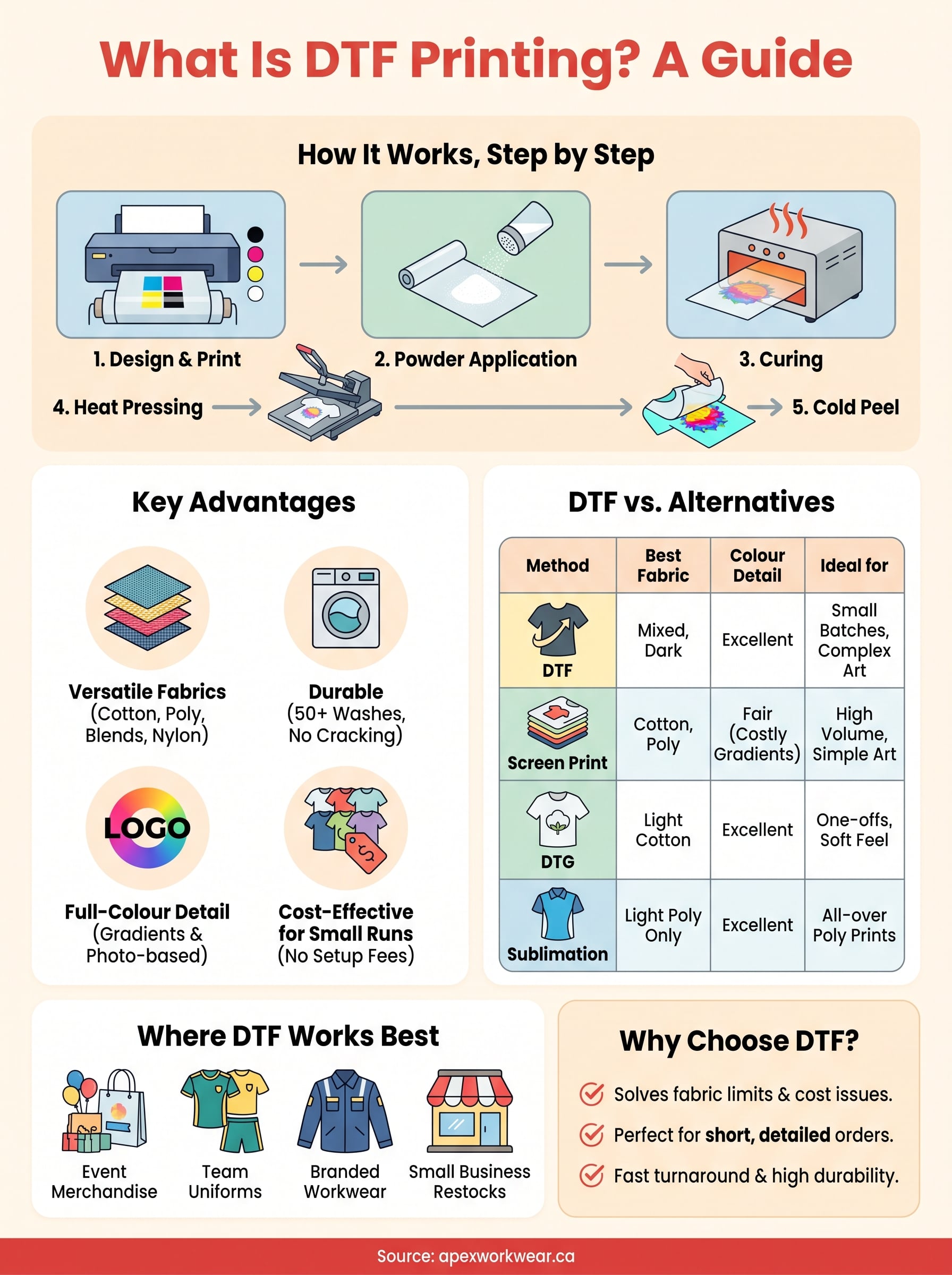
DTF, or direct-to-film printing, works by printing your design onto a special film, coating it with adhesive powder, then heat pressing it onto fabric. The result is a durable, full-colour transfer that works on cotton, polyester, blends, even nylon, without the fading or cracking you might expect from cheaper methods. It has quickly become one of the most versatile printing options for small runs and mixed fabric orders.
In this guide, we will break down exactly how the DTF process works step by step, then compare it honestly against DTG, sublimation, vinyl, and screen printing so you can see where each method shines. By the end, you will know whether DTF is the right call for your next batch of custom apparel, whether that is team uniforms, event shirts, or branded merchandise for your business.
Why DTF printing has become so popular
DTF printing exploded in popularity because it solves a problem that has frustrated small business owners for years: how do you print short runs of full-colour designs on different fabrics without paying screen printing prices or dealing with DTG’s fabric limits? Fabric versatility is the biggest draw here. Unlike sublimation, which only works properly on light-coloured polyester, DTF transfers press onto cotton, polyester, blends, nylon, and even some leather goods. A hoodie order with cotton and poly-blend pieces mixed together used to mean two different print processes. With DTF, it is one process, one film, one press.
Cost at low volumes is the second reason shops and buyers keep asking for it by name. Screen printing needs a new screen burned for every colour in your design, which makes short runs expensive fast. Order quantities of five, ten, or twenty pieces used to mean either eating a setup fee or settling for a plain design. DTF sidesteps that entirely because the film is printed digitally, so a one-off shirt costs roughly the same per unit as a fifty-piece batch when you account for setup. That single fact has changed how small businesses order merchandise.
DTF printing removed the trade-off between design complexity and order size that used to define custom apparel.
Colour reproduction is another factor pushing suppliers and buyers toward DTF. Screen printing struggles with gradients and photographic detail unless you pay for extra colour separations. DTG can handle detail well but fades faster on darker or blended fabrics and needs a pre-treatment step that adds time. DTF prints handle gradients and fine detail cleanly, including bright colours on black fabric, without the washed-out look you sometimes get from other transfer methods. For logos with multiple shades or photo-based designs, that difference is obvious the moment you compare a shirt in person.
Durability seals the deal for a lot of repeat buyers. A DTF transfer, applied correctly, can survive fifty or more home washes without cracking or peeling, based on the wash tests most reputable suppliers run before recommending the method for uniforms and workwear. That is a meaningful upgrade over cheap vinyl decals, which crack within a season of regular wear, or poorly cured DTG prints that fade after a dozen washes. For contractors and teams who wear their branded gear daily, that durability translates directly into fewer reorders and a better return on the initial spend.
Finally, turnaround speed matters more than people expect. Because DTF film can be printed in batches and stored until needed, suppliers can press orders quickly without waiting on screen setup or garment pre-treatment. For event coordinators working against a deadline, or small businesses that need branded shirts for a trade show next week, that speed is often the deciding factor over cost alone. Put those five reasons together, versatility, low-volume affordability, colour accuracy, durability, and speed, and it is easy to see why DTF has moved from a niche technique to a standard offering at most custom apparel shops across Canada.
How DTF printing works, step by step
Understanding the actual DTF process helps you ask smarter questions when you get a quote, and it explains why the method costs what it costs. The process runs through five distinct stages, each one affecting the final print quality.
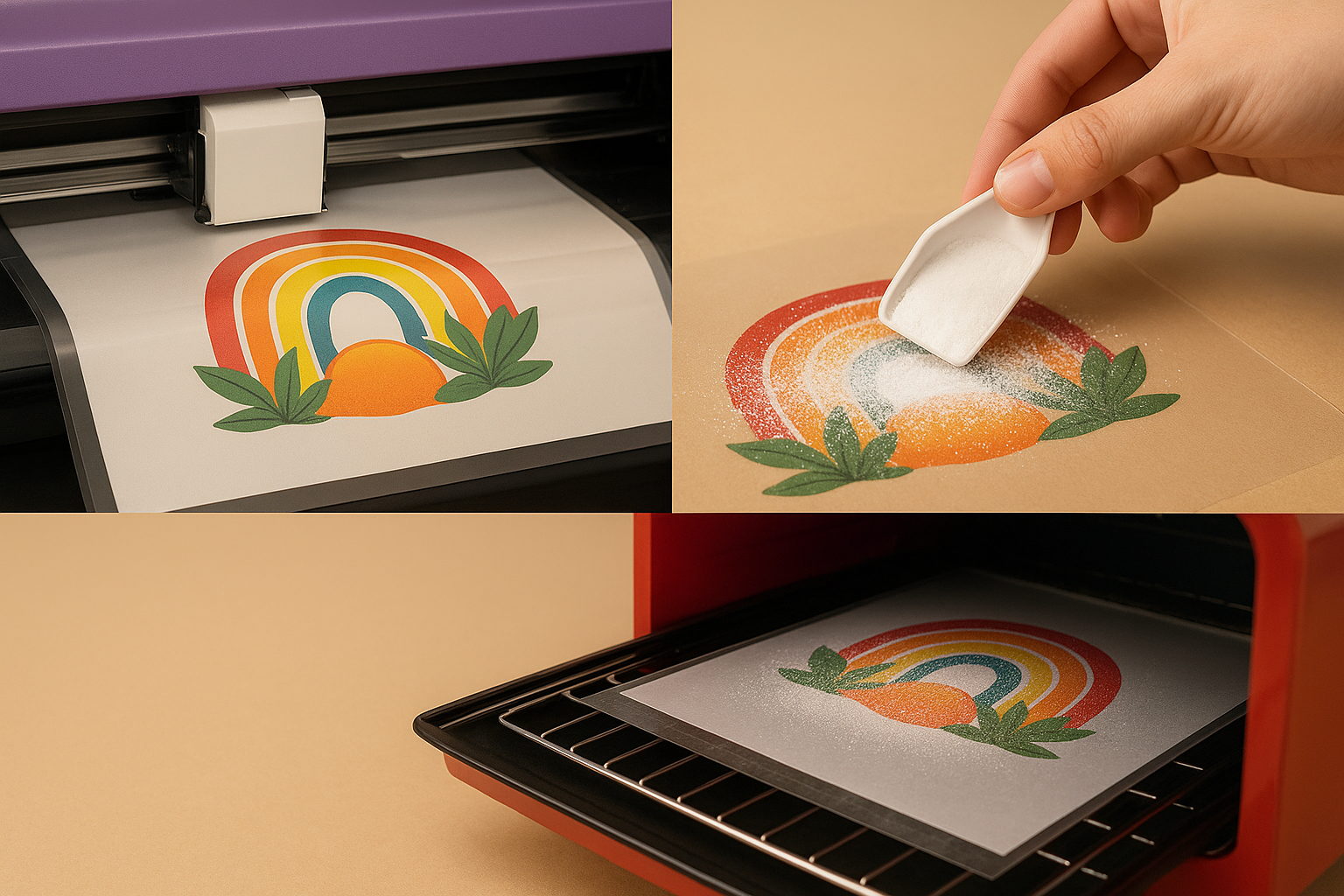
- Design and print: Your artwork gets printed in reverse onto a clear PET film using a specialised printer loaded with CMYK inks plus a white ink channel. That white layer sits underneath the colours and gives the transfer its opacity, which is why DTF prints look solid on dark fabric instead of washed out.
- Powder application: While the ink is still wet, the film passes through (or gets dusted with) a hot-melt adhesive powder. The powder sticks only to the printed area, coating the design with the glue that will later bond it to the fabric.
- Curing: The film goes into a curing oven or under a heat source that melts the powder into a smooth, even layer without fully setting it. Skip this step or rush it, and the transfer will not adhere properly during pressing.
- Heat pressing: The cured film gets placed design-side down onto the garment and pressed at a set temperature and pressure for a fixed time, usually around 15 seconds at 150 to 160 degrees Celsius, though this varies by film and press.
- Cold peel: Once pressed, the film is left to cool for a few seconds before peeling away, leaving the design bonded to the fabric.
Every DTF transfer is only as good as its weakest stage, so a skipped cure or rushed press ruins an otherwise perfect print.
A second, lighter press sometimes follows the peel to seal the edges and improve wash durability, which reputable suppliers include as standard rather than an upsell. What makes this workflow attractive for small orders is that stages one through three happen independently of the garment itself. A shop can batch-print dozens of transfers ahead of time and press them onto shirts, hoodies, or hats as orders come in, which is exactly why turnaround times for DTF tend to beat screen printing on short runs.
DTF vs DTG, sublimation, vinyl and screen printing
Comparing DTF printing against its main rivals is the fastest way to understand its actual place in the market, rather than just taking a supplier’s word for it. Each method was built to solve a different production problem, and none of them does everything well. Screen printing dominates massive runs because the per-unit cost drops sharply once you pass a few hundred pieces, but it struggles with gradient designs and adds a setup fee for every colour. DTG prints detail beautifully straight onto the garment, yet it needs pre-treatment on darker fabrics and its durability drops on blends and heavy cotton. Sublimation gives the richest colour of any method, but only on light-coloured polyester, which rules it out for cotton tees entirely. Vinyl cutting is cheap and fast for simple one or two-colour logos but looks and feels like a sticker once applied.
Side-by-side comparison
| Method | Best fabric | Colour detail | Typical minimum | Wash durability |
|---|---|---|---|---|
| DTF | Cotton, poly, blends, nylon | Excellent, including dark fabric | None | 50+ washes |
| DTG | Cotton | Excellent on light fabric | Low | Fair on blends |
| Sublimation | Light polyester only | Excellent | Low | Very high on poly |
| Vinyl | Cotton, poly | Limited, solid colours | None | Cracks over time |
| Screen printing | Cotton, poly | Fair, costly for gradients | High for value | Very high |
No single printing method wins on every metric, which is exactly why comparing them side by side matters more than picking whichever one you have heard of first.
Which method fits which job
Small businesses ordering mixed fabrics or small batches usually land on DTF because it skips the fabric restrictions of sublimation and the setup costs of screen printing. Contractors printing hundreds of identical hi-vis shirts still get better value from screen printing, since the per-unit price keeps falling as quantity climbs. Photographers or artists selling one-off cotton prints often prefer DTG for its slightly softer hand feel. The right choice always depends on your fabric, your quantity, and how much detail your design demands.
Where DTF printing works best
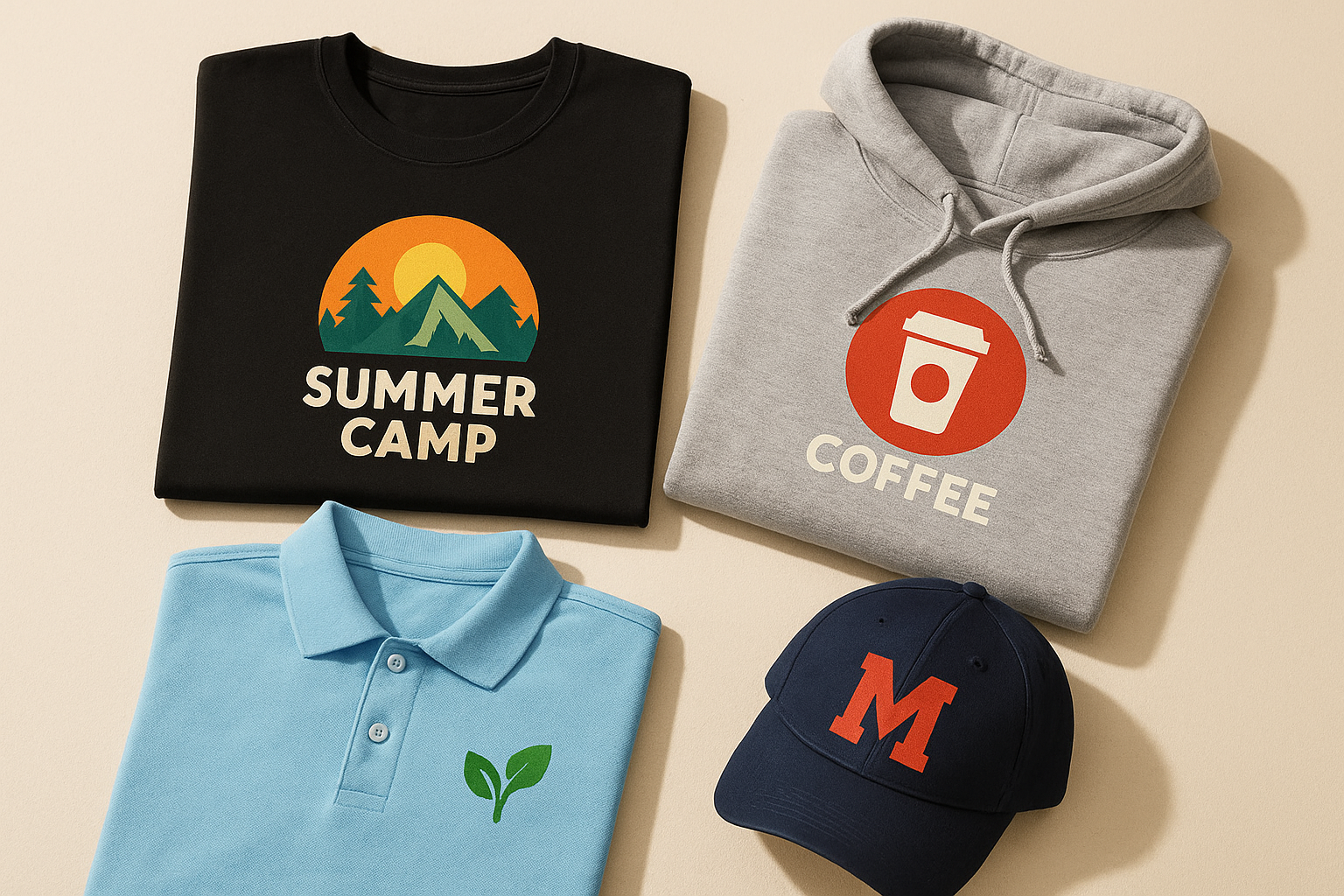
Once you understand the process, the natural next question is where DTF actually earns its reputation versus where it is overkill. Small business orders are the clearest fit: a landscaper needing fifteen branded polos, a coffee shop wanting a one-off staff hoodie run, or a startup ordering merch for a single pop-up event all benefit from paying roughly the same per-unit price whether they order five pieces or fifty. Mixed-fabric orders are another obvious win, since a single batch of cotton tees, poly-blend hoodies, and nylon caps can all take the same transfer without switching processes halfway through production.
DTF earns its place on short, detailed, mixed-fabric orders, not necessarily on massive single-colour runs.
Situations where DTF is the obvious choice
- Event merchandise with tight deadlines and full-colour logos
- Team uniforms across different garment types (shirts, hoodies, hats) in one order
- Photo-based or gradient designs that screen printing would need multiple colour separations for
- Dark garments where sublimation simply will not work and DTG risks fading
- Reorders and small batches where setup fees would otherwise eat the margin
Where another method still wins
Contractors ordering hundreds of identical hi-vis vests or safety shirts usually get better economics from screen printing, since the per-unit cost keeps dropping as volume rises past a few hundred pieces. Sportswear brands producing all-over prints on light polyester jerseys still lean on sublimation, because the ink actually becomes part of the fabric rather than sitting on top of it. Bulk pricing structures reward those methods at scale in ways DTF cannot quite match once you cross into the thousands.
Geography and turnaround also shape the decision. A local Canadian supplier producing DTF transfers in-house can turn around a rush order for a trade show or last-minute team event far faster than a screen printer waiting on new screens, which matters more than people expect when a deadline is fixed and non-negotiable.
Getting the best results from your DTF prints
Getting a DTF transfer to look sharp on day one is easy. Getting it to still look sharp after fifty washes takes a bit more care, and most of that care happens before the print ever reaches your shop. File preparation matters more than people assume. Send artwork as a high-resolution PNG or vector file with a transparent background, and flag any fine text or thin lines under two millimetres, since those details can blur once the powder and heat get involved.
Prepping your artwork
A few small habits save reprints down the line:
- Use 300 DPI or higher for raster files so edges stay crisp
- Keep gradients and photo elements in CMYK rather than RGB to avoid colour shifts
- Avoid pure black backgrounds larger than the design itself, since it wastes film and adds cost
- Ask your supplier for a digital proof before pressing, especially on first orders
A DTF transfer only performs as well as the file behind it, so a rushed design file guarantees a disappointing print.
Caring for the finished garment
Once the shirt or hoodie is in someone’s hands, wash care becomes the deciding factor in how long the print lasts. Turning garments inside out before washing, using cold water, and skipping the tumble dryer in favour of air drying all extend the life of a transfer significantly. Ironing directly over a print, even on low heat, softens the adhesive and causes premature cracking, so a simple care label or a note at handover goes a long way for teams and staff who are not printing veterans themselves.
Working with the right supplier
Finally, the supplier you choose affects the outcome as much as the file or the wash routine. Ask whether they cure transfers properly, whether they run a second press to seal edges, and whether they test wash durability before recommending DTF for uniforms or daily wear. Suppliers who skip curing steps to save time produce prints that peel within weeks, and no amount of careful washing fixes a transfer that was rushed at the press. A supplier willing to explain their process, rather than just quote a price, is usually the one worth trusting with a repeat order.
Choosing the right print method for your project
So what is DTF printing when you strip away the jargon? It is a flexible, durable transfer method that solves the fabric and quantity headaches older techniques never quite fixed. If your order mixes garment types, needs full colour detail, or simply does not hit the volume screen printing rewards, DTF printing is very likely your best option. If you are running hundreds of identical hi-vis shirts or all-over polyester jerseys, screen printing or sublimation still earn their keep.
The honest answer is that no single method wins every job, but for most small businesses, teams, and event orders across Canada, DTF hits the right balance of cost, quality, and turnaround. Getting a second opinion from a supplier who explains their process, rather than just quoting a price, saves you from a disappointing reorder later.
If you are ready to see samples or get a quote on your next batch, get in touch with Apex Workwear and we will walk you through the right fit.