Choosing between heat transfer vinyl vs sublimation can feel like a coin toss when you’re not sure what separates the two. Both methods produce custom apparel that looks professional, but they work in fundamentally different ways, and those differences affect everything from material compatibility to long-term durability and cost.
If you’re a small business owner printing branded uniforms, a contractor outfitting a crew, or a startup building merch from scratch, picking the wrong method can mean wasted budget and results that don’t hold up. The right choice depends on your fabric, your design complexity, your order size, and how long you need prints to last.
At Apex Workwear, we handle custom apparel production across the GTA and beyond, using methods matched to each project’s specific needs. That hands-on experience gives us a practical understanding of where each technique shines and where it falls short.
This guide breaks down both methods side by side, covering cost, durability, fabric requirements, and ideal use cases, so you can make a confident decision before placing your next order. No guesswork, just a clear comparison built on real production knowledge.
Why the choice matters for custom apparel
The method you use to decorate a garment isn’t just a technical detail – it shapes how the finished product looks, feels, and holds up over time. When you’re ordering custom apparel for a business, a crew, or an event, the wrong choice can result in prints that crack after a few washes, designs that won’t bond to your chosen fabric, or costs that blow through your budget before production even finishes. Getting this decision right before you place an order protects your investment and makes sure the final product actually represents your brand the way you intend.
Choosing the right decoration method upfront saves you from reprinting orders and replacing garments before they’ve had a proper run.
The wrong method costs more than you think
When you compare heat transfer vinyl vs sublimation, the upfront differences in equipment, materials, and fabric requirements are only part of the picture. Running costs, reorder rates, and garment lifespan all feed into the real expense of getting it wrong. A print that peels after ten washes means replacing stock, reprinting designs, and potentially refunding customers or reordering crew gear sooner than planned.
For small businesses and contractors operating on tight timelines, those extra costs compound quickly. Minimum viable quality isn’t good enough when your branded apparel is representing your business in public. Every garment you hand out or sell is a mobile advertisement, and a worn-out or poorly applied print sends the wrong message to the clients and customers who see it every day.
Fabric choice locks you into a method
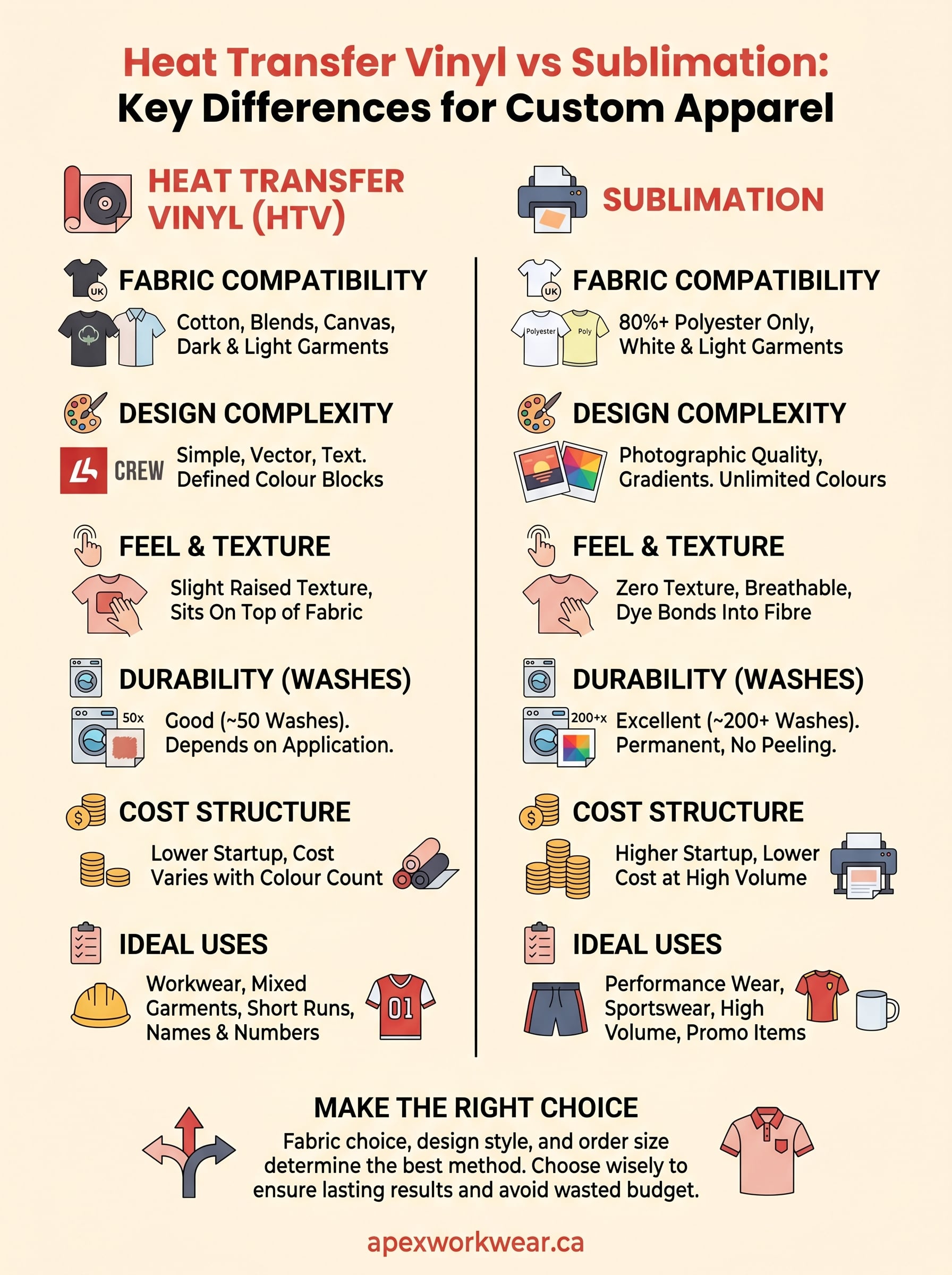
Your fabric selection narrows down your method before you’ve even thought about design. Sublimation only bonds properly to polyester-based fabrics, typically those with a fibre content of 80% polyester or higher. If you try it on cotton, the dye won’t set and you’ll end up with a faded, patchy result that no amount of re-pressing will fix. Many standard workwear blanks are cotton-heavy, which rules sublimation out entirely.
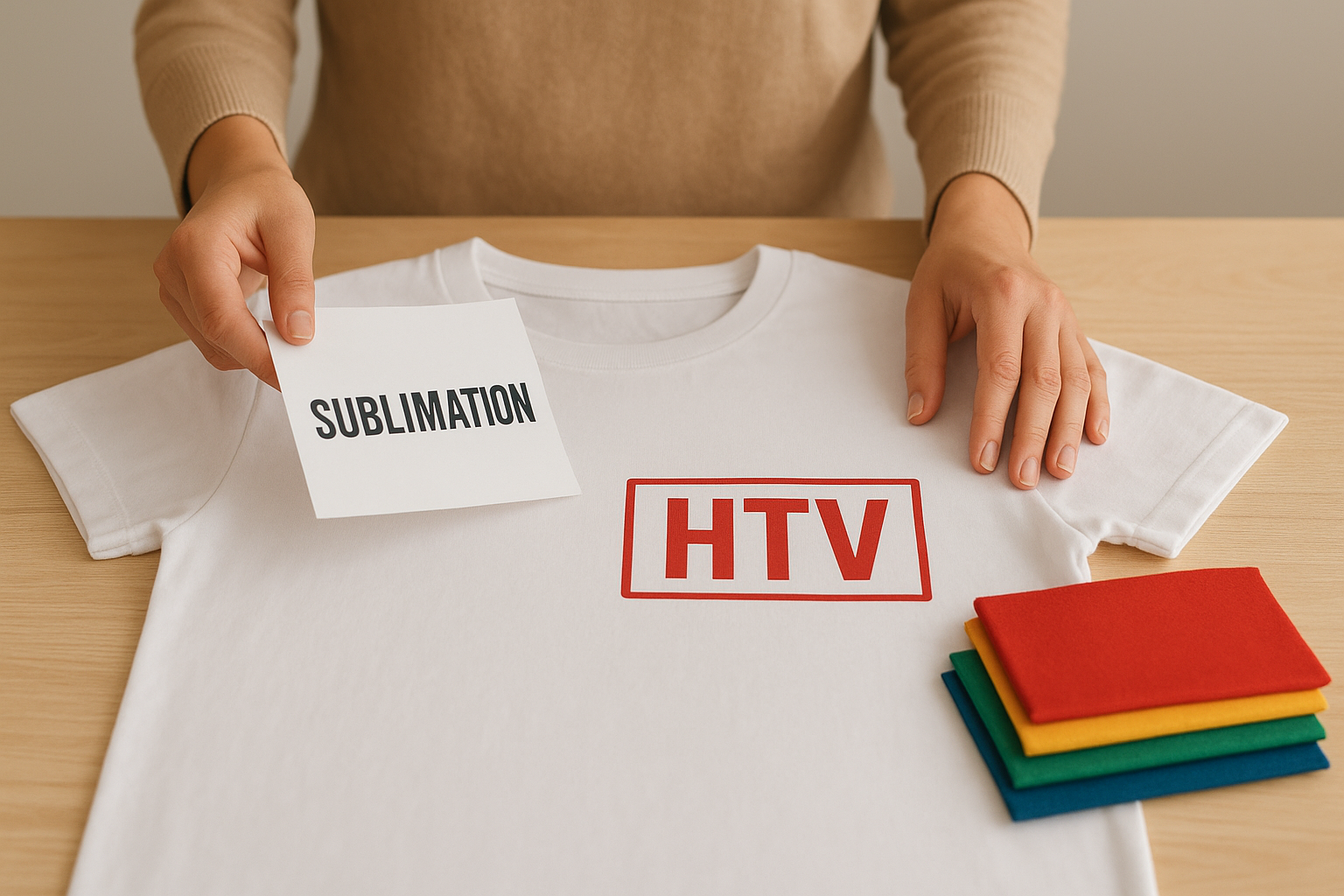
Heat transfer vinyl adheres to a much broader range of fabrics, including cotton, cotton-polyester blends, and even some canvas and nylon materials. That flexibility makes it a reliable option when you’re working with everyday workwear fabrics or standard garment blanks that aren’t polyester-dominant. Here’s a quick look at how fabric type limits your options:
| Fabric Type | HTV Compatible | Sublimation Compatible |
|---|---|---|
| 100% Cotton | Yes | No |
| 100% Polyester | Yes | Yes |
| Cotton/Poly Blend | Yes | Limited (faded results) |
| Performance Fabric (80%+ poly) | Yes | Yes |
| Canvas / Nylon | Yes | No |
Design complexity and colour count matter too
Understanding your design requirements before choosing a method prevents costly surprises during production. Sublimation handles photographic-quality images and gradients with ease because the dye bonds directly into the fabric fibre, producing smooth colour transitions and detailed prints with no raised edges or texture.
Heat transfer vinyl works best with clean, vector-based designs and defined colour blocks. Each colour in a vinyl design typically requires a separate cut layer, so designs with more than four or five colours become time-consuming and expensive to produce accurately. If your logo contains fine gradients or photo elements, sublimation is usually the more practical route.
If you’re printing on dark or black garments, the decision becomes straightforward. Sublimation cannot print on dark fabrics at all because it uses a dye-based process that relies on a white polyester base. Heat transfer vinyl, by contrast, comes in opaque varieties that adhere cleanly to dark garments with sharp, consistent colour output regardless of the base fabric colour.
How heat transfer vinyl works in practice
Heat transfer vinyl is a layered, pressure-sensitive material that bonds to fabric through heat and pressure. You feed sheets or rolls of vinyl into a cutting plotter, which follows a digital design file to cut out your artwork. After cutting, you weed out the excess vinyl, leaving only the finished shape on a carrier sheet. You then position it on the garment and press it using a heat press at a specific temperature and dwell time, fusing the adhesive backing permanently to the fabric fibres.
The cutting and pressing process
The cutting stage is where design complexity directly affects production time. Simple shapes, text, and solid colour blocks cut cleanly and weed quickly. More intricate designs with fine detail take longer to weed and carry a higher risk of tearing the vinyl during removal, which wastes both material and time. When you’re comparing heat transfer vinyl vs sublimation for detailed artwork, this is one of the first practical limitations you’ll encounter with the vinyl route.
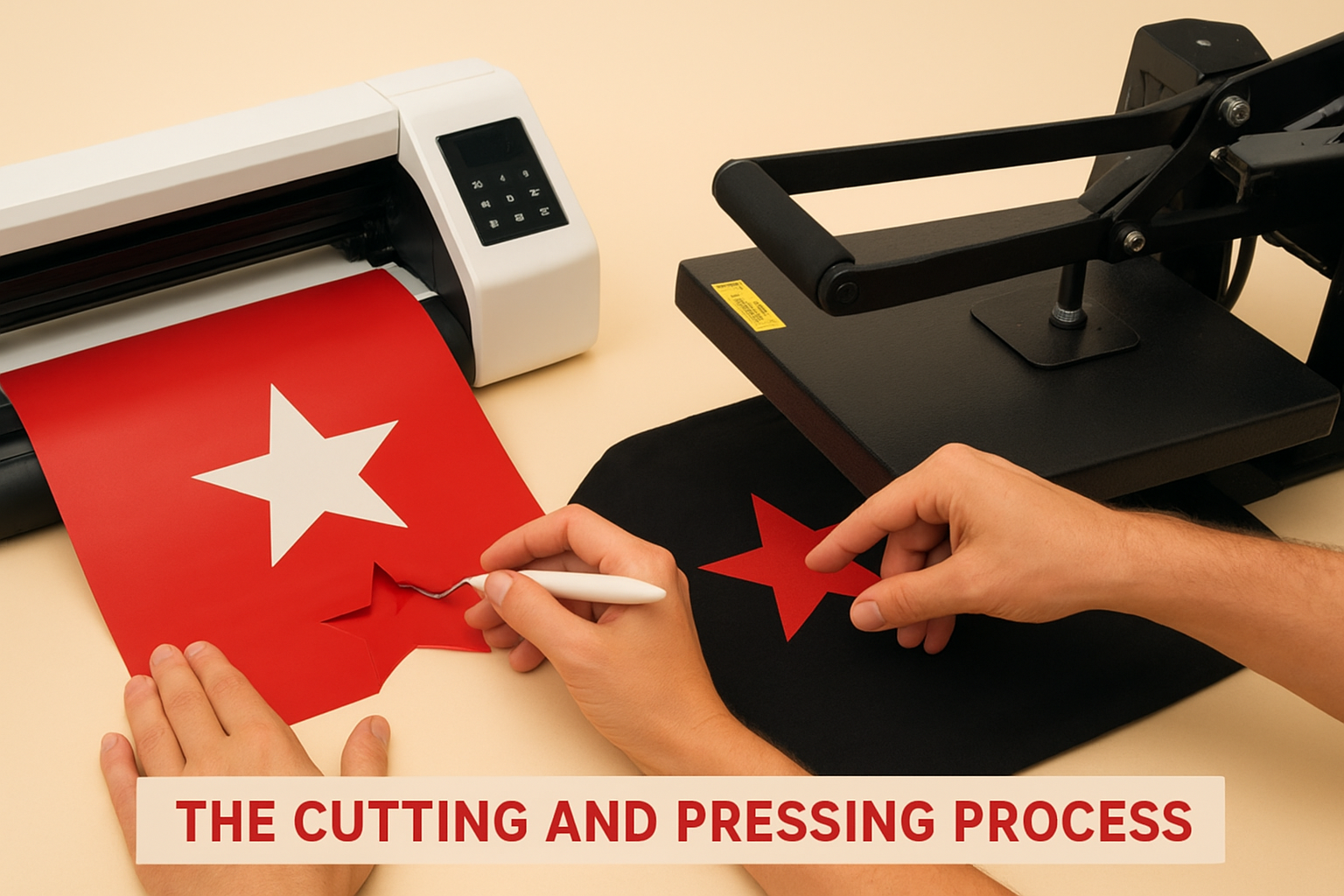
A well-calibrated heat press and the correct dwell time are just as important as the quality of the vinyl itself, because poor pressing technique causes peeling even on a clean cut.
Each colour in a vinyl design requires a separate cut layer, and those layers get pressed onto the garment either individually or stacked. Multi-colour designs are achievable, but every additional colour adds steps, alignment work, and risk of layer misregistration if sheets shift during pressing.
Where HTV performs best
Heat transfer vinyl is the practical choice when you’re working with cotton or mixed-fabric garments, printing text-heavy designs, or producing shorter runs where cost per unit needs to stay manageable without committing to a full sublimation setup. It gives you opaque, consistent coverage on both light and dark fabrics, which makes it the default option for contractor workwear, team shirts, and branded uniforms where the garment colour varies across an order.
The finished print sits on top of the fabric with a slight raised texture you can feel when running your hand across it. Vinyl prints hold up well when applied correctly, typically lasting 50 or more wash cycles before showing any noticeable wear, provided you wash garments inside-out in cold water and avoid high-heat drying.
How sublimation works in practice
Sublimation uses a completely different mechanism than vinyl. Instead of applying a material on top of the fabric, sublimation printing converts dye into a gas that bonds directly into polyester fibres under heat and pressure. The result is a print that becomes part of the fabric itself rather than sitting on its surface.
The dye and heat process
You start by printing your design onto specialist sublimation transfer paper using a sublimation printer loaded with dye-based inks. The paper print looks dull and muted at this stage, which can be misleading, but the colours activate fully during the heat transfer step. You place the printed paper face-down onto the garment, apply firm pressure with a heat press at around 190 to 200 degrees Celsius, and hold it for approximately 45 to 60 seconds. Under that heat, the dye converts to a gas and permanently bonds into the polyester fibres.
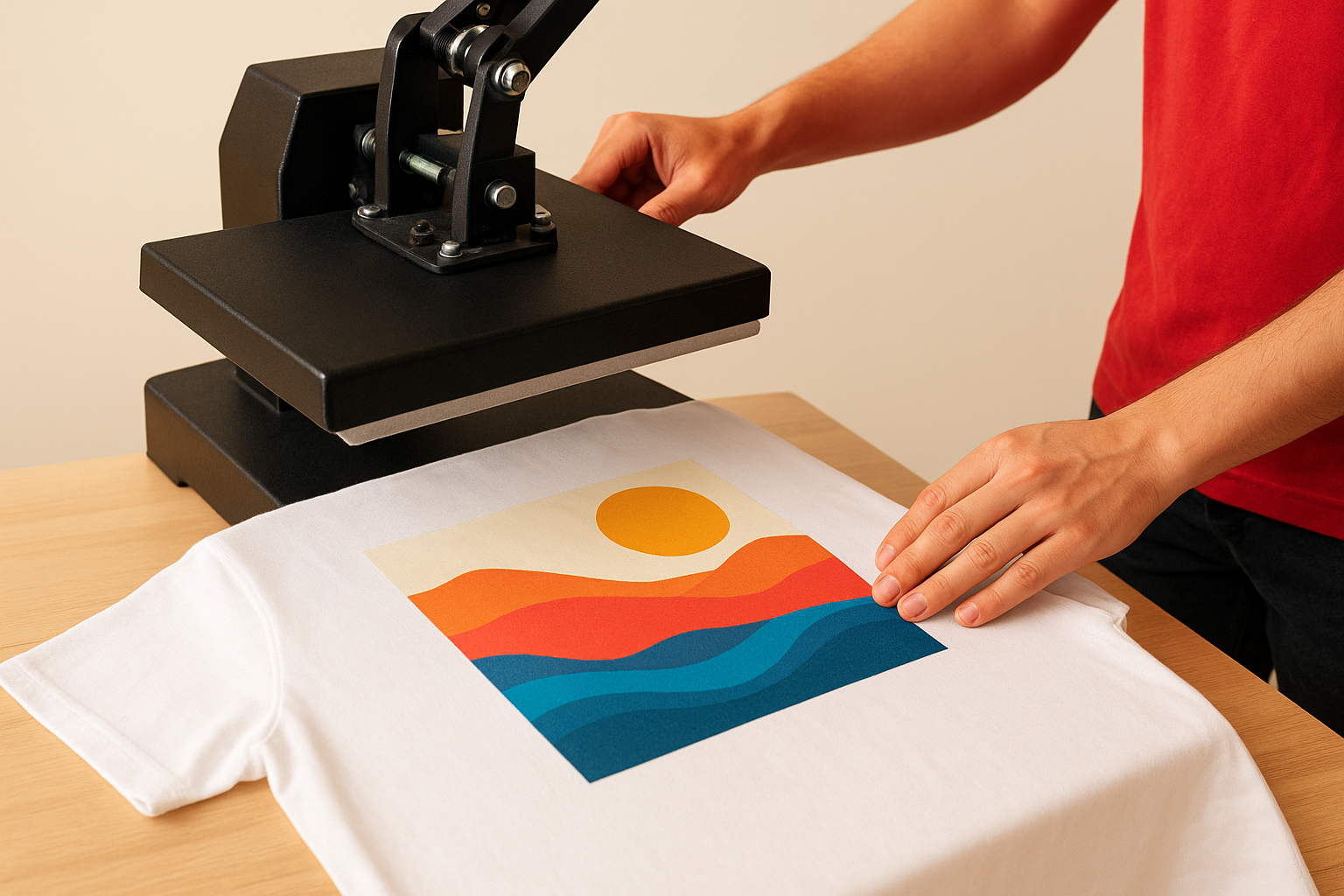
Because the dye bonds inside the fibre rather than on top of it, you cannot feel sublimation prints at all – they have zero texture or raised edges.
Once the garment cools, the dye solidifies inside the fabric and the image becomes permanent. No peeling, cracking, or washing out occurs under normal care conditions because there is no separate layer that can detach. The colour stays vivid through hundreds of wash cycles, making sublimation one of the most durable decoration methods available when matched to the right fabric.
Where sublimation performs best
When you compare heat transfer vinyl vs sublimation for complex artwork, sublimation wins on print quality for detailed designs. Photographic images, gradients, and multi-colour artwork reproduce with sharp detail and smooth colour transitions because the process is not limited by cut layers or colour counts. You can print a 20-colour photographic logo just as easily as a two-colour one, with no additional production steps.
Sublimation works best on polyester-dominant performance wear, sportswear, and promotional items like mugs or phone cases that have a polyester coating. If your order involves bright, light-coloured polyester garments with detailed or full-coverage artwork, sublimation delivers results that other decoration methods cannot match at a comparable price point.
Costs and setup: equipment and running costs
When you compare heat transfer vinyl vs sublimation, the cost gap between the two setups is significant enough to influence which method makes sense for your budget and expected order volume. Neither option is cheap to set up properly, but the investment required and the ongoing running costs differ enough that picking the wrong starting point can strain your cash flow before your first order ships.
Starting costs for heat transfer vinyl
Getting a functional HTV setup requires a cutting plotter and a heat press as your two core pieces of equipment. Entry-level cutting plotters start around CAD $300 to $500, while a reliable heat press sits between CAD $400 and $800 for a basic clamshell model. That puts your minimum hardware investment at roughly CAD $700 to $1,300 before you buy a single roll of vinyl. Vinyl rolls cost between CAD $15 and $40 depending on type and finish, and a single roll typically covers 15 to 20 standard designs, keeping your per-unit material cost manageable once you’re set up.
The cutting plotter is the piece of equipment most people underestimate – a poorly calibrated or underpowered cutter causes inconsistent cuts that waste vinyl and slow production.
Starting costs for sublimation
Sublimation requires a dedicated sublimation printer and a heat press, plus sublimation-specific ink and transfer paper. A reliable entry-level sublimation printer starts at around CAD $500 to $900, and the inks are proprietary and more expensive per millilitre than standard inkjet inks.
Your total starting investment for sublimation sits between CAD $1,000 and $2,000 before factoring in the polyester garment blanks, which typically cost more than standard cotton equivalents. That higher entry point makes sublimation a harder sell for low-volume projects or one-off orders.
Comparing running costs over time
On a per-unit basis, sublimation running costs drop at volume because the printer handles full-colour output in a single pass regardless of design complexity. HTV running costs climb with colour count, since each additional layer requires more vinyl, more pressing time, and more handling.
| Method | Entry-Level Setup | Per-Unit Cost at Low Volume | Per-Unit Cost at High Volume |
|---|---|---|---|
| Heat Transfer Vinyl | CAD $700-$1,300 | Low | Low to moderate |
| Sublimation | CAD $1,000-$2,000 | Moderate | Low |
For shorter runs with simple designs on mixed fabrics, HTV keeps your per-unit cost lower without a large upfront commitment. For complex, high-volume artwork on polyester, sublimation pays off once your setup is recovered.
Durability, feel, and care requirements
Durability separates a worthwhile investment from a recurring expense. When you’re comparing heat transfer vinyl vs sublimation, both methods can produce long-lasting results, but only when applied to the right fabric and maintained correctly. Getting the care requirements wrong is one of the most common reasons custom apparel fails early, regardless of which method was used.
How long each method lasts
Properly applied HTV holds up for 50 or more wash cycles before showing visible wear. The adhesive bond between the vinyl and the fabric fibres remains stable as long as the initial press hit the correct temperature and dwell time. Sublimation, when matched to a high-polyester fabric, outlasts vinyl by a considerable margin because the dye becomes part of the fibre itself. There is no adhesive layer to degrade, which means sublimation prints typically survive 200 or more wash cycles without fading, cracking, or lifting.
Sublimation’s durability advantage only applies when you’re using polyester-dominant fabrics – on lower-poly blends, colours fade quickly regardless of how carefully you wash the garment.
Texture and feel on the garment
Heat transfer vinyl sits on top of the fabric, creating a slight raised surface you can feel when you run your hand over the print. Thicker or multi-layer vinyl designs make this more pronounced, which some wearers find uncomfortable on garments worn directly against the skin, particularly in warmer conditions. Breathability can also decrease in the printed area because the vinyl forms a partial barrier over the fabric.
Sublimation produces no surface texture whatsoever. Because the dye bonds inside the polyester fibre rather than sitting on top of it, the fabric feels identical in the printed area to the unprinted sections. For performance wear, sportswear, or any garment worn in high-movement situations, that absence of texture makes sublimation the more comfortable long-term option.
Washing and care guidelines
Both methods require specific care to reach their full lifespan. Following the correct wash routine protects your garments and keeps printed designs looking sharp across repeated use.
- HTV garments: Wash inside-out in cold water, use a gentle cycle, and avoid tumble drying on high heat
- Sublimation garments: Machine wash cold, avoid bleach and fabric softener, and air dry or use low heat
- Both methods: Skip ironing directly over printed areas; if pressing is needed, use a cloth barrier between the iron and the design
What to choose: fabric, colour, and use cases
The clearest way to decide between heat transfer vinyl vs sublimation is to start with your fabric and work backwards from there. If your garment order includes cotton-heavy blanks, the decision is already made for you – HTV is your only viable option. From there, your design complexity, colour requirements, and end-use application narrow things down further.
Choose HTV for mixed fabrics and dark garments
Heat transfer vinyl is the practical default when you’re working with cotton, cotton-polyester blends, or any fabric that isn’t polyester-dominant. It’s also your only option when the garment colour is dark or black, since sublimation cannot produce visible results on anything other than a white or very light polyester base. If your order covers a range of garment colours, HTV gives you consistent, opaque coverage across the full run without requiring you to stock separate blank types.
Your design style matters here too. Simple, text-heavy artwork – contractor names, job titles, short slogans, or clean logo shapes – cuts and presses quickly without running up your production time or material cost. For straightforward branded workwear across a mixed garment order, HTV is the lower-risk, lower-overhead choice.
Choose sublimation for detailed artwork on polyester
When your garments are 80% polyester or higher and your designs involve gradients, photographs, or full-coverage artwork, sublimation is the stronger choice. The dye-into-fibre process handles unlimited colour without extra production steps, so a complex branded illustration costs no more to produce than a simple two-colour design once your setup is running.
Sublimation works best for performance wear, sportswear, and promotional items where both print quality and long-term wash durability are priorities.
This method suits high-volume orders on consistent polyester blanks, such as team kits, event merchandise, or branded performance gear where every unit shares the same fabric specification. Once you confirm your fabric and design meet the polyester requirement, sublimation delivers results that are difficult to match on durability and print quality at scale.
| Decision Factor | Choose HTV | Choose Sublimation |
|---|---|---|
| Fabric type | Cotton, blends, canvas | 80%+ polyester only |
| Garment colour | Light or dark | Light or white only |
| Design style | Simple, vector, text | Complex, gradient, photo |
| Order volume | Low to medium | Medium to high |
| Durability priority | Moderate | High |
Next steps for your project
Now that you understand the core differences between heat transfer vinyl vs sublimation, you can approach your next order with a clear set of criteria rather than guesswork. Start by confirming your fabric composition and your garment colour range, since those two factors alone eliminate one method in most cases. From there, look at your design file: if it uses defined colour blocks and clean vector shapes, HTV handles it efficiently. If it involves gradients, photographic detail, or full-coverage artwork on polyester, sublimation is the stronger fit.
Your budget and expected order volume also factor into the final call, and it helps to run those numbers before committing to a production method. The team at Apex Workwear can review your garments, design files, and quantity requirements and give you a direct answer without the back-and-forth. Get a free quote for your custom apparel project and we will confirm the right method for your brief before production starts.